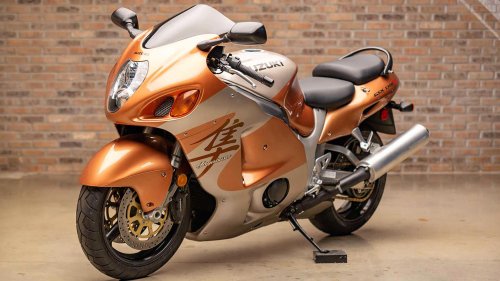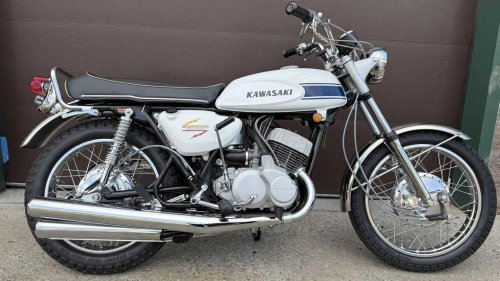
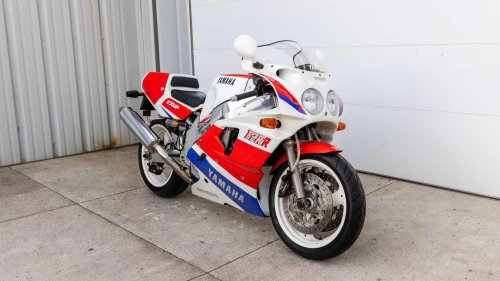
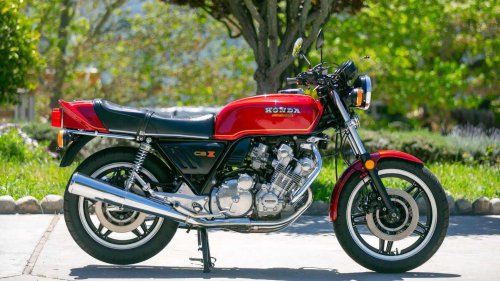
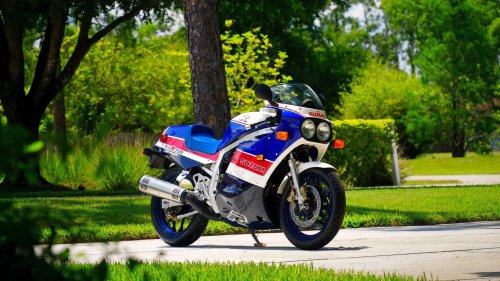
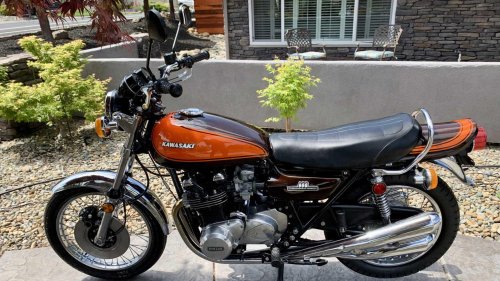
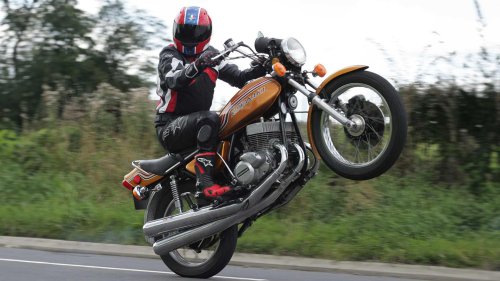
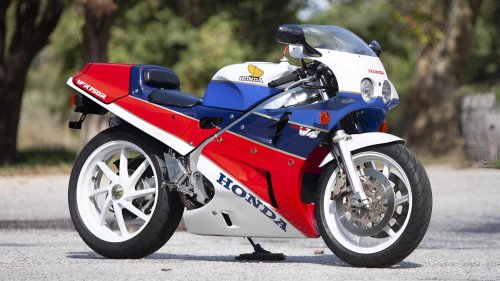
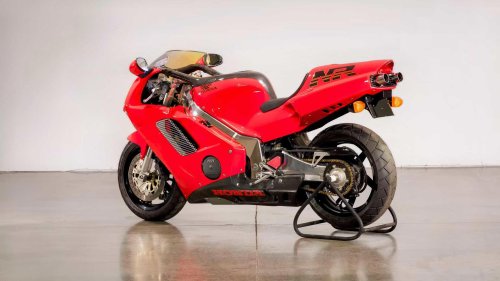
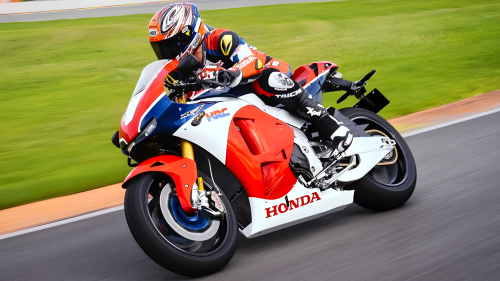
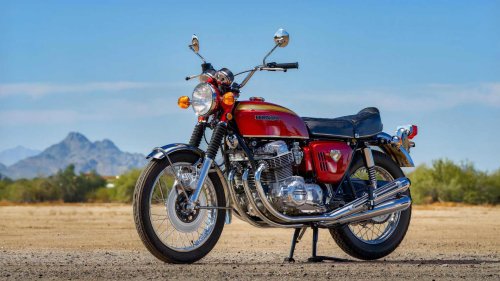


















There was a time when these vintage Japanese motorcycles were just for weekend riders and garage tinkerers. Still, recently, they have become some of the hottest collectibles in the global enthusiast market. Certain ultra-rare examples of these Japanese motorcycles now cost more than brand-new Ferraris, Aston Martins, and Porsches, as they regularly sell at auction blocks for six-figure sums. Over the past decade, the growth of global JDM culture has exploded collector demand for iconic Suzuki, Kawasaki, Yamaha, and Honda superbikes. Rarity, engineering innovation, and racing heritage have made what originally began as nostalgia for 1970s and 1980s performance machines evolve into a serious investment category. Now, a hand-built Honda prototype can trade for over $300,000, costing more than a Ferrari, while a homologation special or two-stroke legend could cost significantly more than luxury sedans and sports cars. So, let’s dive into these Japanese motorcycles rewriting collector-market history, from a Honda superbike worth more than a Ferrari Roma Spider to a Yamaha that now costs more than a new Honda Civic. Kawasaki H1 Mach III (1969): $12,000 – $25,300 Bring a Trailer Kawasaki established its reputation for brutally fast motorcycles with the smaller Kawasaki H1 Mach III before the H2 shocked the motorcycle world. Its 60-horsepower 499cc air-cooled two-stroke triple engine could rocket it to a 0–60 mph acceleration in roughly 3.9 seconds, extraordinary for the late 1960s. Unfortunately, like its successor, it had aggressive power delivery and weak drum brakes that made the bike notoriously difficult to control, a dangerous reputation that has become part of its collector appeal. So today, with collectors now hunting for 1969 examples finished in correct candy-orange paint with matching engine stamping and original exhaust systems, top first-year examples sell for $25,300, slightly more than the base price of a new Kia K4. Yamaha FZR750R (OW01) (1989): $27,820 – $31,000 Mecum The Yamaha FZR750R OW01 was a homologation-focused bike, and remains a highly coveted collector motorcycle. Even at entry level, examples can cost more than a new Honda Civic. This superbike was built for World Superbike homologation, fitted with a 749cc liquid-cooled inline-four, which used Yamaha’s EXUP exhaust valve technology and Genesis five-valve cylinder head design, producing around 106 horsepower. Units used for racing typically pushed closer to 125 horsepower. It won 16 races in the World Superbike Championship between 1989 and 1991. Together with its race lineage, a limited production run, and Deltabox aluminum frame, have steadily increased demand since the mid-2010s. Clean factory-kept examples with intact five-valve heads and proper maintenance histories are becoming increasingly rare worldwide. Honda CBX1000 (1978–1982): $25,000 – $35,000 Bring a Trailer The outrageous Honda CBX1000 exceeded everything from the late 1970s in looks and sound. When it was launched, the 105 horsepower from its monstrous 1,047cc DOHC inline-six engine made it the most powerful production motorcycle in the world. It was certainly one of the most visually dramatic. Its six carburetors and six exhaust headers helped it scream to 9,000 rpm. The CBX had an unforgettable “jet engine” soundtrack, which has become part of its mythology. Today, with units selling for $35,000, pristine CBX1000s cost much more than a new Mazda CX-30. The early naked 1978–1979 bikes, before Honda added Pro-Link suspension and fairings, typically attract collectors more. Also, units with factory paint, complete exhaust systems, and matching numbers command an added premium. Suzuki GSX-R750 Limited Edition (1986): $25,000 – $35,000 Bring A Trailer Suzuki changed sportbike history forever with the original GSX-R750 Limited Edition. The company was able to keep the weight at just 388 pounds, even with a shockingly aggressive 749cc air/oil-cooled inline-four producing around 100 horsepower. The bike had adjustable suspension, full fairings, and aluminum construction, technology that created the blueprint for modern middleweight superbikes that followed. This pioneer of the lightweight race-replica era typically trades above the price of a new Mazda CX-50, with top examples trading for up to $35,000. However, since most surviving bikes were extensively modified, ridden hard, or totaled, clean low-mileage Limited Edition models have become increasingly scarce and valuable. For collectors chasing the birth of the race-replica era, the target is typically the original white-and-blue paint schemes, which command the highest premiums. Kawasaki Z1 900 (1972): $16,000 – $55,000 Bring a Trailer Kawasaki fitted the Z1 900 with a 903cc DOHC inline-four, making roughly 82 horsepower as the company’s bigger, faster, and more ambitious answer to the Honda CB750. It became the first double-overhead-cam four-cylinder motorcycle to be mass-produced. It quickly earned the nickname “King of the Motorcycles” with its top speed of around 130 mph. Today, exceptionally well-maintained Z1s can reach $55,000, nearly $20,000 more than a brand-new Toyota Camry. The original candy-brown and candy-green bikes are more attractive to collectors, while certain communities may prefer to focus on the Z1-A and Z1-B evolutions. The Z1 has excellent engine durability, and with strong aftermarket support, it is one of the easiest vintage Japanese superbikes to restore and maintain. Kawasaki H2 750 Mach IV (1972): $25,000 – $55,000 Classic-MotorbikesNicknamed the “widow-maker,” the Kawasaki H2 750 Mach IV was one of the wildest motorcycles ever built. This notoriety is part of what now fuels collector demand, with top examples currently outpricing a new Tesla Model 3. At the heart of its wild nature was its 748cc air-cooled two-stroke inline-triple engine that unleashed roughly 74 horsepower and an absurdly fast 0–60 mph acceleration of around 3.5 seconds for the early 1970s. But that wasn’t the only problem with this bike; the chassis wasn’t designed to contain that performance, which is where the H2 got its infamous nickname from. Today, most surviving units have been destroyed in crashes, heavily raced, or modified, making unrestored low-mileage examples exceptionally valuable today. With aftermarket expansion chambers common during the period, collectors typically look for units that retained their original exhaust systems. Honda VFR750R RC30 (1988–1990): $35,000 – $120,000 Gooding & Company The Honda VFR750R RC30 is a truly legendary homologation motorcycle, fitted with a 748cc V4, featuring magnesium engine covers, titanium fork legs, gear-driven cams, and Honda’s iconic single-sided swingarm, specifically for the World Superbike competition. Today, with museum-grade examples, RC30s commanding as much as $120,000, they cost nearly double the price of a new Chevrolet Corvette Stingray. The VFR750R RC30 produced around 112 horsepower in stock form, but with race kits, enthusiasts pushed this well beyond 130 horsepower. After winning the inaugural World Superbike Championship with Fred Merkel in 1988 and a consecutive title in 1989, RC30 cemented its place in history. With clean, unmodified examples becoming increasingly difficult to find, the most valuable units today are original Rothmans-liveried bikes with matching numbers and documented ownership histories. Honda NR750 (1992): $85,000 – $150,000 Mecum In today’s collector market, a Honda NR750 commands between $85,000 and $150,000, which exceeds the cost of a new base Porsche 911 Carrera. On a bike that can simulate V8 performance with a four-cylinder 747.7cc V4 engine with oval pistons, it’s no surprise why. As if creating one of the most mechanically complex motorcycles ever built was Honda’s plan, they made each piston use twin connecting rods and eight valves, and peak output reached around 125 horsepower with a 14,000-rpm redline. There are only about 300 examples worldwide of this limited-production sportbike, making it one of the rarest Honda sportbikes ever sold. Today, untouched examples with original documentation demand a significant premium. However, the staggering cost of maintaining the exotic oval-piston engine makes many owners avoid riding them entirely. Honda RC213V-S (2016): $214,000 – $275,000+ Honda With a 999cc V4 engine delivering approximately 159 horsepower in street trim, or up to 215 horsepower with Honda’s official Sports Kit installed, the road-going RC213V-S is one of the most extreme motorcycles ever sold to the public. Back in 2016, it had an MSRP of $184,000 new, but now, pristine examples trade between $214,000 and $275,000+, approximately $65,000 more than a brand-new Aston Martin Vantage costs. Honda used titanium fasteners, carbon-fiber bodywork, and Öhlins suspension to keep the weight to just 375 pounds. However, expect scarcity to also play a role in its current enormous value, with only around 213 units produced globally. For many owners, the RC213V-S is more of a display piece rather than a daily driver, with many units for sale having delivery mileage, further fueling fierce bidding from collectors in Japan and Hong Kong. Honda CB750 "Sandcast" Prototype (1968): $313,500 Bring a Trailer The rarest version of the legendary Honda CB750 is the 1968 CB750 "Sandcast" Prototype, built by Soichiro Honda himself for testing and marketing purposes. Only one version of this blue-chip collector asset was ever built. When this prototype sold for $313,500 at auction in 2026, it meant a 58-year-old bike cost more than a brand-new Ferrari Roma Spider by more than $33,000. The CB750 Prototype’s air-cooled 736cc SOHC inline-four engine was paired with four carburetors and four exhaust pipes and unleashed approximately 67 horsepower and a 125-mph top speed. The 1969 model year had 7,414 units built, and it was named “Sandcast” because of the early crankcase-cover manufacturing process used on the first 7,000 bikes. It is widely considered the motorcycle that invented the modern superbike, effectively ending the British big-bike market dominance.Sources: Edmunds, Forbes, Hagerty, BringATrailer, Mecum, MSN, Motorcycle Daily, Top Speed