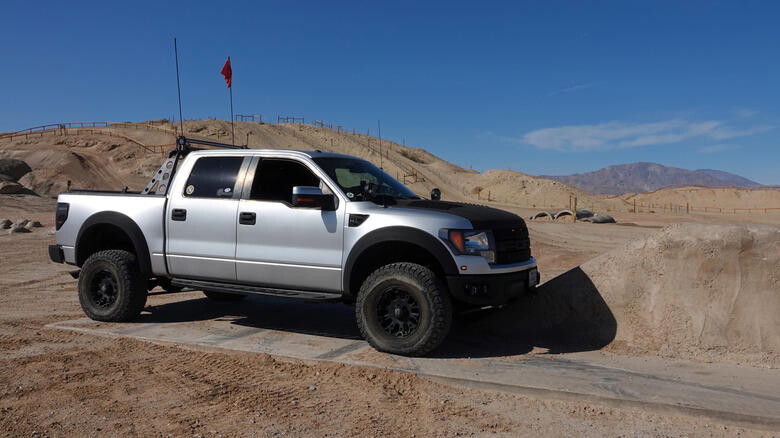
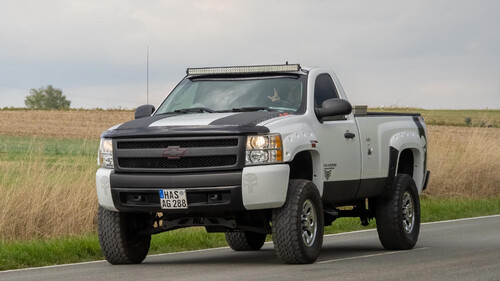
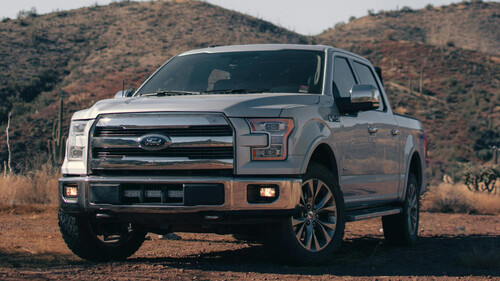
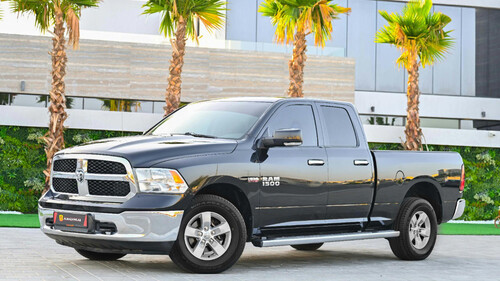
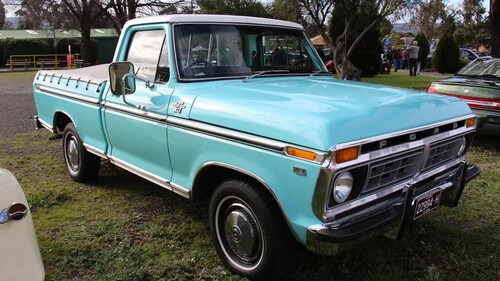
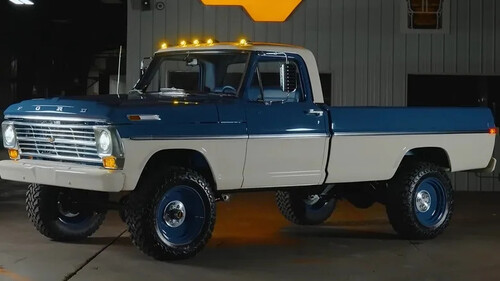
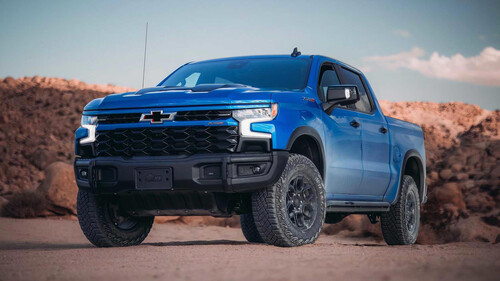
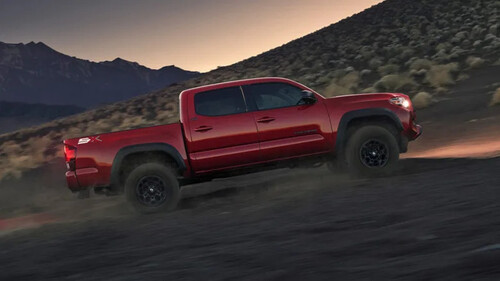
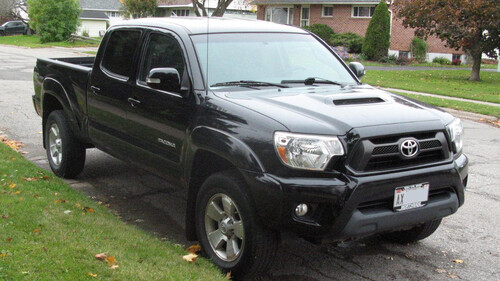
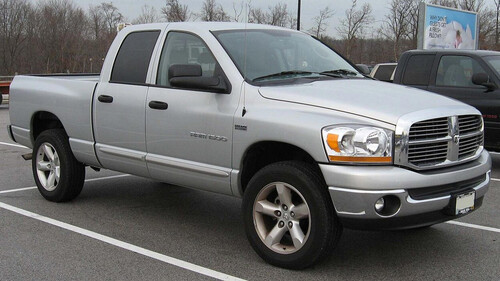
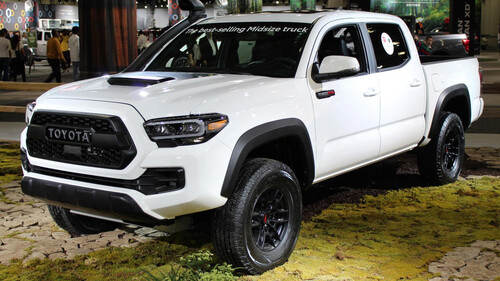
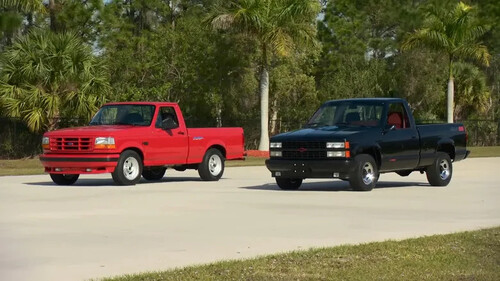
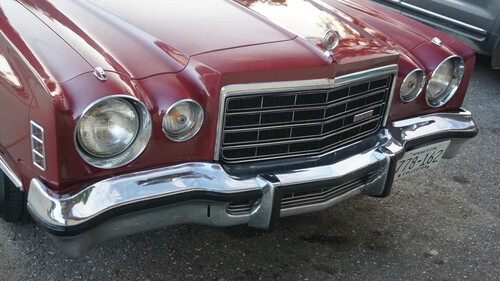
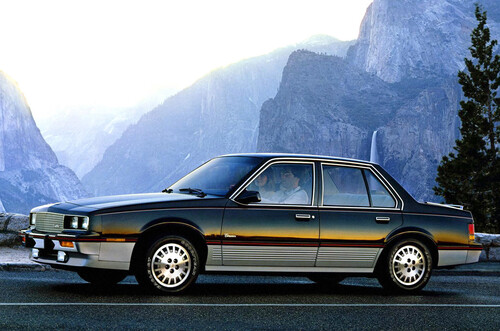
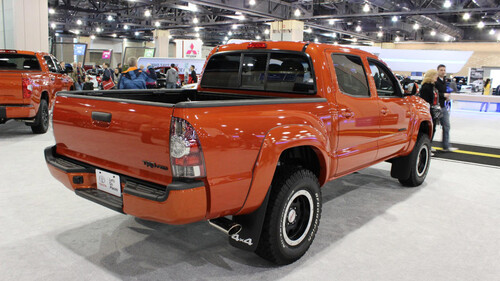
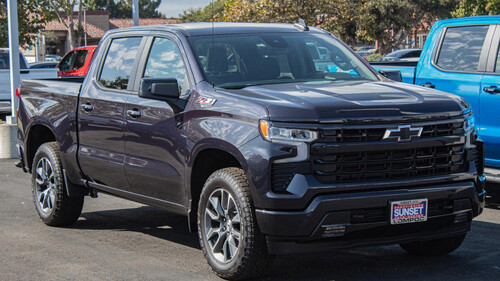
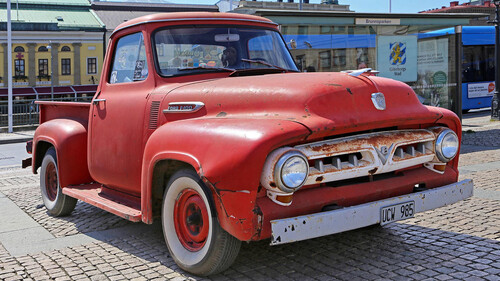
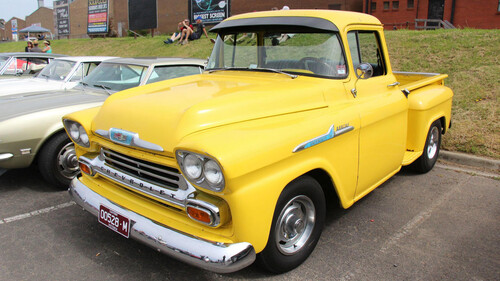
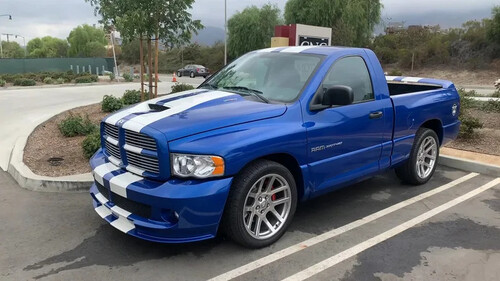
GMC Sierra (GMT800)By the late 1990s, GM was preparing to retire the ancient C/K pickup truck series. In 1998, the replacement arrived in the form of the GMT800-based pickups. Chevy's version was named the Silverado, after the C/K's highest trim level, whereas GMC's version kept the name Sierra. The GMT800 Sierra featured various luxuries, without sacrificing the capability you'd expect from a pickup truck.Between the Silverado and the Sierra, the latter of the two is the more interesting one, due to a certain trim level introduced in the early 2000s. That was the Sierra C3, which was one of the world's first proper luxury pickup trucks, in the same vein as the Lincoln Blackwood and Cadillac Escalade EXT. The Sierra C3 would go on to be renamed the Sierra Denali, and the rest is history.Power came from a lineup of third-generation General Motors V8 powertrains, including the 4.8-liter and 5.3-liter Vortec units, as well as the 6.6-liter Duramax diesel in the HD variants. Thanks to the GMT800's legendary reliability, decent refinement by modern standards, and its old-fashioned approach to capability, a good low-mile example of the GMT800 Sierra (yes, they still exist) will set you back around $20,000.Ford F-100Here's something that's easy to forget: Ford's F-series of pickup trucks has been around since 1948, and it's currently in its fourteenth generation. Not many vehicles can claim the title of having so many generations, but that's just what happens when something is the best-selling vehicle in the world. The first couple of generations carried the name F-1, before switching over to F-100.The F-100 first appeared in 1953, and it's one of the most popular classic pickup trucks on the used market right now, especially for modification and restomod projects. Over time, the F-100 would lose its 1950s rounded styling, in favor of boxier, more utilitarian lines mirrored in the modern F-150. The fourth generation F-100 started offering four-wheel drive, while the fifth generation, produced from 1967 to 1972, would gain a better interior and more room.For the fifth generation, the F-100 received power from about a dozen different powertrains, including several diesels for the South American market, as well as your usual fare of V8s and I6es for North America. Due to its simplicity and its ladles of old-school cool, a good F-100 will set you back just over $20,000 — at least, assuming you can find one that hasn't been modified. Those have jumped well into the 50K range, and some of them way, way more than that.Ford F-150 Raptor (first generation)15 years ago, there wasn't really such a thing as a factory off-roader pickup truck. Most factory off-roading duties were reserved for options like the Land Rover Defender, and crazy off-road pickup trucks were just an idea. Then Ford came in and changed everything. In 2009, it introduced the F-150 SVT Raptor, incidentally one of the last ever vehicles to carry the Special Vehicle Team badge. Based on the 12th generation F-150, the Raptor was designed to go off-road — quickly.Under the hood, buyers were given a choice between a 5.4-liter Modular V8, or the much meatier 6.2-liter Boss V8 plucked from the Super Duty family. The 5.4 put out a pretty good 320 hp, whereas the 6.2 bumped that up to 411 hp. These were pretty major numbers from a pickup truck and they allowed the Raptor to accelerate to 60 mph in 8.2 seconds with the smaller engine, or 7.4 seconds with the larger engine. In the case of the Raptor, the top speed was almost irrelevant, except for the fact that it could achieve high speeds on any terrain, thanks to its standard BFGoodrich mud tires, uprated Fox shocks, skid plates, and massive amounts of suspension travel. Today, off-road pickup trucks are big business, so it's unsurprising that first-generation F-150 Raptors haven't really lost any value at all. Lower mileage examples with few or no mods will set you back a little over $30,000.Toyota Tacoma (first generation)For years, Toyota's pickup truck offering in North America was simply called the Toyota Pickup, and it wasn't all that different from everyone's beloved Hilux. Still, the pickup truck market in North America was very different from that of, say, Africa or Australia. When Toyota decided to overhaul its load-lugger, it devised a pickup truck that would be much more appealing to buyers in the U.S. and Canada. The end product would bear a very familiar name: Tacoma.Introduced in 1995, the Tacoma was quite a bit larger than the outgoing Pickup, and it featured a lot more creature comforts, to bring it closer in line with the competing Ford Ranger and Chevy S10 (which would eventually become the Avalanche). A trio of powertrains took care of driving the wheels, including two high-capacity four-cylinders and one V6. Four-wheel drive was available, along with various bed and cab configurations.Today, the first-generation Tacoma has become something of a legend for being virtually indestructible. As a result, most owners got a lot of use out of them. It'd be much easier to find a unicorn than a low-mile, well-preserved Tacoma, and if that ever happens, $20,000 or more is the norm.Toyota Tundra (second generation)Alongside the Tacoma, Toyota also offered the T100 pickup, which was a larger truck also aimed squarely at U.S. tastes, to compete with pickup truck segment leaders in the U.S. By the late 1990s, the T100 became the Tundra, and it sat at the top of Toyota's pickup truck lineup as its most capable flagship truck. The first-generation Tundras were very similar to the Tacoma, but the second generation rolled around in 2006 and took some major steps to differentiate itself.For starters, it was way bigger than the Tacoma, which had only grown slightly by its second generation. The Tundra had the Ford F-150 and Chevy Silverado firmly in its sights, and for that, there was another major change: the second-generation Tundra added another, significantly larger V8 engine to its engine roster.The dependable Toyota favorites like the 4.0 V6 were still available, but the 5.7 V8 was the most performant out of the lineup, offering up a very healthy 381 hp. Despite some minor reliability issues, the Tundra with the 5.7 V8 can run pretty much forever if you take care of it. It soldiered on for around 15 years, and well-maintained examples with less than 100,000 miles can easily go for $30,000. Especially well-preserved examples from the later model years go for over $40,000.Dodge RAM SRT-10Many would say that Dodge went berserk recently, with its penchant for installing the Hellcat V8 into literally anything with enough room in its lineup. But actually, Dodge has always had a penchant for crazy, almost nonsensical production cars. In the early 2000s, it was looking for something to stick the Viper V10 engine into, and the only vehicle in the lineup with enough room for it was the RAM pickup. It made no sense, but Dodge did it anyway. In 2004, the world was introduced to the RAM SRT-10, to this day one of the most ridiculous production pickup trucks of all time. It was never about the utility or the capability, it was simply designed to put a smile on your face. Under the hood was the 8.3-liter V10 engine from the Viper, practically unchanged from its application in the bonkers sports car.500 hp and 525 lb-ft of torque were dispatched to the rear wheels through, at least on the single cab version, a six-speed manual transmission with a shifter that made the middle seat about as useful as a traction control button would have been. Except, the RAM SRT-10 didn't have that either. Due to its sheer insanity, a used RAM SRT-10 is anywhere from $20,000 with higher miles, all the way to an astronomical $70,000 for museum condition examples.