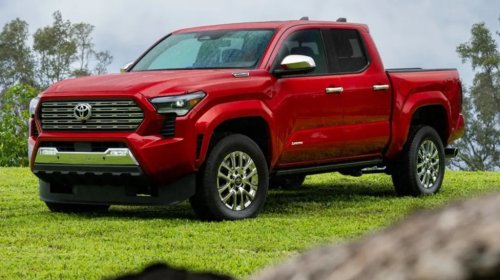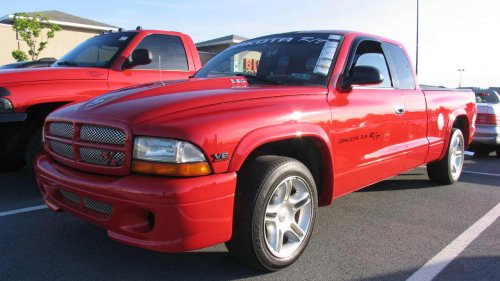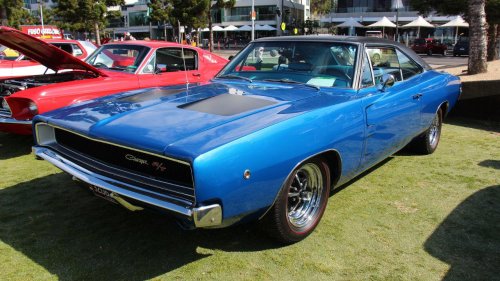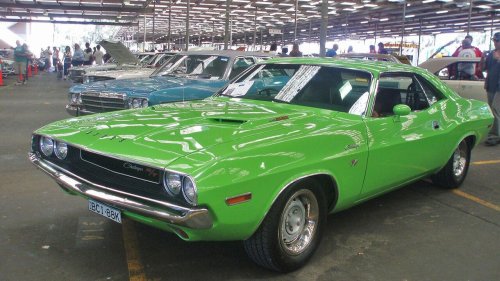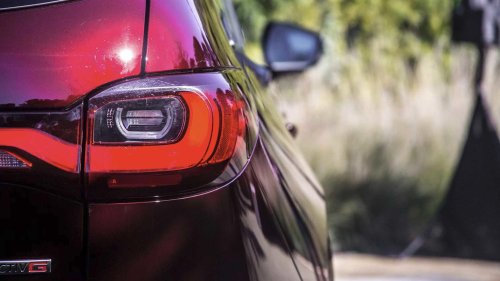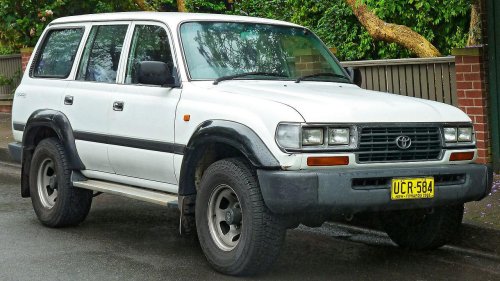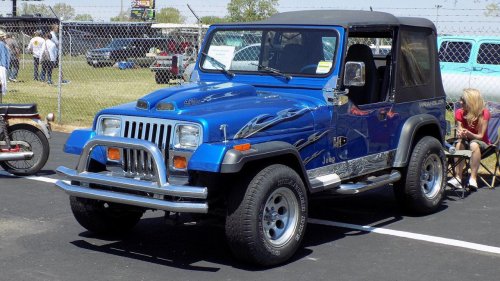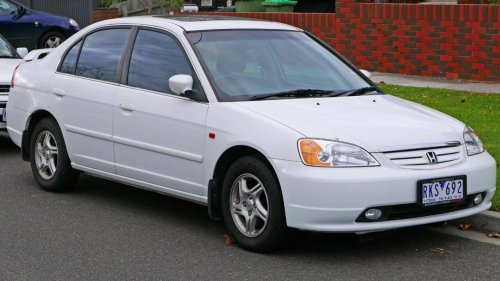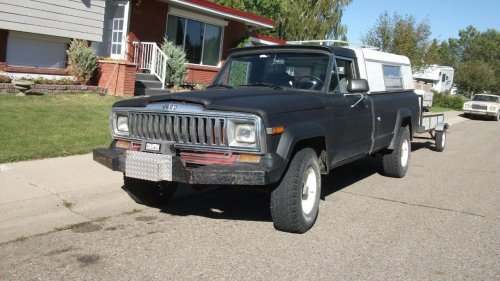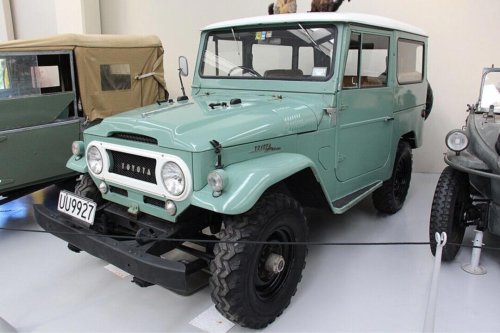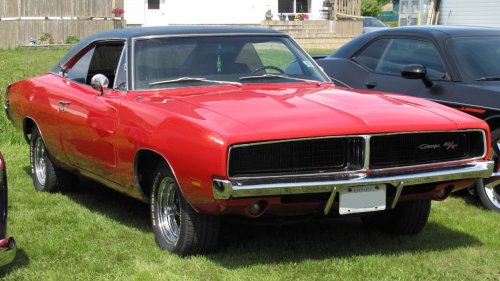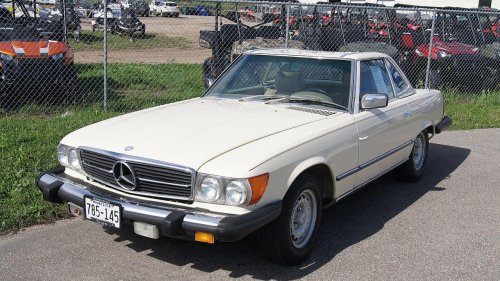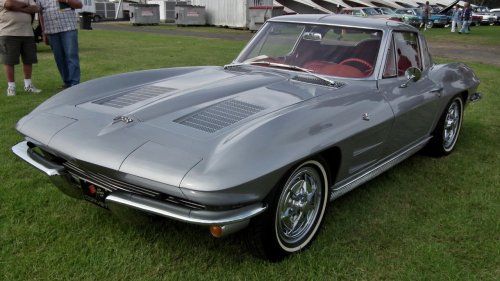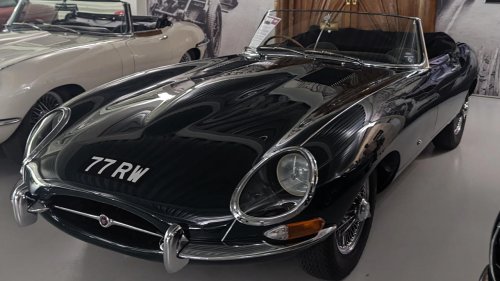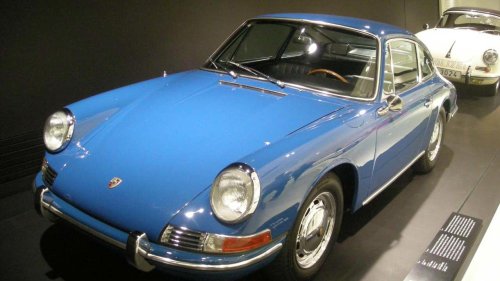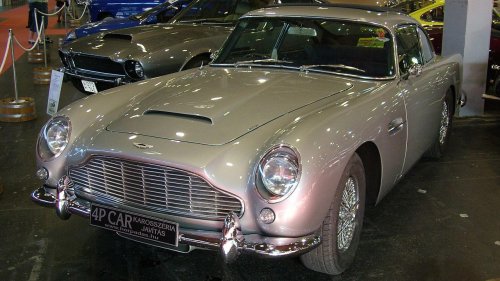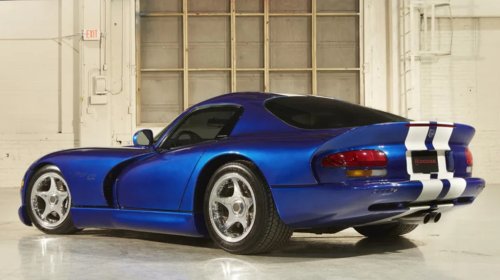
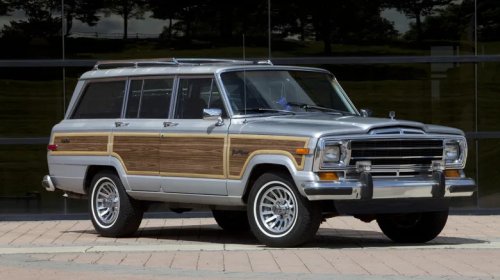
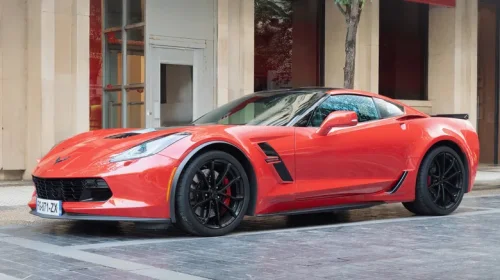
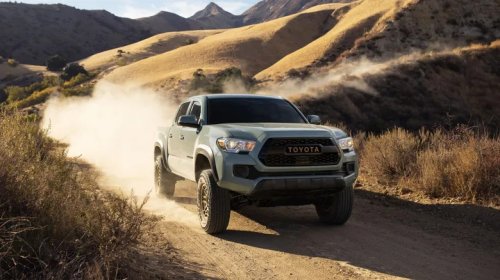
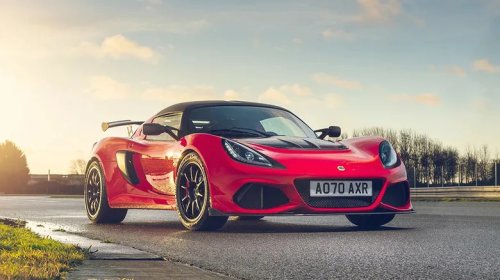
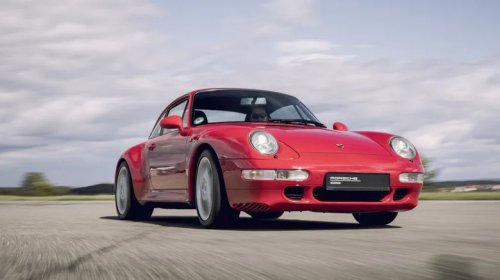
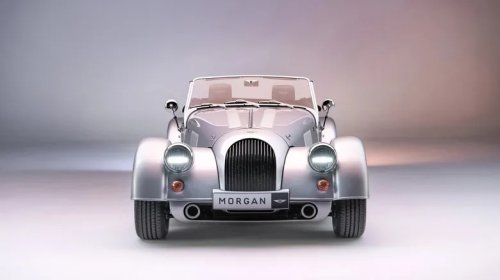

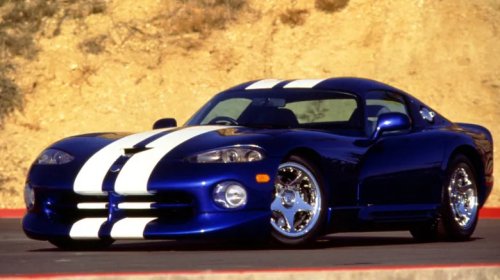
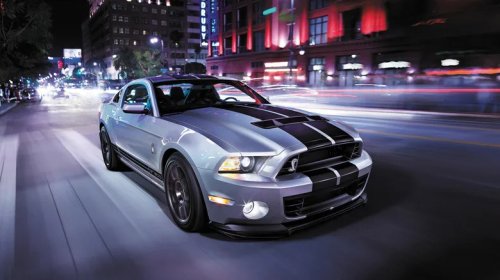
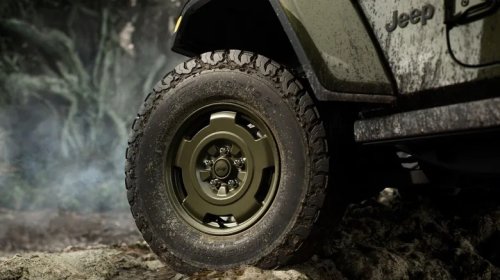
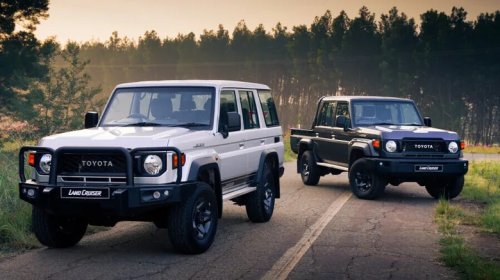



















Dodge Innovation has always carried the auto industry forward. Cars moved from being simple mechanical machines to computers on wheels. They have also become faster, safer, and more refined than ever before. Naturally, innovation quickly infected the automotive field; once a new feature was introduced by one brand, the competition followed promptly. Those that couldn't keep up are largely relegated to the history books. Some cars bucked the trend, though, and kept old technology going past its expiration date. In many cases, it was because these cars were still printing money for the automaker, and there was no need for a change. Other times, old tech just worked better for that particular vehicle. Customers are often prepared to accept older technology for the ease of maintenance and durability, too. Some automakers, however, decided to freeze time because it better fit their legacy. No matter the reason, in this piece, we'll have a closer look at all the obsolete car tech that managed to slip through the cracks of time by residing in some surprisingly popular cars and trucks. Enjoy! 1991 Jeep Wagoneer — Carburetion during a fuel-injected era Jeep When Jeep launched the first-gen Wagoneer in 1963, it was a massive departure from the norm at the time. Instead of the utilitarian, off-road-focused approach of its rivals, the Wagoneer was more luxurious and car-like. It had an optional independent front suspension, power brakes, and power steering, which were not common in SUVs at the time. Furthermore, Jeep dressed the interior in nicer materials and equipped the Wagoneer with upmarket features. Thanks to its wagon shape, the Wagoneer was also very spacious, so it quickly caught the eye of the wealthy crowd. However, some Wagoneer features were short-lived. In 1965, the Wagoneer was reverted to a full-floating front axle, as the independent suspension didn't sell very well and caused some troubles. Since then, Jeep made only minimal changes to the Wagoneer. Sure, the automaker added a V8 engine down the line, but the Wagoneer retained its simple mechanicals up until its demise in 1991. This included a 5.9-liter V8, which made the Wagoneer one of the last carbureted passenger vehicles on sale in the U.S. The V8, which was the only engine option from 1987 to 1991, produced only 140 hp, 280 lb-ft of torque, and was paired exclusively to a 3-speed automatic transmission. The carburetor was also not particularly reliable, and contributed to a dreadful fuel economy of 11 mpg combined, according to Edmunds. Fortunately, the 2026 Jeep Grand Wagoneer with a 647-hp range-extender powertrain is as modern as it gets, while keeping the original's luxury ambitions intact. 2019 Chevrolet Corvette C7 (leaf springs) Roman Belogorodov/Shutterstock Yes, some trucks are still using leaf springs, even in 2026. Sure, they are an antiquated technology, but they are also cost-effective, simple to integrate, and capable of carrying higher loads. However, the Corvette C7 was no truck, yet it came with leaf springs until the 2019 model year. Of course, these leaf springs aren't the same as the ones you'll find on modern trucks. These were transverse instead of longitudinal and made from a composite material. This setup is very compact and gives the Corvette C7 an excellent 15 cu. ft. cargo capacity. For comparison, the mid-engine Corvette C8 has a cargo capacity of just 12.6 cu. ft., and that includes both the front and rear trunks. By sticking with the tried-and-true technology borrowed from the C6, GM was also able to cut Corvette C7 development costs to just $270 million. The real question, however, is do they affect the driving experience? In most cases, the answer would be no. After all, GM refined the same formula for generations, and in the C7 the transverse leaf springs are paired with adaptive magnetorheological dampers. As a result — particularly in the lower-powered variants – the suspension copes without many additional issues and provides good handling, even on a race track. Still, the transverse leaf springs suffer at the limit of traction. As former racing driver Randy Pobst wrote for MotorTrend, the Z06 Corvette C7 is a "wrestling match to drive at the limit on track" and the 755-hp ZR1 makes things worse by having serious issues putting the power down. Fortunately, the Corvette C8 solved those issues by converting to a mid-engine configuration and finally incorporating coil springs. 2023 Toyota Tacoma Third-Gen (rear drum brakes) Toyota Toyota launched the latest Tacoma for the 2024 model year, steering the truck away from mechanical simplicity to highly advanced powertrains and features. Instead of the predecessor's V6, the latest Tacoma comes with a 2.4-liter turbocharged four-cylinder engine. There is also a hybrid version that blows away every truck in its segment with 326 hp and 465 lb-ft of torque, and a new interior with an optional 14.0-inch infotainment display. Hidden in the specs is another interesting upgrade: the fourth-gen Tacoma finally replaced the rear drum brakes of its predecessor. Yup, in 2023, you could buy a Toyota Tacoma, from the dealership, with rear drum brakes. Not that anyone complained — plenty of Tacoma drivers were more interested in longevity and reliability than outright performance. When it comes to durability, drum brakes have no equal; some Tacoma owners report getting 200,000 miles of usage from the rear drum brakes. Compare that to around 30,000 to 70,000 miles for disc-brake pads, and it's easy to see why the Tacoma has earned such a strong reputation for reliability. Still, there is no question disc brakes perform better when it comes to the actual braking. They don't overheat as much, meaning they are the superior choice if the Tacoma is frequently used for towing, particularly on descents. Fortunately, the third-gen Tacoma has disc brakes on the front axle. Since they provide most of the deceleration, overheating shouldn't be an issue, but it's still a thing to keep in mind when towing. 2021 Lotus Elise and Exige (unassisted steering) Lotus Remember the last time you drove a car without power steering? Us neither. After all, Chrysler introduced hydraulic power steering in the 1951 Imperial, and Cadillac followed suit a year later. Soon, power steering became standard on luxury vehicles, and by the 1970s, it became mainstream. Lotus didn't get the memo, though, and still offered unassisted steering in the Elise and Exige in 2011 in the United States. Heck, in Europe, these sports cars were sold until 2021! Of course, the lack of power steering in these fun machines is on purpose. Lotus wanted to provide an unmatched driving experience, and the unassisted steering was at the core of that leitmotif. Yes, turning at parking speeds is a gym session, but the steering becomes alive at higher speeds. It's much lighter, but also weighs up nicely in corners, and crucially, gives you all the feedback you need to feel what the car is doing at that exact moment. The last edition models amped things up with a steering wheel clad in leather and Alcantara. To make them even more engaging, Lotus also offered the Elise and Exige only with a manual transmission. Heck, these mid-engine featherlight sports cars never even had an infotainment system that might steer you away from the driving experience. The European 2021 Elise came exclusively with a supercharged 1.8-liter engine, good for 240 hp. Not much, but the Elise weighed only 1,980 pounds, so 0-60 took only 4.1 seconds. The Exige, meanwhile, packed a 3.5-liter supercharged V6 with up to 430 hp, enough for a 0-60 run of 3.2 seconds. 1997 Porsche 911 993 (air-cooled flat-six engine) Porsche Seasoned car enthusiasts will certainly point out that Porsche's air-cooled flat-six wasn't just cooled by air, but also oil. Still, Porsche kept the engines designed by the legendary Hans Mezger that way until the last 993-generation 911 exited the market in 1998. That was not only the last air-cooled Porsche, but also one of the last air-cooled cars sold globally. Sure, there were some air-cooled cars still on sale after the 911 993 was discontinued, but not in U.S. The Tatra 700 was sold until 1999 in Europe, packing a rear-mounted 4.4-liter V8 with air cooling. The original Beetle equipped with an air-cooled flat-four engine was also on sale until 2003 in Mexico. However, the 911 993 definitely carried the last air-cooled flat-six, and it's a car that carries far greater cachet than both of those models. Today, the 993 is one of the most revered 911 generations, viewed as the pinnacle of a legendary era. Porsche refined the formula so much, that it could extract 450 hp from the 3.6-liter twin-turbo flat-six in the 1997 911 Turbo S without using any water-based coolant. It was enough for a top speed of 184 mph and a 0-60 sprint in less than 4 seconds. However, the limitations of air-cooling proved too challenging, so after 34 years on the market, Porsche finally introduced water cooling in the 996-generation 911. The new platform allowed Porsche to meet the stricter emission regulations, bringing the 911 in line with its rivals. 2026 Morgan Cars (wood ash body frame) Morgan Morgan is a unique automaker that combines 21st century speed with old-school timber carpentry. The company recently launched the exquisite Midsummer Coupé, which still uses an ash frame as a part of its load-bearing architecture. A metal chassis has always carried most of the load in Morgan's sports cars, but an ash wood frame is still used thanks to its durability, low weight, and excellent acoustic properties. Other sports car makers, like Marcos, also used wood, but that was back in the 1960s. Don't expect this to change anytime soon. Morgan uses even more wood in its latest cars equipped with an aluminum chassis. The wood ash frame is also one of Morgan's biggest selling points. The other would be, of course, a unique driving experience. See, all of Morgan's sports cars are incredibly light. The latest 2026 Morgan Plus Four weighs just 2,300 pounds, yet it packs a BMW-sourced 2.0-liter turbo-four with 255 hp. It sprints to 62 mph (100 km/h) in just 5.2 seconds and reaches a top speed of 149 mph. The best part? It comes as standard with a six-speed manual. Then, there is the Morgan Supersport 400, which comes with a BMW-sourced turbocharged 3.0-liter inline-6 that produces a whopping 402 hp. Since it weighs only 2,579 pounds, the Supersport 400 sprints to 62 mph in brisk 3.6 seconds and reaches a top speed of 180 mph. 2011 Ford Crown Victoria / Mercury Grand Marquis / Lincoln Town Car (body-on-frame sedan architecture) Darthart/Getty Images Many modern SUVs and trucks still use a body-on-frame structure, where the vehicle's body is built as a separate unit and bolted down onto a rigid, heavy-duty steel chassis that carries the engine, drivetrain, and suspension. Since these ladder frames are inherently rigid, they excel at carrying heavy loads while resisting the intense torsional forces that happen when crawling over uneven terrain. Hence, they have been almost exclusively used in high-riding, tow-ready vehicles in the past few decades. We said almost exclusively, because the Ford Crown Victoria, Mercury Grand Marquis, and Lincoln Town Car sedans were built on a ladder frame chassis up until the 2011 model year. Ford chose to build the Crown Vic and its cousins this way despite the inherent disadvantages of body-on-frame layouts, like higher weight. The main reason was durability – you could jump a curb in these cars and not worry about bending the chassis. Body-on-frame vehicles are easier to repair, too, which is one of the reasons why the Crown Vic was a widely used police vehicle and one of the most iconic New York taxis. However, private buyers had long lost interest for Ford's body-on-frame sedans, so Ford sold them exclusively to fleets for the final three years of production. It's not hard to understand why — the 2008 Crown Vic packed a 4.6-liter V8 with just 224 hp and had a woeful fuel economy of 18 mpg combined. Dodge Viper (electronic driver aids) Dodge Zero forgiveness. That's pretty much what the Dodge Viper has always been about. The first model, launched in 1992, came with a massive 8.0-liter V10 that produced 400 hp and 450 lb-ft of torque, channeled to the rear wheels via a six-speed manual. That sounds scary, but surely Dodge equipped it with driver aids to help you tame the immense power, right? Sorry, the first-gen Viper came with no active safety tech whatsoever. No ABS. No traction control. You were basically left on your own skills to save you from crashing. Okay, then surely Dodge introduced at least ABS when the second-gen Viper launched? Nope. Dodge made the Viper more potent – 450 hp and 490 lb-ft of torque in the GTS model — but still didn't equip its widow maker with ABS. The anti-lock braking system was finally introduced in 2001, but traction control and stability control waited until 2013. This means that the 510 hp third-gen model, made from 2003 to 2006, and the 600 hp fourth-gen model, built from 2008 to 2010, didn't have traction control. Dodge finally outfitted the Viper with multi-mode electronic stability control and traction control for the 2013 model year (fifth-gen model). By then, the Viper produced 640 hp and 600 lb-ft of torque, so it needed those systems dearly. Ford Mustang S197 (solid rear axle) Ford The S197 Ford Mustang brought the nameplate back to its roots with a retro-inspired design and increasingly more potent V8s throughout its production. For instance, the 2014 Mustang Shelby GT500 packed a 5.8-liter supercharged V8 that was good for 662 hp and 631 lb-ft of torque, all of which was sent to the rear wheels. The interesting part is that those rear wheels were suspended on a solid rear axle, just like the pony cars of old. That's right, the S197 Mustang was retro in other ways as well. True, some Mustangs in the recent past have had an independent rear suspension, like the 1999-2004 SVT Cobra, but those were limited run low-production models. So did the old-school solid rear axle negatively impact the driving experience? The answer isn't exactly straightforward. On track, a solid rear axle can be advantageous in front-engine cars, as it allows for a quick torque transfer to the rear wheels and increased traction. In the S197 Mustang in particular, the solid rear axle also provides excellent stiffness, important when you need to deal with that much horsepower. However, you also need to know what you are doing. The S197 Mustang can suddenly lose traction when you go over a curb or a bump, as you can see in this video from The Drive. As demonstrated, the trick is to momentarily straighten the steering wheel when crossing the bump, which alleviates the issue. That's all fine, but you can't really straighten the wheel before hitting every pothole on the street. So, starting from the S550 generation, Ford has equipped every Mustang model with an independent rear suspension. 2027 Jeep Wrangler (solid axles) Jeep Jeep has introduced a new limited-edition Wrangler for 2027. Inspired by the 1941 Willys MB, the 2027 Wrangler Sarge boasts green accents, military-inspired details, and will be available on Rubicon and Willys trims. What Jeep didn't change for 2027 is the suspension — the Wrangler still uses front and rear solid live axles. Should that worry potential buyers? Possibly, if you mostly use your Wrangler for highway driving. The Wrangler drives like an old-school truck on the street, with ponderous handling and numb recirculating ball steering. That's true even for the Jeep Wrangler Rubicon 392, which packs a 6.4-liter V8 with 470 hp. However, the suspension shows its prowess on the trail. With good all-terrain or off-road tires, getting stuck with the Wrangler is pretty difficult. The live axles allow outstanding wheel articulation, which comes in handy in some challenging conditions, like rock crawling. Still, the Ford Bronco — perhaps the Wrangler's biggest rival — is almost as good on the trail, but it handles significantly better on the road. The Bronco has an independent front suspension alongside its five-link solid rear axle, the combination of which helps make it feel more comfortable on pavement as well as on longer journeys. 2026 Toyota Land Cruiser 70 Series (antiquated diesel engine & solid axles) Toyota As a model, the Land Cruiser 70 Series is already past its expiration date. It was first launched back in 1984, and even then, it was a part of the heavy duty Land Cruiser lineup of simple, barebones off-roaders. Of course, Toyota made some changes over the years. In 1999, for instance, the Land Cruiser 70 Series received coil springs, replacing the semi-elliptic leaf springs. Then, in 2007, the model received its biggest update to date: a 4.5-liter V8 turbodiesel engine. Codenamed 1VD-FTV, the Australia-bound engine is widely regarded as one of the best V8 diesel engines ever made, widely celebrated for its outstanding reliability and towing capacity. Much to the dismay of some Australian Land Cruiser aficionados, Toyota replaced it with a more efficient 2.8-liter turbocharged four-cylinder diesel in 2024. However, Toyota South Africa didn't get the memo. There, the Land Cruiser 70 Series is equipped with the 4.2-liter inline-6 (1HZ), another legendary Toyota diesel engine known for its seemingly indestructible design. First launched in 1990, this naturally aspirated unit produces comically low 129 hp, yet it still roams African savannas. Regardless of the engine, every Land Cruiser 70 Series still rides on live axles, like the Jeep Wrangler. Heck, it wasn't until 2009 that Toyota added airbags as standard equipment to this workhorse SUV. That said, the current Australian models are at least equipped with some active safety features, like autonomous emergency braking and lane departure warning.