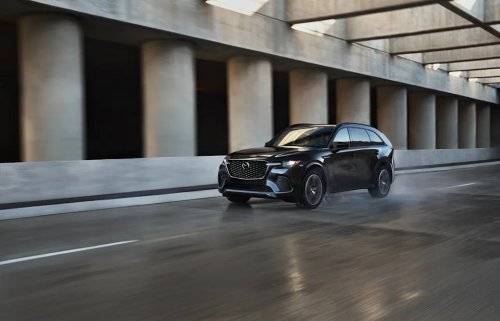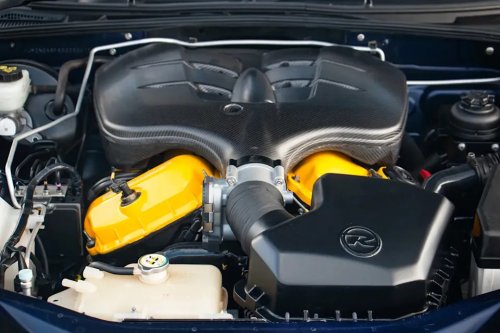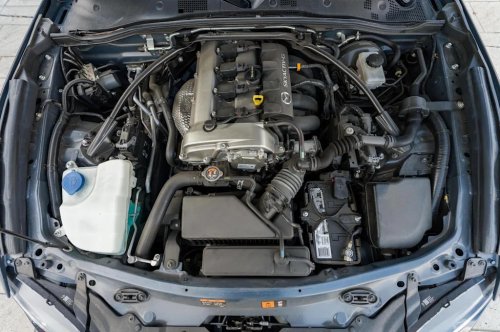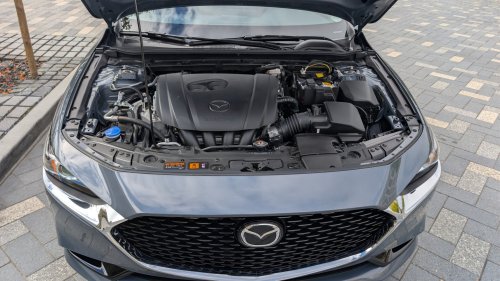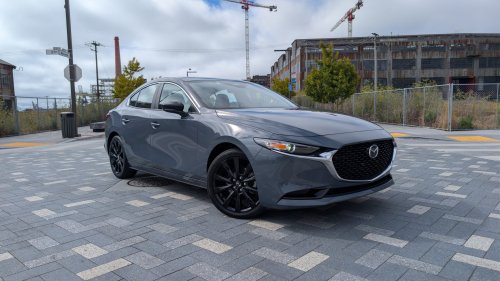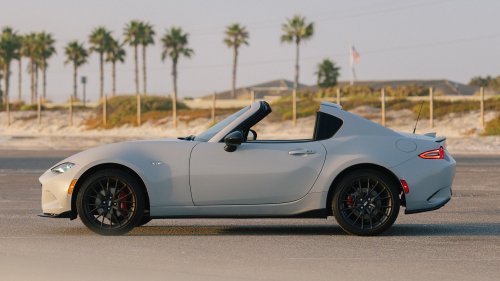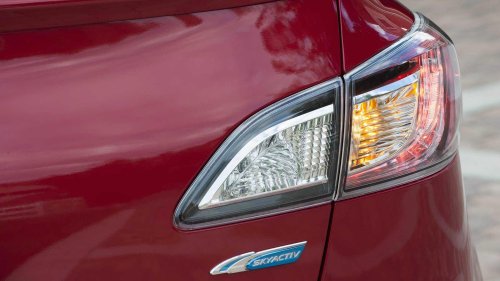
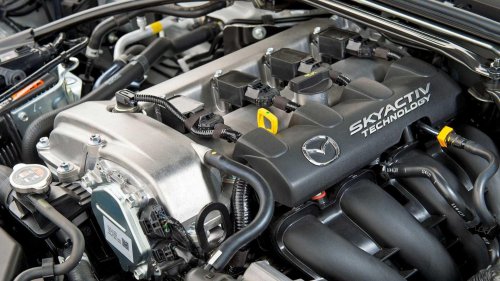
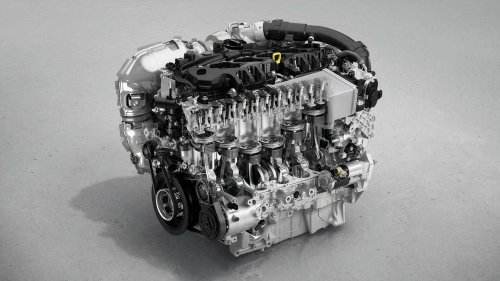
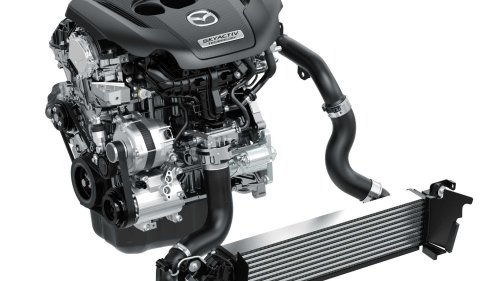
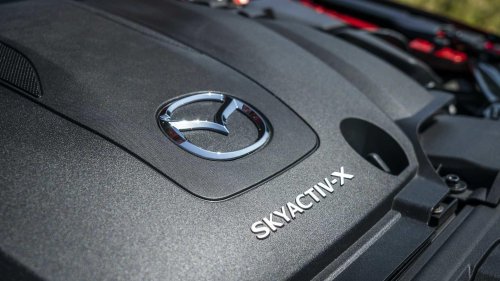



















In the auto industry, going against the grain can result in massive market success or be remembered as a complete flop. Entire design departments can turn over when they back a polarizing design, while marketers hang their heads in despair, thinking of how they’ll recover any lost brand identity. But when the engineering team is behind a major shift, who gets the praise when it works?Mazda has a long-standing tradition of refining internal combustion engines, including its success in making the rotary engine work in road cars. When it comes to piston engines, Mazda also has a few tricks to set itself apart from the rest. The SkyActiv engine debuted way back in 2010 and is still in use today. These engines have garnered supporters around the world among people who prefer practical mechanical function in a market that often praises horsepower output over all else. SkyActiv Tech: Making Waves for 15 Years Mazda In most markets, design makes headlines, and functionality sells cars. However, what makes powertrain engineers drool is how a car makes its power. Anyone can build a high-horsepower engine, but when the objective shifts from brute power to fuel efficiency, it only makes headlines when fuel prices are high.Mazda’s engineers wanted to produce an engine that was efficient yet still fit its enthusiast-centric philosophy, giving the world a fleet of engines under the “SkyActiv” branding. The principles behind it were simple, but the execution was tough. A team of engineers at Mazda cracked the science of making a high-compression gasoline engine that didn’t come with all the quagmires that plague an unrefined system.MazdaThe SkyActiv powerplants' compression ratios of 13:1 to 14:1 were a significant change from the traditional 8:1 or 10:1 found in gasoline cars. Engines with high compression tend to be diesels, which were part of the original fleet of SkyActiv engines for markets outside the United States.However, the tight ignition volume is just the headlining act of how it produces its power. There was no forced-induction or hybrid technology, just an answer to a decades-long problem that, in retrospect, seems quite simple in design. Mazda’s Award-Winning Problem Solvers Mazda In 2011, the engineers and technology behind the SkyActiv engines (specifically the 1.3-liter Demio sold in Japan) received awards from numerous firms recognizing the design. In 2012, the Japan Society of Mechanical Engineers awarded Mazda engineers a medal for their work, and IEEE Spectrum praised the SkyActiv-X’s design when it debuted in 2019.The high 14:1 compression ratio of the SkyActiv gasoline engines caught the eyes of many. The engineers achieved the impressive figure by changing the shape of the piston head and altering the fuel spray, ignition timing, and exhaust header. The higher ratio is better for burning off the fuel in the chamber, creating more complete combustion, boosting efficiency, and providing a more forceful downstroke to make ample power. The walls that other companies hit when developing this tech are pre-detonation or “engine knock”, which is more prone to occur in high-compression engines. To solve it, engineers installed domed pistons with a well in the center, altering how combustion exerts force across the piston head.MazdaHow often and where the fuel injectors spray, and when the mixture ignites, play a significant role in later SkyActiv-X engines, to the point that it received its own acronym: SPCCI. Standing for Spark Controlled Compression Ignition.The system allows the engine to run knock-free at such a high compression ratio. It specifically kicks in at lower speeds, working to shrink the amount of spark and fuel needed for a complete combustion. Moving the exhaust out of the combustion chamber was a new 4-2-1 header that allows for better flow and even returns better mid-range torque in the rev range, according to the Mazda performance enthusiast blog, Corksport.While we didn’t get SkyActiv-X engines here in the US, they made waves in Europe and other markets for their simplicity compared to hybrids and their fuel efficiency. The same goes for SkyActiv-D engines, a similarly designed diesel engine that never made it to the US, save for the one year it could be optioned on the 2019 Mazda CX-5. SkyActiv-X: The Ultimate Game-Changer MazdaThe most advanced engine in the SkyActiv family was the SkyActivX, and it was available in vehicles outside the US for several reasons. The European market faced stricter fuel-economy standards than North America, putting pressure on automakers to find new ways to reduce tailpipe emissions. Where others opted for hybrids and full EVs, Mazda bucked the norm and stayed with combustion engines.SkyActiv-X models sucked in far more air than other engines and used it all, requiring little fuel to expand it. When SPCCI was active, the fuel injector sprayed directly at the spark plug near the end of the compression stroke. This created a smaller, localized explosion of fuel that ignited the other air and fuel in the chamber.However, the system had downsides that Mazda felt would make it unsuccessful in the US market. While more efficient, the SkyActiv-X engine was less powerful than its SkyActiv-G counterpart and was more expensive to produce.The power output actually wasn't very different, with a difference of roughly 8 horsepower and 13 lb-ft of torque. However, the Skyactiv-X would've added a 27% premium over the base engine in a Mazda3. The company reasoned that few American customers would pay that much more for improved fuel economy, while still having less horsepower.This system was far from a flop, but in our eyes, it was destined to fail in this market. Mazda would have been charging more for the same type of engine and forcing salespeople to get master’s degrees in thermodynamics to explain the differences between the two engines without using the word “hybrid” to clear things up.When Mazda revealed the SkyActiv-X powertrain in a Mazda3 Hatchback, outlets reported significant gains in fuel economy over the regular engine, with Green Car Reports noting at the time that 6-speed manual versions achieved 34.6 miles per gallon and 6-speed automatics reached 39.9 mpg. Even with the impressive fuel economy of non-hybrid vehicles, the added cost of optioning the engine in later models and the requirement of 95-octane premium unleaded in the Australian market to achieve peak performance ultimately killed it. More of a Good Thing: SkyActiv-Z is Coming Soon Mazda As the new Mazda’s Skyactiv-Z combustion engines make their way to our shores, it’s important to ask, “will they still get love in an era of hybridization?” Mazda’s lineup already consists of one conventional and two plug-in hybrid models. The addition of a hybrid system has greatly improved the engines' fuel economy, but blending the two will deliver even greater efficiency than we’ve already seen with the full-size CX-70 and CX-90.The goal of these engines isn't to boost power figures. Instead, they are meant to limit the amount of fuel and heat wasted in combustion, building on what they've loved most about the original SkyActiv design. If we’ve learned anything about Mazda in its many years of delivering fun-to-drive small sports cars, we know that they don’t waste their time on things like increasing horsepower or adding weight. That work is paying off now, after all those years of enthusiasts calling for more horsepower, because what makes these engines boring is exactly what’s keeping them around a little longer.