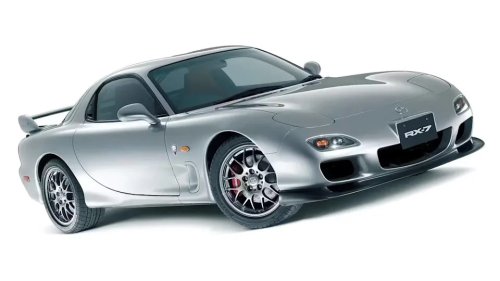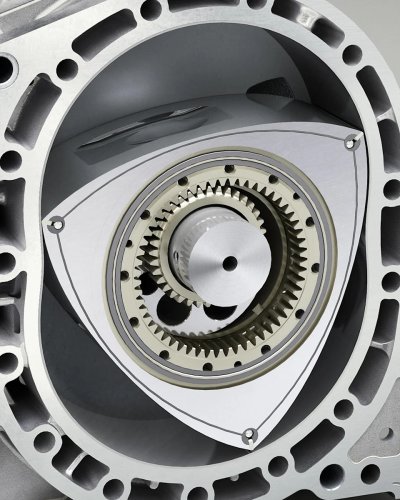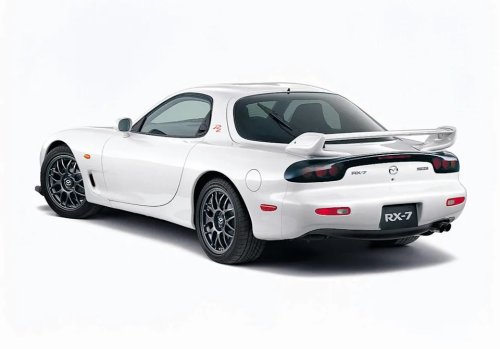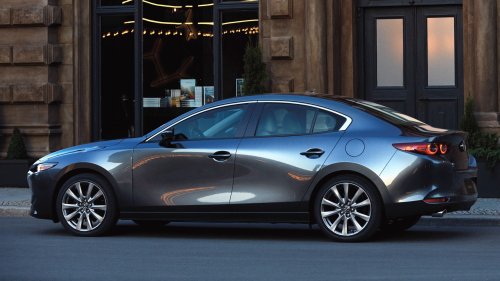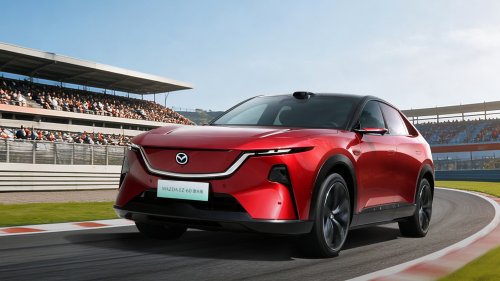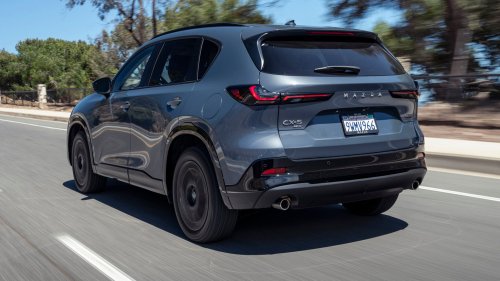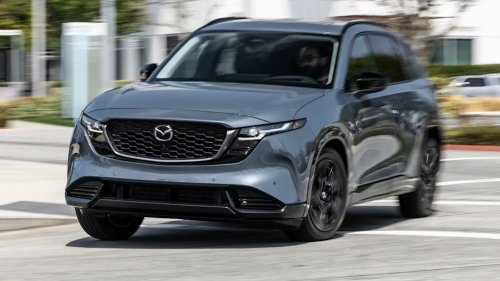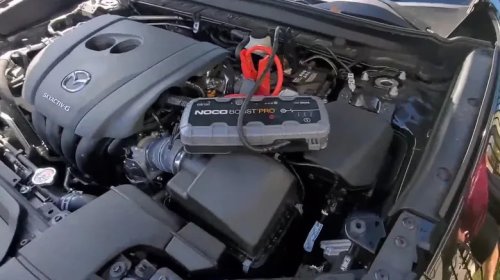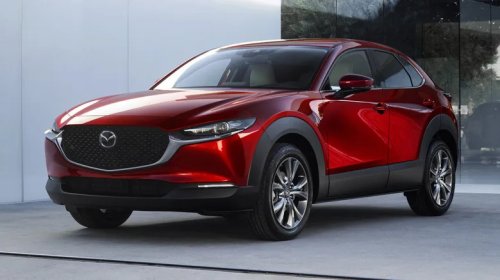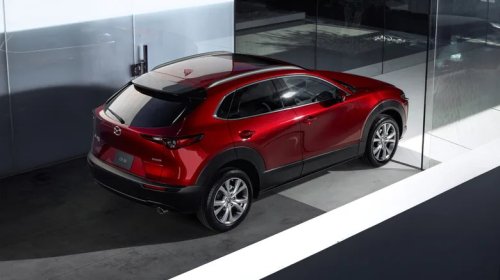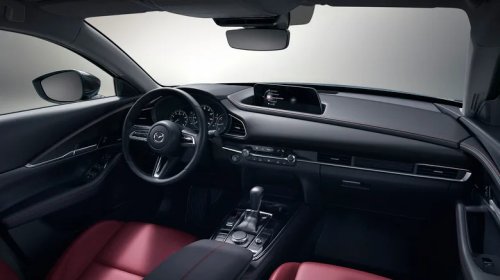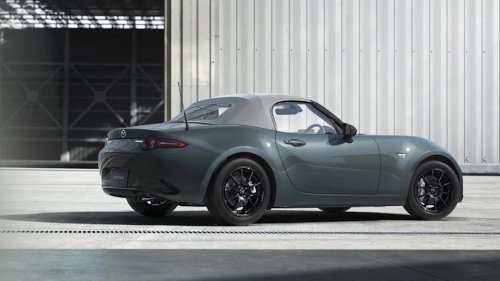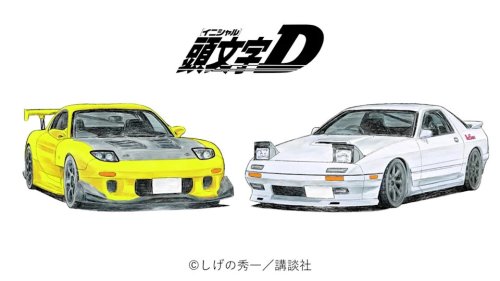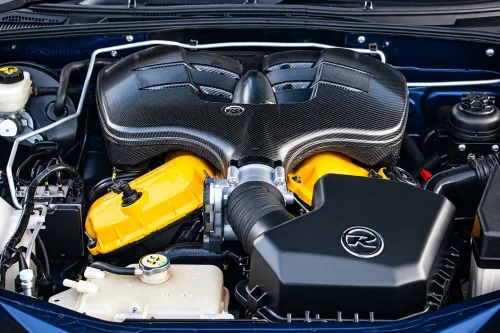
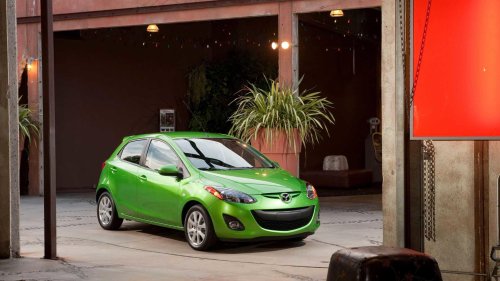
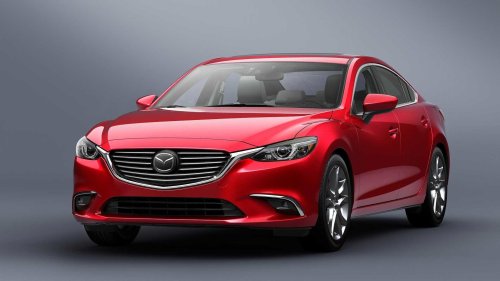
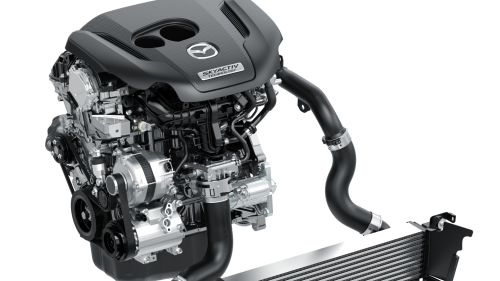
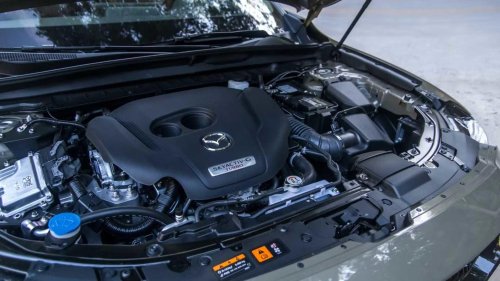

























Mazda has always been the king of quirk, at least when it comes to mass-market automakers. Probably the largest example of the Japanese automaker's outside-the-box thinking is its previously widespread use of the Wankel rotary engine. It saw use in loads of models, the most notable of which were ones like the RX-7, RX-8 and the Cosmo. Currently, Mazda doesn't offer a single Wankel-powered model, although this could very well change soon.At the same time, Mazda has also managed to build both cars and engines that decidedly slipped under the radar. A great example of the latter would be its turbocharged Skyactiv-G engine. It's just a humble, 2.5-liter mill with four cylinders arranged in a straight line, nothing special. However, the motor in question happened to be one of the most reliable, not to mention powerful, four-bangers on the market when it was released. Even today, it's still largely overlooked, despite all of its plus sides. The Skyactiv Family's Origins MazdaThe very first use of the Skyactiv engine family happened back in 2008. At the time, it was simply known as the "Sky-G" engine, and it was installed within the Mazda Kiyora concept car. The Sky mill, a 2.3-liter four-pot, was hooked up to a Sky-Drive automatic transmission. The Sky powertrain duo was meant to provide a good bit of performance, while also displaying a miserly rate of fuel consumption. A 2.2-liter Sky-D diesel engine was also produced alongside the Sky-G iteration. At its core, the Sky-G engine was, in essence, an improved Mazda L Engine.While the official cost was never publicly disclosed, it's reported that Mazda invested a significant amount of capital into the Skyactiv engine program. Not only was it meant to be an all-new engine, it was also meant to become one of Mazda's first modular engines, wherein a single blueprint could be used for multiple engines.In addition, multiple variations of the Skyactiv engine would be produced from the same basic platform at the same factory, significantly reducing costs. The family as a whole would be designed to utilize an extremely high compression ratio of up to 14.0:1 in international markets and 13.0:1 in the US, a chain-driven timing system, and two overhead camshafts.Mazda Fast-forward four years, and the first production versions of the Sky-G engine were hitting the market, renamed "Skyactiv-G" by this point. The first member of the "G" family was a small, 1.3-liter four-banger that debuted in the Mazda 2, also called the Mazda Demio in other markets. It produced just 83 horsepower and an equal amount of torque. The mill was so well-received that five engineers who worked on the project were awarded medals from Japan's Society of Mechanical Engineers.Mazda A year later, Mazda released a 2.0-liter version of the engine, which was slated for use within models like the Mazda 3, Mazda 6, and the Mazda CX-5, among others. In 2013, a larger, 2.5-liter iteration entered the fold, which also saw use within the Mazda 6, CX-5, and the CX-50, the latter two of which still use it to this day. However, up until this point, all Skyactiv-G engines were naturally aspirated, until 2016, when Mazda unveiled the first turbocharged version. The Turbo-ed Underdog MazdaThe brand-new Skyactiv-G turbo, carrying a displacement of 2.5-liters and four cylinders, was first installed within the 2016 Mazda CX-9. Naturally, it shares many of its components with its naturally aspirated counterparts, such as its high-pressure fuel injection system, which is capable of delivering up to 2,900 psi of pressure. It also shares a 4-2-1 exhaust system, and both an aluminum engine block and cylinder head.However, there are quite a few differences, as well. For starters, its entire bottom-end has been strengthened to handle the extra strain brought on by its use of forced induction. Down below, both its crankshaft and connecting rods are stronger than other Skyactiv-G engines', and its block is cast slightly differently with more emphasis put on structural strength. It also goes without cylinder deactivation tech.Mazda To better cope with the stress from the added turbo, Mazda engineers lowered the Skactiv-G Turbo's compression ratio from the usual 13.0:1 seen in its naturally aspirated US-market counterparts to 10.5:1. Depending on the mill's specific assignment, either an air-to-air intercooler (such as within the Mazda CX-5) or an air-to-liquid intercooler (such as within the Mazda 3 and the newer Mazda CX-30) is used.The turbocharger itself is designed to fill multiple roles, in that it's meant to act as a small turbocharger at low rpm, which helps to maximize efficiency and reduce turbo lag under heavy acceleration. The mill does this by re-routing exhaust gases into smaller passages, increasing air pressure, and helping to spool the turbo more quickly. At high revs, a butterfly valve opens up larger air passages, allowing a higher rate of airflow and more boost. Because of its variable nature, Mazda calls its turbocharging system found in the 2.5L Skyactiv-G Turbo the "Dynamic Pressure Turbo".Models Using The Skyactiv-G 2.5L Turbo 2016–2024 Mazda CX-9 2018–present Mazda CX-8 2018–2021 Mazda6 2019–2025 Mazda CX-5 2021–present Mazda3 2021–present Mazda CX-30 2023–present Mazda CX-50 Why It's So Reliable In reality, small, turbocharged engines aren't necessarily known for their reliability, especially when compared to other engines like a naturally aspirated V6 or V8. However, the Skyactiv-G turbo is uniquely capable of lasting quite a long time. Much of its dependable nature can be owed to its bottom-end, made up of forged components, such as its crankshaft, and its strengthened block. Not to mention, its lowered compression ratio, modest turbo boost pressure, and under-stressed nature also lend themselves to longevity.The only fly in the mill's ointment was seen between 2016 and 2019, when its PCV valve had an issue with failing, causing excessive oil consumption. However, Mazda has since rectified the issue.Mazda When it comes to the actual reliability numbers, they speak for themselves. Let's take the 2022 Mazda CX-5, for example, one of the Skyactiv-G 2.5L Turbo's most avid users. According to RepairPal.com, it ranks first out of 26 total mid-size SUVs, and it also sports a below-average estimated annual maintenance cost of about $447 per year. It's also reported that repair severity is below average for the model, with just 10 percent of required repairs being serious. Repair frequency is also below average. How It Stacks Up MazdaThere are tons, and we mean tons, of turbocharged inline-four-cylinder engines on the market these days. It's a safe assumption that virtually all mass-market brands produce at least one, if not several more. That means the market is hot for competition, and the Skyativ-G Turbo needs to be able to hold its own.Take Ford's 2.0-liter EcoBoost inline-four and Volkswagen's EA888 four-pot. Both are around the same size, both produce a similar amount of power, and both are found in mass-market models that occupy the same segments.Ford's 2.0-liter EcoBoost is known for premature failures, most notably of which being its penchant for letting coolant into its cylinders. If this happens, the engine's combustion stroke is not executed properly, and could potentially lead to catastrophic engine damage via bent valves, or worse.The VW mill, on the other hand, is known for a swath of issues, including but not limited to its plastic water pump failing, timing chain tensioner failures, and PCV valve failures causing excessive oil consumption. It Really Is Overlooked Ian Wright/CarBuzz/ValnetThe Skyactiv namesake simply doesn't carry the same sort of clout that other, reliable engines do, meaning the 2.5-liter turbo Skyactiv-G engine is left in the shadows. It's obvious, though, that it certainly doesn't deserve the collective cold shoulder that the automotive market seems to give it.