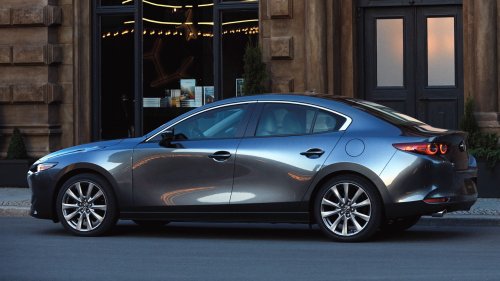
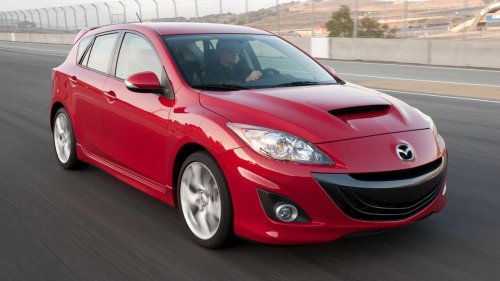
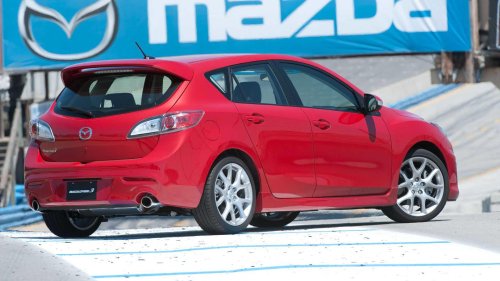
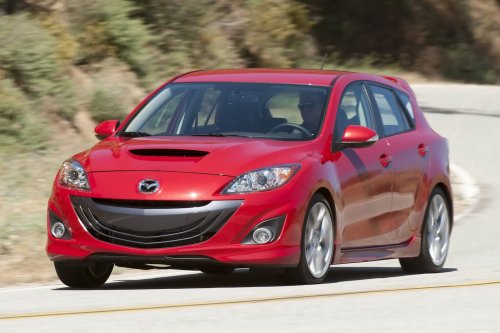
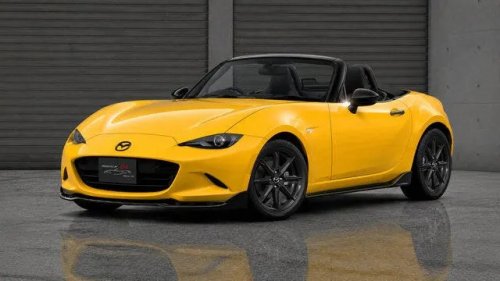
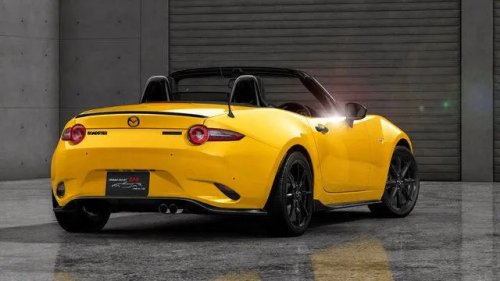
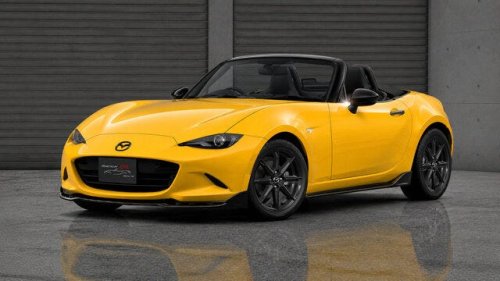
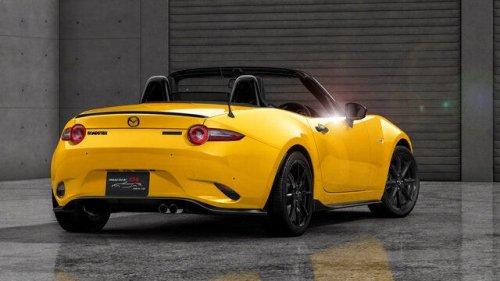
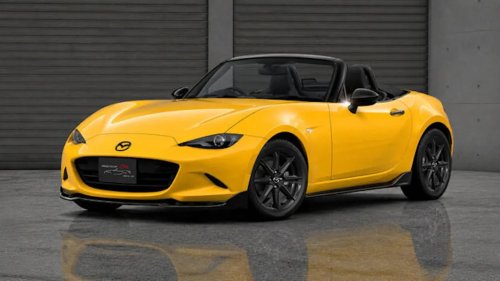
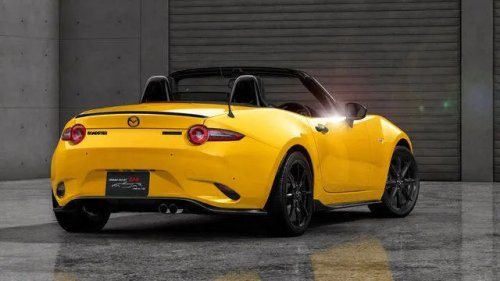
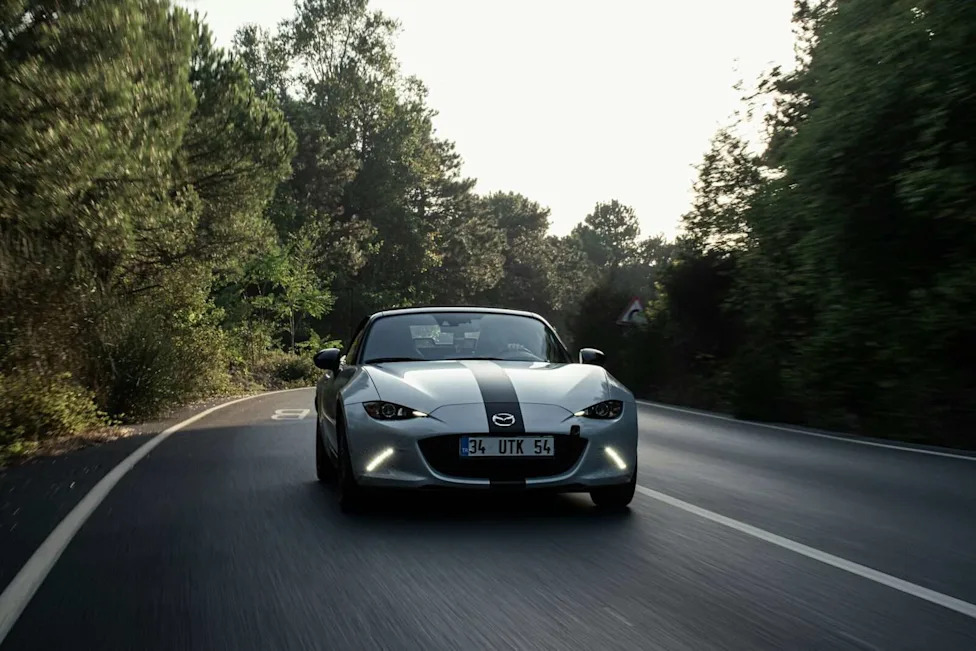
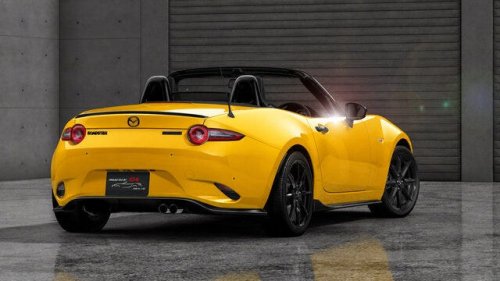
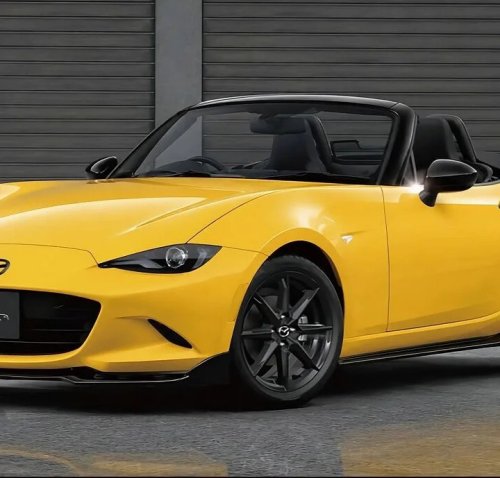
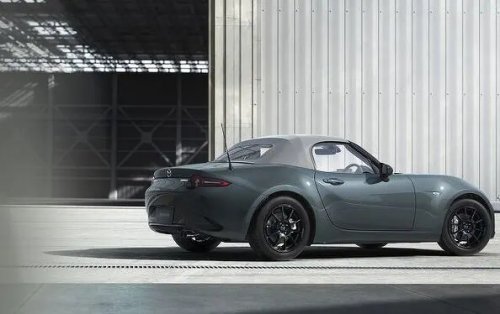
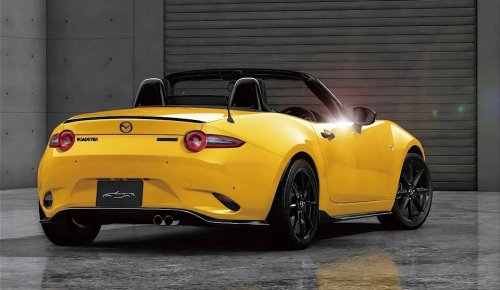
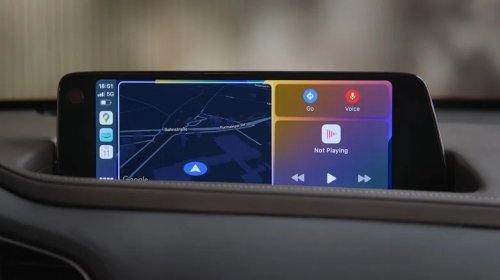
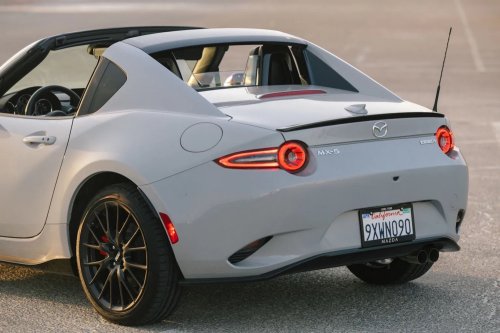
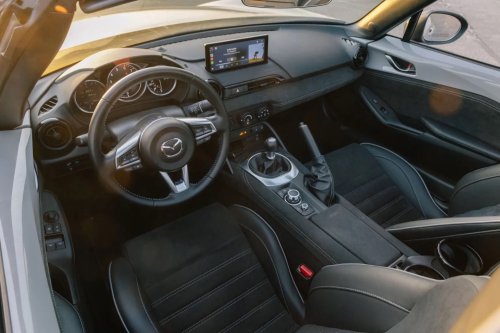
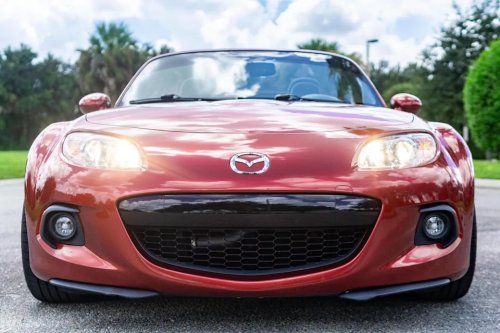
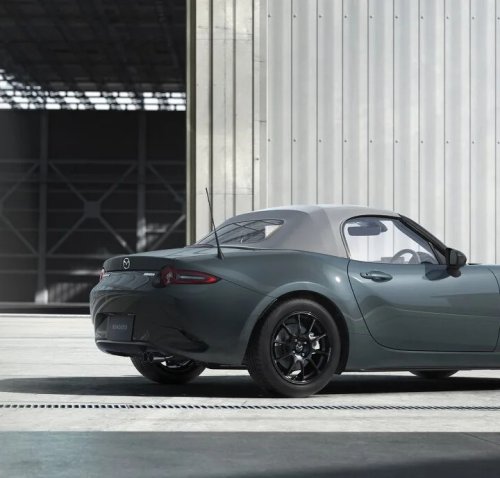
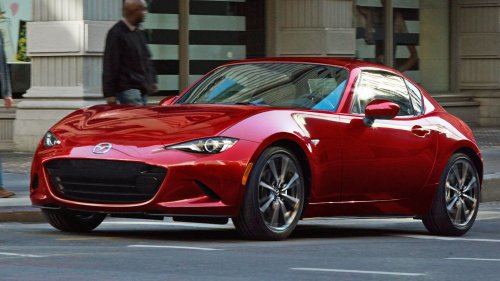
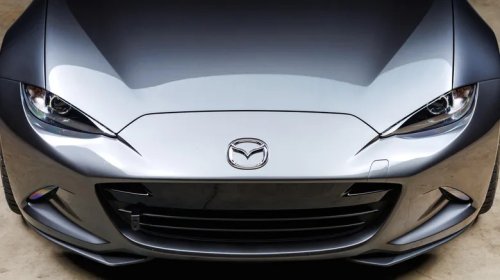
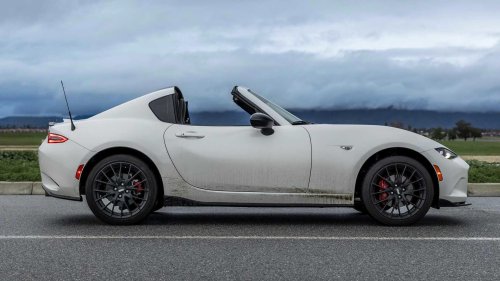
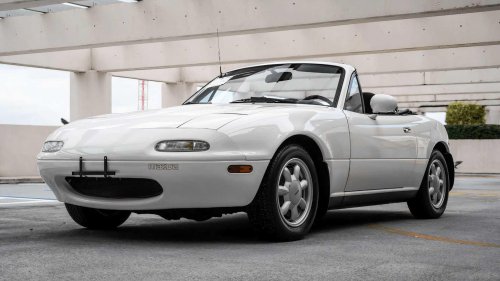
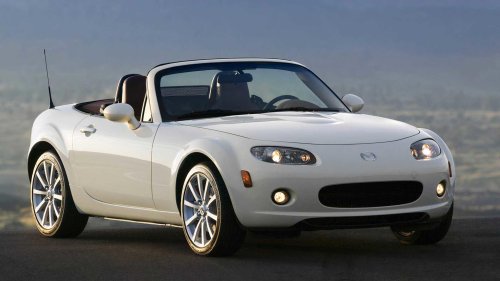
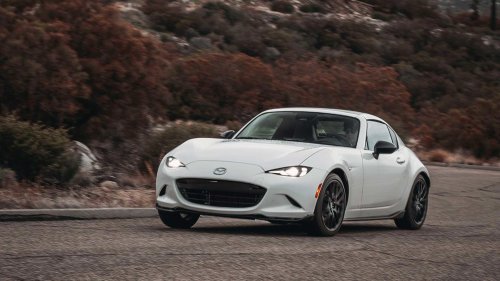
While the Mazda Miata nameplate has survived for an impressive 37 years, plenty of other cars across the industry might tell it to hold their beers. Legends like the Corvette or Toyota's Land Cruiser have been prowling the roads since the 1950s, and the Chevy Suburban goes all the way back to 1935 in its original guise.But many of those other plates refer to very different products today when you take evolution into account. And while the MX-5 Miata is also a different proposition today compared to its 1989 ancestor, it's one of the few to have survived through the decades by using the same basic format. The Modern Miata Is Shorter Than The Original Ian Wright/CarBuzz/ValnetThe original Mazda MX-5 entered production in Japan in April 1989 and arrived in the US the following year. And if you fast-forward to 2026, you can put those two versions side by side and instantly see the connection. The modern version is safer, quicker, more rigid, better equipped, and more sophisticated than the original. But interestingly – and unlike many other vehicles that seem to bloat as they age – the latest Miata is actually shorter than the first version.The first Miata measured 155.4 inches long, 65.9 inches wide, 48.2 inches tall, and sat on an 89.2-inch wheelbase. Today's soft-top Miata is 154.1 inches long, 68.3 inches wide, 48.6 inches tall and now comes on a 90.9-inch wheelbase.This means that the current car is 1.3 inches shorter overall, which is quite a revelation across 37 years, and suggests that Mazda didn't follow the normal pattern of gradual physical expansion. Yes, the car became slightly wider and perhaps more planted, with its wheels pushed further apart, but its total length actually went down. The Mazda Changed Massively In Capability But Not In Mission Bring A Trailer Dynamically, technologically, and mechanically, today's Mazda is really a different beast. The original vehicle had a 1.6-liter, 16-valve inline-four with 116 horsepower and 100 pound feet of torque, but by comparison, the 2026 car has a 2.0-liter SkyActiv G inline-four, which produces 181 hp and 151 lb-ft of torque.That represents an exact 65 hp gain and 51 lb-ft of torque, which is significant in such a diminutive car. Weight-wise, the 2026 soft-top is heavier than the original manual, at 2,366 lbs versus 2,182 lbs. But when you consider that modern airbags, crash structures, infotainment, electronics, driver assistance systems, and larger wheels and tires are in play, that's hardly outrageous.Those numbers become even sharper when you look at power-to-weight ratios. The 1990 Miata represented around 0.053 hp per lb, but the 2026 Miata now projects 0.077 hp per lb – a 45% improvement. That helps the modern car feel more urgent without abandoning the lightweight formula of the original.Back in the day, the early Miata could get to 60 mph in the high-eight to low nine-second range. The modern 181-hp ND Miata can achieve the same objective in the mid-five-second range. That makes it a genuinely quick, lightweight sports car now when compared with the original, even though it's certainly not supercar-fast.Meanwhile, the transmission is also very different. The original manual Miata had a five-speed gearbox, whereas the current one has a standard six-speed manual, with Grand Touring models offering a six-speed automatic. That's one extra gear slot to help show that today's Miata is more of a refined modern sports car than an early-days revivalist roadster. Generational Changes Explain The Modern Miata Mazda On a graph, the Mazda Miata's evolution might look more wavy than linear, as the company learned lessons and wasn't afraid to make corrections where necessary. It started off with the NA to set the initial formula, and this was a car with compact dimensions, pop-up headlights, rear-wheel drive, independent suspension, a naturally aspirated inline-four, and a manual soft top.In the 1990s, Mazda stuck to its basic guns but famously lost the pop-up headlights as factors like safety, aerodynamics, packaging, and styling priorities took hold. The NA initially retained the 1.6-liter engine, but later versions moved on to the 1.8, before the NB appeared and eventually spawned the turbocharged MazdaSpeed MX-5 Miata.The NC appeared for the 2006 model year in the US, and it now had a 2.0-liter engine with a substantially more modern platform. It featured improved braking, larger tires, better suspension geometry, and a trick multi-link rear suspension system. The NC also brought in one of the most noticeable Miata features in the form of a power retractable hard top. This was a roof system that could fold into the same space behind the seats and inside the wheelbase used by the soft-top model.A decade later, the MX-5 RF entered production as part of the ND generation, and this now had a more coupe-like retractable fastback roof. The ND also featured the biggest correction in the Miata history, as the company slimmed the car down closer to its lightweight roots. It kept the 2.0-liter engine, modern structure, and contemporary equipment, but it started to reconnect with that nimble origin story.The ND represented an important correction for Mazda. Some felt that the NC version of the Miata had drifted too far away from the original concept, perhaps due to some of the platform architecture it shared with the RX-8. The NC may have been more usable, but it might not have had the original NA's featherweight minimalist feel. But with the new ND, the driver now sat lower and closer to the car's center, and the vehicle itself was a lot lighter without that heavy roof mechanism.In 2019, an ND2 update brought a 181-hp version of the 2.0-liter engine, while ND3-era updates added further differential, steering, infotainment, and safety refinements. And all of this culminates in today's MX-5, where you're not looking at just a 1990 Miata with extra power, but the result of Mazda learning on the fly and figuring out where it could modernize the car and where it actually needed to hold off. The Chassis Changed From Charmingly Simple To Deliberately Precise Ian Wright/CarBuzz/Valnet The original Miata was more of a touch-and-feel car than something with brute performance. It had a hydraulically assisted rack-and-pinion steering system, rear-wheel drive balance, modest tire sizes, low weight, and compact proportions. It also used independent double-wishbone suspension on the front and rear, and that was one of the key reasons why it felt like a proper sports car. The original formula was quite simplistic, and this set the groundwork for the vehicle's legendary run.Today, the current ND uses front double-wishbone suspension and a rear multi-link layout that also has aluminum components, monotube dampers, stabilizer bars, power-assisted four-wheel disc brakes, and double-pinion electric power steering. And while that certainly reflects a world of emerging technologies, Mazda still had to be careful not to damage the Miata's character during its update work.Take the steering system, for example. If Mazda had just moved directly to electric power steering from hydraulic assistance without careful thought, that could easily have damaged the car's character. Instead, the company took its time to tune the steering system properly so that it would still feel precise, rather than numb.Kinematic Posture Control adds another layer of intrigue. This is a system that stabilizes the vehicle's posture by subtly braking the inside rear wheel during hard cornering, which helps to control body roll. It's a modern solution to an old Miata problem and tackles the twin challenges of movement and feedback in the modern era, so the car doesn't feel loose or underdeveloped. Safety, Features And Price Show How Unusual The Miata Still Is Roger Biermann / CarBuzz / Valnet There is, of course, a huge gap between the safety and general features of an early car and the 2026 version. Back in the day, the original Miata did have a driver's airbag, which was quite novel, but it certainly didn't have modern stability control systems, side impact airbags, blind spot monitoring, lane departure warning, automatic emergency braking, or rear cross-traffic alerts.Today, consumers expect all of those gimmicks on even the most affordable cars, and Mazda doesn't disappoint with its 2026 Miata. In fact, it adds a bunch of tasty extras on some trims, like adaptive front lighting, high beam control, and traffic sign recognition.On board, the cabin’s developmental story tells the same tale. The original Miata had analog gauges, simple switchgear, a manual roof, and a short-throw shifter. Now you're going to find an 8.8-inch infotainment display, Apple CarPlay and Android Auto functionality, USB-C inputs, heated seats, and – on the RF – a roof that can open or close in about 13 seconds.When it comes to the price, there's an interesting twist. In 1990, the base price was $13,800, but using CPI-based inflation figures, that becomes just under $34,500 today. That means that the modern base Miata, at $31,655 including destination, is going to be cheaper in real terms than the original. And this is despite having 65 extra horses, modern safety tech, a six-speed manual, stronger structure, and far more refinement.When you put the 1989 and 2026 Miata side by side, you’ll see that the 2026 car is still a very attractive "driver's" car, while certainly being more capable from a technical perspective. This shows that Mazda never drifted too far away from the original mission – instead, the company managed to retain the launch car's appeal by being unusually disciplined about its progressive journey.




















 +25 others