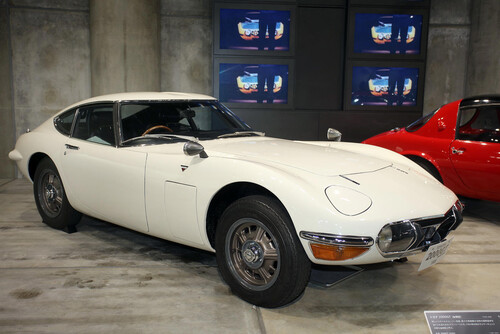
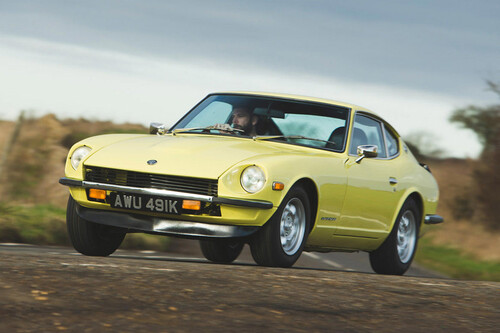
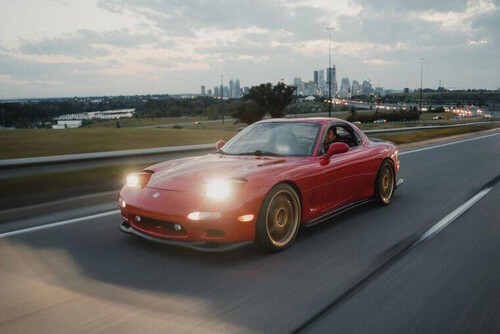
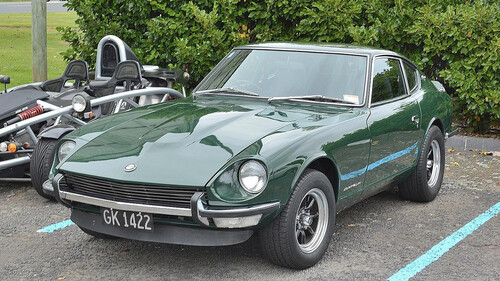
Mazda tends to not need any introductions for most people in the know, so we'll spare it one here, too. But, before it became the company that made rotary engines feel like a religion, it built one low-slung coupe that looked like tomorrow had arrived early. This was the car that was proving that a barely trusted engine idea could survive. It came from a company that still had to convince the world it belonged in the sports car conversation, essentially.Detroit had displacement, Europe had pedigree, and Japan was still shaking off the assumption that its cars were practical first and exciting later. Then Mazda showed up with a smooth, compact, high-revving engine that could have rewritten the whole performance playbook if more people had been ready for it. The RX-7 would eventually become the poster child, but the first real spark arrived earlier. Japan's Sports Car Moment Started Before Most Americans Noticed Bring A TrailerCome the late ’60s, Japan still had to prove it could build more than tidy economy cars. That sounds strange now, because Japanese Performance Cars have since become their own religion, complete with worshipers, arguments, questionable engine swaps, and enough online forum lore to fill a small library. Back then, however, the country’s sports car reputation was still under construction.The Toyota 2000GT had the glamour. It looked expensive, rare, and elegant enough to make even European brands sit up straighter. The Datsun 240Z would soon have the American sales story, giving America a handsome, quick, affordable coupe that felt like a bargain-priced shot across the bow of British roadsters. Those two cars became easy reference points because they were easier to understand. The Cheat Code Bring A TrailerMazda, on the other hand, took the weirder road. Instead of chasing the same piston-engine formula everyone already trusted, it put its faith in a compact rotary engine that promised smoothness, light weight, fewer moving parts, and packaging advantages nobody had fully tamed yet. On paper, it sounded like a cheat code, but it always sounds good on paper. In the real world, it came with the sort of durability headaches that make engineers reconsider their life choices.There’s an important bit of nuance here, because the NSU Ro80 also arrived in 1967 with a twin-rotor engine. The difference is that the Ro80 was a four-door sedan, while Mazda’s rotary pioneer was a proper sports car with a front-engine, rear-drive layout and the proportions to match. Mazda Bet Its Reputation On An Engine Everyone Else Feared Bring A TrailerThe Wankel engine looked brilliant on paper, which is exactly where many brilliant ideas are at their least troublesome. It had no conventional pistons firing up and down, no valve train doing its metallic tap dance, and no big reciprocating parts constantly changing direction. The rotors just spun, giving the engine a natural smoothness and a hunger for revs that made a small displacement figure feel almost misleading.The problem was the seals. The tips of the rotor had to stay sealed against the chamber walls while spinning at high speed, and early rotary engines struggled badly with wear, heat, and long-term durability. Mazda engineers famously battled the marks left inside the rotor housings. To its credit, though, Mazda dug in. The Path To Alt Performance Bring A TrailerThe company had licensed rotary technology through the NSU and Felix Wankel connection, but licensing an idea and making it reliable enough for customers are two very different jobs. Mazda had to solve the part nobody could solve neatly. It worked through apex-seal materials, cooling, oiling, twin ignition, and long-distance durability testing until the engine could handle it all. The company reportedly put hundreds of thousands of miles into development, which feels like the correct response when your new sports car is powered by something that most buyers still consider witchcraft.The payoff was a small twin-rotor engine that let Mazda build a low, light, rear-drive coupe with proportions that felt more exotic than its size suggested. The engine sat up front, sent power to the rear wheels, and helped keep the car compact and clean. This was Mazda suggesting that performance might have another path, one based on smoothness, revs, and lightness rather than brute-force displacement. The Cosmo Sport 110S Brought Mazda The Spotlight Bring A TrailerThe Mazda Cosmo Sport 110S arrived in 1967 as the world’s first volume-production sports car powered by a twin-rotor Wankel engine. Before the RX-7 became the rotary Mazda everyone remembers, the Cosmo Sport was the car that gave the whole idea a shape, a badge, and a reason to be taken seriously.Its 982cc twin rotary engine made 110 hp, which sounds modest, but you need to remember the car weighed roughly 2,050 to 2,200 pounds, depending on specification. Mazda claimed a top speed of 115 mph, a quarter-mile time of 16.3 seconds, and a 0-62 mph time of 8.7 seconds. Tests at the time found those factory claims close enough to avoid the usual “sure, buddy” reaction that comes with optimistic brochure numbers.The Series II arrived with a longer wheelbase, a five-speed gearbox replacing the earlier four-speed, 15-inch wheels, and output bumped to 128 horsepower. That gave the later car a claimed top speed beyond 120 mph, which was strong stuff for a compact Japanese coupe at the time. More importantly, it showed Mazda was not treating the Cosmo as a one-and-done engineering stunt. It was refining the thing.Production numbers weren't massive. There were reportedly 343 Series I cars and 1,176 Series II cars, for a total of 1,519 examples. It's no wonder, then, that it feels almost mythical today, especially compared with the roaring success of the 240Z, which became a far more familiar sight in America. The Rotary Had To Survive Before It Could Become A Legend Bring A TrailerMazda knew the rotary engine needed a lasting impression. Smooth revs and futuristic styling were useful, but durability was the argument everyone wanted to have.So, the Cosmo went racing. Mazda entered rotary-powered Cosmos in the Marathon de la Route at the Nürburgring, an endurance event so punishing that calling it a race almost undersells the abuse. The race was reportedly about 84 hours long, so the cleanest way to frame it is as a multi-day Nürburgring endurance marathon. Either way, it was a brutal test for a new car with a new engine.One Cosmo retired late with a broken axle, while the other made it to the finish and placed fourth overall. That result was key, because it proved that the rotary could survive sustained punishment in a place that has exposed far more conventional cars as overconfident. The Forgotten Mazda Still Feels Undervalued Today Bring A TrailerWith hindsight, it's easy to see that American enthusiasts often overlooked the Cosmo because it never had the same presence as the 240Z or the Toyota 2000GT. It was rare when new, barely exported, and never became the car your neighbor’s older brother bought used after college. Cars become legends through exposure as much as engineering, and the Cosmo spent too much of its life as an object of knowledge rather than memory.That's also why it feels undervalued in the broader Japanese collector conversation. Surviving examples command serious attention (and money: a concours-spec one can run you back in excess of $150,000!). Still, the Cosmo doesn't always receive the same emotional billing as the 2000GT or the same enthusiast warmth as the first Z. It sits in a stranger lane, prized by people who understand what Mazda risked but still obscure enough that casual fans may confuse it for a concept car that escaped from an old motor show stand. What Could've Been Bring A TrailerThe best way to understand the Cosmo is as proof of a future that almost went wider. Imagine if the rotary had become the default path for compact performance cars, with more companies chasing lightness, revs, and mechanical smoothness instead of adding cylinders and cubic inches at every opportunity. Mazda actually tried to build that world. The Cosmo Sport 110S was the first serious evidence that the plan could work. In this world, however, it was the RX-7 that bore the brunt of the spotlight.Sources: Revs Institute, Classic Motorsports, Hagerty, Mazda.