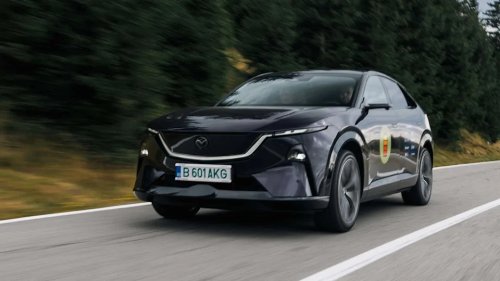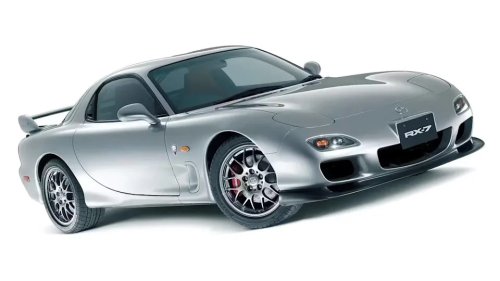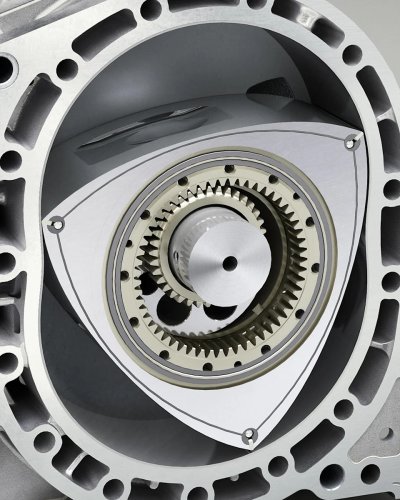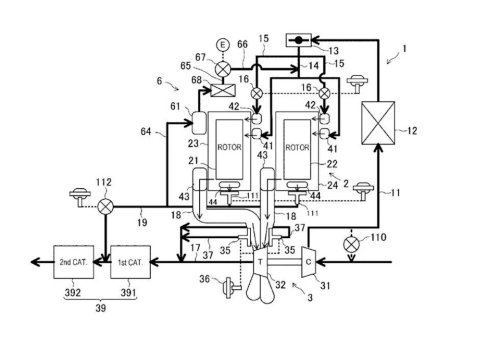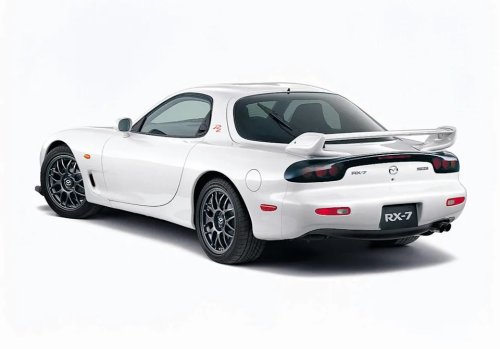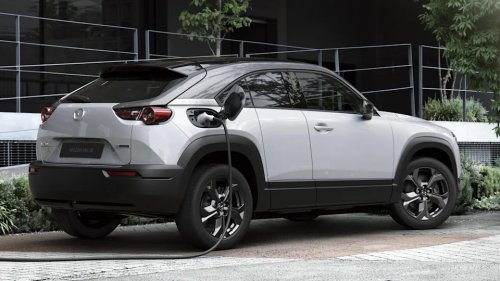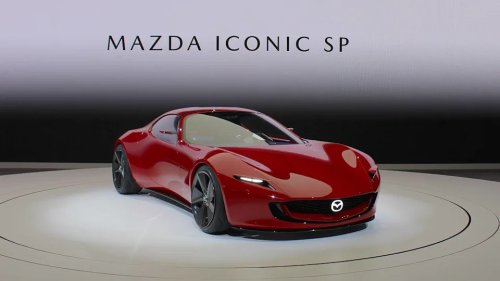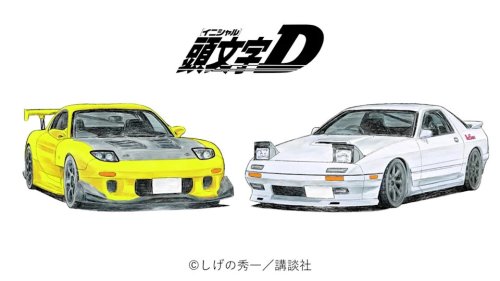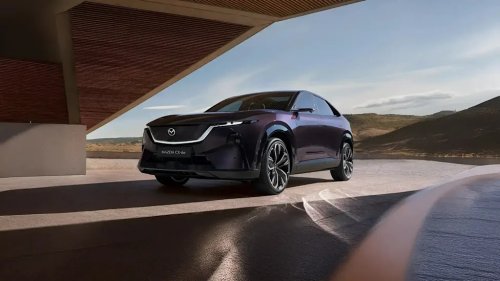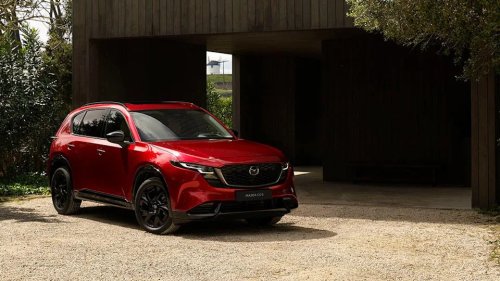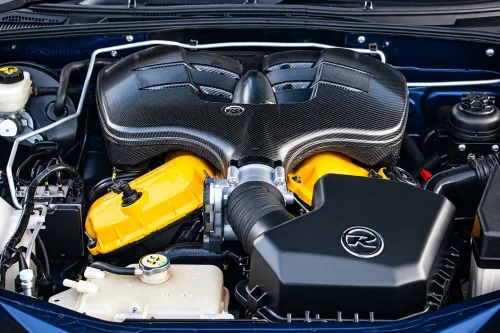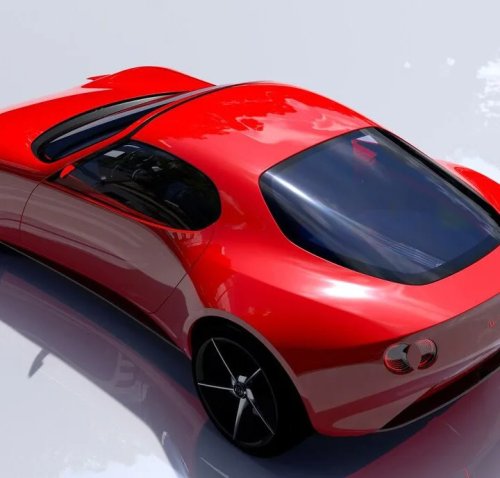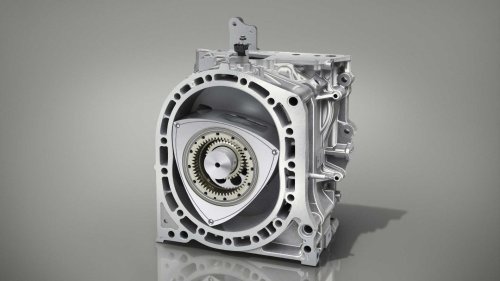
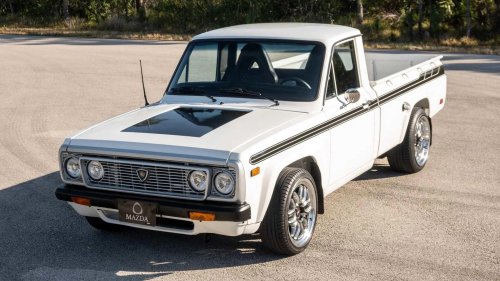
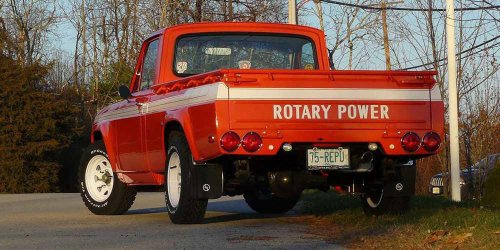
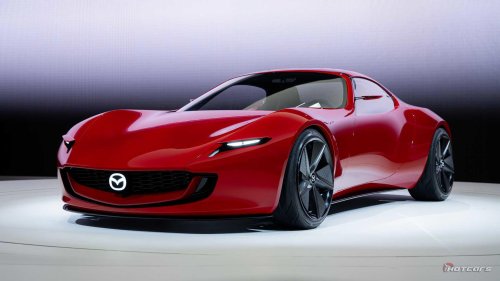



















The Japanese automaker known as Mazda actually has a pretty unique history that involves both rotary engines and trucks. It's the primary automaker linked to rotary or Wankel engines, as Mercedes-Benz and Citroën simply experimented with the idea. I know that you’re primarily used to seeing SUVs from the Zoom-Zoom brand; however, it’s been building pickup trucks since 1931, when the Mazda-Go was introduced. Today, the Mazda BT-50 is currently in production, but it’s not available in the United States.At one time, Mazda got the wild idea to place a rotary engine under the hood of a pickup truck, making a pretty unique model. It’s the only rotary-powered pickup truck in the world! There haven’t been any other factory-built pickup trucks ever sold with a rotary engine. However, it might not be the last. Mazda is still tinkering with rotary engines and designing future pickup trucks, such as the Mazda B2000, that could arrive in America with a hybrid powertrain option. Mazda’s Obsession With Rotary Engines Spans Decades Mazda The 1967 Mazda Cosmo Sport 110S was both the brand and the world’s first production car. It was powered by a two-rotor Wankel engine. It’s a combustion engine that generates crank power via rotation power instead of reciprocating motion, like traditional combustion engines. While it serves as a crucial part of Mazda’s heritage relating to the beginning of its rotary legacy, it also represents the ability to overcome engineering challenges.Development of the rotary engine began in 1961, to the dismay of engineers as they faced setbacks and problems for the next six years. The main problem was related to chatter marks on the inner walls of the housing. Mazda engineers called them "marks of the devil," and they always seemed to appear after testing. But developing seals made of high-strength carbon and aluminum solved this issue. The engine only gained improvements for durability, quality, and refinement from there. While the engine is mostly known for enhancing sports cars with 110 hp, 98 lb-ft of torque, and a top speed of over 100 mph, things got even wilder when Mazda decided to pair a rotary engine with a pickup truck. The Mazda REPU Is The Only Rotary Truck Via: Bring a Trailer In 1974, the legendary Mazda Rotary Engine Pickup (REPU) truck made its debut, and it lives on as a classic today. It was the only mass-produced Wankel or rotary-powered pickup truck. Production of this compact truck ran until 1977. The rotary engine is paired with a four-barrel carburetor and a heavy-duty four-speed manual transmission. Later models gained a five-speed manual transmission; the four-speed is known for being more reliable.The 1974 REPU has a 1.3-liter four-port carbureted rotary engine delivering 110 hp and 117 lb-ft of torque. This was a pretty big deal as it had more power than prominent rivals such as the Toyota Hilux and Datsun. It can accelerate from 0 to 60 mph in about 11 seconds, which was great back then! Also, it features a quarter-mile time of roughly 18.3 seconds. This helped it gain popularity as one of the first sports trucks available.Unique features such as round headlights, a wider stance than B-series trucks, flared fenders, wood grain inserts, pleated door panels, and deep-pile-cut carpet helped the Mazda REPU stand out with eye-catching style. Mazda Continued Working On Rotary Engines Only 16,000 Mazda REPU models were produced. It had a bit of an early grave due to a sales decline and the energy crisis. Also, the Mazda B-Series proved to be a more popular truck with a traditional combustion engine. But this didn’t stop Mazda from continuing to develop rotary engines. They returned to sports cars after 1977. The 12A and 12B were the primary rotary engines used in cars like the RX-7. Also, the Mazda RX-7 was in production from 1978 to 2002.One massive improvement to consider is the introduction of fuel injectors and a larger displacement. Early 12A engines have a thermal reactor and exhaust port to reduce exhaust noise. Also, fuel efficiency was improved. Electronic fuel injection and a passive knock sensor helped boost speed in the 1980s. The 13B rotary engine gained a tuned intake manifold and Rotary Engine Super Injection, and the 13B-T got a divided manifold with a twin-scroll configuration.In 1991, the R26B four-rotor engine was introduced then the 13B-MSRP Renesis gained a multi-port side. Plus, the appeal seal design was changed to reduce friction. But Mazda temporarily stopped building rotary engines in 2008 due to the high cost of meeting increasing efficiency standards and poor fuel economy. Here Are The Mazda Rotary Engine Benefits via Goodwood Mazda’s rotary engines have plenty of benefits for trucks like the Mazda REPU and many sports cars. First of all, they have fewer moving parts than piston engines, meaning they have a much lower risk of catastrophic failure. This also makes them pretty reliable.Rotary engines may have a smaller displacement, but they produce plenty of horsepower for an ideal power-to-weight ratio for high-performance applications.Plus, they’re compact and lightweight for an even better weight distribution. On top of that, this allows for more efficient vehicle packaging.The engines have a high RPM capability for quick acceleration, and due to the lack of reciprocating pistons, they offer a smooth performance with reduced vibrations. These features also improve handling and center of gravity. Each of these features only makes a classic sports truck like the Mazda REPU more desirable. Unfortunately, the high fuel consumption and low torque output are issues that needed to be solved. Mazda Is Still Making Rotary Engines Today Ayesh Seneviratne, Claire-Kaoru Sakai / HotCars After being discontinued in 2008, Mazda returned to rotary engines in 2023. The rotary engine was officially revised for the Mazda MX-30 E-Skyactiv R-RV Plug-in Hybrid. It basically functions as a range-extending generator. It charges the battery instead of directly driving the wheels to solve previous issues with efficiency.Also, the Mazda Iconic SP concept teases a future sports car with a hybrid powertrain and two-rotor design that delivers over 365 hp. Again, the engine acts as a generator for the electric engine. The new rotary engine was developed to use various renewable fuels, such as hydrogen and carbon-neutral synthetic fuels, to further reduce emissions.It’s unclear if this new engine will be available in America or if it will be used in the upcoming B2000 compact truck. However, Mazda’s ‘Rotary Engine Development Group’ is diligently working to advance this unique and historic technology.