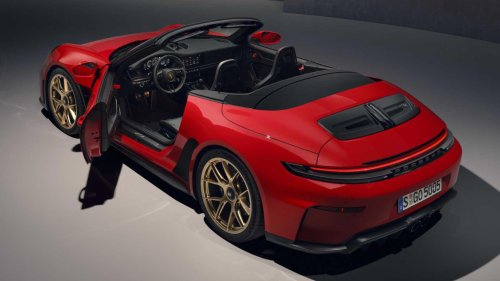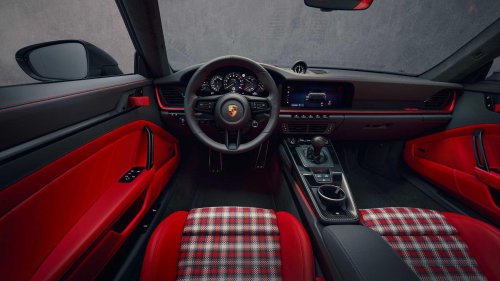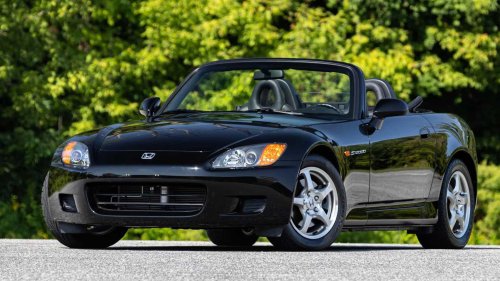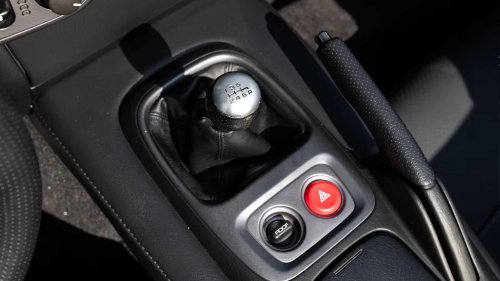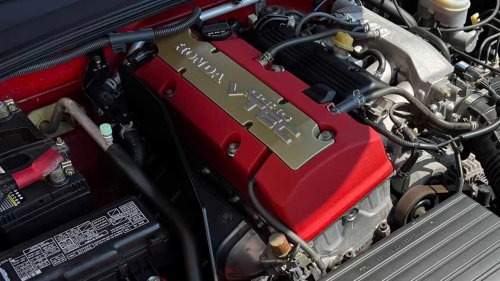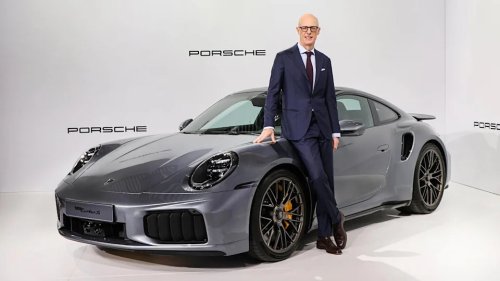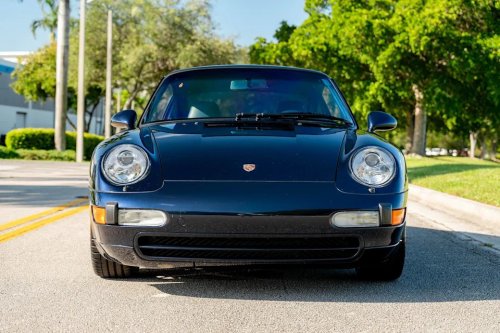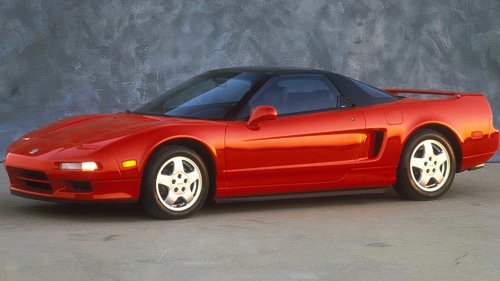
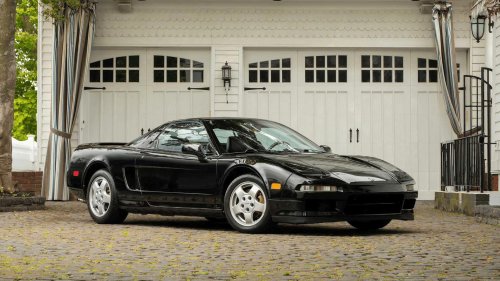
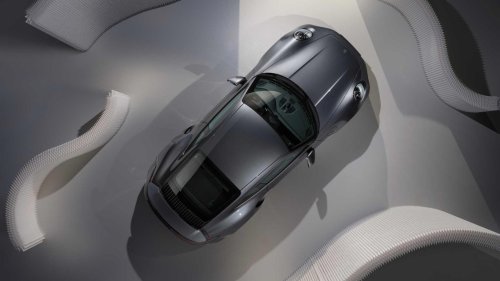
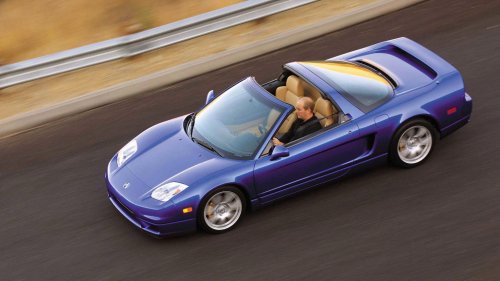
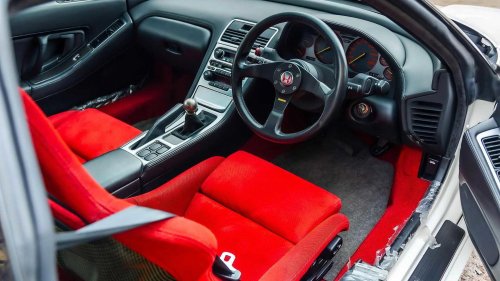


















I bumped into a couple once who were afraid to drive their 2005 Acura NSX. I don’t remember this car being particularly scary. In fact, it’s a dream to drive and the first supercar that could be driven every day. That is because it started more often than not, something none of the Italians could say in the early 1990s when the NSX first went on sale. This encounter happened at a Lotus Owners Gathering in Pittsburg, where the couple had driven their Elise some 250 miles from Michigan to attend. Clearly, they weren’t afraid of a challenging drive. But what kept them from driving the bigger, more comfortable, and arguably cooler car just around town?“The Acura has,” the husband paused. “I think just under 3000 miles.” Puzzled, I asked if that was what he put on it. “No, that’s in total. I don’t drive it.” After I spit my beer out and pleaded with him to enjoy the car more, he returned with candor familiar to most owners of ultra-low-mileage classics. “We’re afraid to drive it. It’s our retirement fund.” Some cars are made to be driven. The NSX is one of them. It lacks the show-stopping looks of others to become permanent art instillations, but for some, they’re quickly becoming garage candy by virtue of skyrocketing values. Today, you can pick up a first-generation NSX for Porsche 911 money. Only one of those will match your 401(k), and it’s not the Porsche. First-Generation NSX: Automotive Purity AcuraGranted, all of Honda’s offerings in 1989 were the poster children of fun-for-the-money sedans and coupes. Adding a mid-engine sports car to the mix is just more of a good thing, which it was. A zingy naturally aspirated 3.0-liter V6 exhaled 270 horsepower and 210 lb-ft., spinning all the way to 8000 RPM in a car that weighed just over 3000 lbs. That redline could be kissed with a five-speed manual, but buyers who wanted their NSX to be just an expensive Accord coupe could option a four-speed automatic instead, which choked the power down 18 horsepower.There is no greater footage of a hot lap than Formula 1 legend Ayrton Senna’s spin in a white over red NSX around Suzuka. If that didn’t do wonders for its reputation, certainly tales of its development would. Engineers stripped a Honda City of its sheet metal and bolted its engine behind the front seats. After turning it into a go-kart, they promptly took turns hooning it around the parking lot before officially launching into building the original HP-X designed by Pininfarina. In 1989, the project would officially become the NSX and go on sale for the 1991 model year until it ceased production in 2005. Hedging Bets: NSX vs. 2026 Porsche 911 Bring A Trailer Comparing an investment into a new 911 with an original NSX becomes objective as terms like “road manners” and “steering feel” are traded for more Wall Street vocabulary like “present/future value” and “effective annual rates.” The return on investment actually holds monetary value, not just which is more fun to drive. No longer is it a question of which is the better car, but which is the stronger investment over time.The cheapest 911 Carrera starts at $135,500, but the more expensive ones tend to hold their value better, or even appreciate, than a bare-bones Carrera. The GT3 range has an entry price of $235,800 while the Turbo S coupe starts at $270,300. For 2026, you can even get a GT3 90 F. A. Porsche, an exclusive model toasting the 90th birthday of Ferdinand Alexander Porsche, designer of the first 911 and the son of Porsche’s founder, Ferdinand Porsche. That model starts at $387,000.Porsche Four years ago, the GT3 started at $161,100, whereas the average sale price of a 2022 model today is $262,467. Compared to the 911 Carrera, which had a base MSRP of $101,200 in 2022 and can sell for $116,625 today if they’ve been babied and optioned correctly. As for the NSX, the rarer, high-performance models follow in similar fashion to Porsche’s GT cars, while base specs and early cars, while on the uptick, still fluctuate like Porsche values over the first few years of ownership. Values of both might seem similar, and the Porsche might sound tempting with extraordinary value retention, but like any investment, always check the data first.Over the past year, NA1 models (1991-1996) sold for an average price of $88,000. NA2 models (1997-2005) went to new homes for an average of $155,000. NSX-T models with a targa roof had an average sale price of $122,690. Post-facelift targa models from 2002-2005 went for around $174,791. Rare versions like the Japan-only NSX-R and US-only Alex Zanardi sell for big bucks when they turn up. The last NSX-R to sell at auction fetched $381,000 in January, besting the most recent sale of a Zanardi edition from 2020 for $282,017. Investment Roadmap AcuraA majority of current and future 911s might not retain values like before with new hybrid technology. The addition of electricity encroaches on Porsche’s sound reliability and raises some concern, but only time will tell. As for the NSX, time has already proven valuable and prices are only increasing. While a Porsche might retain a majority of its value well past half a decade on the road, a first-generation NSX, for the same money, will only go up.Hagerty observed an average list price of $120,000 for current listings of 1991–1996 models and $202,000 for 1997-2005. It used to be that automatic versions went for noticeably less money, but today the lines are blurred depending on mileage and ownership history. Porsche's loss of just 19.5% of value (according to iSeeCars) over the first five years of ownership is great, but since they won’t reach classic status like only a handful of modern ones will, the best bet has to be the NSX, which has been on the uptick since the mid-2010s.Some will pin the blame for tanking new NSX values on its powertrain, but iSeeCars reports rubbery value retention that flexes from a loss of 31% of its value to even appreciating by 6% in some cases. 2022 NSX Type-S models had an MSRP of $169,500 but show up for sale today with an average list price of $242,327. A 42% increase in value after just four years. With Porsches and NSXs, it might as well be the stock market after all. Can I Still Drive my NSX? Broad Arrow AuctionsThere’s a distinct line in the market between preserved NSX’s and ones whose owners packed on the miles. But every once in a while, a pristine, white-gloved, ultra-low mile, original tires, never-breathed-on example surfaces and nudges the average up by a mile. The biggest things that matter in the NSX market are the engine size and mileage, but the latter won’t start to eat into its value unless it’s clocked beyond 50,000 miles.If you’ve got yourself an NSX-R, Zanardi, or any of the other special editions, park it and buy the Porsche. The Acura will pay for it when you go to sell it. If you have a 2005 NSX with 3000 miles on it, I guarantee 3k on the odometer will fetch the same as one with 5k. Though, an Elise is a wonderful distraction from worrying about your 401(k).