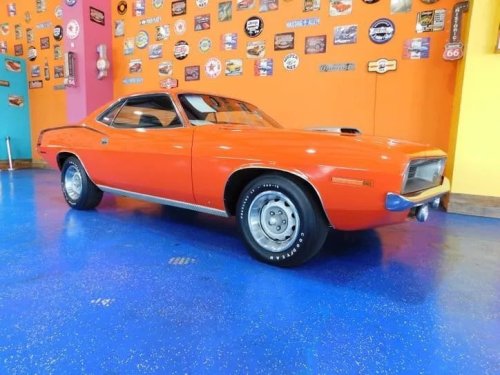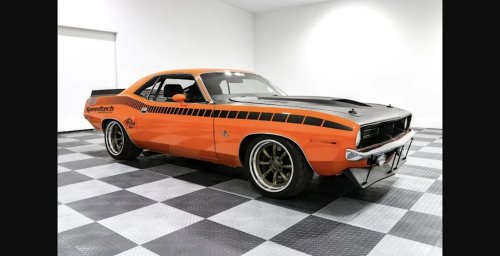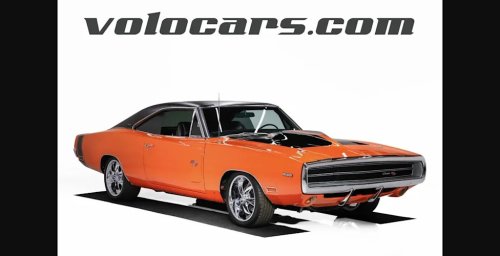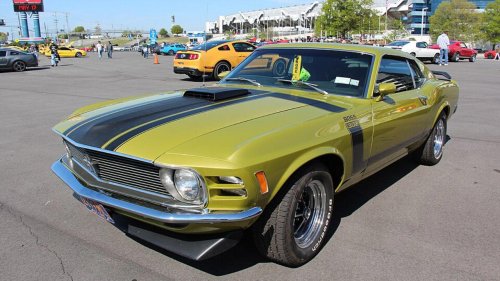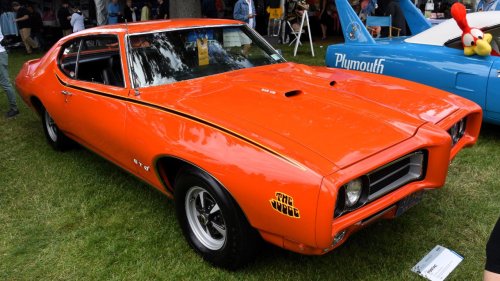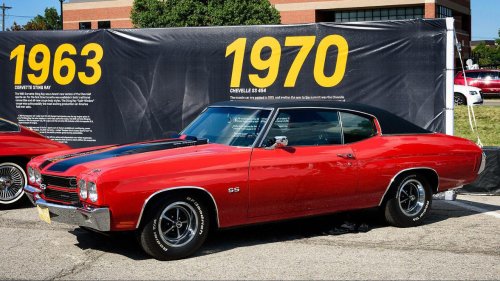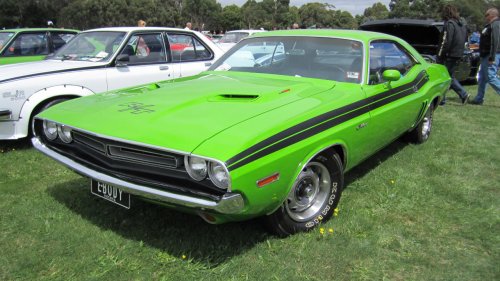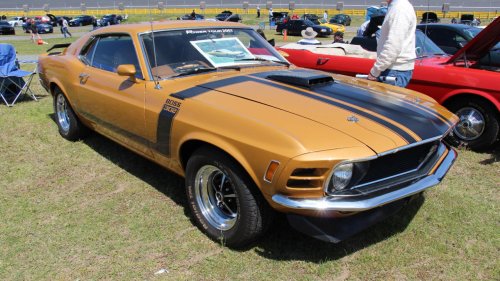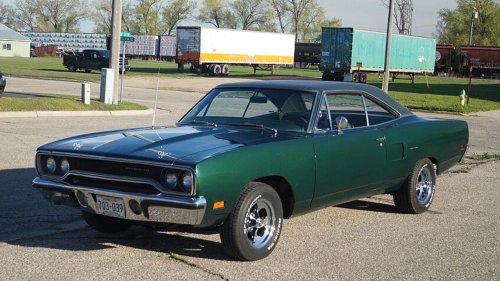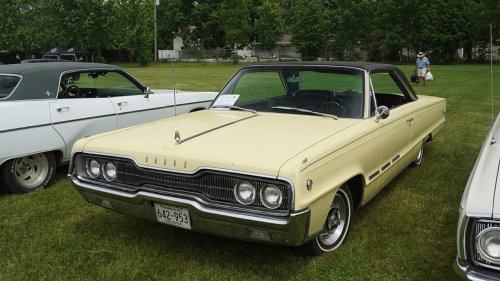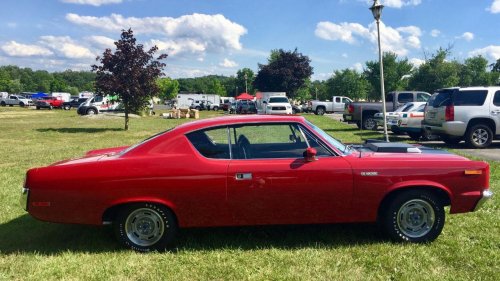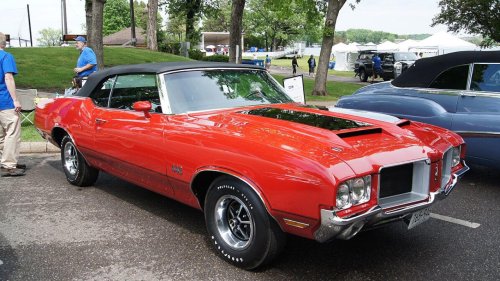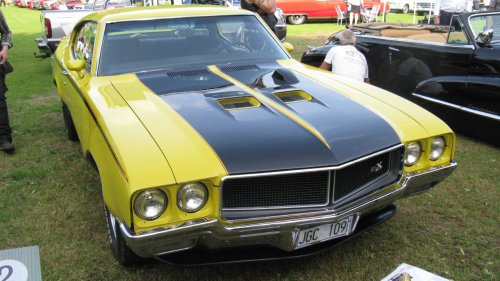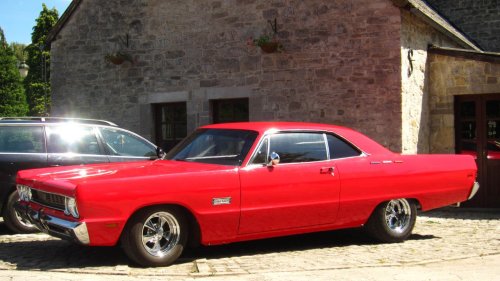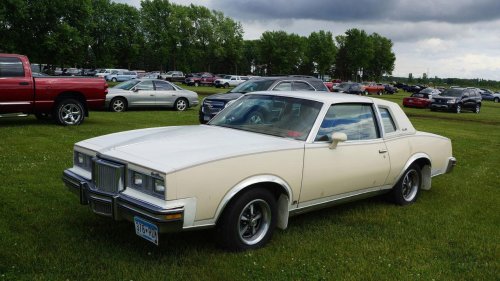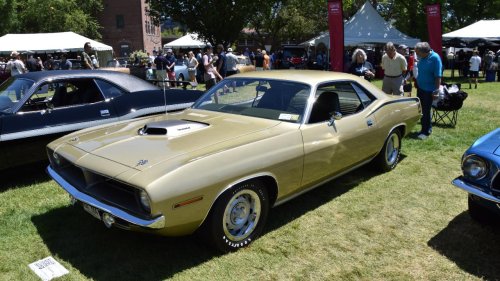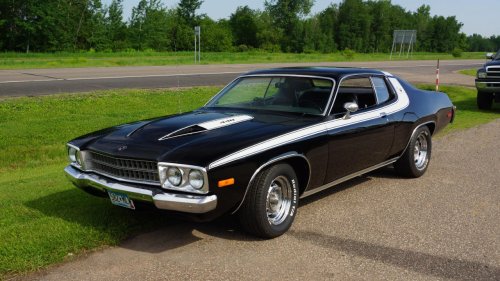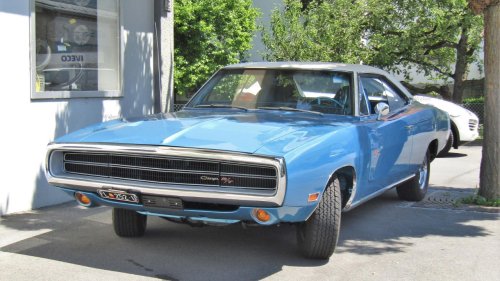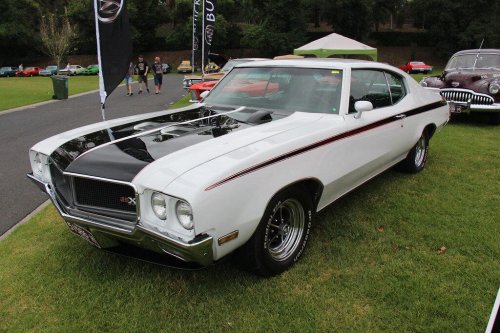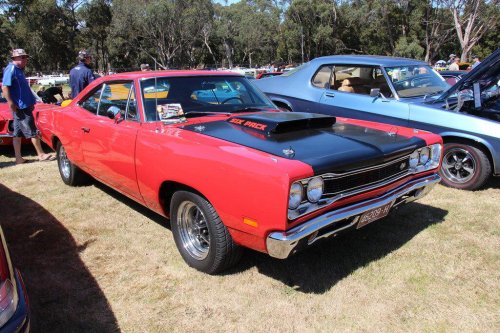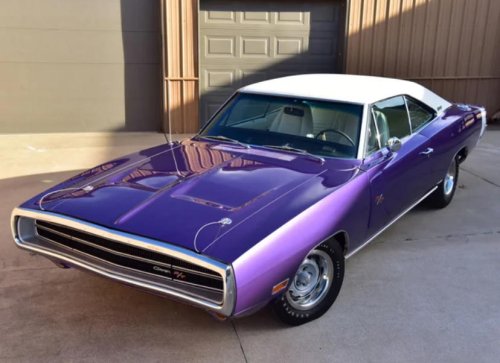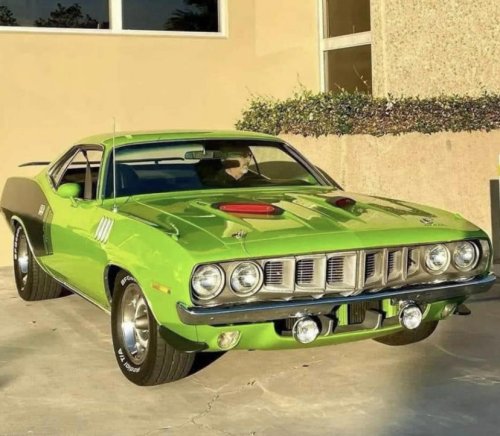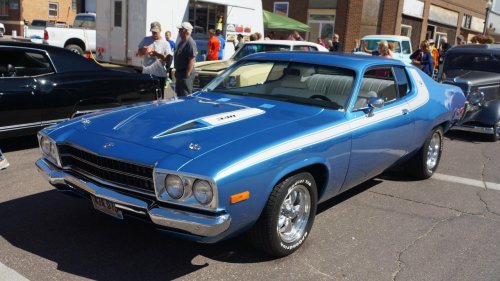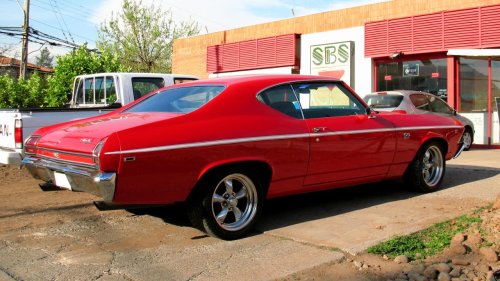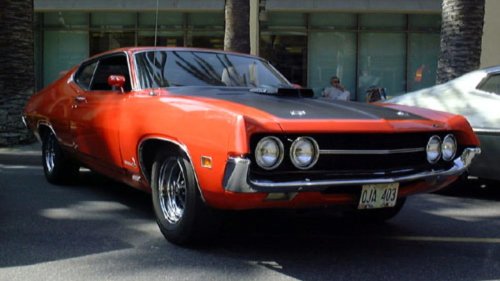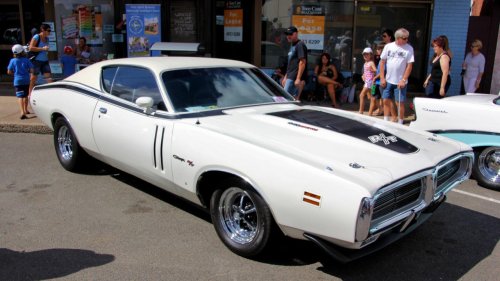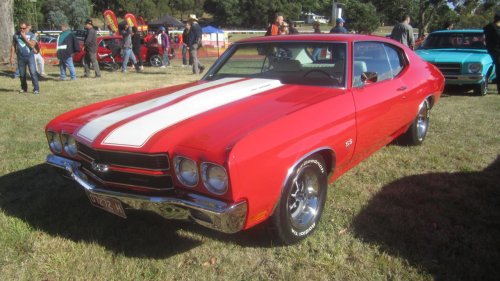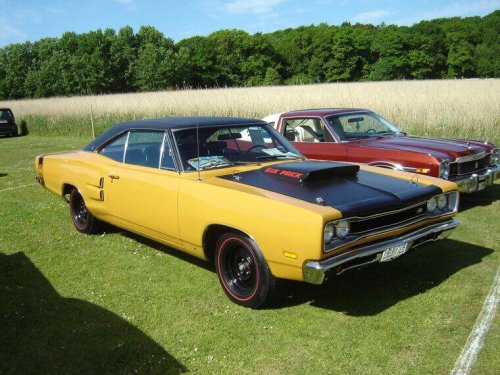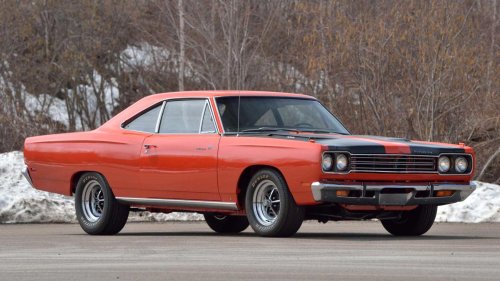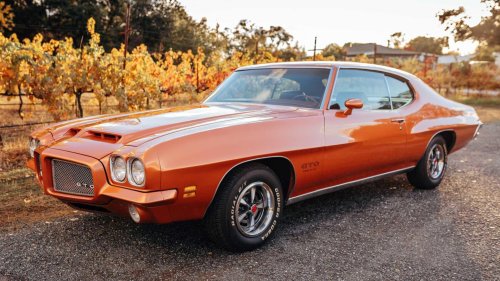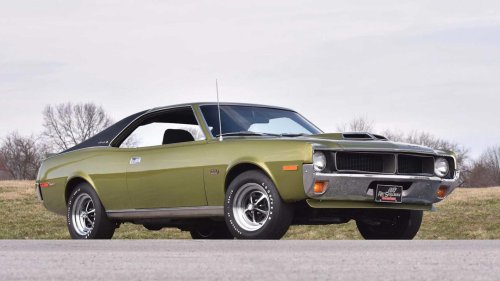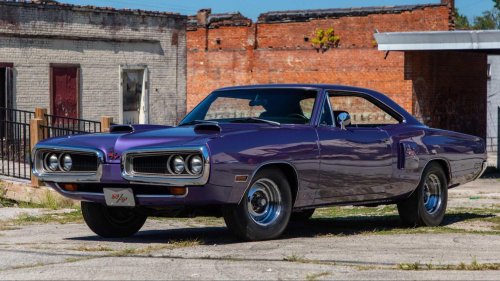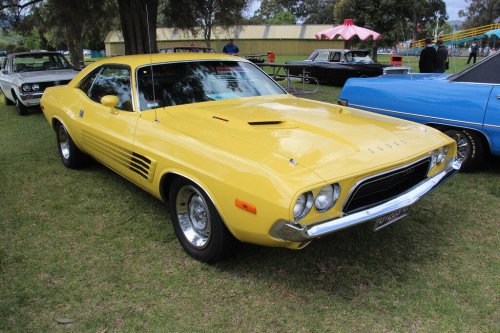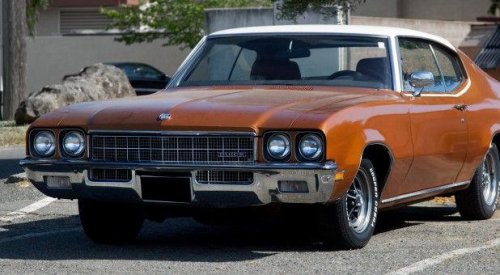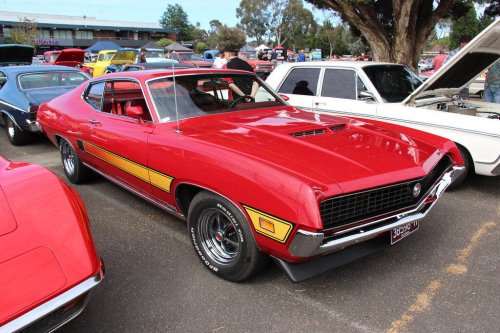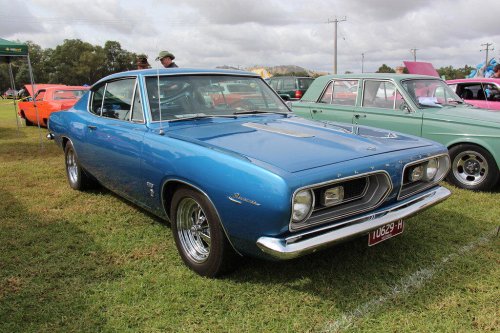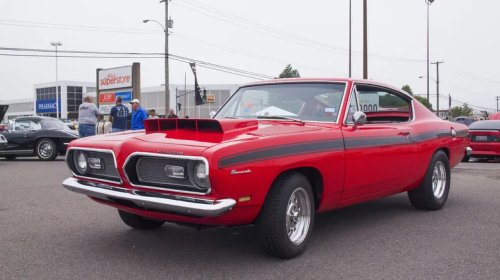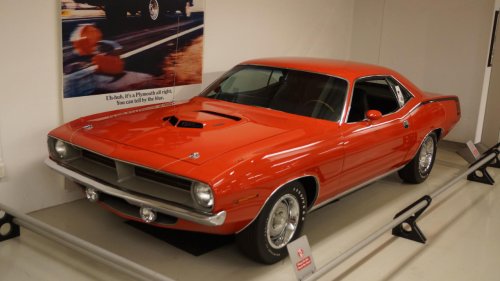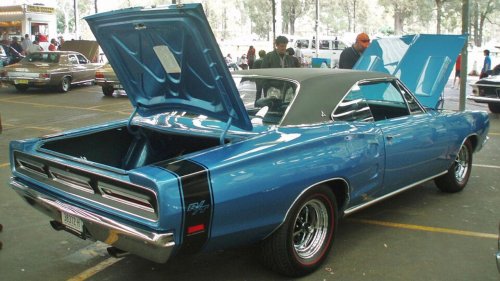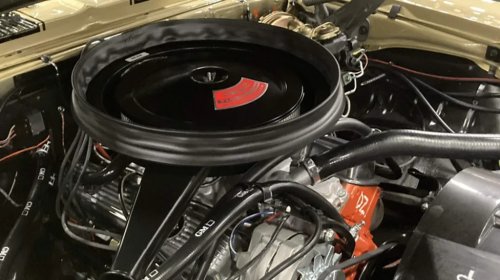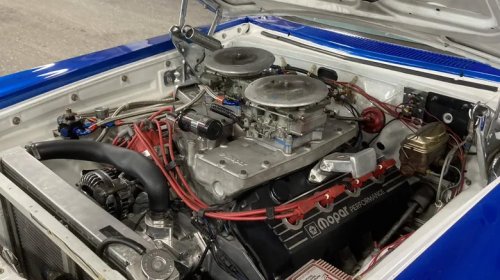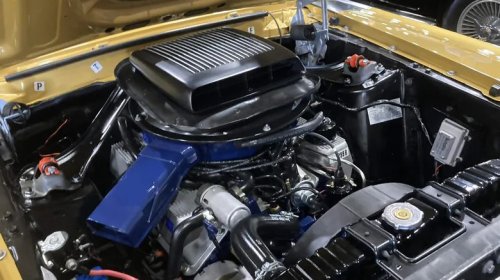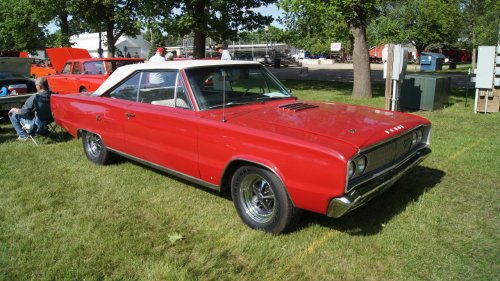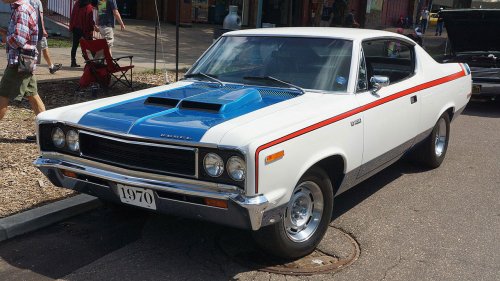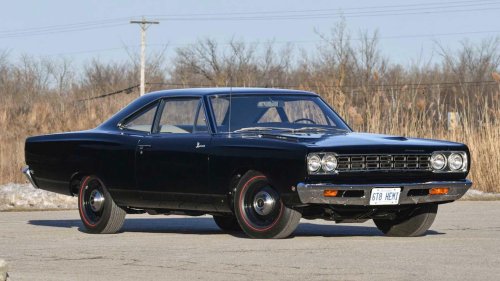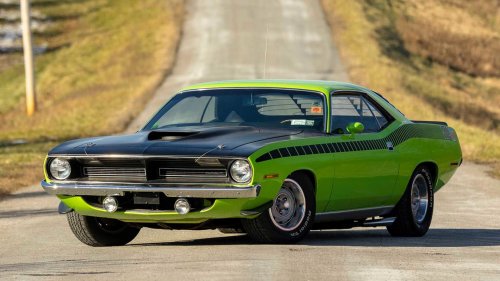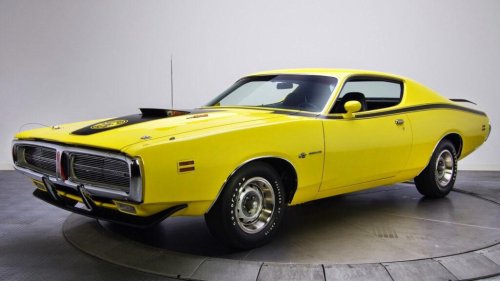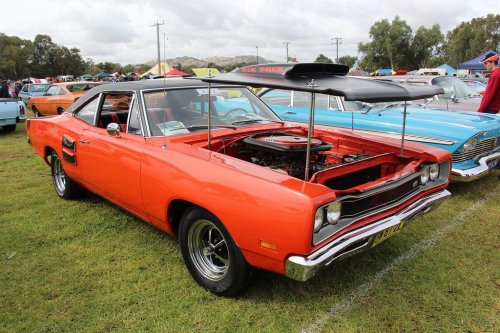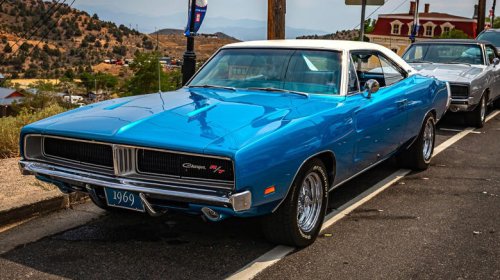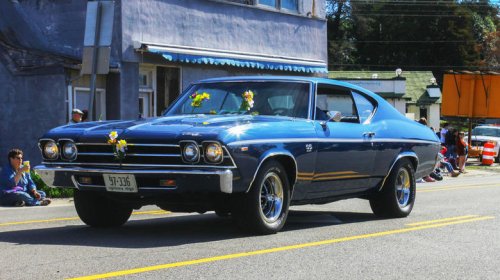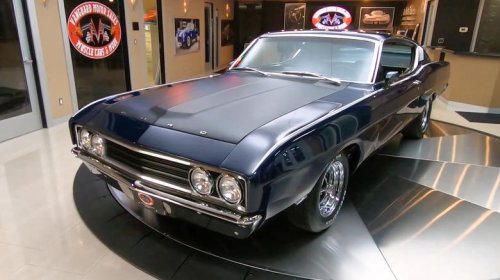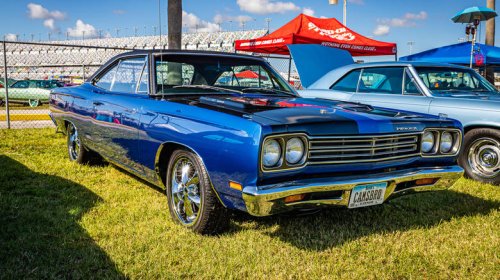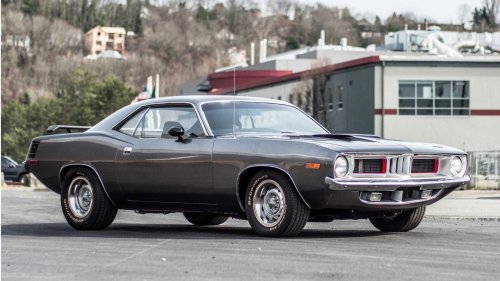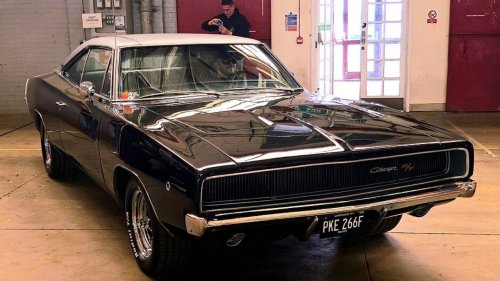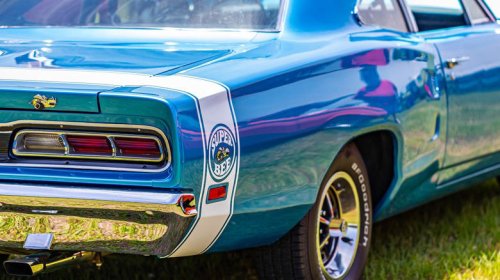
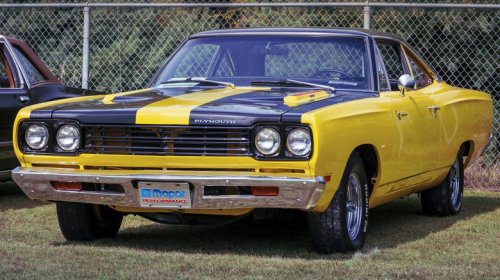
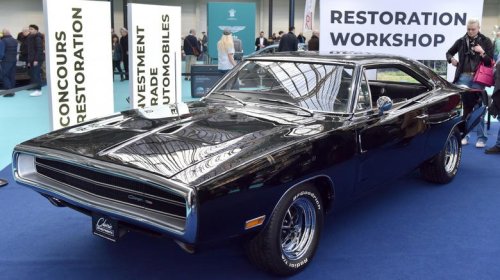
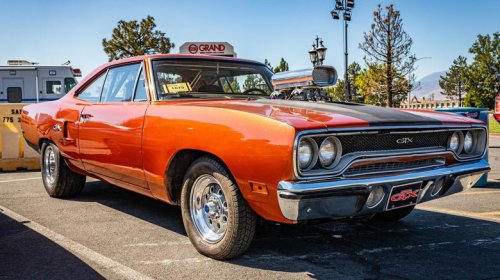



















1969-½ to 1971 Dodge Super Bee 440 Six PackDodge produced the Super Bee, a spin-off of the Dodge Coronet, from 1968 through 1971. The Super Bee upped the ante for the similar Plymouth Road Runner with upgraded accessories like its Hurst Competition-Plus shifter. Built with performance objectives in mind from its inception, powertrain options for the 1968 Super Bee included the 335-horsepower 383 Magnum and the 425-horsepower 426 Hemi. Halfway through the 1969 model year, Dodge began offering the 440 Six Pack as an optional powertrain for the Super Bee.The six-barrel carburetor setup was part of Chrysler's A12 option package. Visual aspects of the upgraded 1969 Super Bee included a lightweight hood attached to the car with a racing-inspired pin at each corner instead of the hinges and latches found on most cars. The unique hood also featured a substantial hood scoop with an all-black paint job. The black paint carried over to a set of matching steel wheels. In 1969, Dodge fitted nearly 2,000 Super Bees with the A12 option, compared to 125 equipped with the 426 Hemi engine. The Hemi's high cost and finicky nature decreased its popularity. The remodeled 1971 Dodge Super Bee shared the same platform as the Dodge Charger. The new model also offered a small block engine option, the 275-horsepower 340-cubic-inch V8.1969-½-1971 Plymouth Road Runner 440 6-BarrelLike its Dodge Super Bee counterpart, the Plymouth Road Runner saw the debut of the 440 Six-Barrel, or 6-BBL, as part of the A12 option midway through the 1969 model year and lasting through 1971. Other engine options through the period include the 335-horsepower 383-cubic-inch V8 and the 425-horsepower 426 Hemi.The early A12 Plymouth Road Runners also featured the black fiberglass hood with functional air scoops secured by four racing-style pins. Its black steel wheels lacked hubcaps, with chrome lugnuts as the only adornment. Plymouth produced around 1,400 440 Six-Barrel powered Road Runners in 1969.1970 Plymouth Road Runners received a makeover that included updates to the grille, hood, front fenders, brakes, and non-functional scoops to the rear quarter panels. The 1971 model year saw the last of the 440 Six-Barrel and 426 Hemi engine options. However, the Plymouth Road Runner would soldier on with reduced horsepower engine options until 1980.1970-1971 Dodge Charger 440 Six PackThe Dodge Charger debuted in 1966, and by 1970, it was at the tail end of its second generation. Second-generation Dodge Chargers found pop-culture fame with appearances in the long-running Dukes of Hazard television show, on the silver screen with the Fast and Furious franchise, and as the first NASCAR entry to break the 200 mph mark on a superspeedway. Interestingly, none of those cars used the 440 Six Pack for power. But Chrysler never meant the 440 to be the superstar of the lineup.The 1970 Dodge Charger offered various engine options, including the 318 cubic-inch small block V8, the 426 Hemi, and the 440 Six Pack. Dodge supplied the 375-horsepower 440 Magnum as the base engine, while those seeking a more subdued driving experience could opt for the 225 cubic-inch six-cylinder. Transmission options included three-speed automatics, three-speed manuals, and four-speed manuals with a pistol-grip Hurst shifter.The third generation Dodge Charger debuted in 1971, the final year for the 440 Six Pack. The new design featured a front grille split by a bulbous chrome nose and a sloping rear window.1970-1971 Plymouth GTX Six-BarrelPlymouth introduced the GTX option for the mid-sized Belvedere in 1967, with the 440 Super Commando engine standard and the 426 Hemi as an option. By 1968, the redesigned GTX was a stand-alone model in Plymouth's lineup.Like most Chrysler vehicles, the GTX got a face-lift in 1970, the generation's final year, including a refresh to the girl and taillights. The new GTX hood had a single central scoop departing from previous years with a narrower scoop on each side of the hood.The following year, 1971, ushered in a new generation of the Plymouth GTX with softer, rounded lines, chrome trim around the grille, and a split chrome front bumper. As the final year of the stand-alone model, the 1971 GTX was at the pinnacle of Plymouth's luxury-leaning performance models. The 440 Super Commando engine came as standard equipment, while the 426 Hemi and 440 Six-Barrel engines remained optional for the 1970 model years.