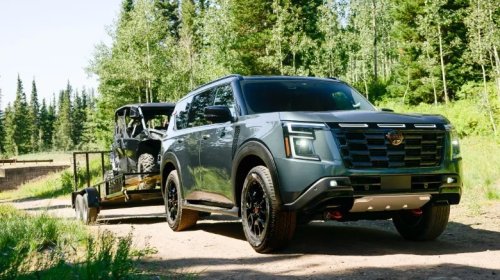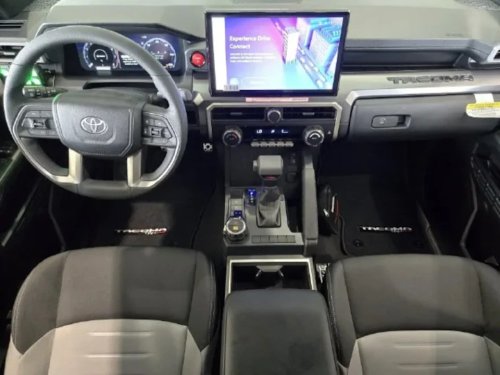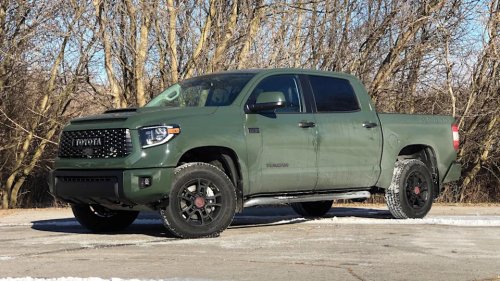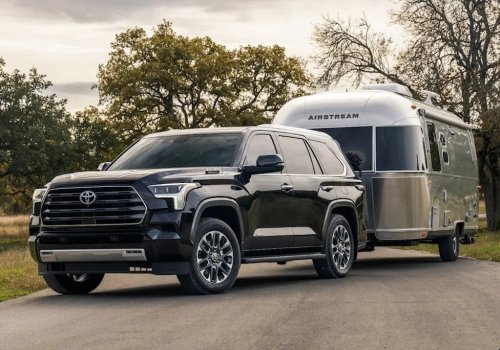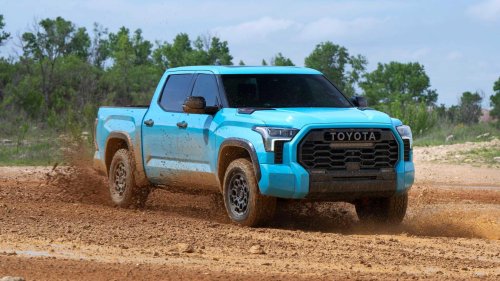
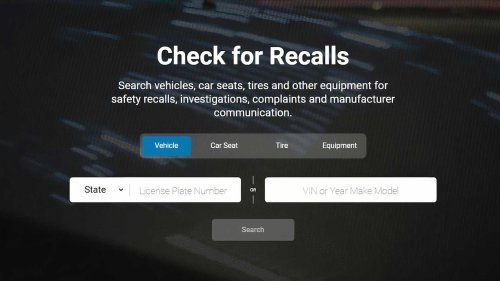
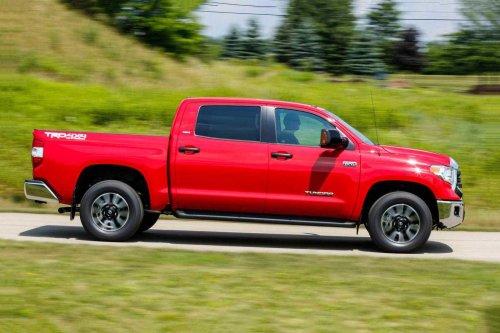
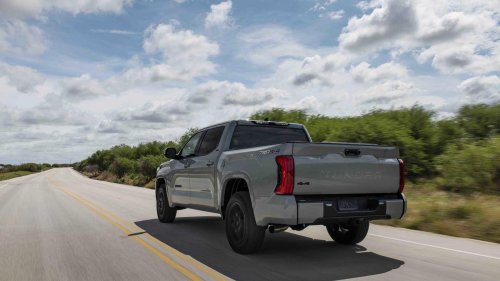
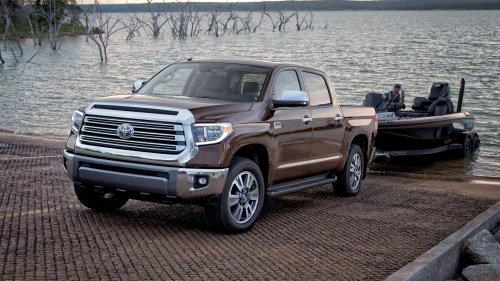
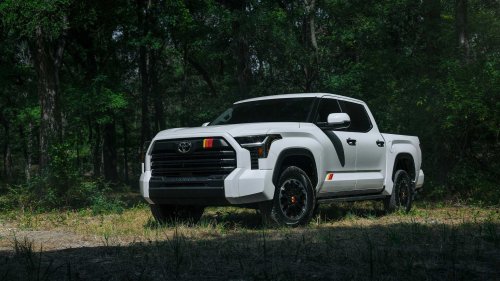
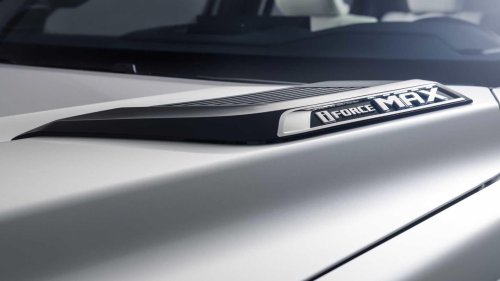



















Toyota isn’t the only brand suffering as it navigates the choppy waters of launching future powertrains for storied nameplates. Ram had to backpedal its rollout of new engines and reintroduce the Hemi V8 into its trucks. In comparison, Ford and General Motors haven't needed to do as much hand-wringing. Throughout the past decade, the Blue Oval and The General have offered a fleet of powertrains in their trucks, making the transition into more fuel-efficient engines easier.As for Toyota, the bulletproof 5.7-liter V8 was kicked off the throne as a twin-turbocharged 3.4-liter V6 engine rose to power in the Tundra and Sequoia. From 2007 to 2022, the i-Force 5.7-liter V8powered the Tundra, Sequoia, and Land Cruiser, as well as the Lexus LX. Once the last V8-powered Sequoia rolled off the line in 2022, the brand ceased production of one of its most reliable engines ever. The V6 engines had a rocky start, but where they rank against the V8 engine now is still the question many are asking. Power and Performance ToyotaSince you're most likely to cross-shop the old powertrain with the new one in the Tundra, let's compare the two. The previous-generation Tundra offered a smaller 4.6-liter V8 on SR and SR5 trims, good for 310 horsepower and 327 pound-feet of torque, but the 5.7-liter eight-cylinder was the more popular motor. Similarly, the new Tundra offers a de-tuned twin-turbo V6 in the SR, rated at 358 hp and 406 lb-ft of torque, although all the hubbub surrounding the high-output version tends to drown out the base engine option.Fuel economy proves to be far better than the old V8, along with towing figures, but the new V6 is 185 pounds shy of the V8’s total payload capacity on trims higher than the SR5. The added weight from extra features causes the figure to plummet. Its better towing performance is thanks in part to its new powertrain and building materials. The old Tundra’s steel construction was, well, porky. The new truck makes good use of its steel frame and aluminum-reinforced bed structure. Recalls NHTSAFans are still singing the praises of the 5.7-liter V8, especially after Toyota recalled 100,000 trucks and SUVs equipped with the i-Force V6 due to debris in the engine. Comparatively, Toyota had to recall almost twice that number of trucks and SUVs from 2012-2014 for an ECM software issue that caused engines to stall or be damaged. Needless to say, both had their fair share of growing pains. To learn if your vehicle is part of an ongoing recall, check the VIN at the National Highway and Transportation Safety Administration’s website: nhtsa.gov. Be sure to stay up to date on all recall information with our recall coverage, too. Driving Impressions ToyotaThe V6 is the more responsive and potent of the two, while the V8 pulls strongly and thumps down the road at idle. The turbos help the V6 make peak torque down low at 2,400 RPM, perfect for pitting itself against the V8's torque curve that crests at 3,600 RPM. Either powertrain wouldn't sound unbothered lugging itself or cargo down the highway, especially if you’re operating the hybrid rig. The 10-speed automatic in the new truck finds gears swiftly and confidently, a wonderful change of pace from the archaic six-speed automatic that, while sturdy, is clunky around town.As for the hybrid powertrain, the electrified system slingshots the truck like it lit a fire under its tow hitch. A 36-kilowatt electric motor helps rocket the truck from a standstill in 5.6 seconds. Sure, there are larger trucks that move much faster, but the Tundra is still plenty quick for the real world.The new Tundra offers ride quality on par with the rest, with a smooth, supple demeanor that floats over craggy concrete. Older V8 Tundras make no apologies for their weight, which doesn’t stack any points against it, but is noticeable over carpet-bombed asphalt.ToyotaPlenty of off-road reviews have been done to compare the old and new trucks. However, certain trims of the new truck come with proper locking differentials instead of the previous system that squeezed the brakes of the spinning wheel to send power to the stuck side.The new Tundra packs a rear multi-link coilover suspension instead of the old leaf springs, officially bringing it out of the Stone Age. The 2021 TRD Pro came with some extra goodies that other trims didn’t, such as locking diffs, detachable anti-roll bars, and Toyota’s crawl control system, but those features have made their way into lesser trims for the new truck. Pricing: Old vs. New ToyotaThere’s never been a better case to apply a bit of Porsche logic to Toyota pickups than right now. If you truly want that V8, you’re in luck because used options from 2018-2021 have an average price of $34,000 to $46,000 for an assortment of SR5, Limited, and 1794 editions. As for used 2022–2025 models, they fetch $40,000 to $52,000 for moderate-mileage examples. Those are going to come with the new engines, so be sure to check if the truck you’re looking at was part of the recall and get it looked at by a mechanic.ToyotaNew Tundras start at $41,260 for the SR with the standard-output V6, followed by the SR5 and the high-output V6 at $46,510. The cheapest hybrid Tundra starts with the Limited trim level at $58,560. The Tonka-toy-like TRD Pro starts at $72,565, while the Capstone follows at $80,800.The new powertrain certainly offers more opportunities to light more money on fire, but when compared to the used market, the Tundra’s famed reliability still has precedent, with average used prices slightly higher than the V8’s of old. Don’t look for Toyota to bring back the V8 like Ram did, but if you wanted a high-performance V8, you weren’t looking at a Toyota in the first place. Is There a Replacement for Displacement? ToyotaBoth the new and old engines have their perks. In the Tundra, Toyota swears by its new engine enough to eliminate the bigger powerplant, offering only three powertrain options stemming from the same twin-turbo V6. Ford and GM might have won with their combined ten engine options, offering a powertrain for everyone, but Toyota has banked on a few sizes fitting all. The twin-turbo V6 is a strong engine, even when an electric motor isn’t wedged between the engine and transmission.The beauty of the hybrid system is torque-fill, picking up where a non-hybrid engine drops off. Despite being down 2.5 liters, the V6 is still able to kick the V8 in the tailgate thanks to a set of turbos and a hybrid powertrain that make more power differently than a naturally aspirated engine would. In short, there is a replacement, and it bodes quite well against what it took the crown from.