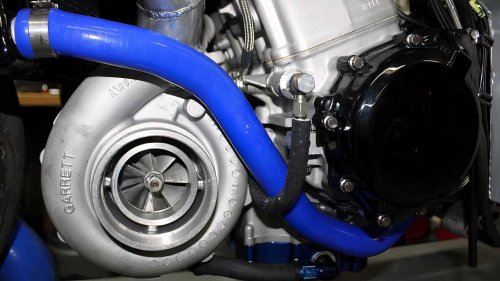
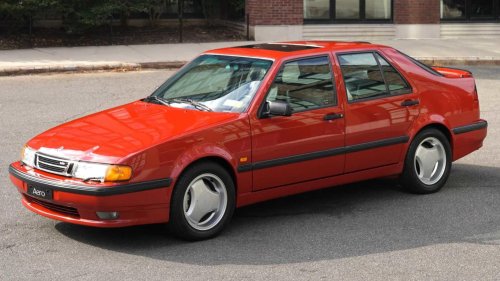
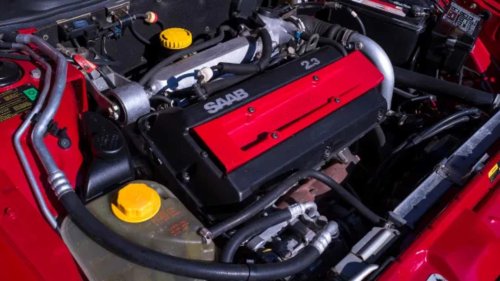
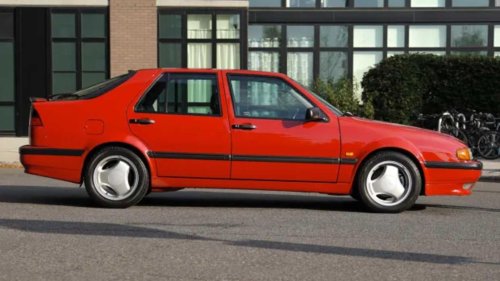
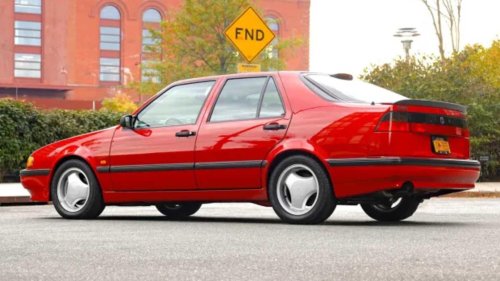
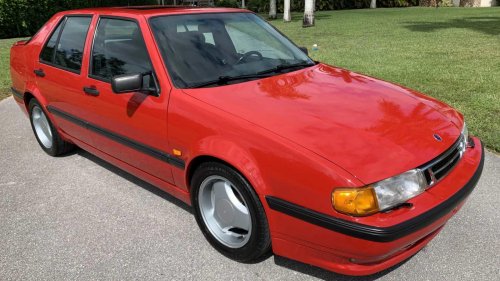
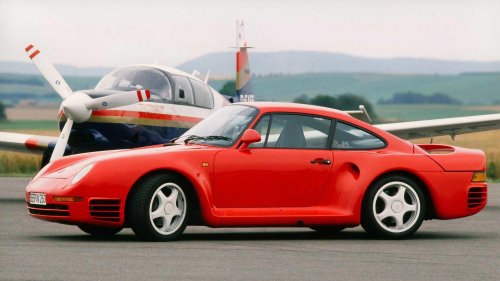
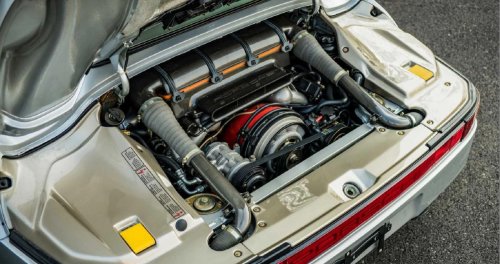
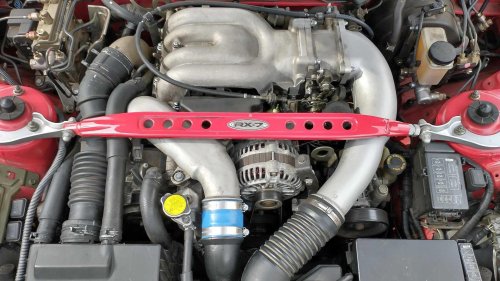
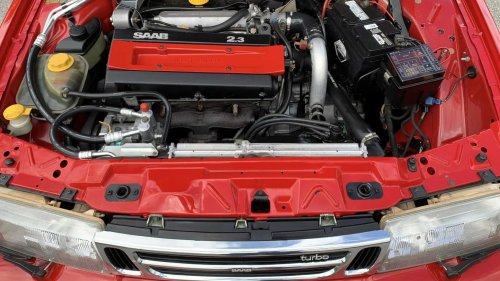
There are certain moments in history where something arrives ahead of its time, years, maybe even decades, earlier than it should have. Like the original Star Wars trilogy from the 1970s. With the pioneering special effects and immense world-building, those films didn’t just entertain, they rewrote the rulebook of film making. And while they were still limited by 70s visual effects technology, nothing else quite caught up for a while.Like Hollywood, the automotive world has also seen its fair share of these moments too, with several cars and innovations over the years pushing boundaries, long before the industry was ready. One of them emerged in the early 1990s, when a Swedish manufacturer quietly developed a turbocharged engine that looked pretty ordinary, but beneath the surface, was doing things very differently, combining performance, intelligence, and durability in a way that wouldn’t become mainstream until years later. Today, it's commonplace with trailblazers like BMW following its footsteps. Turbocharging Was Still Flawed And Inconsistent In The Early 1990s Bring a Trailer By the early 1990s, turbocharging had already proven its potential, but the execution of it was still far from perfect. Many performance cars of this era and earlier were plagued by noticeable turbo lag, inconsistent power delivery, and alarming mood swings, where they’d either be lethargic, or suddenly overwhelming, depending on how boost came in. These early turbo systems just struggled to balance performance with drivability.Since engine management technology simply hadn’t caught up yet, the potential of turbocharging was being held back. Boost control was still relatively in its infancy, and many engines lacked the ability to adapt in real time to changing conditions. Sure, these performance cars were still fast, but they also weren’t smooth, nor did they inspire much confidence either. In short, manufacturers hadn’t fully cracked turbocharging yet, and the gap between potential and real-world usability was still very much there. Why Solving Turbocharging Was More Complicated Than It Seemed Mecum The challenge with turbocharging wasn’t just about eliminating lag or increasing boost, it was also about getting lots of different variables to work in precise harmony for rapid adaptability in real-time. In those early turbocharged engines, airflow, fuel delivery, ignition timing and boost pressure were each reacting independently, rather than as part of one, unified system.This made fine adjustments for better drivability hard to achieve. Make any small changes in conditions, like fuel quality, or throttle input, and you would upset the balance. As such, turbocharged engines could never deliver the smooth, predictable performance their potential promised, which raises an important and intriguing question: was the issue really the turbocharger itself, or the way everything around it was being managed? Saab’s B234R Engine Quietly Solved Problems Others Hadn’t Yet Figured Out Bring a Trailer The turbo engine ahead of its time is the rather overlooked Saab B234R, and on paper, hardly looked a disrupter to the industry. It arrived as a 2.3-liter turbocharged inline-four making around 250 horsepower and 258 lb-ft of torque, while featuring in the Saab 9000 Aero. Though its output was hardly much to write home about by today’s standards, this was still a pretty serious figure for a front-wheel-drive sedan, and enough for a 0 to 60 mph sprint in 6.5 seconds, before reaching a limited top speed of 155 mph.It wasn’t really about having lots of power though. What was more important was how it was delivered. With the B234R, performance came from a level of smoothness, control, and real-world usability that many rivals simply hadn’t mastered yet, and was praised by journalists for combining strong mid-range torque with unusually refined turbo response for its time. As a result, the 9000 Aero managed to avoid the all-or-nothing boost characteristics that defined much of the early turbocars of the era. But how did Saab manage to get this engine to behave so differently than its piers? Saab B234R Performance & Engineering Specs Saab’s Trionic System Was The Real Breakthrough Bring a Trailer The innovative Saab Trionic system was what largely made the B234R so ahead of its time. The most crucial issue prior to this clever feature was the unpredictability that was inherent with turbocharged engines, and was hardly being addressed by the relatively basic engine management systems that most manufacturers were relying on at the time. With Saab, engineers essentially integrated ignition, injection, and boost control functions into one cohesive unit, allowing far more precise control than the fragmented setups used elsewhere. This was a level of integration that had never been seen before.But the real progress was found in Saab’s use of ion-sensing technology, something that still feels advanced even today. Instead of relying solely on traditional knock sensors, the system could actually measure ionization in the combustion chamber via the spark plugs, effectively “listening” to each individual cylinder as it fired.That meant it could detect knock earlier, adjust ignition timing instantly, and safely push higher boost levels without risking engine damage. This wasn't just more power on tap, but smarter power too, delivered in a smoother, more efficient way, and with a level of adaptability that made the B234R feel far more modern than its rivals. With this different approach, Saab quietly solved the biggest flaw of early turbocharging. Making boost wasn’t so much an issue, rather it was how to control it properly. The B234R Was Built To Handle More Than It Ever Needed To Bring a Trailer While the Tronic System delivered the brains, it was the hardware that provided the durability. The B234R was built on Saab’s “H-engine” architecture, but this time heavily reinforced to cope with sustained boost. This meant a forged crankshaft, oil-spray piston cooling, and a bottom end robust enough to handle far more power than it was ever officially rated for. Basically, its capabilities came from being over-engineered, and it was this approach that created a lot of headroom for more performance. Consequently, the B234R became one of those engines with lots of headroom for untapped tuning potential, and many were able to handle 400+ horsepower without catastrophic failure, something few production turbo engines of the era could achieve. Saab’s Understated Approach Is Exactly Why This Engine Was Overlooked Bring a Trailer For all its innovation, the Saab B234R engine never arrived with the kind of fanfare you’d expect from something this advanced. It wasn’t launched in a halo supercar or concealed in aggressive styling that would be enough to turn heads. Instead, it powered cars like the Saab 9000 Aero, a practical, slightly boxy executive sedan that looked more like something your geography teacher might drive. But of course, this understated approach was classic Saab, which historically always leaned more heavily on safety and innovation than attention-seeking theatrics. Basically, that low-key positioning meant much of the B234R’s brilliance flew under the radar. Modern Turbo Engines Now Follow The Blueprint Saab Established Decades Ago Bring a Trailer What makes the Saab B234R engine so significant isn’t just what it achieved when it was new, but how it helped define the blueprint for successful turbocharging today.Building on the same philosophy as the B234R, modern engines from the likes of Audi and BMW now rely on advanced control units to continuously adjust ignition timing, fuel delivery, and boost pressure in real time, and it's this level of integration that Saab pioneered with its Trionic system decades earlier. These features are now considered standard practice, but back then were niche and experimental. Modern systems may be more advanced in terms of processing power now, but the underlying principle has remained the same: control everything, all the time, in a heavily concentrated setup. These Other Turbocharged Engines Were Also Ahead Of Their Time PorscheSaab wasn’t alone in pushing turbocharging forward, and issues like turbo lag were being addressed by other manufacturers. But while these solutions were limited to just tackling specific aspects of performance, it was still Saab’s approach that stood out for how comprehensively it managed the entire system, bringing control, adaptability, and usability together in a way that was still uncommon at the time.Via Mecum Auctions The Porsche 959 twin-turbo flat-six was introduced in the mid-1980s, and used a sequential twin-turbo setup to effectively eliminate lag, a problem most manufacturers were still struggling with at the time. This meant a far smoother and more linear power curve than typical turbocharged engines of the era.C0rbin99, via Wikimedia Commons Then there’s the Mazda 13B-REW found in the Mazda RX-7 FD. This also featured a sequential twin-turbo system, but was also praised for being compact and lightweight. This unit was able to deliver strong performance, while also maintaining the high-revving character of a rotary engine. The Saab B234R Represents A Forgotten Turning Point In Turbocharged Engine Development Bring a Trailer The Saab B234R is a forgotten turning point in turbocharged engine development, approaching performance from a completely different angle. It was hardly the most powerful turbo engine around, and nor did it chase class-leading boost figures either. Instead, it quietly focused on how turbocharged engines should actually behave in the real world, prioritizing control, consistency, and adaptability over making headlines. It also successfully anticipated the shift that would eventually define a successful turbocharged engine.