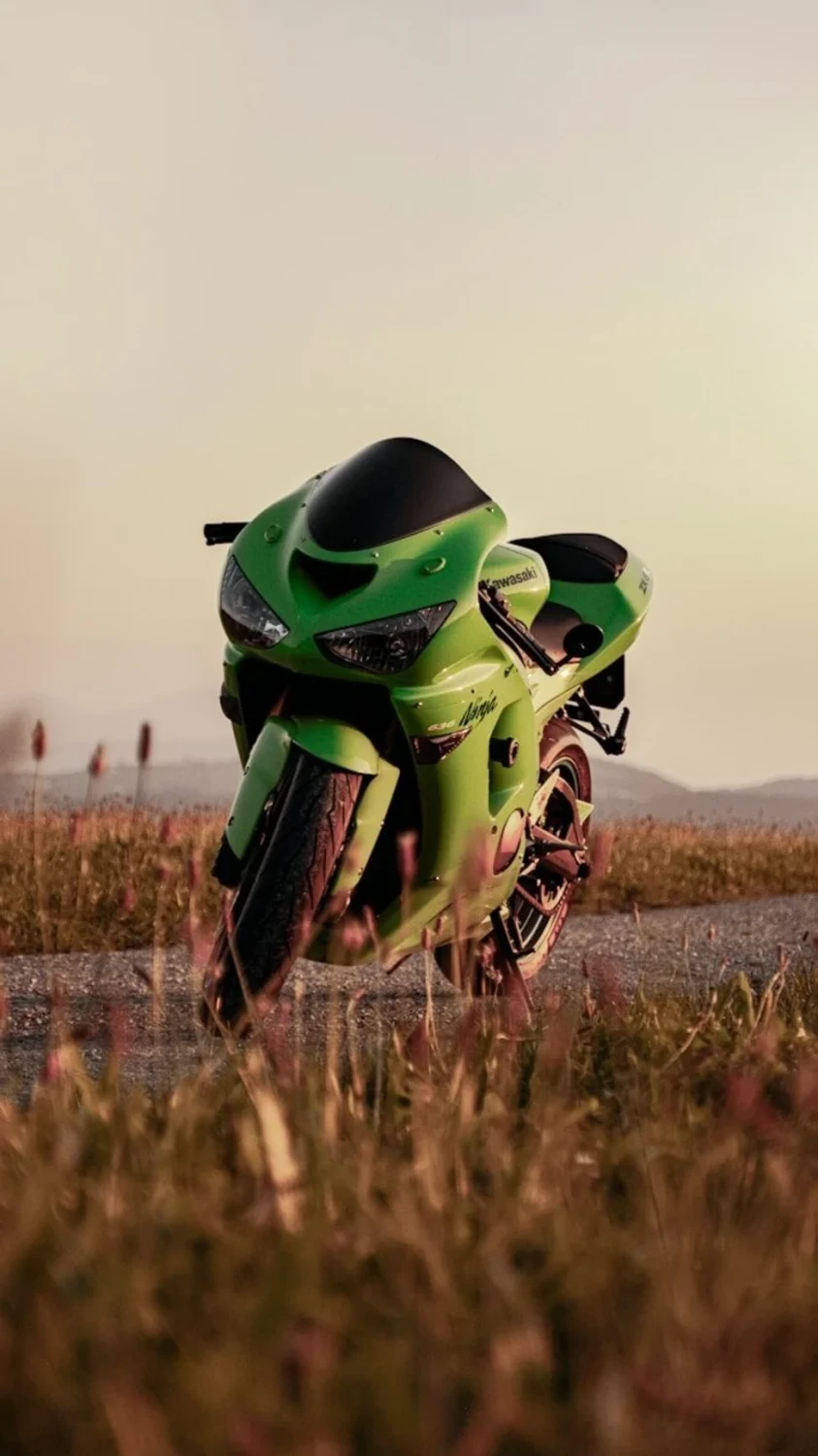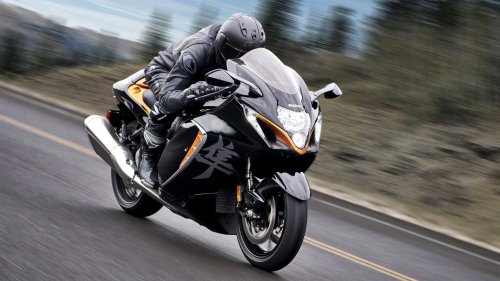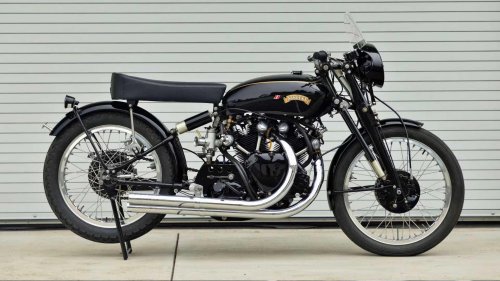
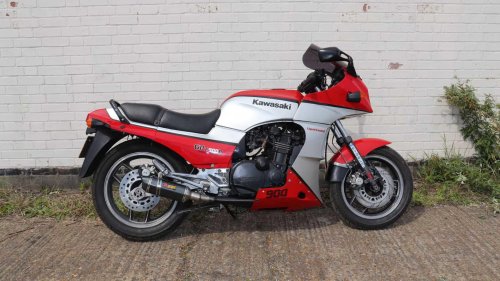
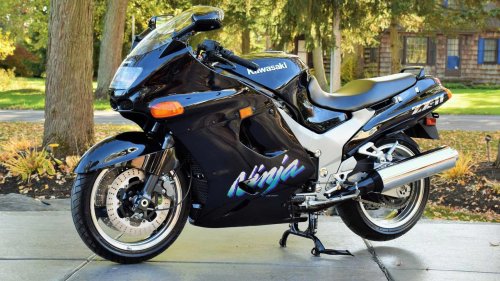
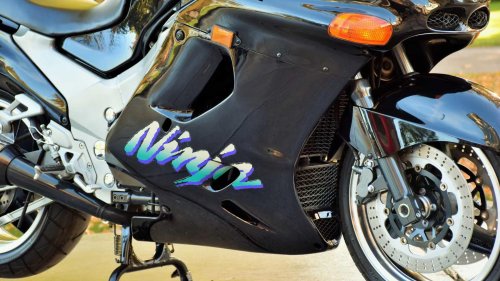
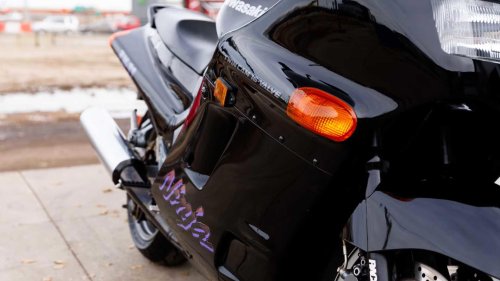
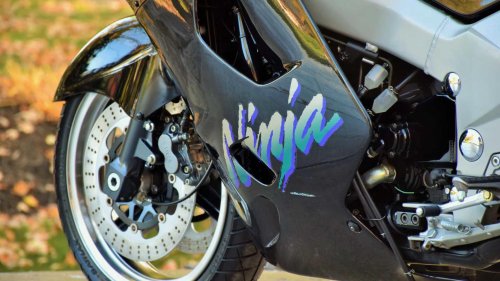
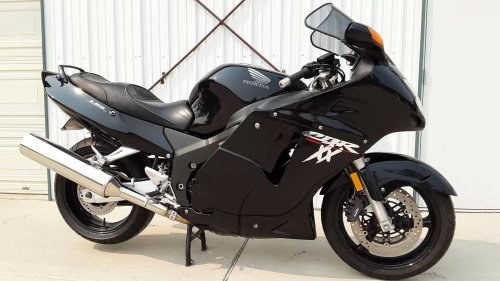
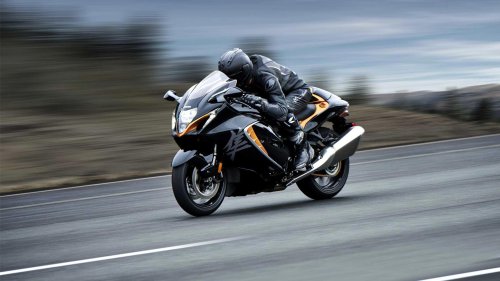
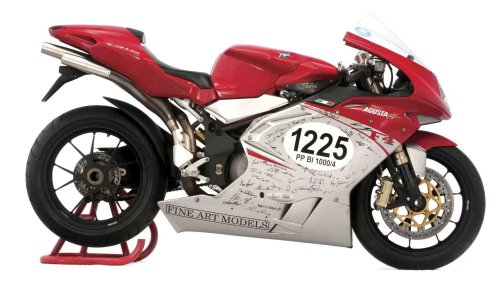
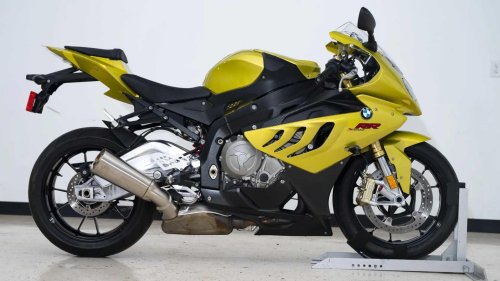
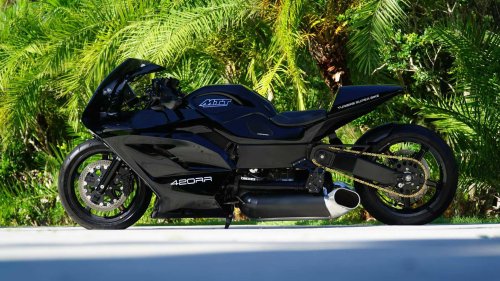



















For as long as automobiles have existed, manufacturers have tried to make theirs the fastest. It's an automotive fool's errand, as no manufacturer wants to lose out and so the accolade of "fastest" continually swaps hands, sometimes changing multiple times per year.In 1989, though, Kawasaki released its take on the fastest production bike — one that would take riders to a top speed of 176 mph — and not only did it take the title, it held the record for six years. It also set in motion what would go on to kill the increasing top speed competition, and force the industry to think about motorcycle performance differently. The Arms Race For The Fastest Bike In The World Mecum While bikes had been hovering around the 100-mph mark both pre- and post-war, it was the British that led the charge with the 1948 Vincent Black Lightning.The 998 cc V-twin engine produced 70 bhp, and it was the first bike to hit a 150 mph top speed. It’s also the bike that American motorcycle and car racer Rollie Free used to set the U.S. national motorcycle speed record at Bonneville Salt Flats, hitting 150.313 mph while lying prone on the bike and wearing only swimming shorts.Other fast and game-changing bikes, like the Honda CB750 and the Kawasaki Z1, came after, but none hit the same mark as the Black Lightning until Kawasaki released the GPZ900R Ninja in 1984.MecumThe bike didn't completely dwarf the Vincent, only upping the record from 150 mph to 158 mph, but what it did do was break the 36-year streak of the Black Lightning and show that consumers were excited about top speed.From here, the record was swapped between Japanese manufacturers, as they fought to increase speeds by just enough to take the title and held onto it until the next bike was released. This came to a stop in 1989, though, when Kawasaki released a bike that would not only take the title, but hold it for six years. The ZX-11 Makes Kawasaki The King Of The Hill MecumKawasaki was no stranger to making fast bikes. Both its GPZ900R and Tomcat ZX-10 bikes, released in 1984 and 1988, respectively, had held the title of the fastest production bike, with the ZX-11 building on the successes of its older siblings.Coming just a year after the ZX-10, the ZX-11 had a 1,052 cc engine good for 145 hp and 79 lb-ft of torque for a top speed of 176 mph. It was helped to this speed by its groundbreaking Ram Air system.Originally used in cars, this was the first time it had appeared on a bike. It worked by having a snorkel mounted to the front fairing that could force high-pressure cold air along a tube and into the airbox, almost like a natural supercharger. This upped the power from 120 bhp to 145 bhp at 10,500 rpm and improved the handling in the process by adding more front bias.MecumThis was only at high speeds — over 100 mph — though, as the air at lower speeds didn't enter fast enough to make a noticeable impact.It wasn't just the engine that the ZX-11 had going for it, though — it had a redesigned chassis compared to the ZX-10, with a more aerodynamic fairing to help it cut through the air.The fact that it wasn't based on a race bike meant there was also more freedom in its design, allowing more legroom to ease riders' wrists and space for a pillion, making it more sport-tourer and adding an extra layer of usability not usually afforded by bikes built for outright speed.Mecum Despite the bike becoming the fastest production motorcycle on its release, period reviews were actually very complimentary regarding its ride and handling.Its power was inevitably one of its major talking points, with one review remarking that it was “nothing less than phenomenal how hard this motorcycle accelerates in any gear at any speed,” but it wasn't only power that it impressed with.Handling was “like the world's fastest 750,” while some parts were made marginally lighter (like the connecting rods, which shaved 32 grams each), meaning the bike had an improved bottom end.Mecum It's not to say that everything was raved about — the considerable weight was a detractor, and some felt that the brakes weren't up to the job of stopping the at-the-time fastest production bike available. However, these weren't enough to outweigh the considerable performance benefits. The Beginning Of The End For Fast Bikes MecumWhile it didn't lead to the end of fast bikes, the ZX-11 was one of the first stepping stones to their eventual neutering. Honda released the CBR1100XX Super Blackbird to end the ZX-11’s reign in 1996 by going 180 mph, then Suzuki destroyed the market with the Hayabusa — a bike capable of hitting 194 mph.Kawasaki had plans to break the 200 mph mark with their upcoming ZX-12R, but plans were curtailed by European politicians. With fears that riders would want to break the 200 mph barrier on the roads, an import ban was suggested against higher-speed motorcycles, which led to a so-called “gentleman's agreement” to limit top speeds to below 300 km/h (186 mph).Suzuki This 2000 agreement was an effective truce to the top-speed arms race that had driven manufacturers forwards for the last fifteen years, as bikes from all brands homologated around a central, electronically-limited figure.This artificial limiting meant that bikes were capable of exceeding the stated speed, but not without tinkering — meaning that manufacturers could claim at least some innocence should anyone be found to exceed that limit. Some Manufacturers Make Exceptions To The Rule Mecum Of course, motorcycling has always been a stomping ground for the rebellious, and there have been some exceptions to the agreement.Italian brand MV Agusta was the first to break, as it claimed its F4 R 312 was capable of 194 mph (312 km/h) in 2007. BMW, who had reportedly been a proponent of the gentleman’s agreement, then overstepped the self-imposed barrier in 2009 with the S 1000 RR — a homologation special required for the World Superbike series. The bike's top speed of 188 mph (303 km/h) didn't exceed that of the MV Agusta's, but was a move beyond that 186 mph number they'd supposedly argued in favor of.Bring a Trailer BMW would push the envelope again, with the second generation of the S 1000 RR in 2019. This time, it was a claimed top speed of 193 mph (310 km/h), which makes it the fastest production bike for sale today. Or at least, that's what some would have you believe.The 2013 Ducati 1199 Panigale R has a claimed top speed that conforms to the 186 mph agreement, but riders report something different. When the bike hits that figure, the screen goes blank and the bike continues to accelerate, to an estimated 202 mph.If it's outright production bike speed you're after, though, nothing will beat the MTT 420RR — a turbine-powered motorcycle capable of speeds exceeding 250 mph.MecumThese are very much the outliers though, as the motorcycling world has largely moved on from competing for headlines with outright top speed and instead looked at things like acceleration, aerodynamics and track performance.While there have been other fast bikes, and there will be more in the future, the ZX-11 held the record of fastest production bike for six years, and set in motion the death of manufacturers competing on top speed alone.Sources: Road and Track, CycleWorld