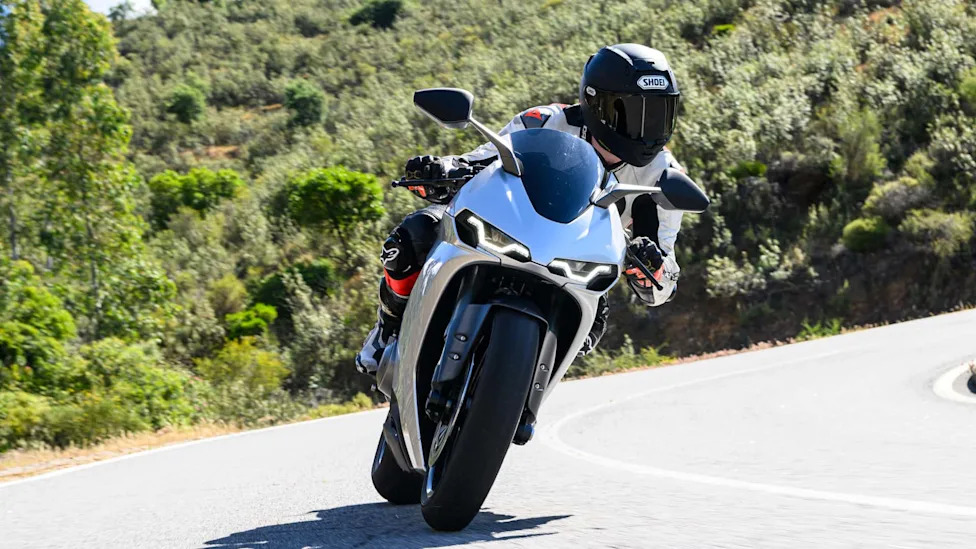
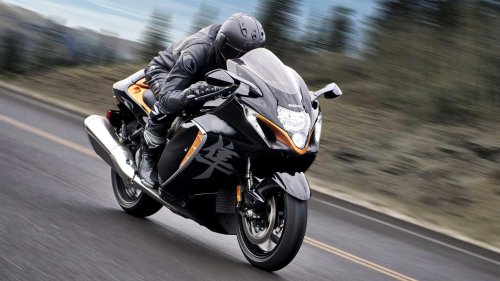
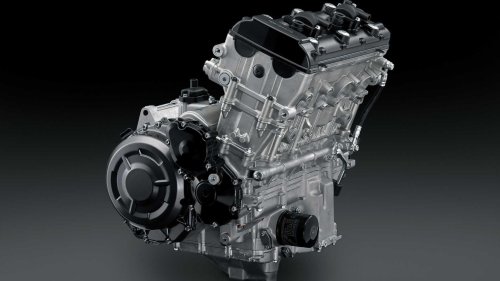
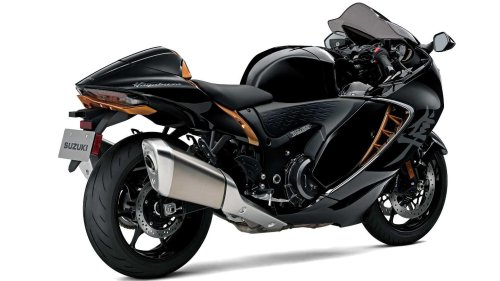
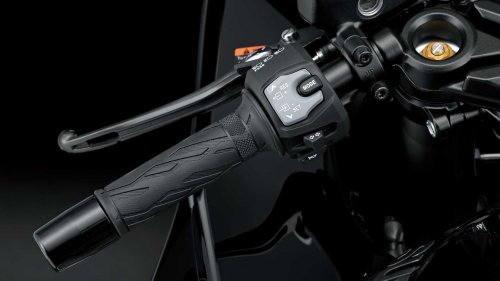
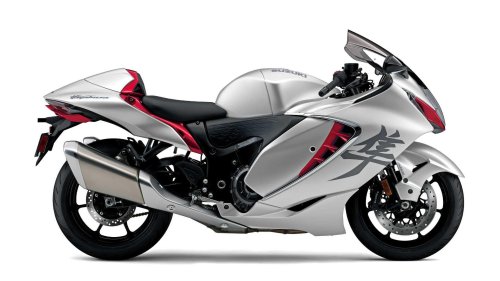
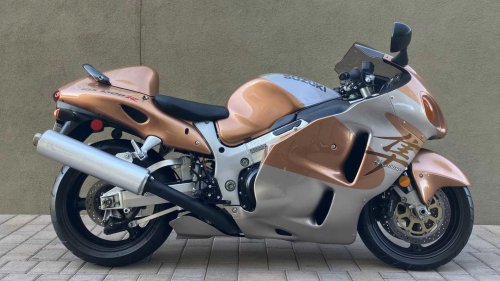


















Suzuki has built something that does not make sense on paper. The hypersport segment is increasingly dominated by machines with razor-sharp electronics, race-derived chassis geometry, and price tags calibrated to match. Spend close to $20,000 on a sportbike in 2026, and the expectation is a hard seat, an aggressive crouch, and a machine that punishes anything less than full commitment. What most buyers do not expect at that price is 186 mph, 111 lb-ft of torque, a usable riding position, and a name that has meant one thing since 1999. There is a bike available right now, brand new, for under $20,000 that built its entire reputation around being the fastest thing with two wheels you could buy on a dealer forecourt. It still is. The number just costs less than people think. UPDATE: 2026/03/06 12:45 EST BY JOHN FLORER More information was added regarding rare examples and possible future market values. Why 186 mph Is a More Complicated Number Than It Sounds Suzuki Every serious hypersport motorcycle sold in the United States today is electronically limited to 186 mph. That cap has been in place since the early 2000s, when Japanese and European manufacturers reached an informal agreement to govern their fastest machines at that figure following concerns about an outright speed war with no ceiling. The result is that the ZX-14R, the RSV4 1100, and every other contender in this class hits the same wall at the top end, regardless of how much power the engine produces or how much you paid for the bike.What that means practically is that outright top speed alone no longer separates these machines. The real differentiator becomes how much it costs to reach that number, and what you get on the way there. A bike with 217 hp that is electronically capped at 186 mph is no faster on a public road than a bike making 188 hp with the same limiter. The fastest production motorcycles ever built have long understood that the conversation is as much about accessibility as it is about absolute performance, and that gap is where one machine has held its ground for 25 years without apology.The Kawasaki ZX-14R comes with 187 hp and a 1,441cc engine. The Aprilia RSV4 1100 brings 220 hp from a 65-degree V4 with electronics that belong on a WorldSBK grid. Both are serious machines. And both cap at the same 186 mph that a particular Suzuki has been touching since the turn of the millennium, for considerably less money. The 2026 Suzuki Hayabusa: Pricing Against the Field SuzukiThe 2026 Suzuki Hayabusa carries an MSRP of $19,399. That is $400 more than the RSV4 1100 and $1,800 more than the ZX-14R, which makes it the most expensive bike in this comparison. On paper that looks like a problem. In practice it is not, because the Hayabusa delivers everything its rivals deliver at the top end, plus a riding experience, a parts ecosystem, and a name that the others are still building toward. All four bikes above are electronically limited to 186 mph. None of them will go faster than that on a stock tune. The Hayabusa reaches that ceiling with 190 hp and 111 lb-ft of torque from a 1,340cc engine that Suzuki has spent 25 years refining for exactly this purpose.The used market adds another dimension. Third-generation (2021 onward) Hayabusas regularly trade hands for $13,000 to $16,000 depending on mileage and condition, based on current market data. A 2022 example with reasonable miles can be found below $14,500. That puts the same 186 mph capability, the same S.I.R.S. electronics package, and the same engine in your garage for a figure that undercuts every new competitor in this group by thousands of dollars. Performance: What 186 mph Actually Requires SuzukiThe torque figure is the Hayabusa's clearest advantage in this table. At 111 lb-ft, it produces more usable mid-range grunt than either the RSV4 1100 (92.2 lb-ft) or the Kawasaki ZX-10R (83.9 lb-ft). Only the ZX-14R, with its 1,441cc displacement and 116.5 lb-ft, edges it out on torque, and the ZX-14R costs $1,800 less at MSRP while offering no meaningful advantage in top speed. The RSV4 1100 claims the highest horsepower figure in the group at 220 hp, but its smaller V4 displacement means that power arrives higher in the rev range, where the limiter is already a factor.The 0-60 mph times are close across all four bikes. Any of them will dispatch the sprint in under three seconds with an experienced rider on board. Where the Hayabusa separates itself is in how that performance is delivered: the 1,340cc engine pulls from low rpm in a way that a 999cc or 1,099cc engine simply cannot replicate, and it does so without demanding that the rider live at the top of the tach to find the power. The 2025 model's Suzuki Intelligent Ride System adds launch control, a bidirectional quickshifter, Smart Cruise Control, and IMU-linked traction control, which closes the electronics gap that the older Hayabusa generations carried as a legitimate criticism. Why the Hayabusa Holds the Title Suzuki When the original Hayabusa launched in 1999, it arrived with a GPS-verified top speed of 188 to 194 mph on ungoverned early examples, making it the fastest production motorcycle on the planet. That title prompted the manufacturer speed agreement that has governed the segment ever since. Every bike in this class now meets at 186 mph. The irony is that the bike which forced that agreement into existence is still the one most associated with the number, and it remains available new for under $20,000.No other motorcycle in this comparison carries that context. The RSV4 is a track weapon with a price that reflects its racing lineage. The ZX-14R is a drag-strip institution that trades corner agility for straight-line authority. The ZX-10R is a liter-class superbike that prioritises lap times over long-distance usability. The Hayabusa is something rarer: a machine that does 186 mph while remaining comfortable enough to ride across a state, with an ergonomic package that does not punish non-professional riders for choosing it. What the S.I.R.S. Package Changes SuzukiThe third-generation Hayabusa, introduced in 2021, addressed the electronics deficit that had long been the bike's most cited weakness. The Suzuki Intelligent Ride System now covers motion-track ABS, cornering traction control, launch control, engine brake control, wheelie control, and a bidirectional quickshifter, all managed through an IMU that reads lean angle in real time.The 2025 update added a revised Smart Cruise Control that no longer cancels when using the quickshifter, a detail that matters on extended high-speed runs. These are not afterthoughts. They put the Hayabusa on equal footing with the RSV4's APRC suite and ahead of the ZX-14R in terms of rider-assistance sophistication, at a price that still comes in under the ceiling. Who the Hayabusa Is Actually For Suzuki The Hayabusa is not a track-day weapon. Its 582 lb wet weight and riding geometry are calibrated for straight-line authority and long-distance endurance, not knee-down corner speed. Riders who prioritise lap times at a club circuit are better served by the ZX-10R or the RSV4. Those bikes are lighter, sharper through direction changes, and built around a completely different set of priorities.For everyone else, the Hayabusa represents a case that is genuinely difficult to argue against. It is the only motorcycle in this group that reaches 186 mph while also functioning as a practical long-distance machine, with a seat height of 31.5 inches and a riding position that does not require a trip to a physio after two hours on the road. At $19,399 new, it sits at the top of the under-$20,000 bracket. For riders who want that combination of speed and usability, there is no credible alternative at this price. The used market takes it further still: a clean third-generation example can be had for $13,000 to $16,000, which undercuts every new rival in this group and still delivers everything the headline promises.Suzuki did not build the Hayabusa to win spec-sheet arguments. It built it to be the fastest thing you could legally buy and ride to work. A quarter century later, within a $20,000 budget, nothing has changed that. Which Hayabusa Generation Is Most Likely to Become A Collector Bike MecumIf the collector market behaves the way motorcycle history usually does, the early first-generation Hayabusa is the version most likely to see any kind of meaningful appreciation, especially in the copper/silver since that was the rarest color scheme. Built from 1999 to 2007, it was the bike that shattered speed expectations and forced manufacturers into the now-famous 186 mph benchmark. Early examples, like the 1999 and 2000 model years, were even rarer because they were the only versions not originally built around that limiter. Clean, unmodified bikes have become increasingly difficult to find because many were heavily modified or raced during the early 2000s tuning boom, and that rarity is already pushing the first generation into early collector territory, with enthusiasts beginning to treat stock examples as future classics rather than disposable performance bikes.Sources: Suzuki Cycles, Motorcycle.com, SlashGear, MotoStatz, Total Motorcycle, Cycle Trader.