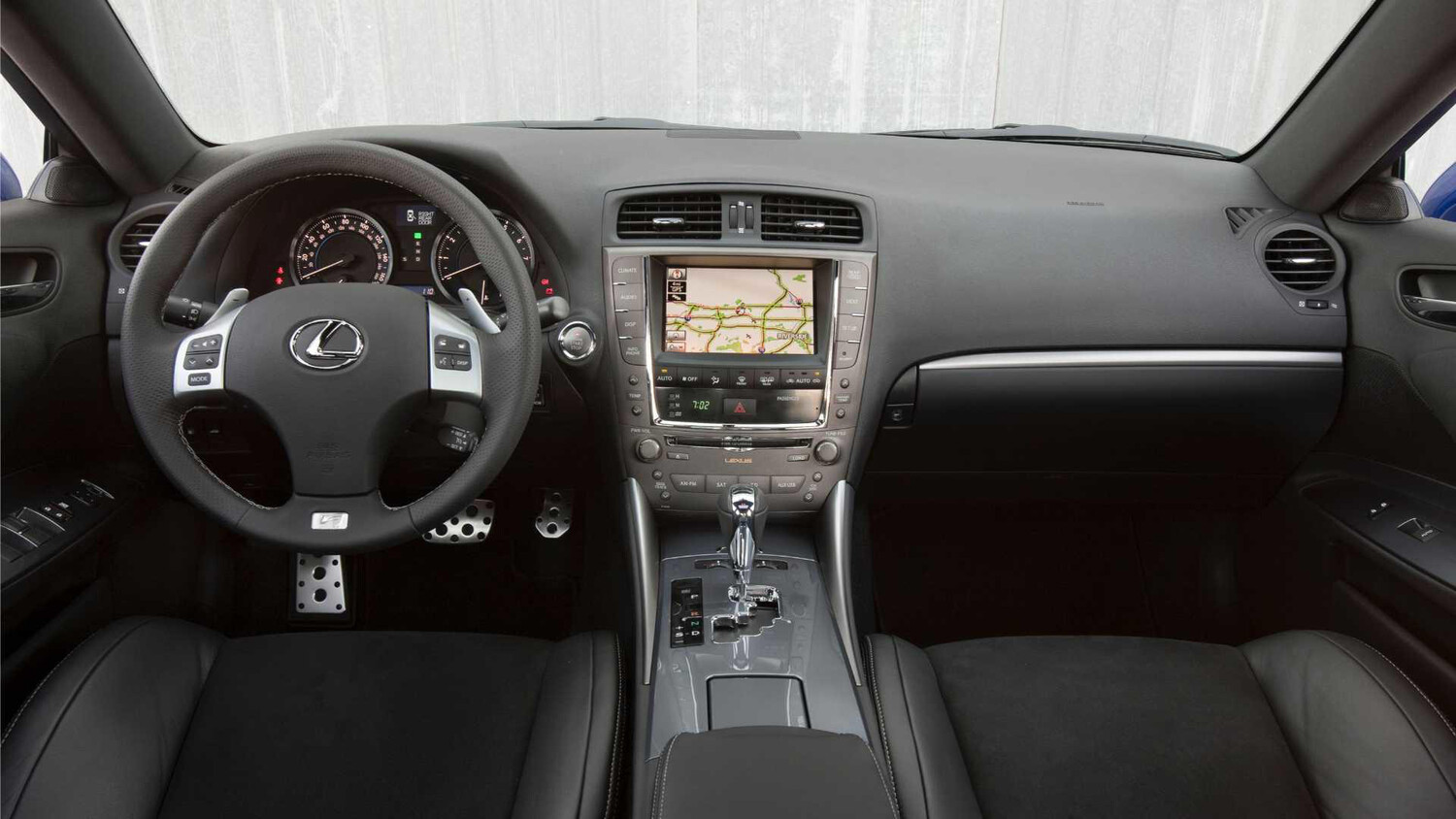
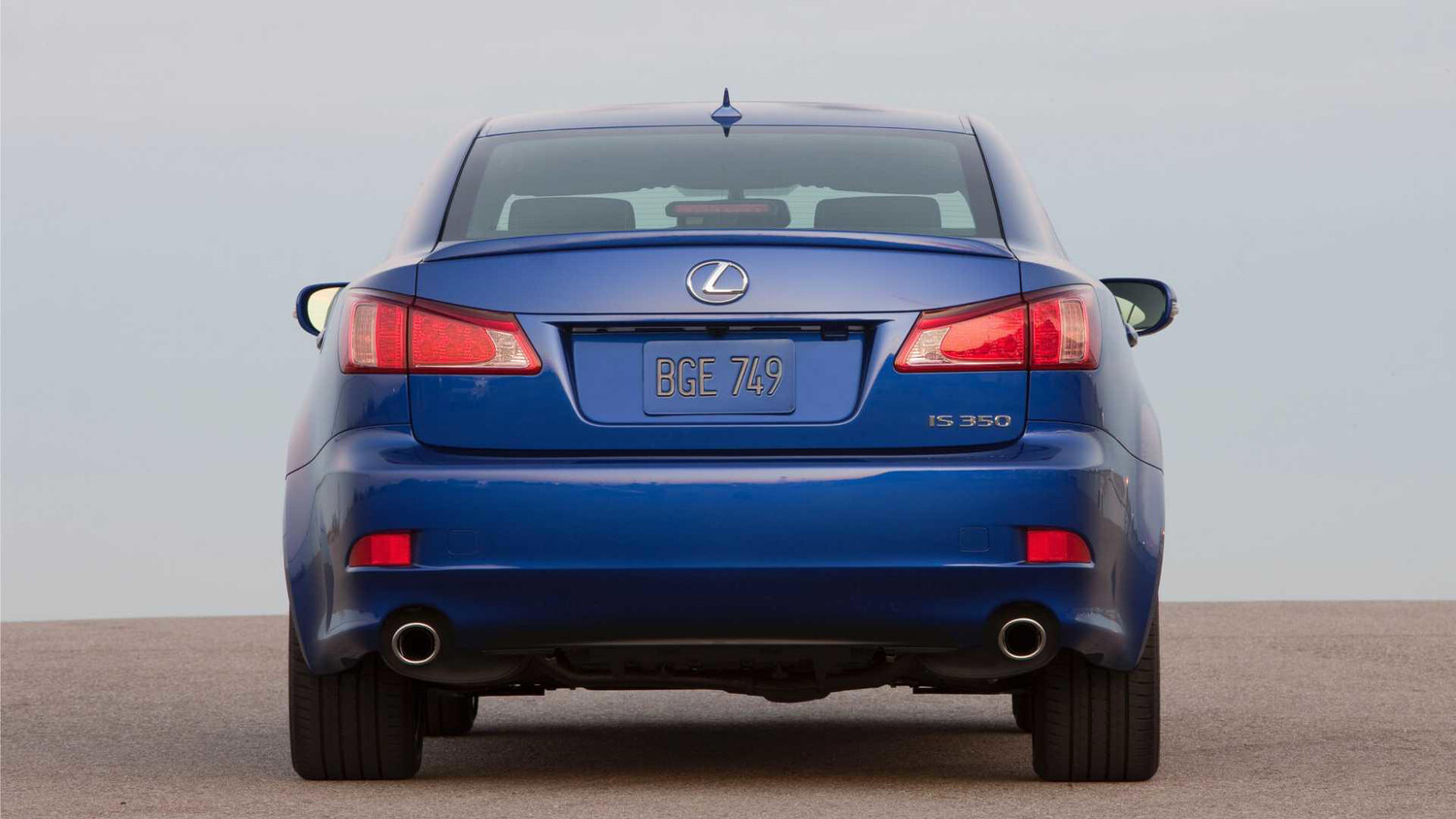
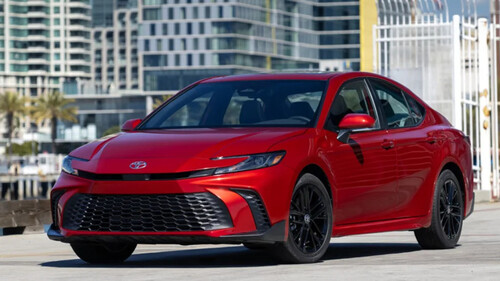
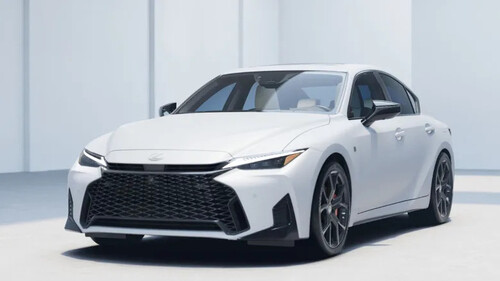
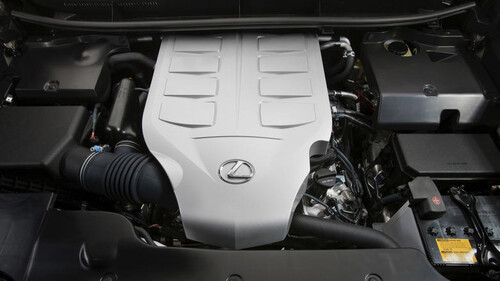
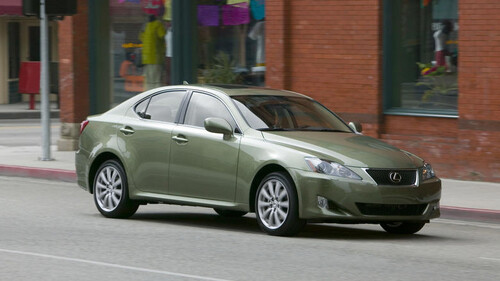
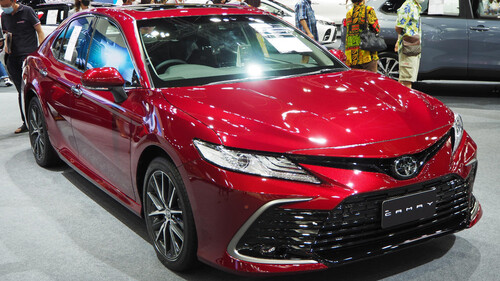
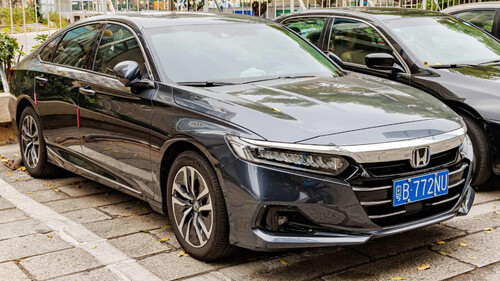
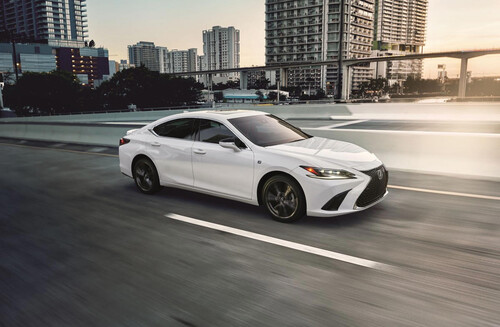
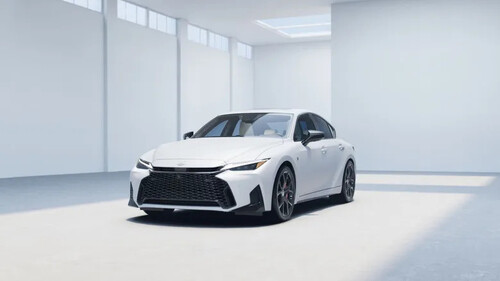
The average used car listing price in the United States now sits above $26,000. For a buyer with $15,000, that number frames every search. You are operating well below the market average, competing for inventory that most listings politely describe as "high mileage" or "priced to sell." The default recommendations at this budget are well-known and for good reason. They are reliable, they are plentiful, and parts are cheap. But there is a car out there that most buyers at this price point never seriously consider, despite the fact that it originally cost nearly $40,000, is faster than almost everything else available at the price, and carries a reliability record that the enthusiast press has been praising for over a decade. It was built to fight BMW, and the used market has somehow forgotten it entirely. At $15,000, Most Buyers Settle For Less Than They Should Lexus The Toyota Camry and Honda Accord are the default answers at this budget, and there is nothing wrong with either of them. Both are genuinely well-built cars with strong reliability records and wide parts availability.A 2016 Camry in good condition will start reliably, run for a long time, and cost very little to maintain. Nobody argues with that. But both cars ask the buyer to accept something: that a $15,000 purchase is a practical transaction rather than an enjoyable one. That the performance, the interior quality, and the driving experience you get are proportional to what you spend.Lexus built the car being discussed here rejects that logic entirely. It was designed from the ground up to match the BMW 3 Series and Audi A4 on dynamics, interior quality, and performance. Clean examples of it now sit at this price point because most buyers scroll past the badge and assume the running costs must be terrifying. They are not. Lexus Built A Sports Sedan The Used Market Forgot About Lexus The second-generation Lexus IS ran from 2006 through 2013 and was built on a platform developed specifically to challenge the German compact sports sedan segment. The version that earns this headline is not the IS 250, which uses a 2.5-liter V6 that reviewers consistently described as underpowered. The IS 350 fitted a 3.5-liter 2GR-FSE V6 producing 306 horsepower, the same engine family that powers a wide range of products across the Toyota and Lexus lineup. The transmission is a six-speed automatic with paddle shifters and a sport mode that sharpens responses noticeably. Drive goes to the rear wheels only in the standard configuration, giving the car a dynamic character that front-wheel-drive rivals lack.The original starting sticker price was approximately $38,000 for a well-specced example. That price bought a double-wishbone front suspension, a multi-link rear, leather seating, a Mark Levinson audio option, and the kind of build quality that Lexus had spent two decades establishing as its competitive advantage over European rivals. Meet The 2011-2013 Lexus IS 350 LexusToday, a used IS 350 is now available for $8,775 to $12,000 in private party value for a 2011 example, and $10,520 to $13,170 for a 2013. Every year in that range sits comfortably under $15,000. To put that in context: a 2011 BMW 328i in equivalent condition currently trades at around $16,000 to $19,000. A comparable Audi A4 2.0T sits in a similar range. Both cars have less power, slower 0-60 times, and front-wheel drive in base configuration.The IS 350 is the faster, more powerful, rear-wheel-drive car, and it costs several thousand dollars less. That gap exists for one reason. Most buyers recognize the German badges and do not think to search for the Lexus. For a buyer who does the research, it is one of the most significant value anomalies in the current used market at this price point. The Reliability Record That Changes The Calculation Lexus The 2GR-FSE uses a dual injection system combining both direct injection and port injection, which gives it more complete combustion across the rev range than a conventional direct-injection setup alone. The engine architecture is shared across a wide range of Toyota products, which means parts are widely available, independent mechanics know it well, and the cost of maintenance does not require a specialist. The turbocharged four-cylinder engines in the BMW 328i and Audi A4 from the same era carry timing chain concerns and known maintenance costs at this mileage that the naturally aspirated 2GR-FSE simply does not have.The second-generation IS platform carries an above-average owner reliability rating of 4.8 out of 5 on KBB across more than a decade of documented ownership. One important distinction: the IS 250 uses a related but different engine designated the 2GR-FE, which has a documented oil consumption issue. Buyers should specifically target the IS 350 and not assume the two are interchangeable. 306 Horsepower, Rear-Wheel Drive, And A Five-And-A-Half-Second 0-60 LexusThe IS 350 is faster than both the 328i and the A4 2.0T from the same era and produces more horsepower than either. Drive goes to the rear wheels only in the standard configuration, giving the car a dynamic character that front-wheel-drive rivals simply cannot match. The transmission is a six-speed automatic with paddle shifters and a sport mode that sharpens responses noticeably. Its double-wishbone front suspension and multi-link rear give it a level of composure through corners that the platform's original $38,000 price tag was built to justify. If you need even more out of it, the F Sport trim, identifiable by its adaptive variable suspension, more aggressive fascias, and sport seats, is the version to seek out and does not command a significant premium at this age and mileage. What To Look For And What To Avoid LexusThe rear-wheel-drive configuration really is the version to buy. The AWD system adds weight, reduces the dynamic character that makes the IS 350 worth seeking out, and does not add meaningful real-world capability at this price point in most climates. The six-speed automatic transmission is the only option on the IS 350 and has a strong reliability record.Oil change discipline is the single most important maintenance factor on the 2GR-FSE. The engine tolerates standard intervals well, but owners who have documented the highest mileage figures consistently used quality synthetic oil and respected the change schedule. Higher-mileage examples should have the variable valve timing actuator inspected, as wear on this component can cause roughness at startup that is audible but not immediately damaging if caught early. Rust inspection is essential for examples from northern states. Why This Is The Smartest $15,000 You Can Spend In 2026 Lexus A car that cost $38,000 new, produces 306 hp, rides on a rear-wheel-drive platform designed to fight the BMW 3 Series, and carries a 4.8 out of 5 owner reliability rating is not a $10,000 car by merit. It is a $10,000 car by circumstance. The IS 350 landed at this price because the badge does not carry the same cultural weight as a BMW roundel or Audi rings, and because most buyers at this budget are not looking for it. That is the entire opportunity. The cars that the default used car conversation recommends at this price, including the Camry, the Accord, and the Civic, are all competent and all slower, less engaging, and less well-built than the IS 350. None of them will embarrass a hot hatch from a standing start. None of them has a Mark Levinson audio system and a leather interior that was designed to rival a German flagship sedan.The IS 350 is not a compromise dressed up as a bargain. It is a car that the used market has mispriced because it requires a buyer who does the research. For anyone reading this article, that excuse no longer applies.Sources: Kelley Blue Book, Lexus.