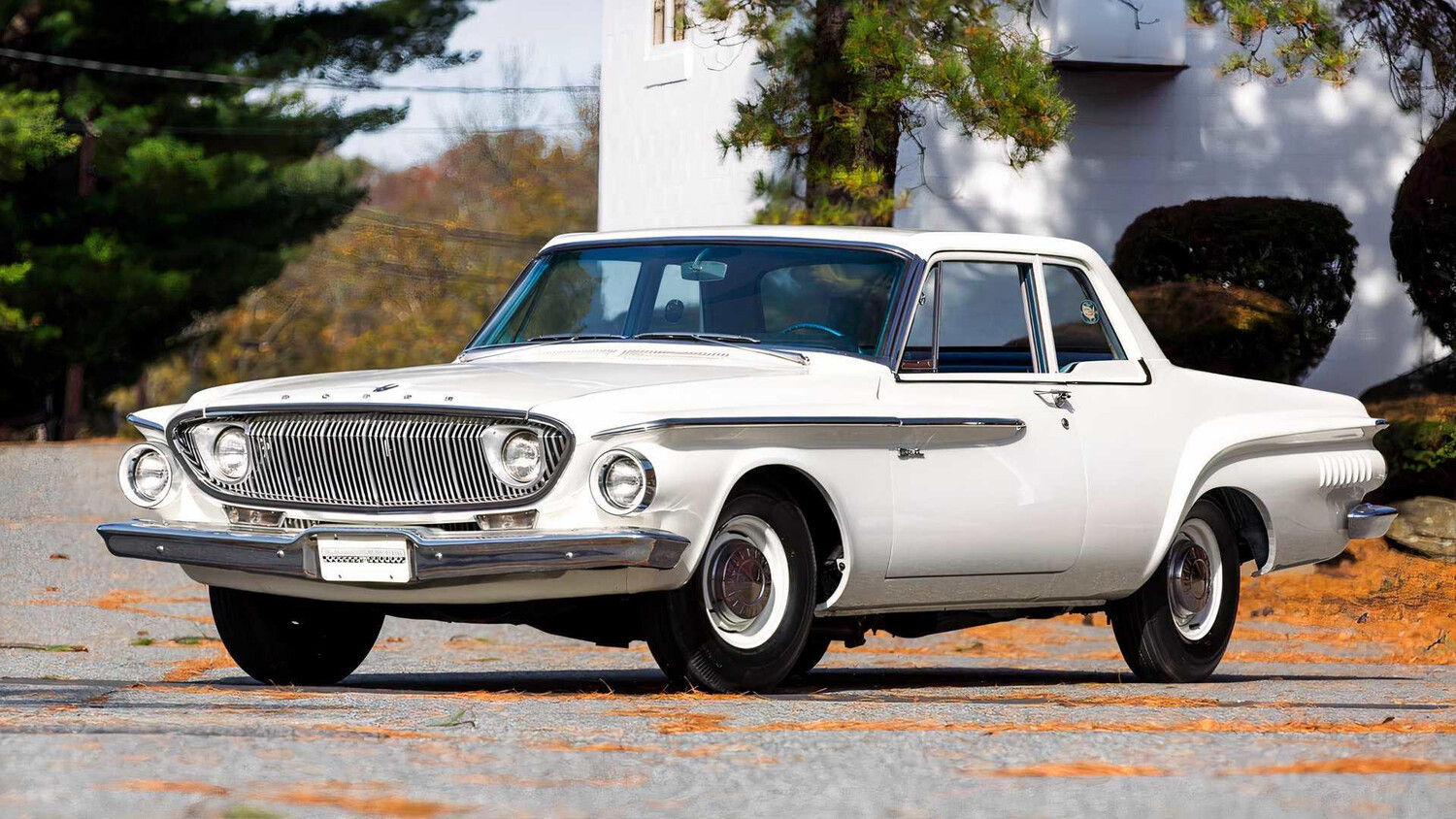
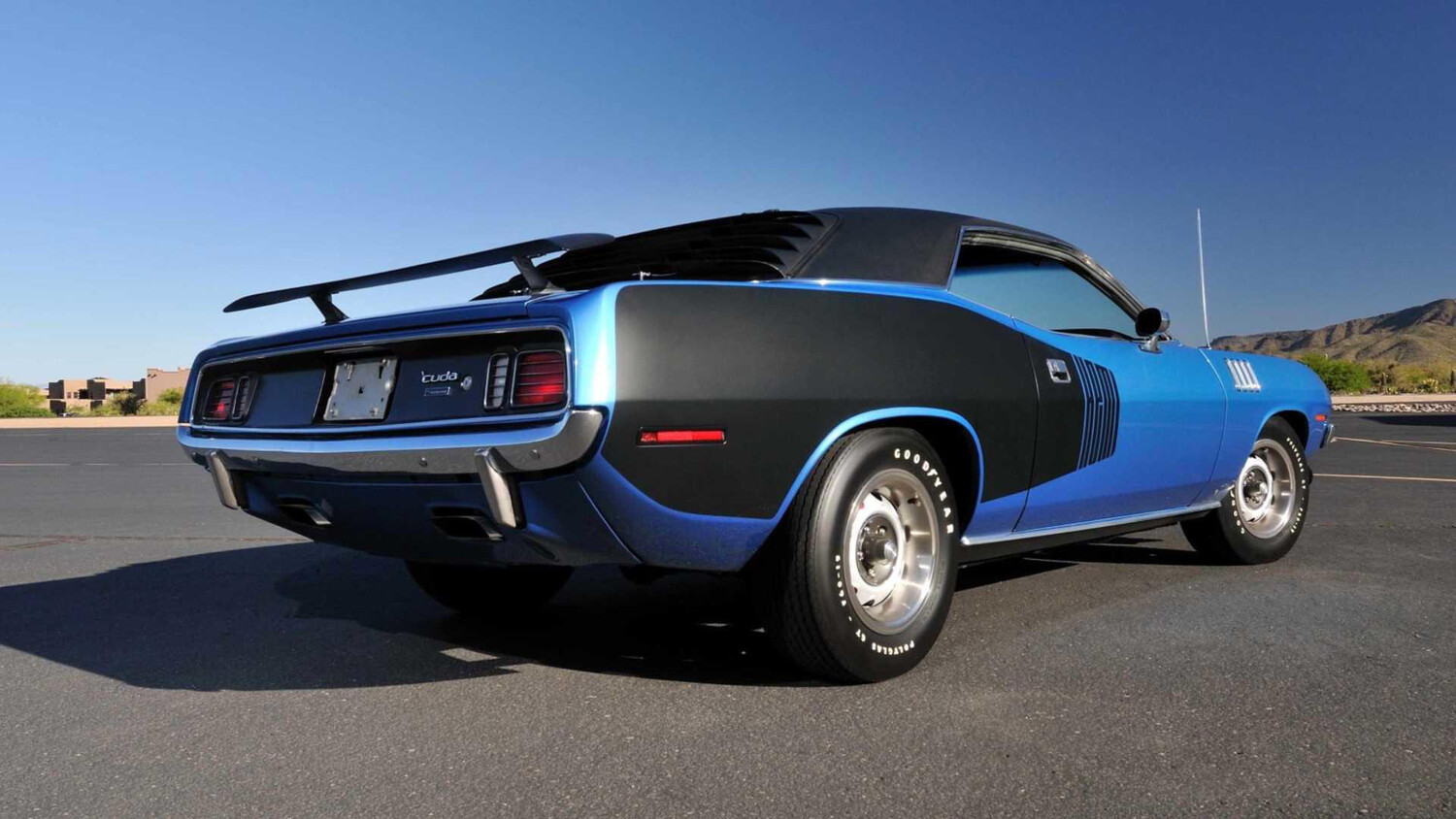
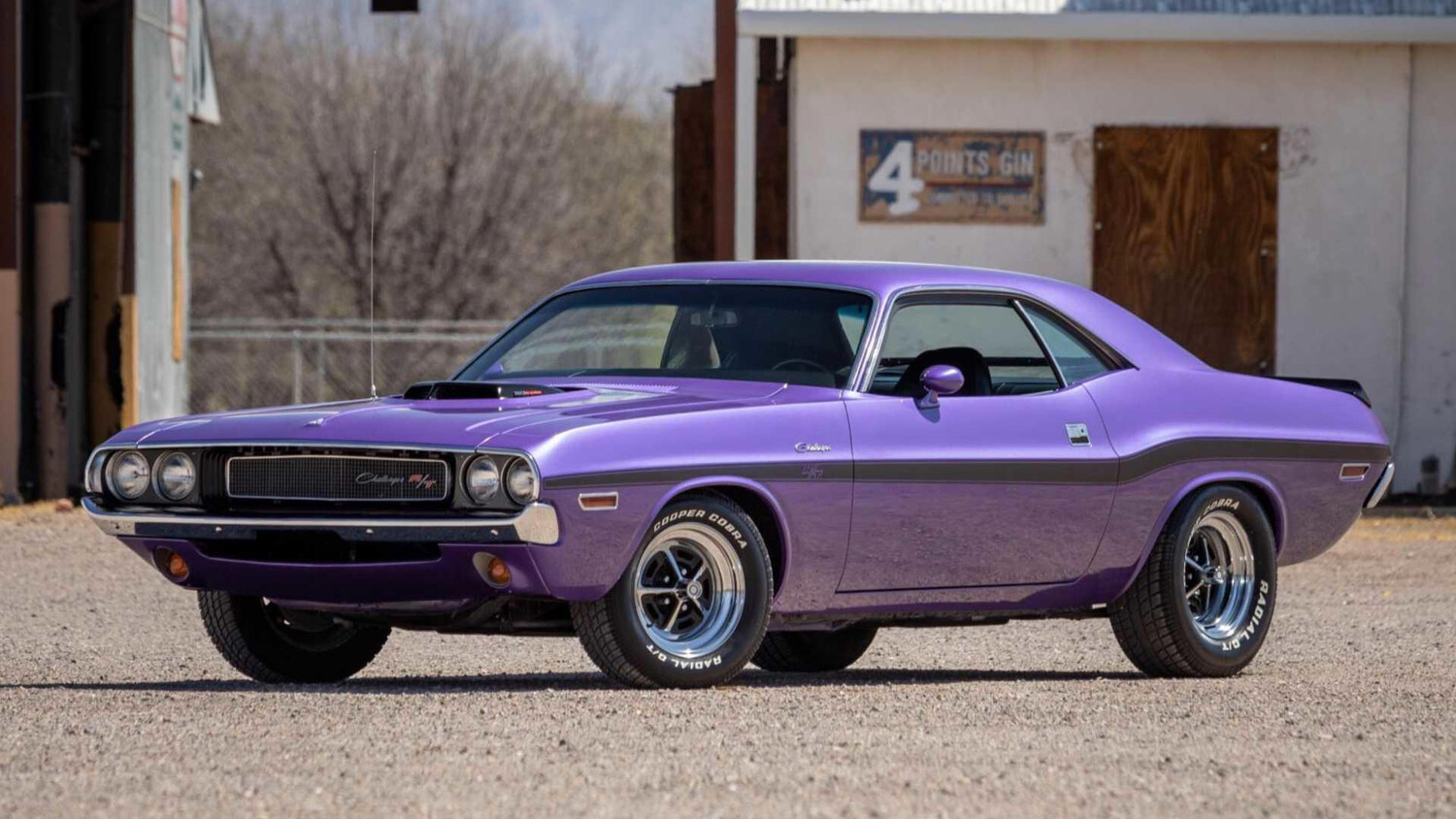
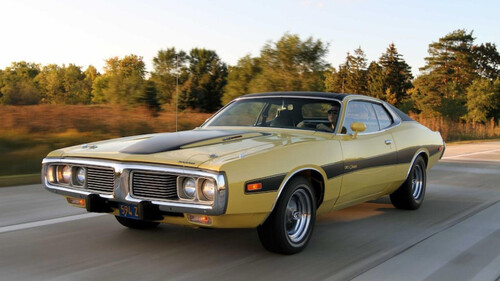
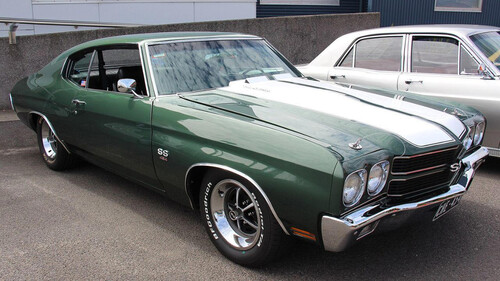
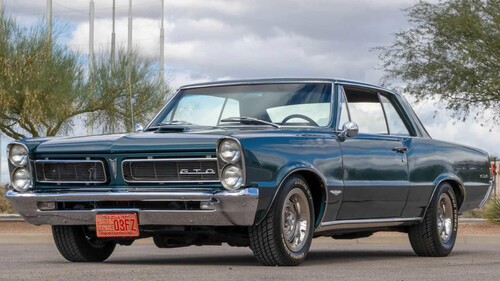
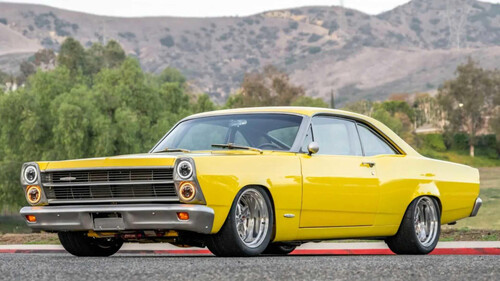
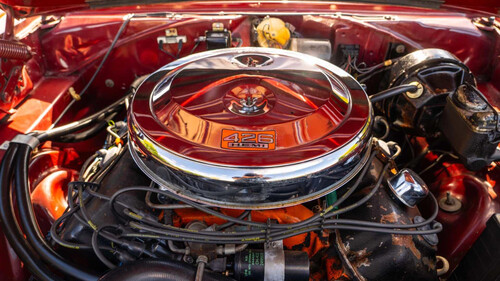
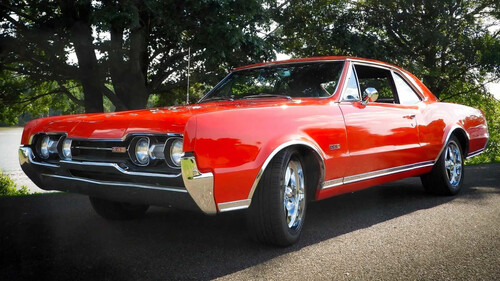
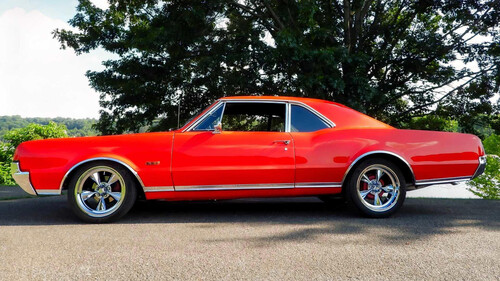
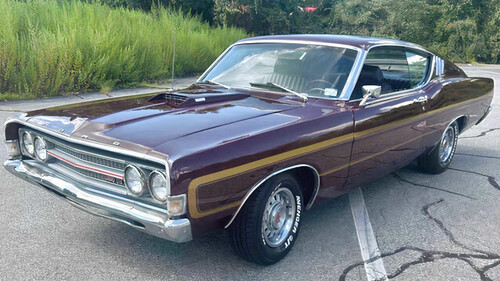
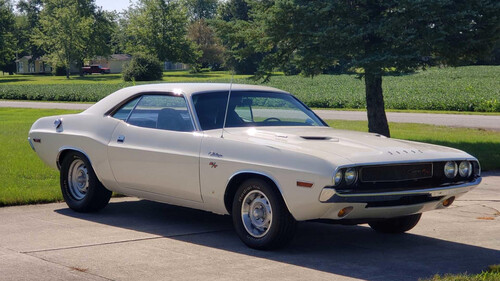
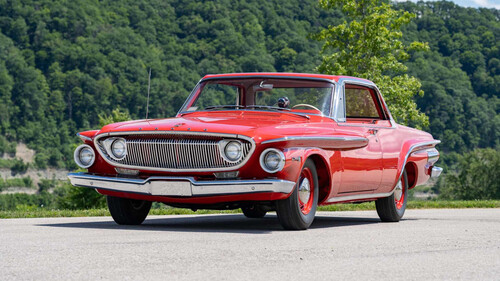
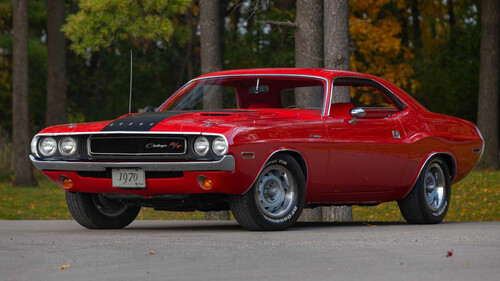
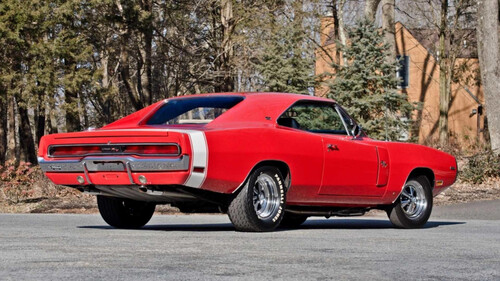
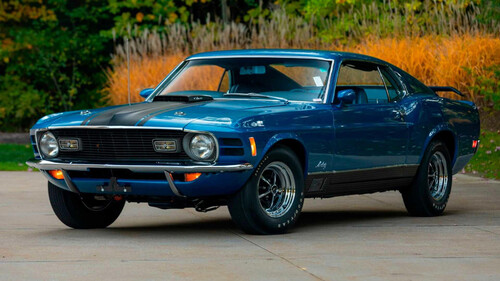
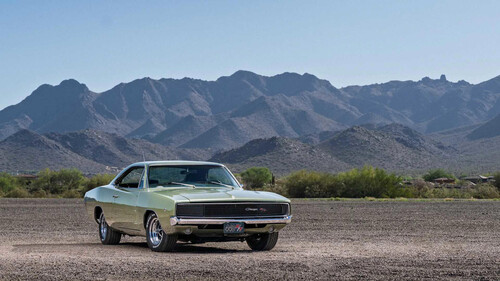
A lot of people have this romantic notion about the Golden Age of American Muscle in which every car on the street was packing either a 426 Hemi, 429 Cobra Jet or 454 LS6 and that no traffic light ever turned green without a drag race erupting. The truth is, those iconic big-block V8s were extremely rare, and almost every muscle car sold was equipped with a smaller displacement engine with far fewer ponies under the hood. Even something like a 1966 Chevy Chevelle SS, which had no engine options, favored the less powerful variants, with only 3,099 buyers getting the top-dog 375-horsepower version of the 396 out of 72,272 sold.People also don't know that many of these aggressive-looking street rides could be optioned with puny small-blocks and even six-cylinder engines. As ridiculous as it sounds, the 1968 Dodge Charger came standard with a 230-hp 318 V8, of which more than 53,000 were sold, and at least 500 people optioned the 145-hp 225 Slant-6 for some reason. Classic Mopars, like the Charger, are associated with the 426 Street Hemi and 440 Six-Pack big-blocks, but very few of them ever left the factory with those legendary V8s. There is an awesome big-block, however, that served proudly in the Mopar Muscle Corps that is extremely common and almost completely forgotten. Chrysler FirePower Engines Mecum Any history of Mopar performance engines begins with the Chrysler FirePower Series V8s, which were technically the first Hemi engines, though they were not marketed as such. Chrysler had developed some fairly gnarly engines with hemispherical combustion chambers for military use, but World War II was decisively won by the US and, to a lesser extent, the Allies, so there was no longer a need for a 2,500-hp fighter aircraft V16. Chrysler did think they were onto something with this radical technology and applied it to passenger cars. The most famous and frightening of these engines was the 375-hp 420 lb-ft of torque dual-quad 392 FirePower V8, which made the 1957 Chrysler 300C the "fastest car in the world," as well as the first ride that could legitimately be classified as badass. Max Wedge Hits the Streets Mecum Chrysler retired the FirePower proto-Hemis in the late 1950s, replacing them with the B-Series which are often referred to as "Wedge" engines because...dramatic pause...they featured wedge-shaped combustion chambers. Two years before the 1964 Pontiac GTO made the muscle car a thing, the 1962 Dodge Dart 330 was terrorizing the Beach Boys with a 420-hp 413 Max Wedge, that they lied about beating with an underpowered Corvette in their song "Shut Down." There was also an extremely rare 426 Max Wedge that cranked 425 horses, but the 426 Street Wedge didn't exactly suck either with up to 375 hp and 480 lb-ft of torque. When the GTO became the "first" muscle car, Dodge and Plymouth Wedge rides begged to differ. Mopar Muscle Car Big-Blocks Mecum The Chrysler 426 Street Hemi, introduced in 1966, became the defining Golden Age V8, mostly because its 425-hp and 490 lb-ft of torque turned any Mopar blessed with it into a 13-second factory drag car. Just 9,761 Street Hemi cars were ever built, making them unicorns and in some cases Holy Grails. The Hemi was a rather expensive engine option, so in 1969, Chrysler came out with a 440 V8 featuring a 3x2-barrel carburetor set, known as the Six-Pack by Dodge and the Six-Barrel at Plymouth, that offered Hemi-like performance for about half the price. With 390 ponies and a Hemi-matching 490 lb-ft of torque, the Six-Pack was a killer budget big-block that could annihilate anything GM or Ford had going. Despite the awesome power-to-cost ratio, the 440 Six-Pack is also kind of a rarity, with only 13,883 cars equipped with it between 1969–1971. Chrysler 383 B-Series V8 Mecum The Chrysler B-Series 383 big-block V8 landed under the hoods of Dodge, which dubbed them "Magnums" and Plymouth, which called 'em "Super Commandos," cars in 1960. Initially rated at 330 hp these underrated engines actually exceeded the 392 FirePower with 425 lb-ft of torque, giving them credible launch capabilities. Early on, there was a high-performance option of the 383, with dual Carter four-barrels and a cross-ram induction manifold that upped the ante to 345 hp and 460 lb-ft of torque. Sadly, this option didn't make it to the muscle car era, but it definitely gave full-size rides like a 1960 Dodge Dart Phoenix (pictured above) some extra oomph. A land yacht like that wasn't necessarily a burner, but as we shall soon see, the 383 in an intermediate was driving dynamite. 383 Specs ’N Stuff MecumThe 383 was a larger-bore version of the B-Series 350 and 361 engines, and was Chrysler's most diverse big-block, powering everything from family wagons to street machines. The larger bore meant bigger valves, so the 383 could breathe easy, while the shorter stroke got it revving quickly and made it smooth at high speeds. The 383 was Mopar's most balanced block that revved better than the 440 and weighed significantly less. It was also a highly tunable engine that could deliver power gains with simple bolt-on parts and even just futzing with the carburetor. Anyone with a little bit of knowledge and motivation could crank the 383 up to a formidable road warrior, but even with the factory tune, it was a pretty kick-ass engine. Plymouth Road Runner Pumpin’ Base Mecum The Road Runner landed in 1968 as Plymouth's stripped-down speed machine, and for the record, we looked it up and the roadrunner birds actually can fly, they just prefer to leg it. The Road Runner could also fly, based on the strength of its available high-output big-blocks, including the standard 383 V8. For reasons that nobody can explain, the Road Runner's version of the 383 was five ponies better than any other car it was equipped in. With an original price of just $2,870 or $27,464 in today's bucks, the '68 Road Runner was cheap enough to make bigger engine options like the 426 Street Hemi doable, but the base 383 was so good, there was no need. This was a legit 13-second set of wheels that cost less than most 15-second cars and blew away more expensive performance rides. 383 vs. GM and Ford Mecum The Chrysler 383 was Mopar's bottom big-block option, but it was more than competitive with everyone else's top performance engines, and we'll use the class of '65 to demonstrate that. The 1965 Ford Mustang GT's best engine was the 271-hp 289 K-Code V8, that lumbered it to a 15.5-second quarter-mile. The '65 Pontiac GTO had a 360-hp 389 Tri-Power V8, that was a second quicker with a 14.5-second run. Late in 1965, the Chevy Chevelle SS got a 396 V8 that ran a quarter-mile in 14.6 seconds, which is shockingly slow. The budget 1965 Dodge Coronet Deluxe 383 with a four-speed was capable of 14.2-second ETs, owning the streets in the early days of the Golden Age and proving that money doesn't always buy credibility. Dart and Barracuda Compact Street Sweepers Bring a Trailer We've already seen what a killer engine the 383 was in intermediates, but under the hoods of compacts like the Dodge Dart and Plymouth Barracuda, it was especially lethal. A 1967 Barracuda Formula S 383 could sprint 0-60 in 6 seconds flat and blaze a quarter-mile in 13.8 seconds. In 1967, no Ford or GM car ran in the 13s without some tuning, and here was a little compact, with the least powerful Chrysler big-block that could smoke them all. Keep in mind that Dodge and Plymouth muscle cars had access to the 375-hp 440 and 425-hp 426 Hemi in '67, which should tell you everything you need to know about Mopar's dominance during the Golden Age. 383 cars could run down just about everything for most of the classic era, and it was an entry-level engine. Detuned ’71 383 Still a Contender Mecum 1971 was the last great year for American muscle cars before the detuned engines of the Malaise Era robbed them of their power and glory. Actually, performance started circling the drain in '71 with most manufacturers downgrading their outputs, and even the mighty 440 Six-Pack in its final year lost five ponies. The 383 was the hardest hit, with a drop from 335 hp to just 300. Despite this loss of power, the 383, also in its swan song, was still a great, inexpensive big-block that, in a '71 Dodge Charger Super Bee, could run a quarter-mile in the low 14s. Of course, it was pretty easy to get back those lost ponies and have the Bee rocking in the 13s again. After 11 years, the 383 was retired in 1972, but it had an impressive run, powering the vast majority of all Mopar muscle cars and shocking the hell out of folks who opted for more expensive V8s only to lose to the Mopar budget big-block wondermill. 383-Equipped Mopars Are Golden Age Bargains Mecum If divers dredged a Hemi 'Cuda, encrusted in barnacles, off the sea floor, it would still be a six-figure ride, while pristine land-loving examples can and do sell in the millions. Even 440 Six-Pack cars are edging toward that million-dollar mark, but they're practically giving away 383-equipped Mopars. Hagerty sets the good condition value of a 1968 Road Runner 383 at just $34,000 and a '65 Coronet at only $32,000.A 1970 Dodge Challenger Hemi R/T is worth $127,000, while the same car with a 383, that looks every bit as cool only runs $26,400. Back in the day, ripping ETs in the low-13s was everything, but now it's all about looking cool in a killer classic, and a 383 car is the best way to make that happen. Most people will never own a Hemi Mopar, and the ones who do, won't put any miles on them for fear of losing value, but an affordable 383 car can be enjoyed every day of the week.Sources: Chrysler, Hagerty