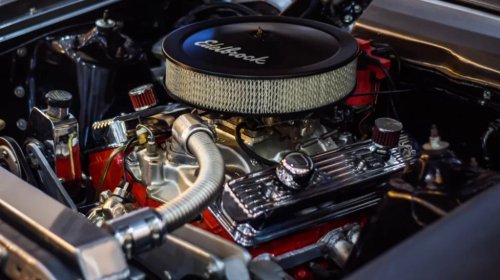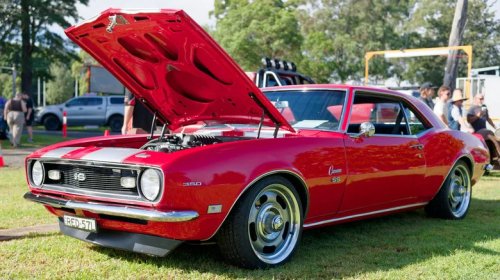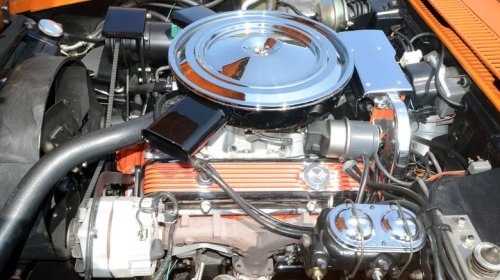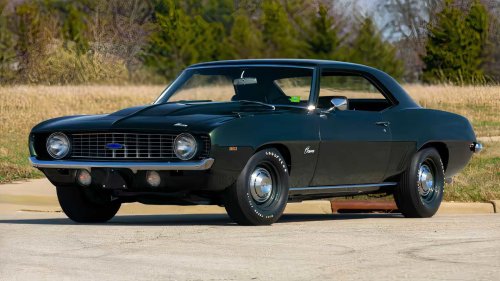
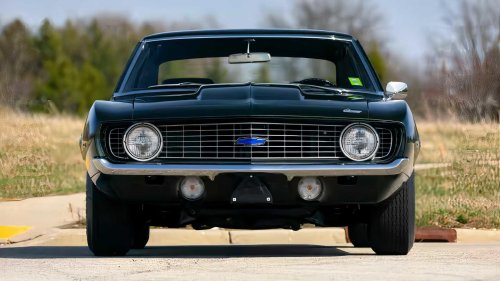
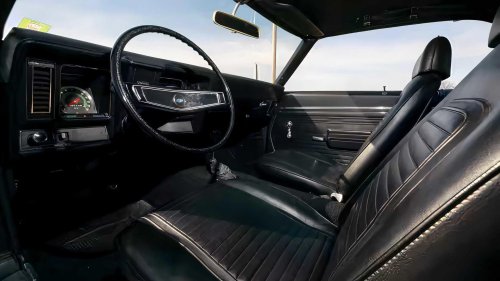
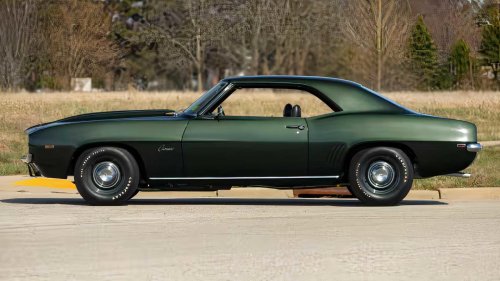
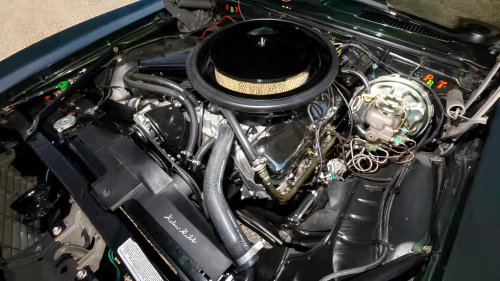

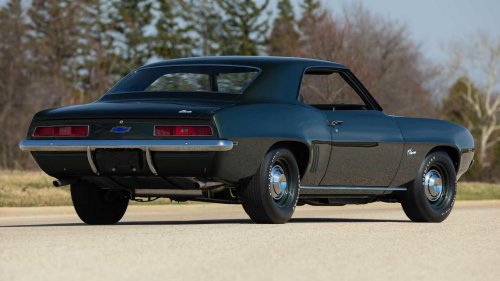
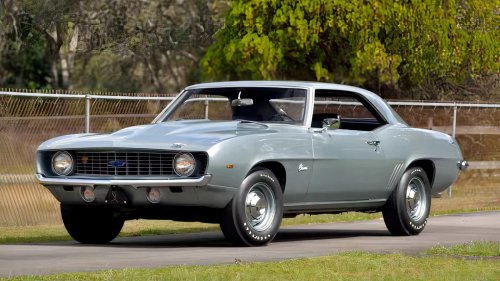
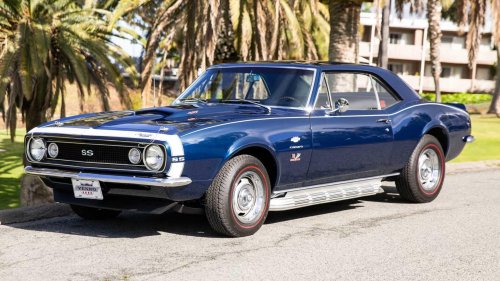
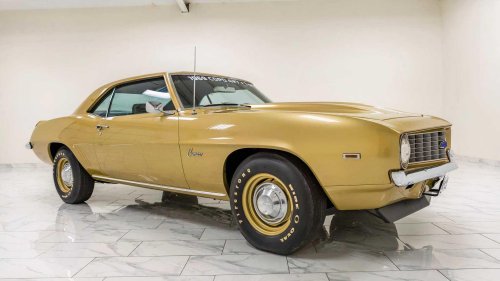
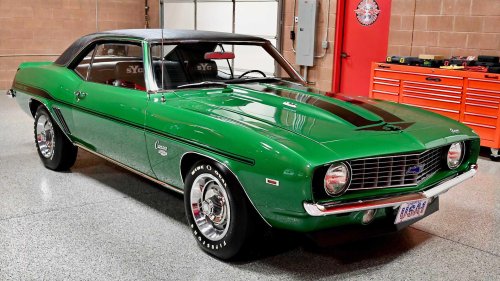



















In the late 1960s, Chevroletquietly built a Camaro so rare, so purpose-driven, and so far removed from normal showroom logic that most gearheads never even knew it was available. It was never advertised, and it certainly wasn't flashy. And, sadly for the average gearhead, it was never meant for casual drivers. This was a machine created to satisfy racers, bend corporate rules, and dominate the drag strip at any cost.And now, almost six decades later, the mystique of this Camaro hasn’t faded. In fact, scarcity has only heightened the legend surrounding this big-block. In the late 1960s, it was a hard sell, but today what was once a hard sell has turned into one of the most coveted Camaros ever built. The 1969 Camaro ZL-1 Was The Rarest Big-Block Camaro Chevy Ever Built via MecumThe 1969 Chevrolet Camaro ZL-1 sat at the very top of the Camaro food chain during the golden age of American muscle cars – not because of flashy stripes or luxury options, but because it was built with one purpose in mind: winning drag races. It was a one-year-only machine created through Chevrolet’s Central Office Production Order system, under the code COPO 9560. At the time, GM had placed a strict corporate policy on Chevrolet. The policy was made to ensure that Chevy only equipped factory-built Camaros with engines that were less than 400 cubic inches. Thus, utilizing the COPO’s special ordering system was Chevy’s way of quietly bending corporate rules and building unthinkable machines like the ZL-1.via MecumInterestingly, the request for the ZL-1 came from an Illinois car dealer and well-known racer, Fred Gibb. You see, Gibb wanted a more powerful option for NHRA drag racing. And, under NHRA rules, at least 50 identical production cars had to be built and offered for sale for the car to be approved for competition.Only 69 examples were built, all during the 1969 model year, making it the rarest factory big-block Camaro ever produced. Each car was fitted with an all-aluminum 427-cubic-inch ZL-1 V8, a racing-derived engine developed for Can-Am competition. Despite being officially rated at 430 horsepower, the ZL1's real power was widely understood to be much higher, with many period testers and racers estimating output well north of 500 horsepower in stock form. Aluminum construction helped offset the engine’s size, keeping weight closer to that of a small-block Camaro than a typical iron big-block car.via Mecum While Gibb had intended to sell the entire fleet of ZL-1s through his Chevy dealership in La Harpe, Illinois, he soon found that his philosophy of “what wins on Sunday, sells on Monday” didn’t exactly translate to public appeal. Gibb had trouble selling the 50 ZL-1s, worth over $363,000 combined, to the public. So, while his creation did meet NHRA rules, it wasn’t necessarily a great financial move. Only 13 ZL-1s were ever sold directly by Gibb’s dealership. The majority of the ZL-1s were eventually redistributed through the Chevy dealer network or had their engines removed to be used in different projects. A Sleeper Among Muscle Cars via MecumAside from its rarity, what made the 1969 ZL-1 stand out was how understated it was. Most were ordered with minimal options, basic interiors, and little visual flair. From the outside, it looked like a regular Camaro. Under the hood, it was one of the most exotic engines Chevrolet had ever installed in a streetcar.Today, the ZL-1 remains deeply desirable because it represents a rare moment when Detroit briefly prioritized performance over sheer profit. It is a factory-built race car hiding in plain sight, produced in microscopic numbers, and backed by ironclad documentation. For collectors, it is not just a Camaro. It is the ultimate expression of Chevrolet’s muscle car era, frozen in a single model year. A Look Under The Hood Of The 1969 Chevrolet Camaro ZL-1 via MecumThe heart of the 1969 Chevrolet Camaro ZL-1 is what truly separates it from every other big-block Camaro that came before or after. Under the hood sits the legendary 427-cubic-inch ZL-1 V8, an all-aluminum monster originally developed for Chevrolet’s Can-Am racing program. This was not a warmed-over street engine or a dressed-up iron big-block, either. It was a full-on racing design adapted, just barely, for street use. 1969 Chevrolet Camaro ZL-1 Specs At its core, the ZL-1 featured an aluminum block and heads, forged internals, a high-lift solid-lifter camshaft, and a 780-cfm Holley four-barrel carburetor. Chevrolet officially rated it at 430 horsepower, the same conservative figure used for the iron-block L88 Corvette. In reality, most experts agree the ZL-1 produced well over 500 horsepower in stock trim, with enormous headroom for racers who knew what they were doing. That kind of output was almost unheard of for a factory-installed street engine, especially in the '60s.Via: Mecum AuctionPerformance numbers backed up the legend. Period testing and drag strip results showed ZL-1 Camaros capable of quarter-mile times in the low 11-second range with minimal modifications, and some dipping even lower in race trim. Thanks to the aluminum construction, the engine weighed roughly 100 pounds less than an iron big-block, helping balance the Camaro’s front end and improving its launch capabilities.Via: Mecum AuctionWhat makes the ZL-1 engine so rare today is simple math. Only 69 Camaros ever received it from the factory, and the engines themselves were astronomically expensive at the time. The ZL-1 option alone costs nearly as much as an entire base Camaro, which is why many dealers initially struggled to sell them.Today, the ZL-1 remains one of the most exotic, overbuilt, and myth-laden engines ever installed in a Camaro. And gearheads will never forget that it also represents when Chevrolet quietly unleashed a race-bred V8 into a showroom car. How Much Is A 1969 Camaro ZL-1 Worth Today? via MecumWhen the 1969 Chevrolet Camaro ZL-1 first rolled off the assembly line, its sticker price was significant, especially compared to other Camaros of the era. It was roughly $7,269 with the ZL-1 option, nearly double what a cast-iron big-block package cost at the time. When adjusted for inflation, that’s about $64,200 in today’s money. That high price tag was one reason dealer Fred Gibb struggled to sell his allocation of cars in 1969.Fast-forward more than five decades, and the ZL-1 has become one of the most collectible and valuable American muscle cars ever built. Its value today is driven by extreme rarity and the mystique of the all-aluminum 427 monster that powered it. According to Hagerty’s valuation tool, a ZL1 in good condition can be worth around $622,000 in the current market, with top examples trading well above that.Auction results illustrate just how far values have climbed. One original, matching-numbers ZL-1 reportedly sold for over $1,094,500 at a Barrett-Jackson Scottsdale sale, making it one of the highest-priced first-generation Camaros ever recorded, as noted by GM Authority. Other Rare Big-Block Machines That Deserve A Second Look Mecum AuctionsWhile the 1969 Camaro ZL-1 sits at the top of the rarity pyramid, it wasn’t the only big-block Camaro created by bending corporate regulations in an effort to dominate drag strips. Chevrolet and its dealers quietly unleashed a few other monsters in 1969 that deserve serious respect today. Two standouts in particular are the COPO 9561 Camaro and the Yenko Camaro. 1969 Camaro COPO 9561 (L72 427) via Bring A TrailerThe COPO 9561 Camaro was essentially the ZL-1’s iron-block counterpart. Built through Chevrolet’s Central Office Production Order system, it was designed to bypass GM’s 400-cubic-inch limit and give racers access to the fearsome L72 427-cubic-inch V8, officially rated at 425 horsepower.Unlike the ultra-rare ZL-1, the COPO 9561 was produced in larger but still limited numbers, with roughly 1,015 examples built during the 1969 model year. These cars were stripped-down, purpose-built drag machines. Today, collectors prize COPO 9561 Camaros for their factory documentation, brutal performance, and close ties to Chevrolet’s late-’60s racing ambitions. 1969 Yenko Camaro (Iron 427) via Bring A TrailerThe 1969 Yenko Camaro represents the dealer-driven side of the big-block wars. Created by legendary performance dealer Don Yenko, these Camaros were converted after delivery using Chevrolet’s iron-block 427-cubic-inch V8, typically rated around 425 horsepower. Yenko built them to satisfy customers who wanted ZL-1-level performance without the astronomical price tag. Production was limited to approximately 201 units, all built during 1969. With bold Yenko graphics and serious straight-line performance, these cars blended race-ready hardware with unmistakable street presence.Today, Yenko Camaros remain highly desirable thanks to their rarity, documented provenance, and the part they played in pushing American muscle beyond factory limits.At the end of the day, the 1969 Camaro ZL-1 was never built to be a popular or a practical muscle car. It was built to win, and decades later, it's still one of the most revered muscle cars Chevrolet has ever produced.Sources: Chevrolet, Hagerty.