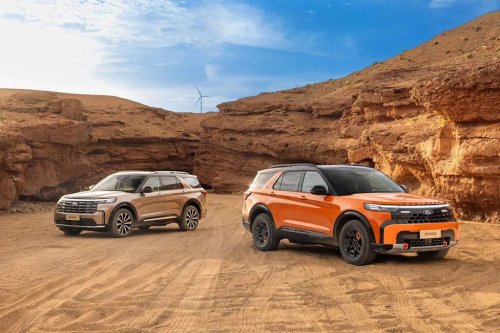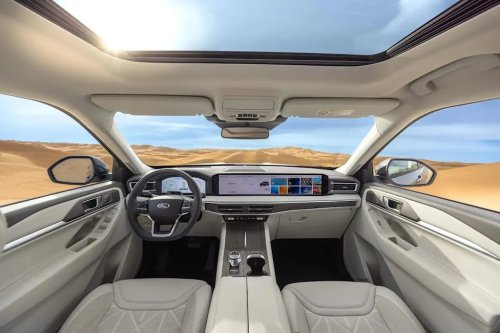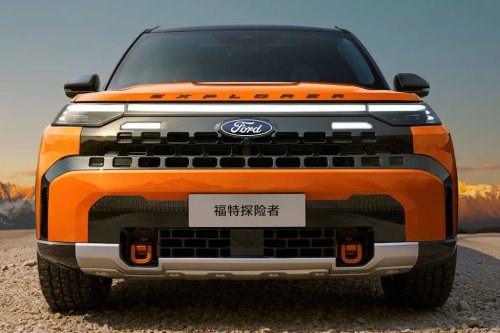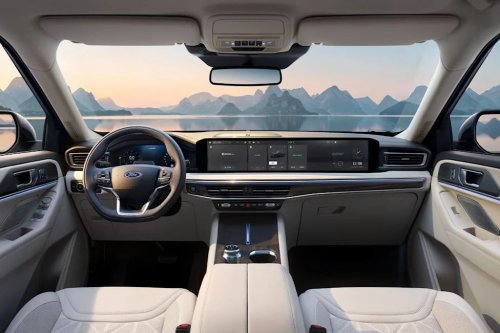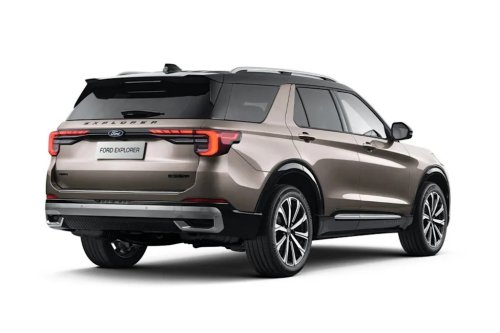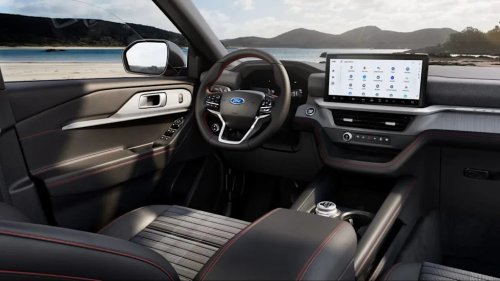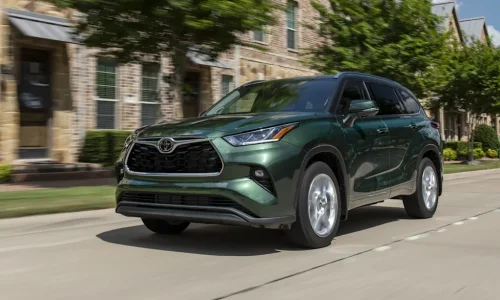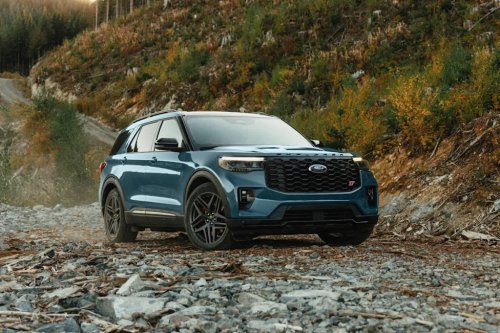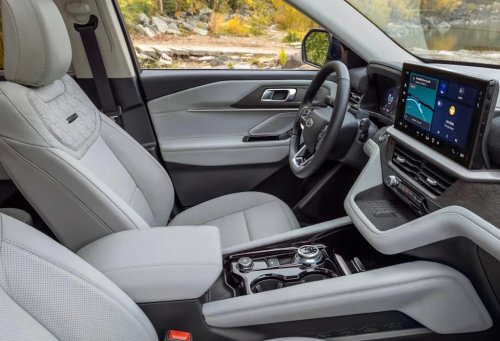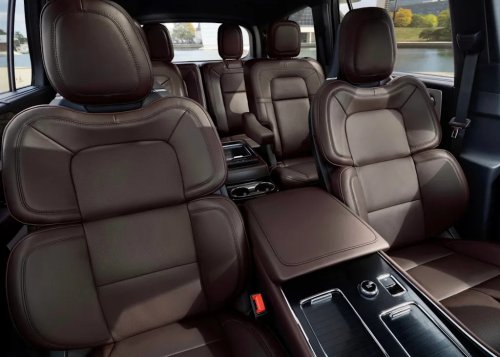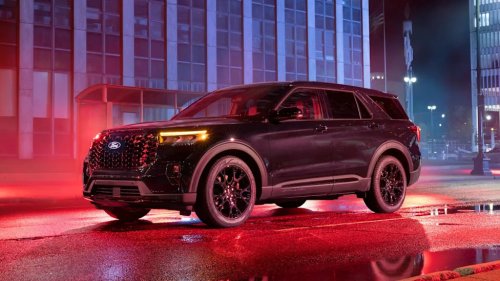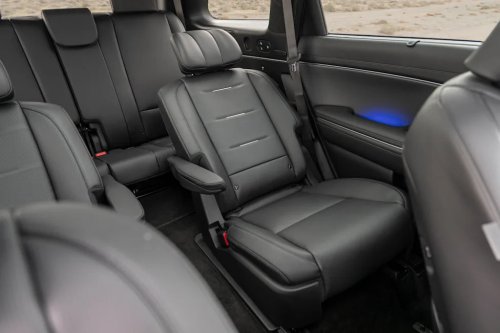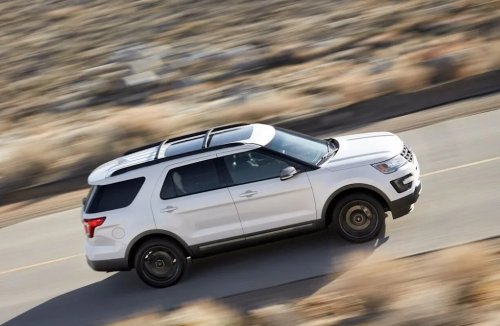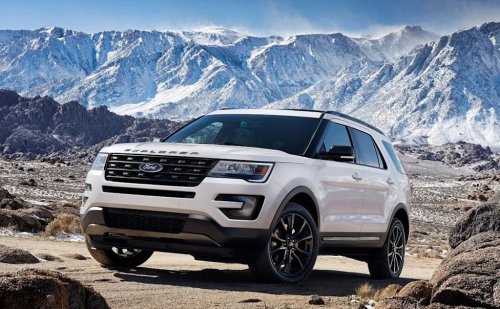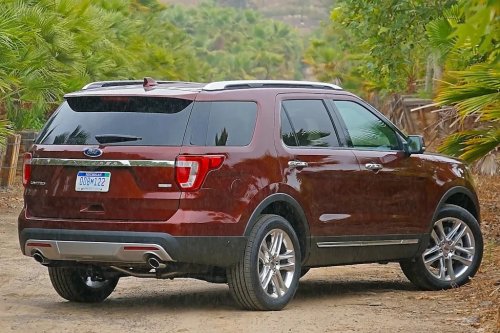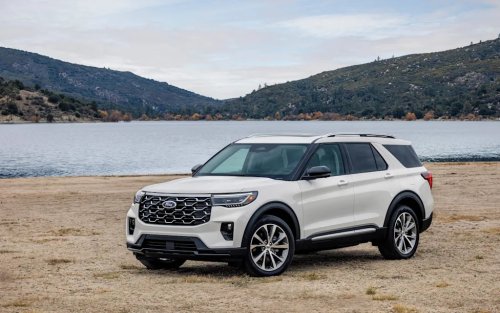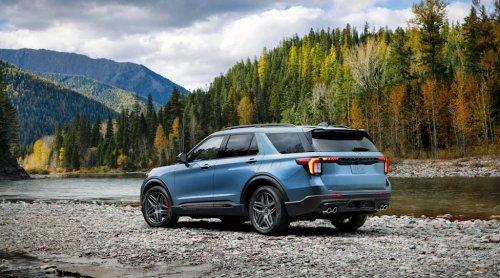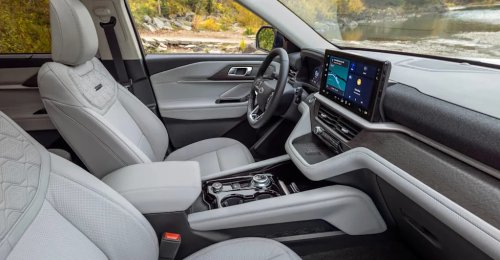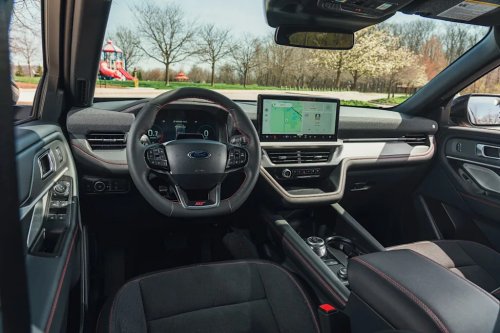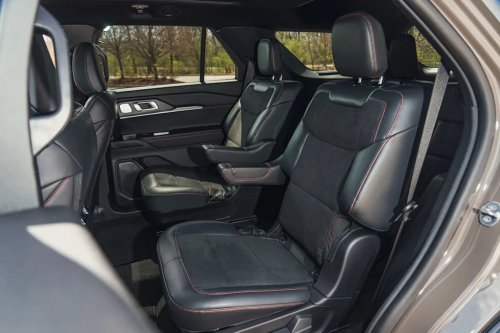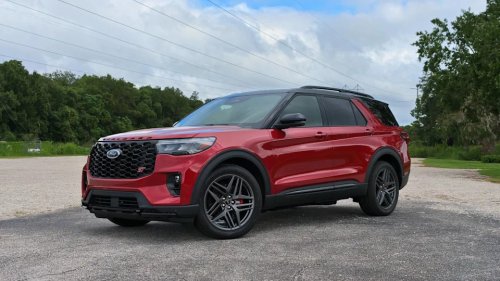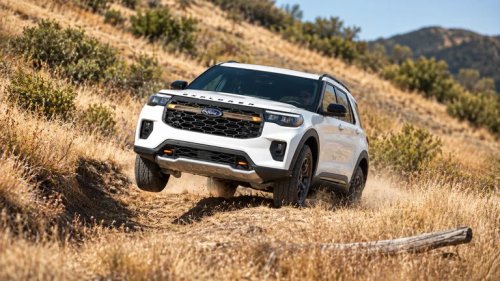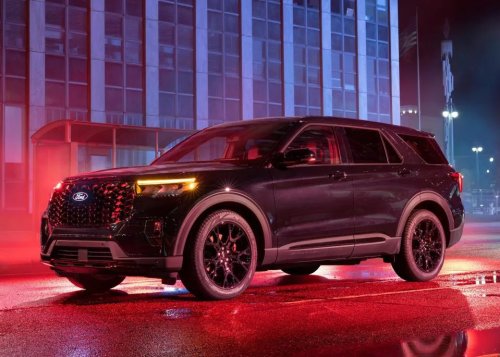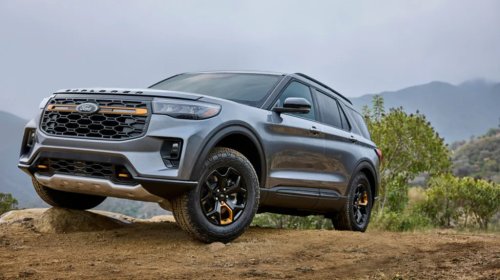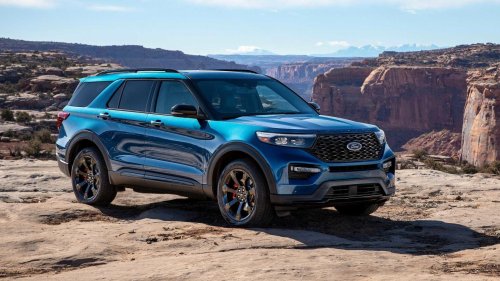
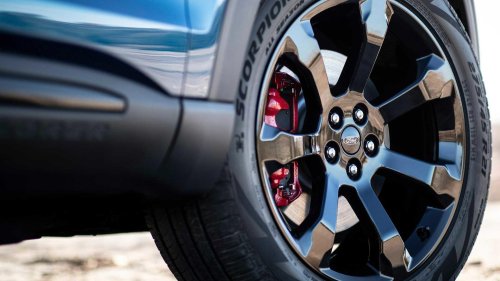
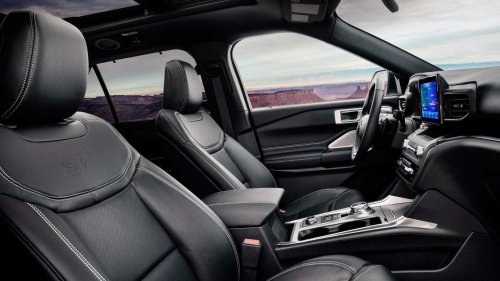
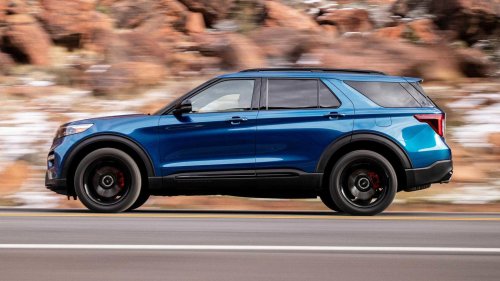
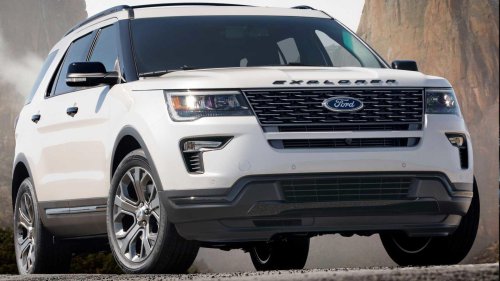
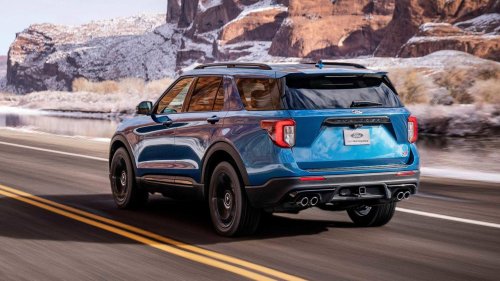
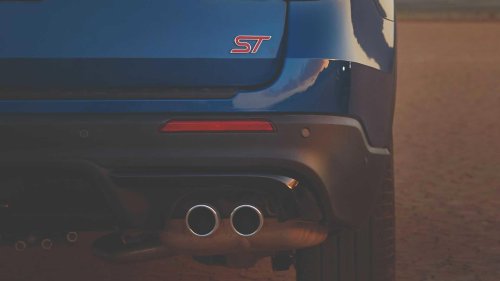
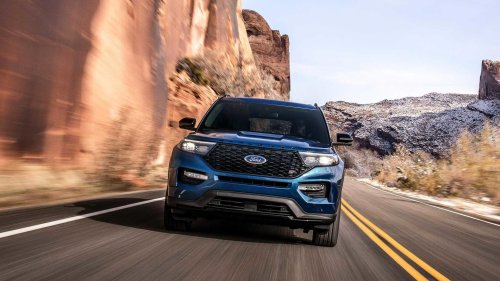





















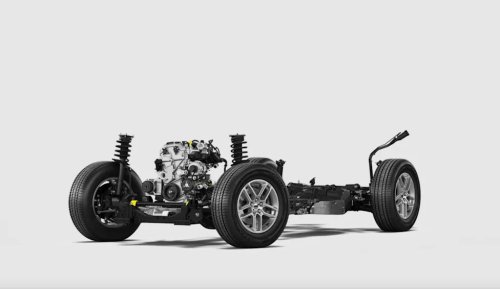
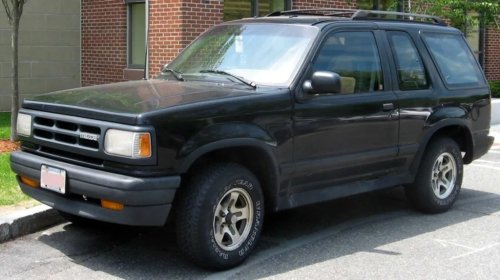
Minivans have long been the default choice for larger families, offering third-row seating, space for storage, and easy access via sliding doors. Over the past decade, though, there’s been a noticeable shift toward three-row SUVs. These deliver similar space and cargo versatility but with a taller seating position that improves visibility as well as access for those with weaker knees. Buyers gave up some efficiency and the sliding door but gained style and a more adventurous image, even though most rarely leave the pavement.Earlier three-row SUVs, like the original Jeep Grand Wagoneer, leaned toward ruggedness, promising off-road capability and heavy-duty hauling. Today, though, unless you’re willing to pay premium prices, most mainstream three-row SUVs are as uninspiring to drive as a minivan. There have been exceptions, however, and the Ford Explorer ST stands out. It injected serious performance into the segment when it landed for the 2020 model year, and for buyers with a budget around $20,000, a used early example offers an unusual mix of utility and excitement. A Family Hauler That's Actually Fun Ford Key Facts To Know Unveiled at the 2019 Detroit Auto Show Packs a twin-turbocharged V6 Based on the sixth-generation Explorer It was last updated for the 2025 model year Pricing has sat around $55,000 MSRP throughout its time in production Ford introduced the sixth generation of its Explorer for the 2020 model year, built on a new rear-wheel-drive platform with longitudinally mounted engines, the kind you usually find in more premium SUVs. The sixth-gen Explorer also debuted a performance flagship wearing the ST badge, a nameplate more commonly reserved for brash, rally-bred hot hatches.But this was no dilution of the storied badge. The Explorer ST arrived ready to bring its performance A-game. Ford had already proven that a performance-oriented Explorer could work with the previous-generation Explorer Sport. With the new ST, the bar was raised, thanks to more power and torque, upgraded brakes complete with an ST-specific brake booster calibration, and the new platform’s suspension setup. We’re talking front strut-type suspension with a multi-link rear setup, stabilizer bars front and rear, and gas-pressurized hydraulic shocks.The regular Explorer’s suspension already has a hint of firmness that reveals itself when you start pushing it through corners. The ST keeps that same balanced character, only with higher limits. Body roll is still present – this is a tall, 4,700-pound SUV, after all – but its predictable nature instills confidence in tight bends and quick transitions, thanks in part to its standard all-wheel-drive system. Among mainstream three-row SUVs, the Explorer ST stands out as one of the most dynamically competent, adding just enough sharpness and personality to make driving genuinely engaging.Ford There’s still a gap between the ST and pricier performance SUVs from BMW M and Mercedes-AMG. For example, the steering remains relatively light, even in Sport mode. And combined with the ST’s tight on-center spot, it makes it easy to drift a hair off-line if you’re not paying attention. There's also some hesitation when accelerating from a standstill. Press the accelerator fully, and there’s a noticeable pause in power delivery, followed by a soft rollout, until the power finally hits and presses you firmly back in the seat – enough to sprint from zero to 60 mph in a brisk five seconds. Exhaust tuning ensures the engine sounds lively, especially in Sport mode, though some buyers may find it a touch loud.Ford All of this practicality and performance came for a starting price of just under $55,000. Even at that level, the ST offered a wealth of standard equipment, including unique ST styling cues on the exterior, quad exhaust tips, a 12.3-inch digital gauge cluster; heated sports steering wheel, second-row captain’s chairs, a Class III receiver, and Ford’s suite of active safety tech. Standard wheels measured 20 inches, with 21-inch options available via the ST Street and ST Track packs, which also added upgraded brake hardware.The Explorer ST was last updated for the 2025 model year as part of the Explorer's mid-cycle refresh. Performance stayed much the same, with the focus instead being on a new exterior design and tech upgrades. The latter included a new 13.2-inch infotainment screen and the latest conveniences like wireless Apple CarPlay and Android Auto and voice assist. Impressively, the starting price for the Explorer ST hasn't budged much over the years, with the current 2026 model carrying an MSRP of $56,465. How Much To Pay Today Ford Looking at classifieds, a number of early model year Explorer STs can be found for under $20,000. As you might expect, mileage at this price point tends to be on the high side, typically at least 120,000 miles, but examples with just under 100,000 miles still surface. The good news is that you only have to stretch the budget slightly higher to yield many lower-mileage examples. For around $25,000, it’s not hard to find Explorer STs with roughly 70,000 miles on the clock. To drive the point of affordability home, our own Price Trends tool, accessed via the CarBuzz Marketplace, demonstrates that the average price of a '20 Explorer ST is $26,955, based on over 250 listings. Among these are numerous sub-$20,000 listings.At that $25,000 mark, other three-row performance SUVs from mainstream brands enter the conversation. One contender worth considering is the Dodge Durango SRT, introduced for the 2018 model year. Early examples came with a 6.4-liter Hemi V8, rated at 475 horsepower, and can be found starting around $25,000, though mileage tends to be well over 100,000 miles. Examples with slightly under 100,000 miles command closer to $30,000. The infamous Durango SRT Hellcat, packing the supercharged 6.2-liter V8 with 710 hp, arrived in 2021, though prices remain well above this range.Ford For buyers on a strict budget, a more practical alternative may be the Explorer ST’s predecessor, the Explorer Sport. Produced from 2013 to 2019 and powered by a twin-turbocharged 3.5-liter V6 rated at 365 hp, these can be found today with fewer than 100,000 miles for less than $10,000. What To Watch Out For Ford While this generation of the Explorer's dependability is generally good, the 2020 model did have more issues compared to later model years, according to information from CarComplaints. Transmission troubles especially can lead to big repair bills, with hard shifts and hesitations potentially hinting at issues ahead. RepairPal gives the Explorer an above-average reliability score of 3.5 out of 5.0, noting that owners generally experience relatively few unscheduled repair visits and average repair severity. The site estimates annual maintenance and repair costs at about $732, slightly higher than the midsize-SUV average but still within a typical ownership range.The good news is under the hood: Ford’s twin-turbo V6 engine family has matured significantly, with engines built after 2018 generally benefiting from changes that helped improve durability compared with earlier units. Some owners noticed cracks in the exhaust system, though, including on the catalytic converters.Ford A thorough pre-purchase inspection is highly recommended, especially for higher-mileage examples, and buyers should try to secure as much documentation as possible showing routine maintenance. Setting aside a budget for future repairs is also a smart move. In addition, the 2020 Explorer, including the ST variant, also racked up many recalls, including for issues like rollaway risks and faulty backup cameras. Ensuring these are addressed is crucial. The Sweet Spot For Practical Performance Ford For buyers hunting a fast, fun-to-drive family SUV without spending luxury-car money, the Explorer ST hits a rare sweet spot. It blends genuine performance with everyday practicality, decent reliability, respectable fuel economy, and strong value on today’s used market. In a segment full of sensible but sleepy choices, the Explorer ST proves a three-row family hauler can still put a smile on your face.