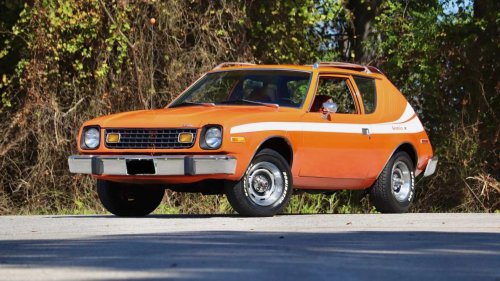
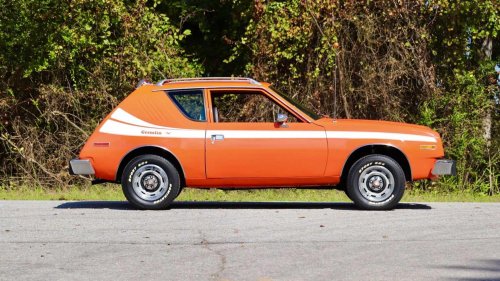
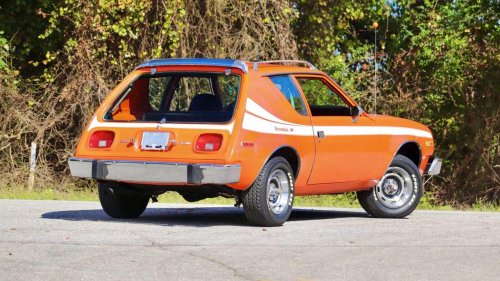
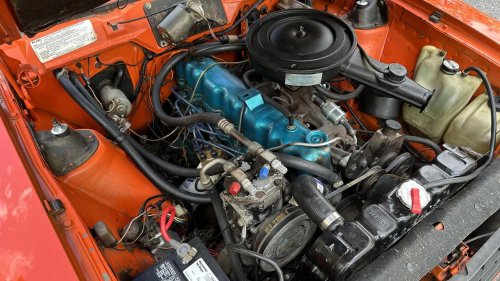
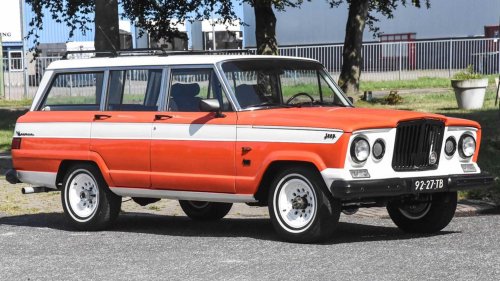
When it comes to SUVs, most people trace their roots back to the 1980s with early Broncos, Range Rovers, or Explorers. But the real pioneer showed up much earlier, and barely gets the credit it deserves.In 1963, a four-wheel-drive vehicle hit the market with a factory automatic transmission, independent front suspension, and optional comforts like air conditioning and power steering. It was aimed at families, not just off-roaders, and it set the blueprint for the modern SUV, decades before the term even existed.While vintage Broncos and FJ40s regularly fetch big money, this early SUV remains overlooked. You can find one in good condition today at an affordable price. That makes it one of the most accessible ways to get into vintage 4x4 ownership with real historical significance.We’ll break down exactly what made this vehicle so innovative, how it quietly reshaped the market, and why collectors should start paying attention. We’ll also look at what it costs to buy today and how it stacks up against other classic 4x4s. The 1963 Jeep Wagoneer: The First Automatic 4x4 Is Worth $18,400 Today Via: Collecting Cars The 1963 Jeep Wagoneer holds a unique place in automotive history: it was the world’s first mass-market four-wheel-drive vehicle with an automatic transmission. That alone gives it serious credibility. It replaced the aging Willys Jeep Station Wagon and rewrote the rulebook for what a 4x4 could be.No vehicle before it combined a 4WD layout with an automatic gearbox in a civilian-friendly package. The Ford Bronco didn’t arrive until 1966 and offered only a manual transmission at launch. The original Range Rover, often credited with blending comfort and off-road capability, debuted even later in 1970. Jeep did it first, and arguably with more mechanical innovation for its time.Via: Collecting Cars Despite its pioneering status, the original Wagoneer remains shockingly undervalued. According to Hagerty’s valuation data, a 1963 Wagoneer four-door 4x4 in good condition averages just $20,700. Even examples rated excellent typically don’t exceed $34,000. That’s a bargain compared to early Ford Broncos, Toyota FJ40s, or first-gen Land Cruisers, which regularly command prices well beyond $40,000 in similar condition.There’s growing interest in vintage 4x4s, and the Wagoneer is starting to show up on collectors’ radars. But for now, it still lags behind its better-known peers in both recognition and value.That makes it a smart buy for enthusiasts who want historic significance without paying inflated classic truck premiums. It's a landmark 4x4 that did it first and still costs less than most of the ones that followed. The Wagoneer Was Also The World's First Luxury SUV Via: Collecting CarsThe 1963 Jeep Wagoneer wasn’t just ahead of its time mechanically, it also redefined who a 4x4 could be for. Instead of building a bare-bones off-roader for farmers or military use, Jeep aimed the Wagoneer at families, professionals, and suburban drivers who wanted capability without sacrificing comfort.Industrial designer Brooks Stevens shaped the look of the Wagoneer. Known for his clean, functional style, Stevens gave the vehicle a modern, almost wagon-like silhouette that stood apart from the boxy Jeeps of the past. His design helped position the Wagoneer as more than just a tool. It looked at home in both the driveway and the dirt.Via: Collecting CarsBeneath the body, Jeep introduced an independent front suspension, something nearly unheard of in 4WD vehicles at the time. This gave it better on-road handling and a smoother ride, critical for everyday use. Optional features like power steering, air conditioning, and, of course, an automatic transmission further pushed the Wagoneer toward refinement. These were the kinds of luxuries you expected in sedans, not trucks.Via: Collecting Cars A 1963 advertisement for the Wagoneer called it “All-New. All-Jeep.” That summed it up well. Jeep had created a 4x4 that didn’t require trade-offs. It was a vehicle that could handle the campsite and the carpool lane.Today’s luxury SUVs follow that same formula. They mix utility, comfort, and family-ready practicality. The Wagoneer pioneered the "luxury SUV" as we know today. The Engine And Transmission That Pioneered The Automatic 4x4 Via: Collecting CarsThe 1963 Jeep Wagoneer came standard with a 3.8-liter Super Hurricane inline-six that made 140 hp and 210 lb-ft of torque. It was simple, durable, and delivered enough low-end torque for basic off-road use and towing. Jeep also offered the more advanced 5.4-liter Tornado overhead-cam inline-six, also rated at 140 hp. Despite matching the output, the Tornado ran smoother, revved higher, and was more refined for road use. It was the first overhead-cam engine offered in a mass-produced American vehicle.Jeep added factory automatic options, making it the first four-wheel-drive vehicle in the U.S. to offer a true automatic transmission. Depending on the model year, Jeep sourced these from GM (Turbo-Hydramatic 400) or Chrysler (TorqueFlite), pairing them with part-time 4WD. But most early Wagoneers used three or four-speed manual transmissions.Via: Collecting CarsThe drivetrain used a manually engaged transfer case and Dana 44 axles. In rear-wheel-drive mode, the Wagoneer handled like a car. With 4WD engaged, it was capable enough for trails, snow, and rough roads. Curb weight ranged from 3,900 to 4,100 pounds depending on trim and equipment. Ground clearance was competitive, and the independent front suspension gave it better road manners than any other 4x4 at the time.This layout that married the torquey inline-six, optional automatic, selectable 4WD, and comfort-focused suspension set the blueprint for the modern SUV. The details have changed, but the concept hasn't. A Historic 4x4 That’s Still A Steal Via: Collecting Cars The 1963 Jeep Wagoneer redefined what a 4x4 could be. It was the first to offer a factory automatic transmission with four-wheel drive, independent front suspension, and options like air conditioning and power steering. It targeted families, not just off-roaders. That alone puts it in a category of one.Sixty years later, it's still undervalued. According to Hagerty, a good example averages around $18,400, with excellent ones staying under $30,000. That’s a fraction of what early Broncos, Land Cruisers, or FJ40s are going for—and the Wagoneer arguably had more influence on the modern SUV.This is a rare case where the historical significance, mechanical innovation, and usability all line up, and the price is slowly catching up. The drivetrain still holds up for occasional use. The body styling still turns heads. And the story it tells still matters to the evolution of the American automobile.For anyone hunting a vintage 4x4 with real heritage and a backstory worth sharing, the ’63 Wagoneer deserves a serious look. It’s not just a piece of history. It’s one you can still afford to drive. The market will figure that out soon, so better to get in before it does.


























 +31 others