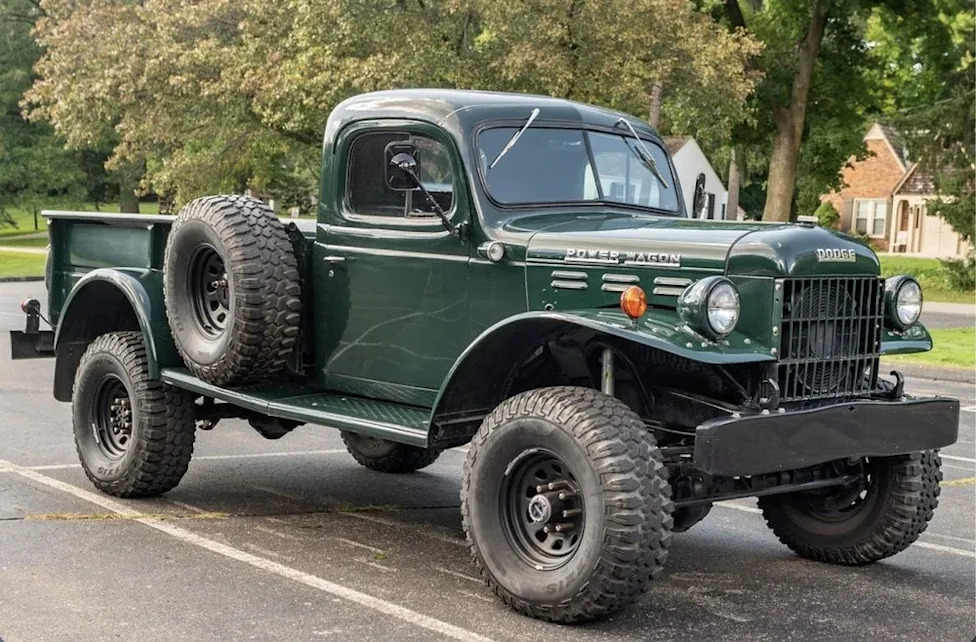
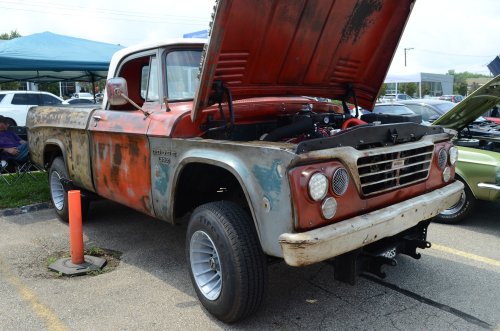
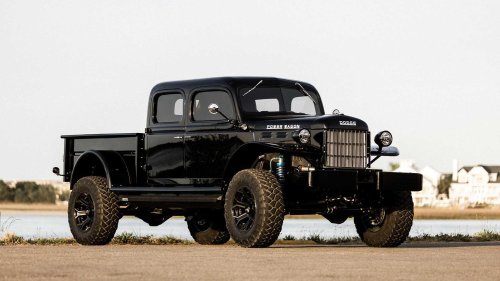
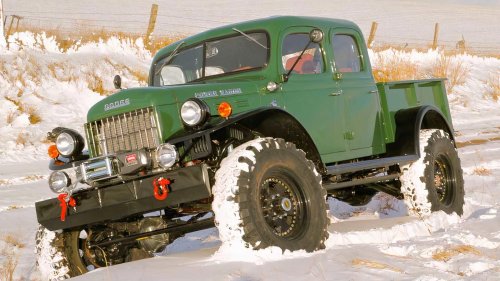
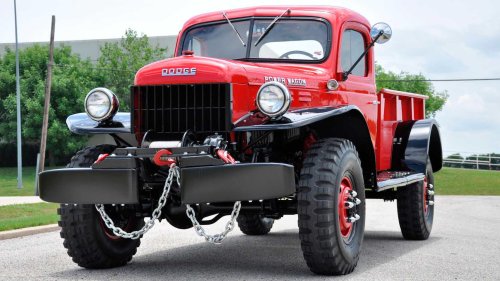
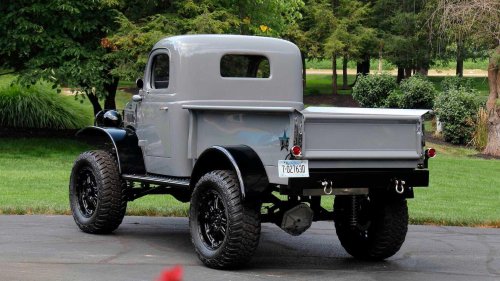
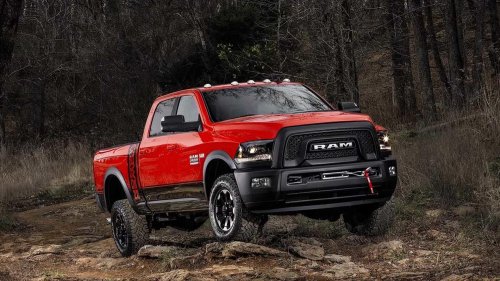
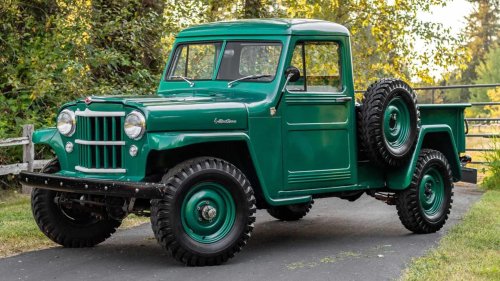
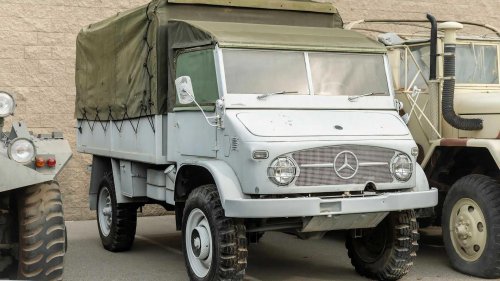
Pickup trucks have long battled for dominance in towing, hauling, reliability, and off-road capability. These are vehicles that built their reputation on being able to do the work anywhere and under any conditions, which includes off the beaten path. Today, names like Raptor, TRD Pro, ZR2, and RHO sit at the top of their respective brands' truck lineups, but the blueprint for those pickups had been established decades before those names ever hit the roads.The very first purpose-built off-road pickup hit the streets in the 1940s – decades before the modern 4x4 era began. It packed serious muscle, durability, and forward-thinking engineering that allowed it to dominate terrain where others simply couldn’t go. Dodge wasn’t just building another work truck; it was pioneering a whole new class of vehicle. This machine set the standard for toughness long before anyone knew there’d be a competition. The Dodge Power Wagon Is The World's First True Off-Road Pickup Desert Power Wagon You could say the Dodge Power Wagon was the spark that lit the off-road pickup revolution. Long before “trail-rated” badges and Baja modes were marketing buzzwords, the Power Wagon was out there proving what a truck could really do. Launched in 1945 and based on the tough-as-nails Dodge WC military trucks from World War II, it became the first mass-produced 4x4 pickup sold to civilians.It didn’t take long for farmers, ranchers, and construction crews to realize this thing wasn’t just another work truck. It was a go-anywhere, do-anything machine. (Honestly, it’s a mystery why Yellowstone hasn’t featured one yet.) 1945 Dodge Power Wagon Key Specs Under the hood sat a flathead inline-six making 94 horsepower and 185 lb-ft of torque. Sure, that may not be much by modern standards, but back then, it was serious pulling power. Over the years, the Power Wagon lineup saw a variety of engines, including a 4.1-liter flathead six, a 5.2-liter LA-series V8, and the later 5.9-liter LA V8.The 1945 model used a stout 4-speed manual transmission, part-time four-wheel drive, and live axles with leaf springs at both ends – a formula that gave it immense traction and reliability. With locking front and rear differentials, high ground clearance, and a steel body built to survive anything, it could muscle through ruts, boulders, and mud like nothing else on the road. Today, only hardcore off-roaders like the Ford Ranger Raptor or Chevy Silverado ZR2 Bison come with similar front and rear lockers. Solid Axles, Locking Diffs, And High Ground Clearance Made The Power Wagon The Most Capable Pickup Legacy Classic Trucks Built Like A Tank Before Anyone Knew They Needed One The Power Wagon’s two-speed transfer case lets drivers switch between high and low range, making it equally comfortable crawling up a rocky hill or pulling a trailer out of a swamp. The solid axles and leaf-spring setup gave it immense articulation and strength – it could twist, flex, and claw its way through terrain that would stop lesser trucks cold.Via: Mecum With short overhangs and a tall stance, the Power Wagon handled obstacles like a mountain goat. Its 4-speed gearbox featured a super-low first gear, perfect for slow-speed rock work or heavy towing duty. Locking hubs ensured all four wheels dug in when traction ran thin.The Dodge Power Wagon didn’t just invent the off-road pickup, it defined it. Every modern trail-ready truck, from the Ram TRX to the Tacoma TRD Pro, owes a little bit of its DNA to this WWII-born legend. Nearly 80 years later, it’s still the blueprint for what a real off-road truck should be. Prices For A Used Dodge Power Wagon Vary Wildly via Mecum Auctions The original Dodge Power Wagon was produced for over two decades, from 1946 to 1968, with an estimated16,000 units leaving the factory. Since then, it has undestandably become a highly sought-after classic, with used prices varying significantly based on condition, originality, and restoration quality.Today, according to Classic.com’s valuation, an original Dodge Power Wagon averages right around $60,000, covering model years 1946 to 1968. A rough, unrestored example can sell for $10,000 to $30,000, while well-maintained or lightly restored models typically range between $50,000 and $80,000. Fully restored, showroom-quality Power Wagons can certainly sell for over $100,000. Prices have steadily increased as collectors and off-road enthusiasts appreciate its historical significance and rugged charm. The Ram Power Wagon Is A Worthy Modern Successor Ram 2025 Ram 2500 Power Wagon Feature Highlights Heavy-duty coil-spring front suspension with Bilstein shocks and a solid rear axle Front and rear locking differentials Electronically controlled sway bar disconnect Available 12,000-lb winch Ram brought back the Power Wagon name in 2005 as a special off-road package for the Ram 2500. It remains available on the 2500 model, but unlike high-speed desert runners like the Ford Raptor or Ram 1500 RHO, the Power Wagon prioritizes utility-focused off-road performance, slow-speed rock crawling, and extreme articulation. It has 33-inch all-terrain tires, Bilstein shocks, and front and rear locking differentials, just like the original Power Wagon, while adding an electronically controlled sway bar disconnect, introduced in 2011, that increases front flex at the push of a button. You can also get a winch installed on the front bumper directly from the factory, rated at 12,000 pounds.A Cummins turbodiesel used to be available on the Ram Power Wagon, but for 2025, the only option is a 6.4-liter HEMI V8 that produces 405 horsepower and 429 lb-ft of torque. It can tow up to 10,570 pounds, less than diesel-powered heavy-duty trucks but still adequate for most hauling needs. Payload capacity is rated at 1,560 pounds, also lower than standard Ram 2500 trims due to its off-road suspension and softer coil springs. Other Early Off-Road Pickups That Followed The O.G. Power Wagon Willys-Overland Jeep 4x4 Truck Bring A TrailerBuilt on the CJ-2A Jeep platform, the Willys-Overland Jeep 4x4 Truck was produced from 1947 to 1965. It was one of the first civilian pickups to offer factory four-wheel drive, decades before Chevy and Ford would catch up in ’57 and ’59.Like the Power Wagon, it had military roots, but civilians quickly realized it was perfect for farm work, trades, and outdoor adventures. Its body-on-frame construction, solid front and rear axles, and high ground clearance made it a serious off-road machine, capable of tackling mud, rocks, and steep inclines that would stop most other trucks.Under the hood, buyers could choose between two engines. The original Go-Devil L-head 134 cu-in inline-four made 63 horsepower, while the later Hurricane F-head 134 cu-in inline-four bumped that to 75 horsepower. Not huge numbers by today’s standards, but these engines were bulletproof, easy to maintain, and perfect for both work and play. Mercedes-Benz Unimog BonhamsInitially designed as an agricultural machine in post-war Germany, the Mercedes-Benz Unimog – short for "Universal-Motor-Gerät" or "Universal Motor Machine"—was built to handle extreme farming terrain. Unlike traditional tractors, it had four-wheel drive, equal-sized wheels on all corners, and portal axles, providing exceptional ground clearance and off-road capability.It was powered by a 1.7-liter diesel engine producing 25 horsepower, and it had a flexible frame and coil-sprung suspension that made it immensely capable. Its durability quickly caught the attention of Daimler-Benz, which took over production in 1951 and expanded its use beyond agriculture to military, rescue, and expedition roles.



















 +31 others