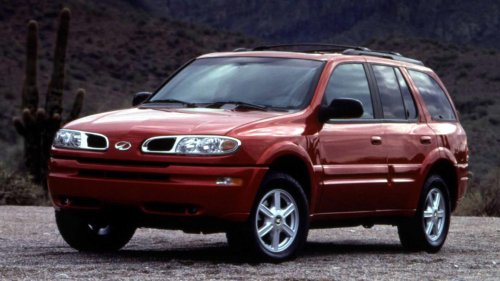
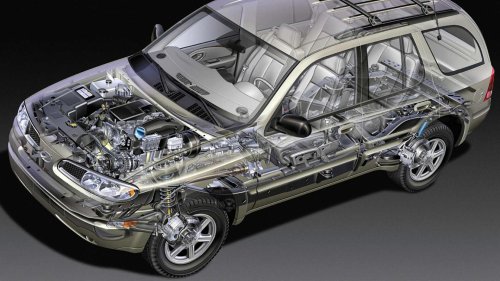
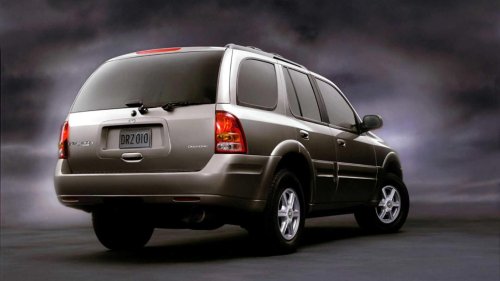
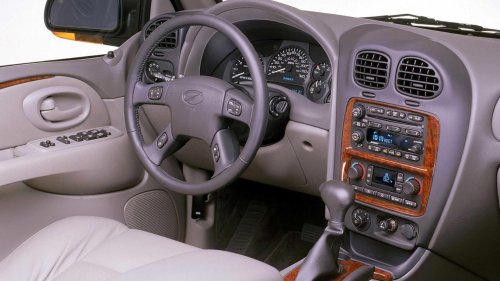
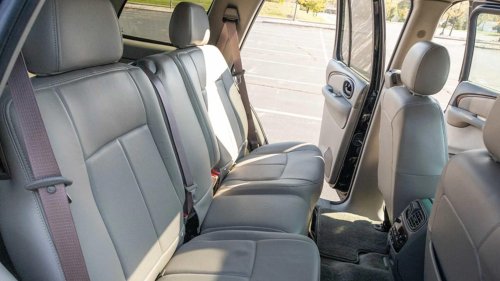
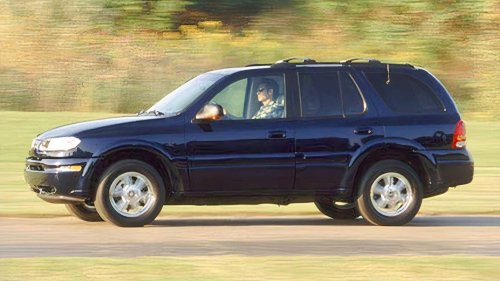


















Getting hold of a new luxury midsize SUV isn't a cheap exercise in today's world, with the most affordable examples setting you back around $50k. While this is pretty much bang on the current average cost of a new car in the United States as of 2026, many families won't want to be committing to such an expensive vehicle, especially given the rate at which the cost of living has increased over the past several years. This doesn't mean you'll have to forego your goal of adding a mid-size SUV to your driveway though, quite the contrary.In fact, you can spend a hell of a lot less if you really put your mind to it. Around a 10th of that, to be a little more exact. The Oldsmobile Bravada failed to make much of a mark when it was new, especially the final third-generation car that only lasted a few years on sale before the Oldsmobile name was killed off by General Motors. The machine can be picked up for an absolute bargain these days, and is a great way of getting a mid-size luxury SUV without the high-end pricetag. The Bravada Was GM's High-End Mid-Size SUV General MotorsBack in 2002, when the third-generation Bravada was unleashed to the American public, Oldsmobile retained its place as the mid-range brand in the General Motors portfolio of marques. It sat below Cadillac and Buick in the pecking order, though above Pontiac and the entry-level Chevrolet.Notably, the third-gen Bravada was one of three SUVs that utilized GM's new GMT360 platform, which was designed specifically to act as the starting point for its mid-range SUVs. Like its predecessors, the Bravada acted as the range-topping model above the GMC Envoy and Chevrolet Trailblazer.It was the shortest-lived of the trio though, primarily due to Oldsmobile being discontinued in 2004. As a result, GM essentially replaced it with the Buick Rainer in 2003, ahead of the Bravada meeting its maker the following year. The Bravada Provides Solid Power, But Won't Be Too Kind At The Pumps OldsmobileChoosing the engine housed beneath its sizable hood wasn't too difficult, as only one was made available. This was in deference to its Chevy and GMC siblings, which could be specced with V8s alongside the same naturally aspirated inline-six powerplant found in the Bravada.The 4.2-liter unit kicked out a solid 275 horsepower, which is sufficient to get the SUV to 60 mph in around 8.5 seconds. The Bravada channeled its power through either the rear or all four wheels, the latter coming via GM's SmartTrac AWD system.All examples came with a four-speed automatic transmission. Be wary of the Bravada being an early 2000s SUV though, as its six-pot powerplant is nowhere near as efficient as the smaller capacity engines used nowadays, which usually have some form of turbocharger or electrification to allow them to drink less gas. According to Fuelly, Bravada owners tend to average around 15 MPG, ensuring you'll need to get used to filling up the thirsty machine more often than a newer alternative. The Bravada Can Be Picked Up For Peanuts General MotorsIt's lucky, then, that the old beast is such a bargain on the used market. Considering its placement as a luxury mid-size SUV, it wasn't exactly cheap back in the day, as even the base 2WD model would have demanded $34,295. This translates to a hefty $59,950 in today's money, whereas an AWD variant would have snatched just shy of $36,500, or $63,359 in 2026 dollars, from your wallet before you had even considered any options.The passage of time and depreciation have worked their magic on Olds' last SUV though, and the average value of such a machine in 2026 sits at a lowly $5k.This'll get you a car with well north of 100,000 miles on the clock, albeit in good condition. Cars with fewer miles traveled are difficult to find, considering the newest examples are over 20 years old, and most were used as trusty family pets, though they are out there if you can extend this budget a little further.Spending around $7,000 can net you a car with around 80,000 miles on the odometer, while Bravadas that are spring chickens in comparison with closer to 50k miles, start from $10k.Do your homework though, and you'll be able to find a well-looked-after high-mileage hero that has plenty of meat left on the bone for well under $10,000. Or, in other words, less than a fifth of its original value. Don't Expect A Bentley When Climbing Into A Bravada General MotorsWhile the Bravada was aimed at a more luxurious end of the market, GM's skimpiness did compromise the potential of the vehicle. While the sumptuous leather seats and door cards were a nice addition, the Olds' plastic dashboard and cheap-looking wood trim that blinded you with its glossy finish smashed this illusion somewhat.Still, the vehicle was equipped with a soft suspension setup that provided a smooth ride, especially when equipped with the rear air suspension setup. This came as standard on 2WD variants, and was optional on the AWD Bravada.Cruise and climate control systems are included on all versions as standard, as was a useful remote trunk unlocking feature that meant you didn't have to search for the trunk release at the rear of the vehicle. Optional equipment included an upgraded Bose audio system, as well as a DVD entertainment setup for rear passengers. If you're protective of your old DVD collection and need an excuse not to throw them out, tracking down a used Bravada equipped with this system could prove to be your savior. Oldsmobile's Luxury SUV Is More Than Big Enough For Family Life Bring a TrailerWhile it only seats five people, like most mid-size SUVs on the market, its taller and longer frame means that there is plenty of space within the cabin for actual humans. The Bravada provides more head- and legroom than the 2009 Lexus RX, though it does get beaten out front by the 2009 Infiniti FX35. The Bravada fights back when it comes to rear passenger space though, with the machine boasting more head- and legroom out back than the FX35.Where the Bravada does fall down is when you factor in trunk space. With 20.9 cubic feet of room available with the seats up, it's thoroughly beaten by the Japanese duo. The FX35 has 27.4 cubic feet of available space, whereas the RX provides an impressive 38.3 cubic feet of cargo room. The Bravada does rank well when the seats are lowered, as its 80.1 cubic foot figure puts it just four down on the RX, and a strong 16 cubic feet better off than the FX35.All in all, while the Bravada isn't outstanding when it comes to practicality, it should prove easily adequate for most average-sized families. The Bravada Has Proven To Be Pretty Solid So Far GMWhile the Bravada may be cheap, it can be intimidating to spend your cash on a 20+ year-old SUV with typically well over 100,000 miles on the clock. Well, the Bravada can answer these concerns better than a perfectly trained politician, as it has proven to be a dependable bus during its extended lifetime.RepairPal reports that the estimated average yearly maintenance cost of the machine stands at just $345, which is remarkably cheap for a big and heavy SUV that comes packing a large six-cylinder engine. The most common issue associated with the car relates to the rear air suspension compressor, which needs replacing as they get older.Make sure to check out the profile of any machine equipped with it, as you'll notice the rear of the car is sitting lower than the front if the system is broken. Replacing the system can cost a fortune, with bills of well over $1,500 being common to sort it out.Beyond this weakness, most problems regarding the Bravada have only covered dodgy sensors and other age-related issues, which are normal for cars as they advance in years. Since it shares many of its components with the likes of the popular Trailblazer and Envoy, spares are easy and cheap to come by, too.As a result, spending such a small amount of money on a luxury SUV such as the Bravada doesn't necessarily mean you'll have to bankrupt yourself keeping it on the road. It may lack the fit-and-finish or modern toys of a 2026-registered equivalent, but the Bravada affords you the chance to roll around in a comfortable and luxurious SUV, but without the heavily depleted bank balance.