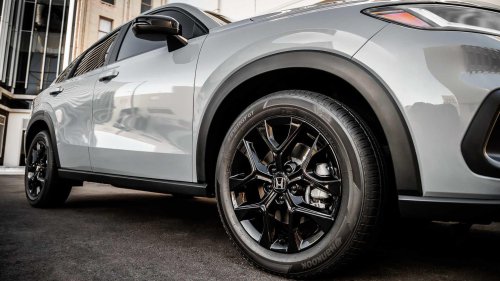
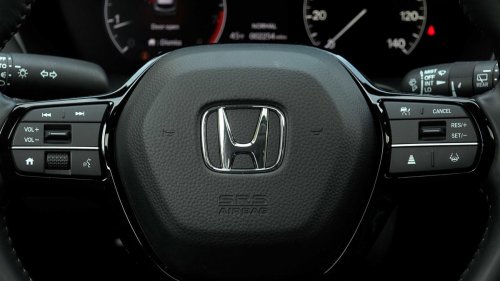
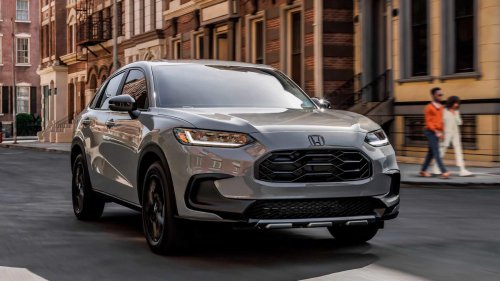
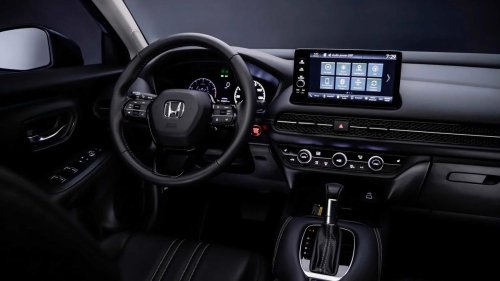
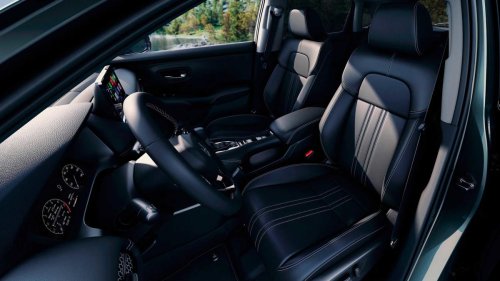
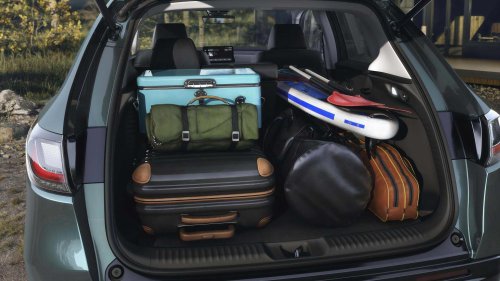
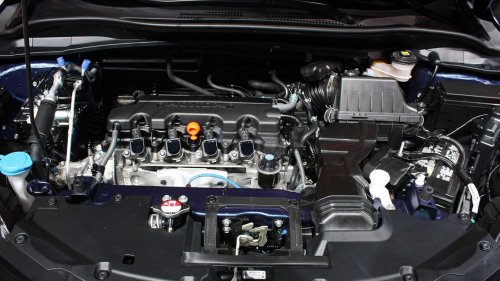
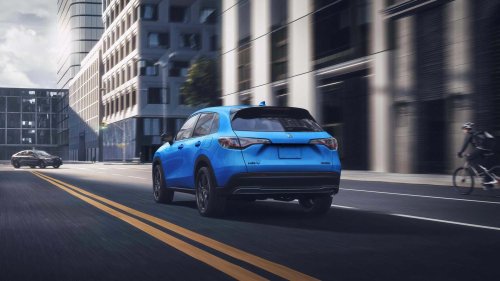
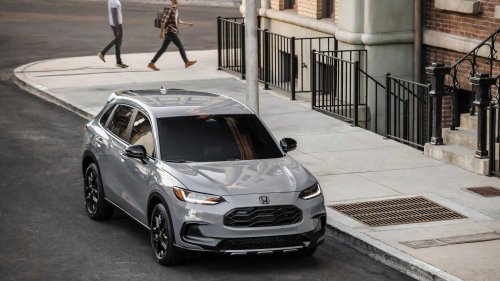



















As of 2026, the compact crossover and SUV segment stands as an important volume contributor to the U.S. automotive market. These entry-level options serve as the default choice for up-and-coming American buyers wanting a balance of efficiency, utility, and modern technology. Over the last five years, this market has evolved from an entry-level class defined by basic commuter packaging into a highly competitive arena. New-generation models feature near-luxury interior settings, comprehensive standard advanced safety suites, and a massive shift toward electrified and hybrid powertrains.The key demographic for these vehicles is incredibly broad, bridging two distinct generational waves. Budget-conscious younger buyers starting young families who need a versatile daily driver are the main audience. Aging consumers wanting to downsize from larger and less efficient three-row vehicles without giving up a high-riding seating position add to overall demand. Within this landscape, options priced below the $30,000 threshold have become vital economic considerations for consumers and manufacturers. These attainable crossovers provide buyers an affordable entry point into a brand-new vehicle with a full factory warranty, while simultaneously allowing automakers to secure high-volume market share and cultivate brand loyalty in a fiercely contested economic climate. The Japanese Set The Compact Crossover Stage HondaThe roots of the Japanese compact crossover can be traced back to the early-to-mid 1990s. During this era, Japanese automakers pioneered a radical shift away from heavy, truck-based sport utility vehicles in favor of car-based, unibody architectures. These set the foundation for modern crossovers, blending the raised ride height and commanding driving position with the rugged styling of a traditional SUV.Doing so resulted in better fuel efficiency, comfort, and nimble handling. When these vehicles arrived on American roads, they immediately disrupted the automotive landscape. They proved that consumers were eager to trade truck-like towing capacities for everyday drivability and family-friendly utility. Today, Japanese brands remain the dominant architects and undisputed heavyweights of this segment in the U.S. market, consistently capturing the top spots on national sales charts. Honda's Noteworthy Contributions To The Segment Drive Time Productions LLC | TopSpeedHonda’s foundational contribution to the affordable compact crossover segment is anchored entirely by a variety of models throughout the years. Its creations fundamentally shaped the category when it debuted in the late 1990s. Honda created an accessible benchmark that offered families sedan-like fuel economy and bulletproof mechanical reliability without the premium price tag of a traditional SUV.As the market has evolved, Honda has aggressively expanded this nameplate's footprint to maintain its competitive edge, offering a plethora of crossovers and SUVs suiting various segments. Its entry-level option fails to hit the same mass market numbers as its larger andmore aspirational CR-V sibling, but it remains a compelling, affordable option that suits the needs of the average crossover consumer. The HR-V Is An Undervalued Compact Deal Honda The 2027 Honda HR-V is the Japanese brand's gateway to the brand's crossover lineup. It holds a distinct position as Honda’s smallest and most affordable utility vehicle in the U.S. market. This current-generation subcompact crossover was completely overhauled and introduced to American buyers for the 2023 model year. This change transitioned it into the larger and more refined Civic-based global platform that shed its predecessor's quirky subcompact roots for a mature and premium demeanor.Despite occupying an essential entry-level spot directly beneath the dominant CR-V, the HR-V's sales performance faced notable challenges. According to Honda's Q1 2026 sales report for the U.S., the HR-V maintained healthy baseline volume, surpassing 11,000 units in March alone. However, overall first-quarter deliveries for the crossover dropped by 24.2 percent compared to the same period in 2025. This highlights a cooling period in a fiercely competitive sub-$30,000 crossover market. Competitive Pricing With Comprehensive Features HondaPricing for the 2027 Honda HR-V reflects its positioning as an accessible entryway into the crossover market, with all trims retaining a compelling baseline of value despite general automotive inflation. The base LX trim starts at an MSRP of $28,050. This derivative offers a highly cost-effective entry point for budget-minded buyers.In terms of features, it includes automatic climate control, push-button start, power windows, and a 7.0-inch digital instrument cluster. On the entertainment front, Honda equips it with a standard 9.0-inch color touchscreen display, featuring wireless Apple CarPlay and Android Auto compatibility, a Qi wireless phone charging pad, and three USB-C ports. It also boasts a basic four-speaker, 180-watt sound system with active noise cancellation.Honda Stepping up to the mid-tier Sport trim increases the price to $29,850, bringing distinct athletic styling cues and added convenience. This adds a leather-wrapped steering wheel and shift knob, ambient console lighting, and distinct black interior cloth accented with orange stitching. Honda also fits remote engine start and Smart Entry with Walk Away Auto Lock system, while adding heated front seats and a six-speaker audio setup.The range-topping EX-L starts at $31,900, bundling upscale materials and tech features into a subcompact footprint. It introduces premium leather-trimmed seating, an eight-way power-adjustable driver's seat, dual-zone automatic climate control, and a one-touch power sunroof. The entertainment suite reaches its peak in the EX-L with an eight-speaker, 180-watt audio system. More Than Enough Interior Space Honda The interior layout of the Honda HR-V prioritizes passenger comfort and flexible utility, maximizing its compact footprint to provide impressive cabin dimensions. Up front, passengers get 39.4 inches of headroom and 41.9 inches of legroom. The second row offers passengers 38.0 inches of headroom and 37.7 inches of legroom.When it comes to hauling gear, the vehicle's cargo capacity is highly adaptable across all seating configurations. With the rear seats raised, the trunk area holds 24.4 cubic feet of luggage volume. This expands to 55.1 cubic feet of flat-floor cargo space when the 60/40 split second row is fully folded down. Reliability Trumps Speed Honda The 2027 Honda HR-V is only available with the brand's trusty 2.0-liter naturally aspirated, 16-valve DOHC i-VTEC four-cylinder engine. This generates 158 horsepower at 6,500 RPM and 138 pound-feet of torque at 4,200 RPM. Driving the front wheels is a CVT featuring Honda's G-Design shift mapping.The Japanese brand engineers this to simulate traditional gear changes to mitigate the rubber-band feel typical of older CVTs. All-wheel drive is optionally available on all trims for $1,500. Regardless of the drivetrain, you can expect it to cover a 0 to 60 MPH sprint in 9.4 seconds before hitting a limited 116-MPH top speed. While it is a versatile crossover, Honda confirms that it will not be able to tow. Perfect Fuel Consumption For Urban Commuters Honda When it comes to efficiency, the front-wheel-drive configuration of the Honda HR-V delivers an EPA-estimated 26/32/28 MPG result on the city/highway/combined cycle. Opting for all-wheel drive changes the result to 25/30/27 MPG. Across all trim levels, the vehicle is equipped with a 14.0-gallon fuel tank, granting the front-wheel-drive model an estimated range of 392 miles, whereas the all-wheel-drive variant covers 378 miles.Official EPA evaluation metrics are based on 15,000 annual driving miles and current national average fuel costs. The front-wheel-drive model incurs an annual fuel cost of $1,600, costs $2.64 to drive 25 miles, and costs $44.10 to fill. The EPA also indicates that you will spend $500 more in fuel costs over a five-year ownership period compared to the average new vehicle on American roads today. Fans Love What It Has To Offer HondaThe Edmunds Consumer Review section reveals a 4.2/5 average score for the 2026 HR-V model year, highlighting its interior space, driving experience, and value as its most noteworthy strengths. Common criticisms include uncomfortable seats, loud road noise, and questionable quality of some of the interior trimmings on the base model.According to J.D. Power, the 2026 model year holds an 82/100 consumer-verified overall score. This includes 83/100 for quality and reliability, 75/100 for the driving experience, 86/100 for resale, and 83/100 for the dealership experience. iSeeCars holds the model to a high reliability standard, indicating that it will have an average lifespan of 17.8 years or 195,524 miles with a 48.1 percent probability of reaching 200,000 miles. On the value retention front, expect it to lose $7,601 or 28.7 percent after five years.