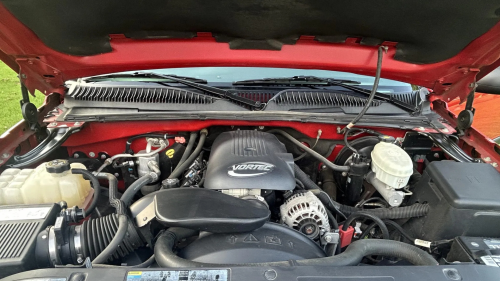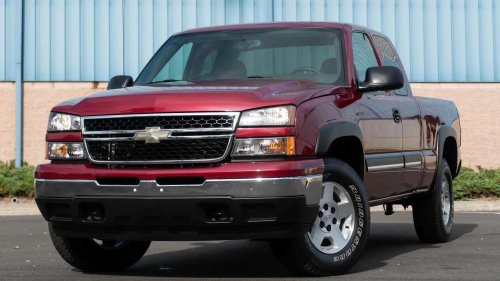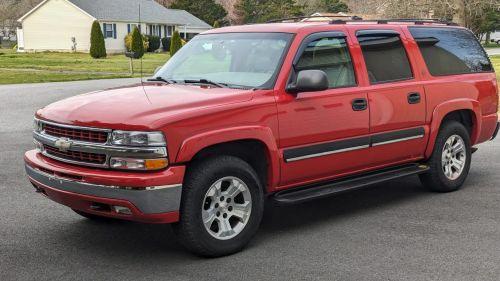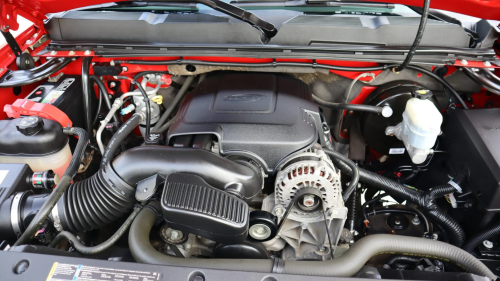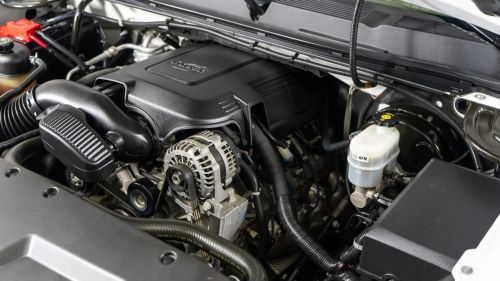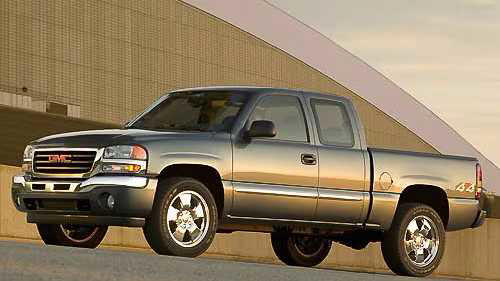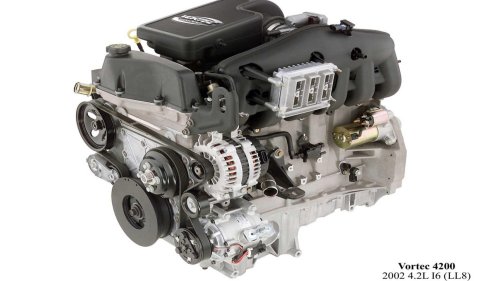
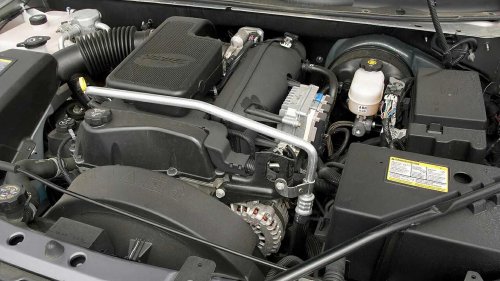
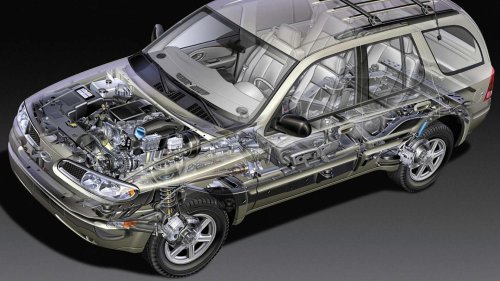
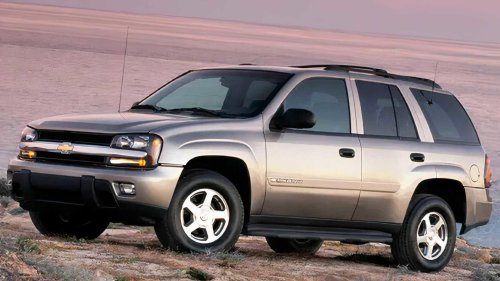
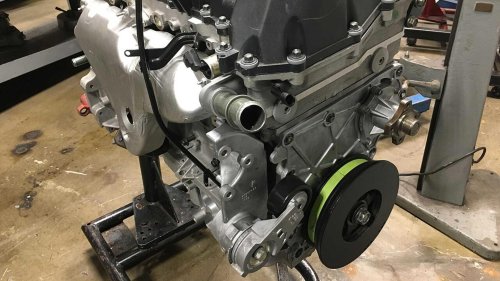
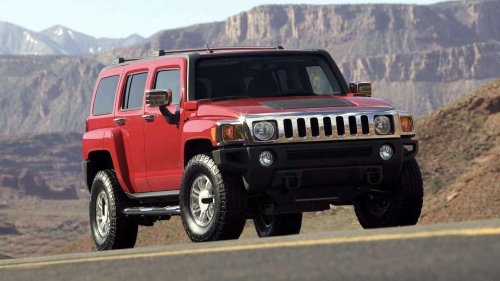
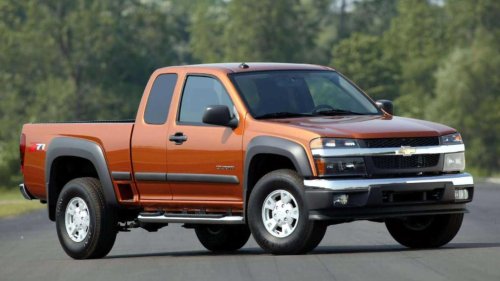
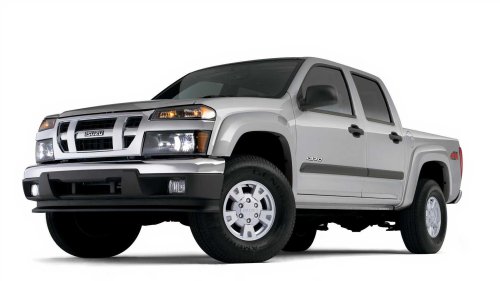























Most engines that have received awards, or became icons in the tuning community, are well-remembered by most gearheads. Think of mills like the Toyota 2JZ and the Chevrolet small-block V8. Both lived rather long lives, especially in the latter's case. You won't get far around any gathering of gearheads before someone mentions one of the two aforementioned powerplants. And, in all honestly, you can't blame us for talking about them, either. However, in rare cases, truly exceptional engines end up running well under the radar.That's where our engine of interest comes into play, the GM Vortec 4200, also known as the LL8. It's a 4.2-liter straight-six, and it was only around for a short time, bowing out of existence near the end of the 2000s. Before it left, it managed to secure four consecutive mentions on Ward's 10 Best Engines list. On top of it all, the mill had just come into its own around the same time that some GM engines were beginning to struggle in terms of reliability. A Science-Based, Rough-And-Tumble Straight-Six General Motors The LL8 first hit the market in 2002, and was bred specifically for the GMT360 platform and its derivatives. It was also the first member of the GM Atlas engine family. Immediately upon its introduction, Ward's AutoWorld recognized the LL8 on its 10 Best Engines list, a spot it would enjoy until 2005. To make it onto the list, the LL8 needed to showcase things like smoothness in its operation, a good bit of efficiency, and well-placed technology that elevated it above other engines being produced at the same time.One of the hallmarks of the LL8 engine was its advanced 24-valve, dual-overhead cam valvetrain. In addition, both its aluminum block and cylinder head were cast with a method called the lost foam process. In short, using the lost foam production method allowed the LL8 to utilize complex, aluminum components that don't sport casting lines, meaning fit and finish is better than other mills that use conventional means of casting. It was also one of the first GM-bred engines to take advantage of variable valve timing.The LL8 is also known to respond extremely well to modifications. Its bottom end is known to be over-engineered. It's got a 12-point counterbalanced crankshaft along with a reportedly strong main girdle, or the part of an engine that lashes all main bearing caps together. Because of these factory-supplied upgrades, the LL8 can supposedly handle up to 700, and even 800, horsepower on stock internals. Some publications, such as EngineLabs, have even considered calling the LL8 the "American 2JZ."Lastly, the LL8 came straight out of the gate guns a-blazing. The first version of the motor to hit the market in 2002 churned out 270 horsepower and 275 pound-feet of torque. A power output that large meant it could compete with V8s, despite having two fewer cylinders. Engines like Ford's 4.6-liter Modular V8, and even its 5.4-liter Triton, produced less power than the LL8 in 2002. Even GM's own 5.3-liter V8 barely outpaced the 4.2-liter six with its 285 ponies. The Nitty-Gritty ChevroletAlong with the LL8, the Atlas engine family housed inline-four, five, and six mills. GM specifically designed the Atlas to allow for interchangeability between specific engines, meaning all members of the family used many of the same parts, like pistons, connecting rods, and even the equipment used to build them. Doing things this way allowed GM to save on production costs, as well as streamline the assembly process.The LL8 featured numerous electronic components not commonly seen in American engines at the time, such as the aforementioned use of variable valve timing on the exhaust valves. This allowed the LL8, along with the rest of the Atlas family, to comply with federal emissions standards without the use of an exhaust gas recirculation system (EGR). In addition, it also employed a coil-on-plug ignition system, rather than a coil pack. Its throttle was also controlled electronically, too.Oldsmobile One of the unique aspects of the LL8 engine was its specially-designed oil pan. Instead of being a straight-forward design, the Atlas family, along with the LL8, had a special trough molded into the middle. This allowed the axle shafts found on four-wheel drive models to pass right through without needing to modify anything else. When it came time to service the axles, removal and reinstallation was easier than some other models.*Specs courtesy of GM & Ward's Auto Models That Used The LL8 ChevroletThroughout the LL8's entire tenure, it was only found on models belonging to the GMT360 platform. Technically, the first model to boast the engine was the 2002 Oldsmobile Bravada. Following suit were models like the Chevrolet TrailBlazer, the GMC Envoy, and the Buick Rainier. At the time, General Motors also owned a controlling stake in Saab and Isuzu, meaning both the 9-7X and the Ascender, respectively, received the engine, too.We'll list out the rest of the LL8's full model lineup below:2002–2006 GMC Envoy XL2002–2006 Chevrolet TrailBlazer EXT2003–2005 GMC Envoy XUVIn 2009, GM decided to discontinue the entire GMT360 platform, meaning all the models mentioned above received the ax either in or before that year. At the same time, the Detroit Giant discontinued the LL8 engine, despite its strong market position and competitive edge, which it still, reportedly, managed to hold onto even after seven years in production. GM themselves cited a cooling market for inline-six engines, as well as poor fuel economy and the closure of its Moraine, Ohio assembly plant for the LL8's departure. History Of The LL8 Engine Wikimedia Commons: VX1NGIn the mid 1990s, two long-standing GM engines were in desperate need of replacement. One, the Chevrolet Turbo-Thrift Engine, had been in production since 1962. While it had been phased out in 1988 for the US market, countries such as Argentina and Brazil continued to use the Turbo-Thrift until 2001. The other mill on the chopping block was the GM 122 engine, a family of four-pots ranging from 1.8 to 2.2 liters.Instead of introducing two entirely new engines, General Motors decided to approach the issue with a single, all-new engine. It was to be called the GM Atlas Engine, and its first application was actually in racing, at events like the Baja 1000 and the Pikes Peak International Hill Climb. The latter event saw a tuned, Atlas-powered GMC Envoy beat other V8s at the famous hill climb event in 2000, effectively cementing the LL8's future as an over-engineered, brute-force mill. Other Users Of The Atlas Engine General MotorsWhile the LL8 was exclusively used by the GMT360 platform, the Atlas engine as a whole offered a few other mills that found their way into other products. In total, there were four other Atlas engines, those being the LLR, L52, LLV, and LK5. LLR Coming in at 3.7 liters, the LLR is a five-cylinder mill found in the Hummer H3, the Chevrolet Colorado, and the GMC Canyon. The forgotten Isuzu i-370 pickup, based on the Colorado, took advantage of the LLR from 2007 to 2008. The mill is rated for 242 horsepower and the same amount of torque. L52 Chevrolet A 3.5-liter iteration of the Atlas engine called the L52 was also offered. Like the LLR, it boasted a five-cylinder configuration, and it was also used on the exact same models. However, it was an earlier iteration of the LLR, used from 2004 to 2006. The Isuzu pickup using the L52 was named the i-350, and it produces 220 ponies and 225 pound-feet of torque. LLV Continuing down the ladder, we reach the LLV 2.9-liter inline-four. In essence, the LLV is an L52 with a cylinder lopped off, and its cylinder bore enlarged from 3.66 inches to 3.76 inches. Only the Chevrolet Colorado and GMC Canyon, along with the Isuzu i-290 pickup took advantage of the mill. Its output is rated at 185 horsepower and 195 pound-feet of torque. LK5 Isuzu Coming in as the smallest Atlas engine, the LK5 is just 2.8 liters in size. Like the LLV, it was only used in the Colorado, Canyon, and Isuzu i-280 pickups. Power output is rated at 175 horsepower and 185 pound-feet of torque.