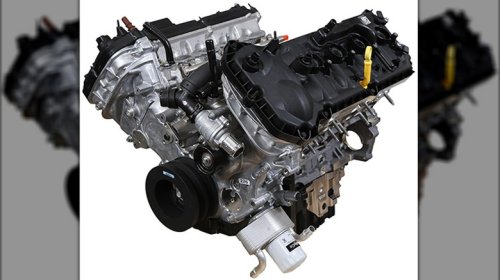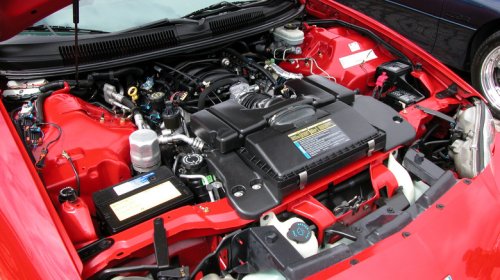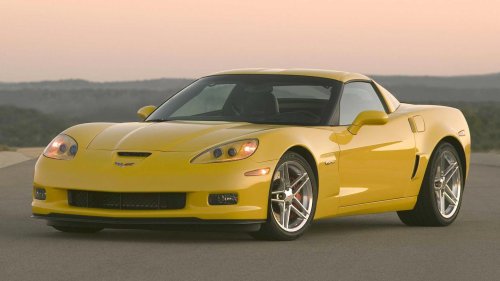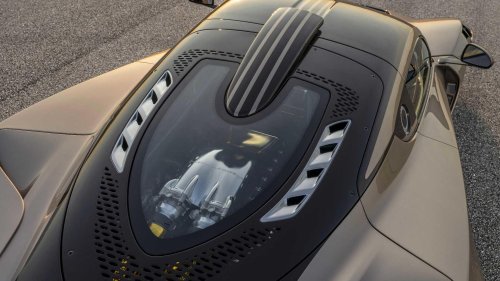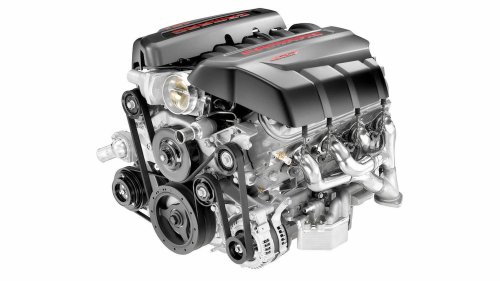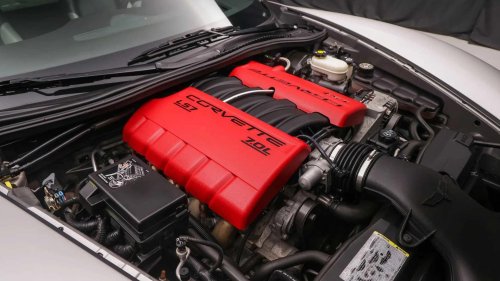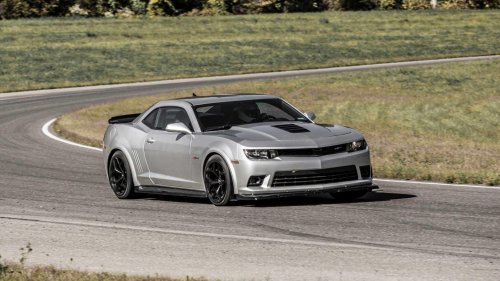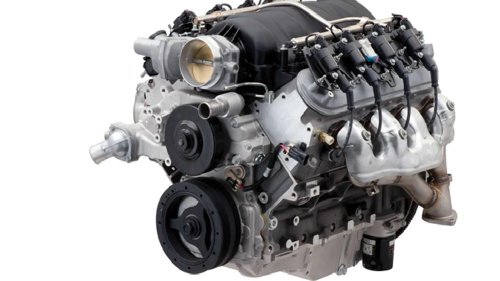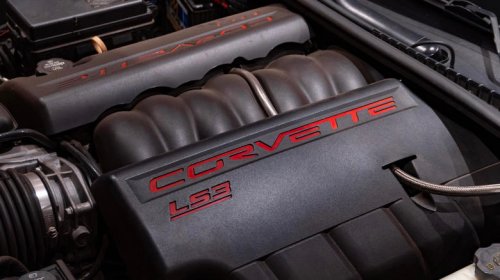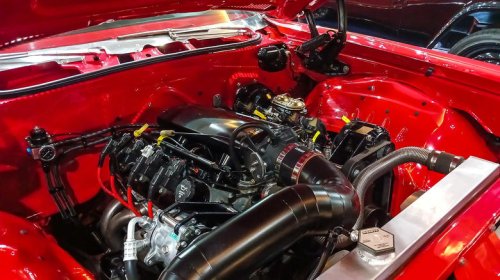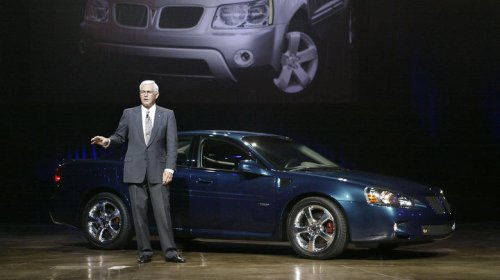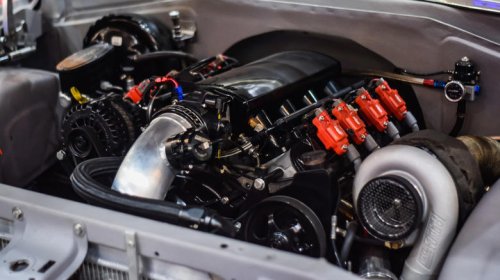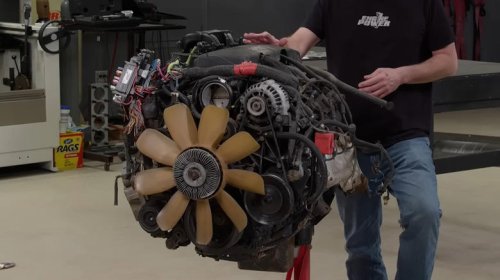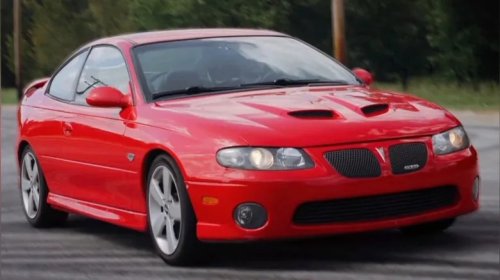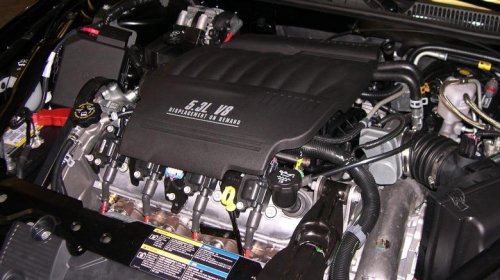
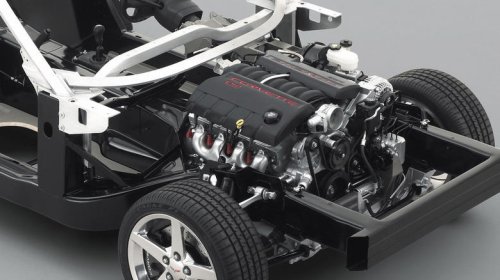
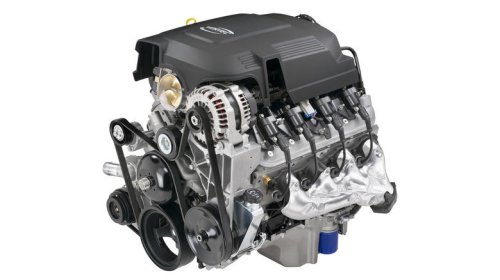
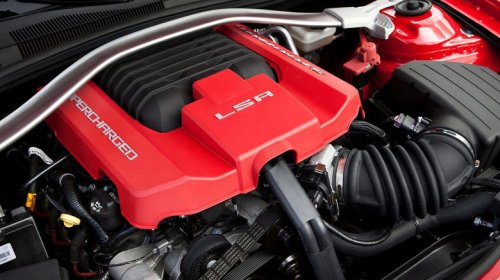
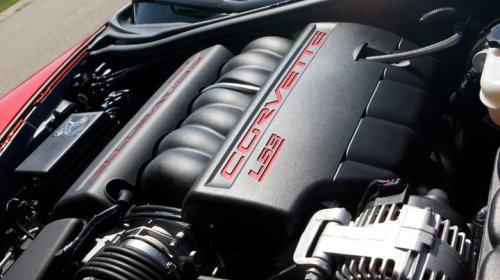
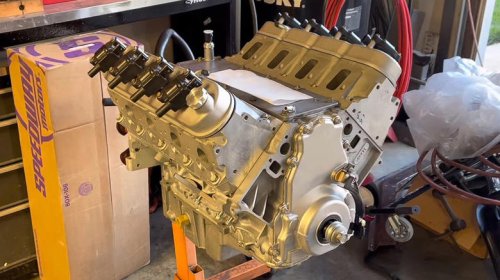
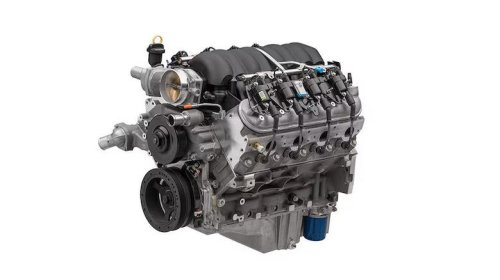
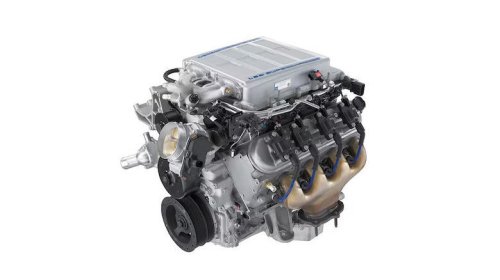
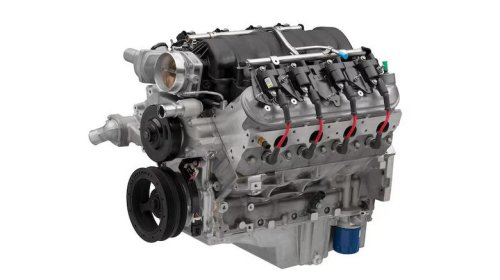



















LS4There is nothing wrong with the LS4 – it is a capable engine. However, it is part of one of the greatest automotive heresies. Namely, to bring V8 power to its lower class of vehicles, General Motors paired the LS4 with front-wheel drive. The idea was straightforward – it wanted to one-up its competitors.Unfortunately, the LS4-powered vehicles arrived when customers started seeking more fuel-efficient cars. While the 5.3-liter V8 is efficient for the power on offer (290-303 horsepower), it can't match four or six-cylinder engines. The LS4 is also heavier, which hurts the driving dynamics, and the high power and torque introduced understeer. LS4-powered vehicles were not drivers' cars; let's put it that way.There was one positive. With the LS4, General Motors showcased the most significant advantage of its LS family: the compact dimensions. If a V8 engine could fit in a Chevrolet Impala SS, it could fit in most other cars. Besides, the LS4 is a solidly built unit with strong internals and good tuning potential. Thus, it's a shame that General Motors didn't at least pair it with AWD.If you want an LS4 because of its smallish dimensions, the price might make you think otherwise. You can have an LS6 – a more powerful and advanced engine for the same money while sacrificing little by way of size. Therefore, the LS4 only deserves the last spot on our list.LS2The LS2 is the first engine of GM's Gen IV small-block V8s. Like its predecessor, the LS1, it was introduced alongside the all-new C6 Corvette, later appearing in the Chevrolet SSR and Pontiac GTO. Packing 400 horsepower and 400 lb-ft of torque, the LS2 also introduced a larger 4.000-inch bore, bringing the displacement to 6.0 liters. Although more powerful, the LS2 is more fuel efficient than the LS1, thanks to GM's Active Fuel Management (AFM).The numbers, then, look quite promising, but the LS2's toughness makes it very desirable. It has a powerful block that can withstand more than 800 horsepower without big modifications, meaning it is a great candidate for turbocharging or supercharging. The LS2 is also one of the most reliable LS engines, further adding to its appeal.The reason why it is rated so highly on this list is the price. The LS2 isn't as advanced or as powerful as its younger brother, the LS3, but it also costs less. As such, it is a solid option for tinkerers on a budget.Iron block truck variants (LM7/LY6/L96)The LSX376-B15 and LSX376-B8 iron-block crate engines are great for turbocharging/supercharging; however, they are still expensive for most people and don't come as a whole unit from the factory. Fortunately, there is a solution for tuners with tight budgets — iron block LS engines designed for GM's full-size and heavy-duty trucks. These would require some modifications, like installing a new port to replace the cathedral one, but other than that, they are good to go.Furthermore, iron-block LS engines for trucks and SUVs have stiffer blocks, which allow for some heavy turbocharging or supercharging. In addition, because General Motors sold many more trucks with these engines than sports cars, availability is higher.Of all iron-block LS engines, the 5.3-liter LM7 producing 270-295 horsepower is the cost-friendly option, though the 6.0-liter LY6 is more desirable, as it packs 364 horsepower from the factory. You can easily double those figures with forced induction and put some supercars to shame at the traffic light. However, don't expect to carve corners as successfully. Due to the heavy iron block, these engines will add weight to your project car, affecting the handling and braking performance.LSAThe LSA is a lower tune of the supercharged 6.2-liter LS9 engine in the 2009-2013 Corvette ZR1, designed specifically for the Cadillac CTS-V and Chevrolet Camaro ZL1. It is equipped with a smaller 1.9-liter supercharger, compared to 2.3 liters of the LS9, resulting in 556-580 horsepower. For reference, the LS9-equipped Corvette ZR1 made 638 horsepower .One might think adding the larger supercharger to the LSA would instantly make it an LS9, but this is not necessarily true. Although the LSA features the same block, the internals of the LS9 are much more advanced. Notably, the LSA doesn't have titanium con-rods, inlet valves, or forged aluminum pistons. Therefore, it can't be tuned as easily, making it less desirable for high-horsepower builds.However, the LSA is a great engine if you aren't interested in the horsepower war. Although it launched 15 years ago, it can still put its modern counterparts to shame. 580 horsepower from the factory and a block ready for heavy tuning? Check. Lightweight and compact design? Check again. It also adorned two outstanding vehicles — the 2009-2015 Cadillac CTS-V and the 2012-2015 Chevy Camaro ZL1. LS3The 6.2-liter LS3 is one of the most readily available LS engines, as it adorned the base C6 Corvette and fifth-gen Camaro. It is also cheap for the performance it offers, as some examples go for around $6,000! Besides, with 430 horsepower and 425 lb-ft on tap, the LS3 pushed the C6 Corvette to 60 mph in just 4.5 seconds and up to a top speed of 186 mph (300 km/h). Moreover, it is a great swap for many vehicles, even without forced induction, although it does respond well to turbocharging or supercharging. However, you don't need to go that route, as a simple camshaft replacement with stiffer valve springs will return 500 horsepower on stock internals. That is a healthy amount of power for most builds and very reliable, as you won't be stressing the engine internals. Not to mention, the cam replacement is fairly simple!The LS3 is also significant because it is the first Gen IV small-block engine from General Motors built for performance cars. It comes with many improvements over the LS2, including a larger 4.065-inch bore, a stronger block, and a cam similar to the one in the LS6. These improvements not only made the LS3 more powerful, but also more responsive, and generally better to drive.Aluminum block truck variants (L92/L9H/L94)Although iron-block LS engines are popular for their forced-induction capabilities, the aluminum block variants are even more precious among enthusiasts. With these units, you are getting the same performance as a Gen IV LS3 engine, albeit at a lower price point. They are also compact and lightweight, perfect for any build. In some ways, they were more advanced; the L94 variant, for example, had Active Fuel Management and cylinder-deactivation tech.The L92 was the first Gen IV small-block engine, and it shares many of the parts with its LS3 brother. It has 403 horsepower and 417 lb-ft of torque stock – pretty close to the LS3. However, with a cam replacement, it can also push the envelope to 500 horsepower easily. Meanwhile, the L94 variant has E85 fuel capabilities, making it an even better option for high-horsepower builds. With the stock injectors and forced induction, you can expect around 700 horsepower – not bad for a truck-sourced engine.The best thing about the aluminum-block truck variants is that they are easy to find and cheaper than LS3s. Besides, all of these engines have excellent aftermarket support. Turbo or supercharger kits, stronger internals, and better cams are all easy to find. As a result, these motors are only growing in popularity among LS swappers.LS376/525Although you can get great power from the LS3 and aluminum-block Gen IV small-block engines, the LS376/525 is the best version of this generation. It is a marriage between an LS3 engine and an ASA camshaft with a .525 lift on both sides to maximize the airflow. General Motors also increased the cam duration to 226 degrees on the intake side and 236 degrees on the exhaust side. As a result, the power improved dramatically – the crate-only LS376/525 produces 525 horsepower and 486 lb-ft of torque stock.However, General Motors didn't replace any internal parts. Thus, apart from the improved camshaft, it is a carbon copy of the LS3. This means you can get an LS3, equip it with the ASA camshaft, and achieve the same power numbers. There is a downside with that approach, though: the LS376/525 is a crate engine built in a factory by experienced workers. It also comes with a warranty, offering peace of mind to potential owners. In our eyes, that is enough to warrant a higher place on this list. Still, for those on a budget, an LS3, L92, L9H, or L94 might be better options.LS9With the supercharged, 6.2-liter LS9, General Motors engineers activated beast mode. That was necessary because Chevy wanted a sports car that would push the boundaries and even trump Italian supercars. That sports car was the still coveted 2009-2015 Corvette ZR1. With 638 horsepower and 604 lb-ft on tap, the American rocket reached 205 mph (330 km/h) and climbed from 0-60 mph in just 3.4 seconds. In 2009, these numbers were earth-shattering.The LS9 is easily the most powerful Gen IV small-block engine, but also one that reacts extremely well to tuning. That is not surprising, as it comes with a large, 2.3-liter Roots-style supercharger from the factory. Moreover, it features polymer-coated forged pistons, titanium connecting rods, a dropped-forget micro-alloy steel crankshaft, a honed deck plate, cast-iron cylinder liners, and a lower 9.1:1 compression ratio. Its block is also stronger than the one found on the LS3 family of engines, and the head is designed for higher airflow.The LS9 is also a sound-tuning foundation. With a simple ECU map and more aggressive cam durations, you can easily add 100 horsepower without worrying about running the internals. All things considered, the LS9 checks most boxes for a performance engine, if only it cost less and was available in greater numbers.LS427/570The Corvette is Chevy's most successful racing car across multiple championships, including the 24 Hours of Le Mans and 24 Hours of Daytona. It brought brand recognition and pride, especially since it competed with exotics from Italy and Germany. This also meant that the racing technology trickled down to GM's road cars. The engine that best represents what the company learned in racing is the LS427/570.This 7.0-liter crate engine is largely the same unit as the LS7 found in the C6 Corvette Z06, but with a higher-lift camshaft that extracted 65 extra horsepower and 59 lb-ft more torque. This translates to 570 horsepower and 540 lb-ft of torque, exceptional numbers for a naturally aspirated engine. Moreover, the LS427/570 has a new wet-sump oiling system, which makes installation less of a hassle.Overall, the LS427/570 is the best engine for racing applications or for people who want to build a track-day machine. There is one small caveat: GM discontinued this crate engine, and finding one on the second-hand market can be difficult. Not to mention, this thing is expensive, so it would be best to leave it to private racing teams.