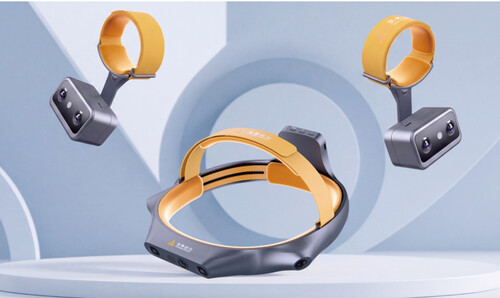
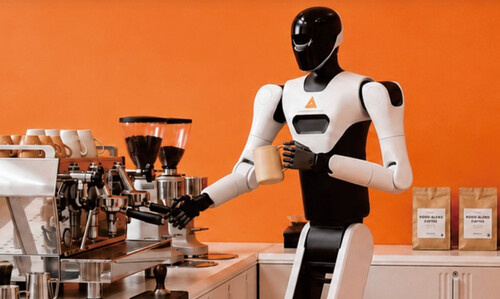
Gasgoo Munich- When people talk about embodied AI, the image that often springs to mind is a humanoid robot: tightening screws on the assembly line by day, then doing chores or caring for the elderly and children at night. It suggests that a humanoid chassis paired with a general-purpose model is all it takes to automate every task in the physical world.But as 2026 unfolds and more robots step out of laboratories and onto real factory floors, into warehouses, retail stores, and even homes, the gap between hype and reality is widening. Those "general-purpose" robots that handled multi-tasking demonstrations with ease are now stumbling over real-world variables like line adjustments, shifting lighting, and displaced items.Amid these frequent failures, a fundamental question looms: How can embodied AI bridge the gap between specialized tasks and general utility?The First Step to Generalization: Enter the FactoryWidely seen as a trillion-dollar opportunity, the consensus is that once embodied AI reaches true AGI, the humanoid robot sector alone could be worth trillions—combining the production volume of smartphones and the price tags of automobiles.The thesis is that embodied robots, in various forms, will gradually permeate every aspect of daily life. They may eventually evolve into highly human-like, versatile generalists capable of adapting to complex tasks and demanding work environments.Yet, achieving general-purpose embodied AI is far harder in practice than in theory.Autonomous driving offers a cautionary tale. In the early days, many firms were ambitious enough to believe they could leap straight to Level 4 autonomy. But as the technology deepened, the industry realized that moving from advanced driver-assistance in specific scenarios to fully driverless operations requires long-term iteration and data accumulation—it cannot be done overnight.Embodied AI is now following that same industrial logic. A path of "industrial first, then commercial, finally home"—moving from specialized to general use—is becoming the industry consensus.Image Source: Spirit AISpeaking recently at the 2026 Zhangjiang Embodied AI Supply Chain Conference, Spirit AI Vice President Sun Rongyi noted: "Objectively speaking, industrial settings have relatively lower requirements for model generalization. Robots only need to perform fixed processes at fixed stations, so generalization is manageable. But in home settings, needs vary wildly across thousands of households, placing extreme demands on generalization. That is why we are taking the more feasible path first."He also pointed out that in terms of total market size, the industrial sector is not actually the largest—it is relatively small. The industry is ultimate blue ocean remains the home sector.Wu Wei, CEO of Popular Space, agrees that the endgame for embodied AI lies in the consumer market, but the timing is not right yet. "We prefer prioritizing B2B scenarios in the early stages. The industrial sector is a direction where we can clearly identify who pays. But we can also see clearly that industrial scenarios will inevitably face intense competition down the line."Wang Guanglei, R&D Director at JEE, echoed this sentiment, noting that while the industry hopes humanoids will quickly achieve the flexibility to adapt to different environments, that is hard to realize in the short term. "We might as well follow a path from simple to complex. Start by entering environments already covered by industrial robots where standardization is high. Conduct early exploration, testing, and benchmarking to accelerate the pace of implementation."Driven by this consensus, "going to work in the factory" has become a priority for top players as they enter 2026.Recently, the AgiBot Elf G2 robot conducted a 64-hour live demonstration on a tablet production line at Longcheer Technology is Nanchang factory. Dubbed "full coverage of mass-production quality inspection," the robot completed 17,625 inspection tasks during the period, achieving a task success rate of 99.99%.Earlier, Figure AI completed a 200-hour continuous field test in a real factory, achieving stable, high-frequency operation over a long cycle in a warehouse sorting scenario.These "demonstrations" were not mere marketing stunts; they sent a clear signal: Embodied AI is shifting from "technical demonstrations" to "frontline production."Image Source: AgiBotIn fact, AgiBot Elf G2 entered the Longcheer factory line last December to test loading and unloading functions and adapt to the production environment. It was later integrated into the real line for MMIT testing processes and began routine operations. This May, AgiBot deployed eight units in parallel at the Longcheer factory, fully covering the entire tablet mass-production quality inspection section and working alongside human operators.Meanwhile, in March, AgiBot deployed units on the mass-production line at SAIC-GM is Ultium Super Factory. They undertook high-precision tasks on the Buick E7 battery production line and have been operating stably for over a hundred days.Galbot also recently partnered with CATL. Prior to this, its Galbot S1 passed acceptance at CATL is HX base in March. Since then, it has worked 24/7 on the mass-production line for over three months, handling long-haul autonomous tasks in module and battery pack production, and directly replacing human labor in high-intensity processes like material handling and picking.Additionally, companies like Unitree, UBTECH, AI² Robotics, TARS, and Gigaai are actively deploying humanoid robots into real factory environments. With top players pushing collectively, "factory work" is moving from proof-of-concept to the early stages of scaled deployment.Yet, even amid this consensus, differences are emerging.For instance, is a humanoid form strictly necessary? "Many manufacturers now use a robot that looks human to do traditional pre-programmed tasks for single-variety, high-volume tasks. That does not fit the product positioning and will eventually be disrupted by traditional industrial robots," Sun argued.Zhang Li, a seasoned market expert in embodied AI, also warns against an "obsession with humanoids." "On the industrial floor today, some places need humanoids, but in others, a humanoid form is not necessarily the optimal solution. Our focus should be on how to use the best form factor to liberate the workforce."In other words, whether humanoid or specialized non-humanoid, only those forms that truly adapt to specific needs and solve real pain points have a shot at commercial viability.From Pilot to Mass Production: What Are the Hurdles?While a preliminary consensus has formed on the path for embodied AI, frankly, the current state of implementation across the industry is far from optimistic.According to Li Jinke, Secretary-General of the Humanoid Robot Scenario Application Alliance, humanoid robots are currently viable in two main applications: research education and entertainment. Research education has seen the fastest demand growth in the past three years, with universities as the primary client base, followed by government-led digital infrastructure. Entertainment, while relatively mature, is suffering from severe competition in the leasing market—daily rental rates for robots have plummeted from 10,000 yuan to 1,000 yuan, a drop far faster than technological iteration.Beyond these, many companies in the race deliver impressive demonstrations, yet truly practical, deployable results are few and far between.Han Fengtao, CEO of Spirit AI, put it bluntly: "If a perfect humanoid robot scores 100 points in comprehensive capability, the current development levels of various components vary widely. Industrial robotic arms and surgical robots are relatively mature, scoring maybe 50 points; wheeled chassis about 40; quadrupeds 30; bipedal robots only 15; dexterous hands just 5; and the supporting AI capability scores even lower, perhaps only 3."Aiming for a 100-point goal while holding a hand worth only 3 points—that is the reality of the industry today.Behind this reality lie multifaceted challenges.The first challenge stems from the massive "disconnect" between the laboratory and the real world.Zhang Shihai, Head of Digital Transformation at Faurecia China, revealed that when selecting designated suppliers, the company found that although most had completed POCs in the lab, labs are optimized environments with controlled lighting and surroundings. Once placed on the factory floor, environmental changes impact performance. Even a slight adjustment to the production line can cause the robot to fail recognition.Image Source: Mayi LingboOn a technical level, Zhu Xing, CEO of Mayi Lingbo, identified four core pain points hindering industrial deployment: First, a massive capability gap between pre-training and post-training, where pre-trained models lack sufficient understanding of real-world environments. Second, exorbitant costs to replicate environments; even within the same pharmacy chain, layout differences between stores can cause model failure. Third, the high technical barrier of post-training—the entire process of data collection, cleaning, labeling, completion, and iterative training requires deep expertise, making it hard to crack success rates in long-tail environments. Fourth, insufficient hardware stability and consistency, making it difficult to sustain long-term, high-success-rate operations.If technology addresses the question of "can it be done," delivery addresses "can it be done consistently well"—and that is the industry is current weak link."Most projects in the industry suffer from prioritizing sales over delivery. Robots perform brilliantly during demonstrations, but once they reach the client site, a host of practical issues emerge—from whether the on-site flow fits and network stability, to task configuration and staff training, to who responds promptly when failures occur. None of these are being properly resolved," said Hu Lingpeng, CEO of Feikuo Technology.Furthermore, he noted that many robots lack continuous operational support after delivery. "For robots to be truly deployed, a robust localized service network must be built. At least for now, robots are not standardized products; they rely on localized client interfacing, delivery teams, maintenance response, and resource coordination."A mature after-market system—including repairs, upgrades, IP customization, content operations, and data services—is also notably lacking. Yet these are precisely the factors that determine whether clients can use the product long-term and generate continuous value through robots.For this reason, Hu believes the industry has never lacked a single robot product. What it lacks is a systematic player capable of connecting the entire chain: technology, application, delivery, operations, and the after-market.Zhang Shihai confirmed this from a user is perspective: "Many manufacturers we encounter focus heavily on sales and pay scant attention to service, mostly promising just a one-year warranty with a 'break-fix' approach. But humanoid robots are meant for continuous factory work. If a unit goes down, how can a service provider rush to the site from out of town? Production lines cannot afford downtime, and existing factory staff are not equipped to handle repairs. Then there are spare parts—we cannot idle production capacity just to keep a backup battery on hand."If an industry cannot guarantee that a broken product will be fixed, discussing large-scale deployment is clearly premature.Then there is the absence of standards—an unavoidable issue for the industrialization of humanoid robots."There are no unified general safety standards for humanoid robots. If a robot falls on someone while carrying a box, or suddenly moves and injures a maintenance worker entering the area, who is responsible?" Without clear standards, Zhang revealed, factories currently have no choice but to isolate robot work zones.Data security remains similarly unresolved, with no consensus on data asset ownership, rights division, or security guarantees.None of these challenges can be solved overnight. Technology needs time to iterate, delivery requires systems to be built, and standards demand industry negotiation.More vexingly, these three factors are intertwined: without standards, delivery lacks a basis; if delivery fails, technology does not get sufficient feedback from real-world applications; and if technology is not mature, standards cannot even be discussed.A Watershed Approaches: Who Will Lead the Endgame?Although embodied AI remains in a highly fragmented period, the contours of the industry landscape are becoming visible.It is widely believed that this year and next will mark a critical watershed for the industry.Li Jinke predicts that this year will be a watershed for capital in the humanoid robot sector and a crucial year for industrial implementation. "The core driver of industry development will shift completely from technological imagination to the pressure of commercialization. The key to a project is success will no longer be parameter specs in the lab, but whether a product can be delivered at controllable cost to stably solve specific problems, gain client approval, and achieve repeat purchases."He emphasized that if integrators remain stuck at the stage of simple hardware connections or basic programming, they will be eliminated by the market within three years. "Top hardware manufacturers are already building their own delivery and service teams, moving downstream to erode integrator profits. At the same time, large models have significantly lowered the barrier to robot programming. In the future, clients business staff will be able to generate tasks directly using natural language. This is the predicament integrators face today."Therefore, integrators must transform, evolving from hardware agents into scenario definers.Image Source: Feikuo TechnologyHan Fengtao, however, believes the most obvious change this year will be a clear gap in model strength between companies holding massive data and having completed large-scale pre-training, and those that have not. Academic institutions, limited by data reserves, will see relatively weaker model performance.Liu Dong, founder and CEO of XYZ Embodied AI, has defined 2027 as the "first year of large-scale robot deployment." In his view, the industry is past focus on basic model training and data collection meant many devices never actually entered production. In the coming year, he expects a large number of robots to enter various real-world environments for work, with models deployed directly on the edge and operating without human remote control. Completion rates for tasks in most environments could even reach 80 to 90%.These judgments point in the same direction: 2026 and 2027 will be the critical window determining who survives. The only difference lies in strategy—some will seize the market through delivery capability, while others will build moats via data barriers. Whoever succeeds first will have the right to define the rules of the next stage.Looking further ahead, Wang Tianmian, Honorary Director of the Robotics Institute at Beihang University and Dean of the Zhongguancun Zhiyou Institute, views 2027 and 2030 as "two critical milestones" for seizing application opportunities and achieving technological convergence. Embodied AI will first enter logistics, cleaning, supermarkets, and retail, then move further into industry and specialized environments, and in the longer term, enter homes and elderly care sectors.In terms of industrial landscape, the embodied AI sector will display a diverse pattern. The ecosystem will consist of four main parts: First, full-stack hardware manufacturers acting as leaders and anchor enterprises; second, cloud, AI model, development tool, and chip vendors; third, the upstream high-value supply chain; and fourth, under new conditions, the emergence of operational leasing and AI customization service providers similar to Didi or SF Express.After 2030, once embodied AI has widely penetrated industry, logistics, and commerce, 20 to 50 leading enterprises may emerge, with individual companies potentially reaching a scale of 50 billion yuan. Meanwhile, in the next three to five years, the consumer-facing home service sector will likely spawn about five companies that could grow into 100-billion-yuan market cap giants. By then, the companies that truly break out will possess full-stack capabilities.In fact, competition in the embodied AI industry has already moved beyond comparing single-point technologies and is gradually shifting to a contest of full-chain systemic capabilities.A telling example: in the past, companies only needed a breakthrough in a specific niche technology—such as dexterous hand control, visual perception, or motion planning—to win favor from the market and investors. Today, possessing a single-point advantage is far from sufficient.After all, moving a robot from the lab to a real production line tests not just hardware reliability, model generalization, and data collection efficiency, but also the delivery service system and after-sales maintenance network. None can be missing.ConclusionReviewing the development of autonomous driving over the past decade offers a clear lesson: optimistic expectations for technological roadmaps are often forced to correct in the face of real-world complexity.Currently, embodied AI is undergoing that same process.But this correction is not a rejection; it is the beginning of maturity. True industrialization only begins when the industry wakes from the fantasy of "overnight success" and accepts the reality of "generating incremental value along the way."