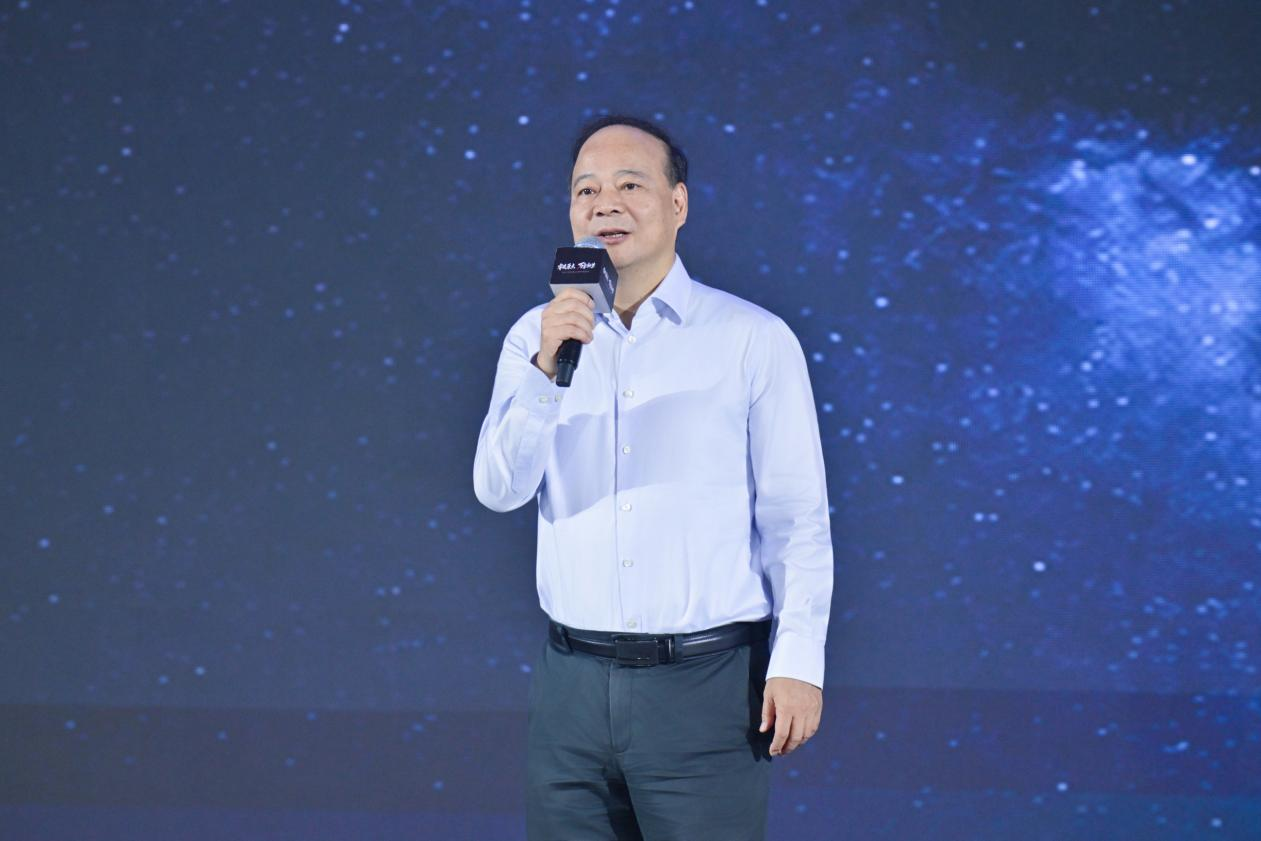
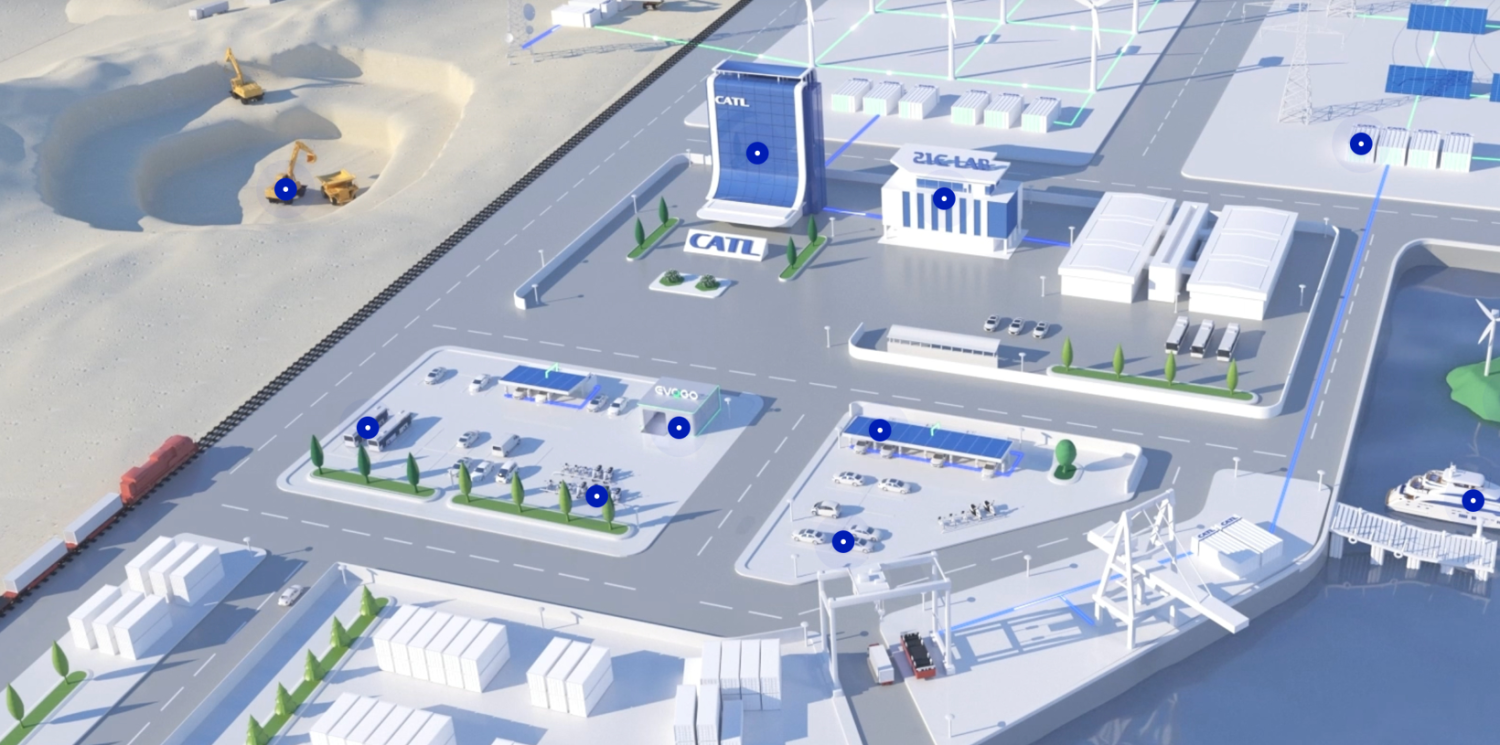
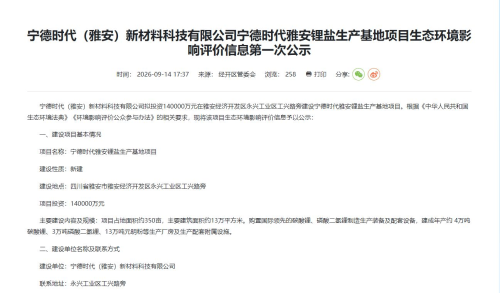
Gasgoo Munich-On April 7, sources inside CATL confirmed to media that the company has officially appointed Chen Jinghe—the founder and former chairman of Zijin Mining—as a consultant for its mining division. The move aims to bolster the company's mineral supply chain operations.The news sent shockwaves through both the new energy and mining sectors. Why would a "master of mining," retired for just over three months, be urgently summoned back to the front lines by the world's leading battery maker?Chen founded Zijin Mining in 1993, spending more than three decades transforming a failing gold mine in Shanghang, Fujian, into a transnational mining giant with a market capitalization exceeding 860 billion yuan. Known as the "King of Gold" in China, he has amassed unrivaled expertise in geological exploration, the utilization of low-grade resources, and the management of massive mining engineering projects.In November 2025, Chen stepped down as Zijin’s chairman, citing age and family reasons. He officially retired on January 1, 2026.Yet, just three months later, he accepted CATL’s offer to return to the industry front lines. The move sends a clear signal: the battery giant is pushing for a major breakthrough in upstream mineral resources.From Buying Mines to Mastering Them: The Full Scope of CATL’s Upstream StrategyAs the world’s largest EV battery maker, CATL has long hungered for upstream minerals. Core materials like lithium, nickel, cobalt, and phosphate are critical—their price swings and supply security directly dictate the company’s cost floor and ability to deliver.In recent years, the company has aggressively staked out resources globally through self-built projects, equity investments, joint ventures, and mergers and acquisitions.On lithium, its reach spans four continents.Image Source: CATLAs far back as 2022, CATL invested 26.747 billion yuan in China Molybdenum (CMOC) to secure a 25% stake in the KFM copper-cobalt mine in the Democratic Republic of Congo. By February 2026, that investment had generated paper profits exceeding 90 billion yuan—ranking it among the most successful strategic bets in the new energy sector in recent years.In the same period, CATL poured 1.5 billion yuan into Indonesia’s MDKA. The move not only yielded a stock surge of over 26% but also unlocked a critical supply channel for nickel.In Africa, the company holds a stake in the world-class Manono lithium project. Across North America, Australia, and South American salt lakes, CATL has also landed stakes or partnership projects.Domestically, it is advancing lithium extraction cooperation at salt lakes in Qinghai and securing spodumene and lepidolite resources in Sichuan and Yichun, Jiangxi. The Jianxiawo mining area in Yichun was once considered one of the world’s largest lepidolite extraction projects.For nickel and cobalt, CATL has invested roughly $6 billion in Indonesia to build an integrated nickel mining and battery supply chain, bridging the gap from raw ore to intermediates and finally battery materials. Its cobalt supply system has been stabilized through its footprint in the Democratic Republic of Congo.Additionally, the company is actively securing phosphate rock to ensure raw material supply for lithium iron phosphate (LFP) battery cathodes.Yet, a vast chasm exists between buying mines and mastering them. Mineral development involves incredibly complex layers—from geological exploration and mining engineering to metallurgy, environmental compliance, community relations, and even transnational political maneuvering. A single misstep can trigger delays, cost overruns, or total failure.While CATL has leveraged its massive capital to stake claims globally, its operational expertise still lags behind top-tier mining groups like Zijin.As its mineral empire expands, CATL urgently needs a strategic advisor who truly understands the mining game.Chen’s arrival could not be better timed. He brings hands-on experience with mining projects across the globe, along with deep expertise in the economic development of low-grade deposits, cross-border M&A integration, and mining ESG governance.Furthermore, after lithium carbonate prices swung violently from a low of roughly 60,000 yuan per ton in 2025 to an expected rebound of 220,000 yuan in 2026, CATL faces a critical challenge: how to secure resources at a better cost structure, boost development efficiency, and protect its supply chain amid global geopolitical uncertainty.Resources Are King: The EV Battery Race Enters the Deep EndCATL’s hefty investment in hiring Chen reflects a profound shift in the competitive logic of the entire EV battery industry.For years, the battle centered on midstream manufacturing: production capacity, energy density, cost control, and the speed of technological iteration.But as the industry matures, the center of gravity is accelerating toward upstream minerals. The supply security of key metals like lithium, nickel, and cobalt is no longer just a procurement issue—it is a strategic matter of survival.Image Source: CATLTwo main drivers are fueling this trend.First, the global energy transition is driving exponential demand for key minerals. Industry forecasts suggest global lithium demand will triple by 2030 compared to 2023 levels, while nickel and cobalt demand will also surge. Yet developing new mines takes 7 to 10 years, leaving a persistent risk of supply-demand mismatches.Second, geopolitical maneuvering is increasingly "weaponizing" mineral resources. Governments worldwide are classifying lithium, cobalt, and nickel as critical minerals, imposing export controls or mandating local processing. As a result, battery makers face growing non-commercial barriers to their global expansion.Against this backdrop, CATL’s strategy is clear: use capital to lock in resources, technology to cut costs, and top-tier talent to drive mining operational excellence.Chen’s hiring is a critical move for that "talent engine." Notably, CATL is also diversifying its technology to reduce reliance on specific minerals. Its "Tianxing II" sodium-ion battery has reached scale application, and its semi-solid-state batteries are now being installed in vehicles at volume.Additionally, CATL has built million-ton-level battery recycling capacity, achieving 35% self-sufficiency in lithium by partially substituting primary resources with recycled materials.Looking ahead, lithium, nickel, and cobalt will remain irreplaceable core materials for the foreseeable future. The companies that secure these resources at lower cost, with greater efficiency and resilience, will seize the initiative in the next industry shakeout.As the creator of China’s largest mining empire joins the world’s largest battery maker, the capabilities of two giants are converging.For CATL, this is more than a high-profile hire; it is a strategic leap from a "battery manufacturer" to a full-chain energy technology company spanning resources, materials, batteries, and recycling.