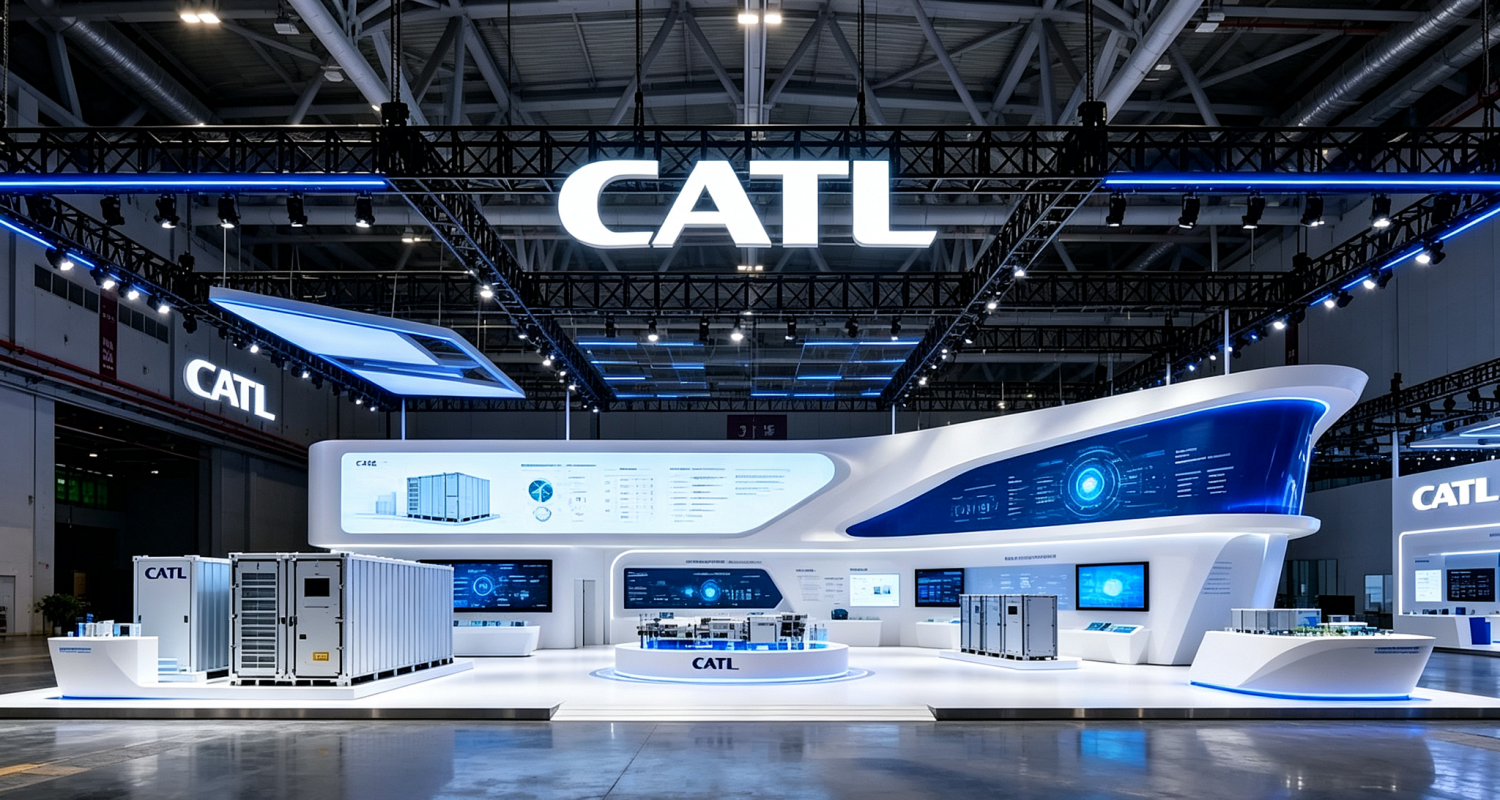
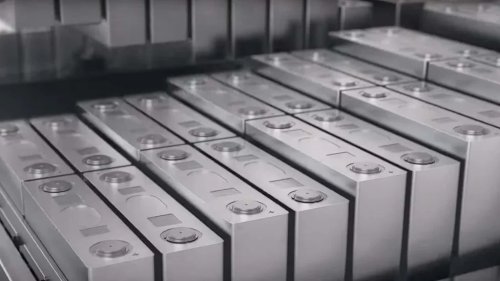
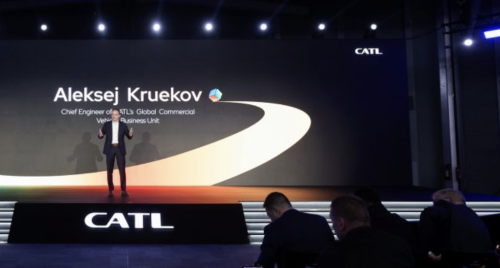
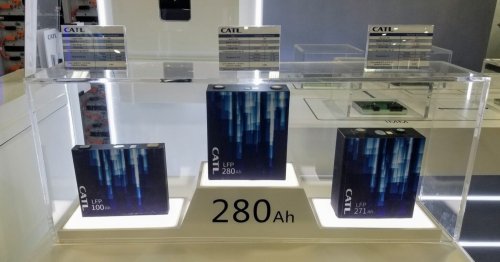
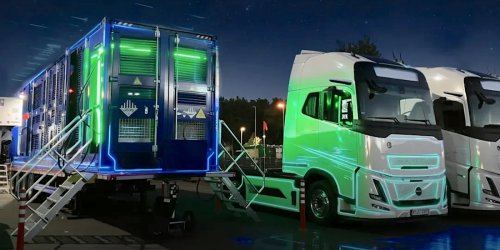
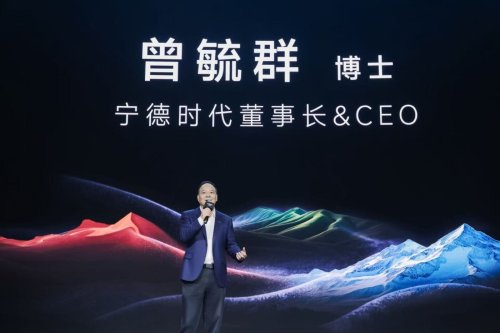
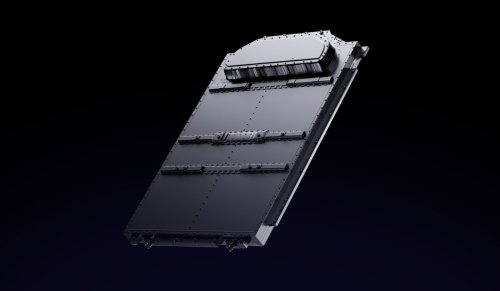
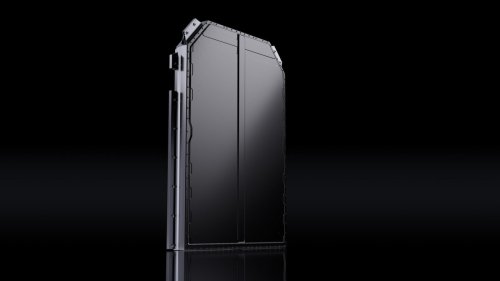
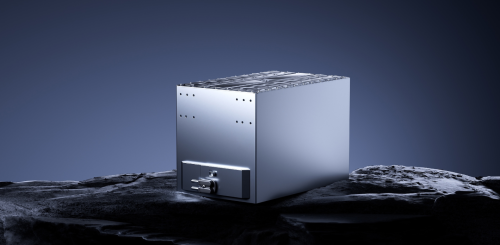
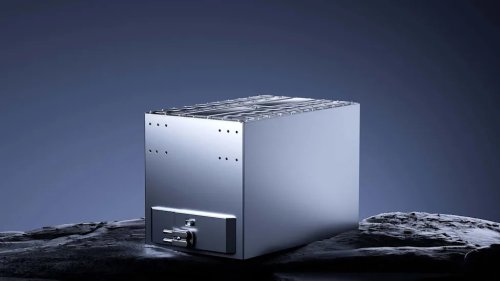
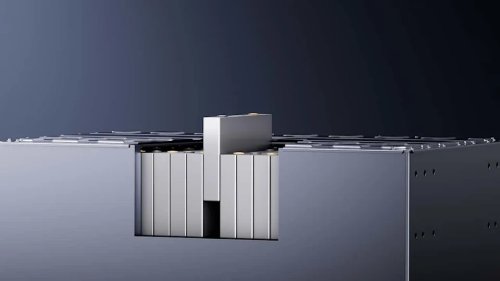
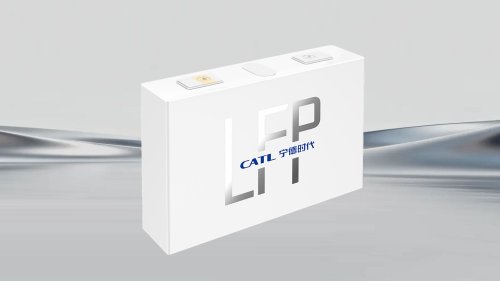
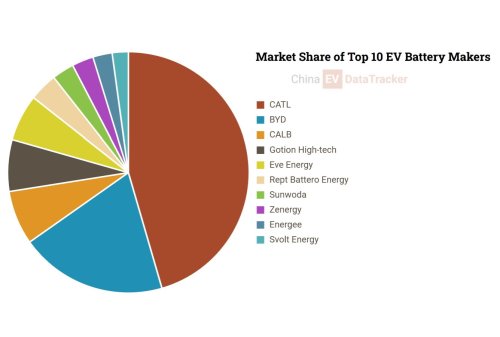
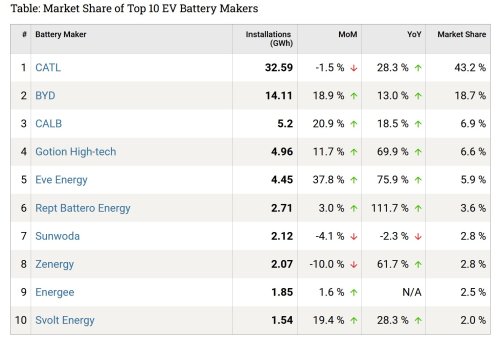
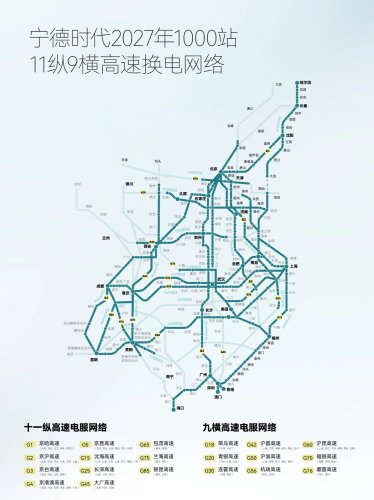
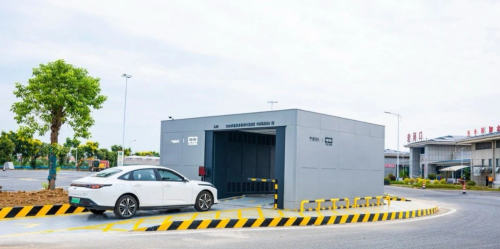
Image: CATLCATL leads the global electric vehicle battery market with its NMC and LFP batteries. According to the latest figures, the company dominates half of the Chinese market. At its Super Technology Day in Beijing yesterday, CATL made it clear that it intends to maintain this lead. The manufacturer unveiled the following innovations:the third-generation Shenxing superfast-charging batterythe third-generation Qilin batterythe second-generation Freevoy super hybrid batterythe Qilin Condensed Batterythe Naxtra sodium-ion batteryan integrated solution for fast charging and battery swappingThe third-generation Shenxing Superfast-Charging Battery follows just one year after the introduction of its second generation. CATL states that its primary focus has been on improving the lifespan of this LFP battery.The guiding principle: ultra-fast charging and an extremely long lifespan should no longer be mutually exclusive. The new Shenxing fast-charging battery is designed to optimise thermal management through three key measures. These are ‘reduced heat production during operation, stronger thermal propagation, and higher precision control.’“As a result, after 1,000 complete cycles, the battery’s capacity retention remains above 90%, achieving an optimal balance between extreme superfast charging and ultra-long service life,” CATL states. The third-generation Shenxing Superfast-Charging Battery.Image: CATLAs technical specifications, the company lists a charging rate of 10C and a peak charging rate of 15C. Additionally, charging from 10 % to 35 % state of charge (SOC) is said to take just one minute, from 10 % to 80 % three minutes and 44 seconds, and from 10 % to 98 % six minutes and 27 seconds. Even under extreme cold conditions at −30 °C, charging from 20 % to 98 % SOC takes only about nine minutes, according to CATL.To recap: The second generation of the Shenxing battery was announced a year ago with a charging rate of 12C and a peak charging power of up to 1.3 megawatts. Within five minutes, this battery generation could recharge enough energy for up to 520 kilometres of range in the Chinese CLTC cycle. CATL does not provide an equivalent figure for the third generation. However, it is clear that performance values have, at best, only moderately increased, while the developers’ focus – as CATL itself emphasises – lies on the desired longevity of the Shenxing battery.Cell-to-pack at a new levelThe Qilin battery, or CATL’s Cell-to-Pack technology, takes a different approach. Following initial generations in 2019 and 2023, the manufacturer now announced an even further improved successor. The current Qilin batteries with NMC chemistry achieve energy densities of up to 255 Wh/kg, while those with LFP reach 160 Wh/kg. Up to 72 % of the ready-to-install CtP battery pack is filled with cells.The third-generation Qilin battery is expected to achieve an energy density of 280 Wh/kg and is specifically designed for premium electric vehicles with long ranges. It is said to enable a range of 1,000 km while supporting 10C fast charging. It should deliver a peak power output of 3 MW – ‘doubling the output of the second-generation Qilin track battery which competed on the Nürburgring (1,330 kW),’ as CATL states. The third generation of the Qilin battery.Image: CATLThe entire Qilin battery pack will weigh just 625 kg. “Compared with equivalent LFP systems, this represents a weight reduction of 255 kg and space savings of 112 litres. The lightweighting metrics deliver exceptionally significant benefits,” the manufacturer emphasises.For example, energy consumption per 100 kilometres is reduced by over 6 %, acceleration from 0 to 100 km/h improves by 0.6 seconds, and braking distance is shortened by approximately 1.44 metres. Additionally, developers have reduced the size of the battery pack, gaining 112 litres of space, which, according to CATL, ‘can increase cabin headroom by at least 18 mm.’Finally, the risk of thermal runaway has been further reduced by equipping each cell with an independent exhaust channel ‘to isolate thermal events.’Technology transfer from electric aircraft developmentAs another innovation, CATL introduced the Qilin Condensed Battery in Beijing. This battery is set to transfer aviation technology to passenger cars for the first time, achieving a cell energy density of 350 Wh/kg and a volumetric energy density of 760 Wh/L – ‘a new record for mass-produced batteries.’ This is expected to enable ranges of 1,500 km for saloons and over 1,000 km for large SUVs, while keeping the weight of the battery pack below 650 kg.The battery’s name derives from a specific feature. “Replacing liquid electrolyte with a condensed system eliminates risks associated with leakage and combustion,” as CATL describes it. The company first presented this technological approach two years ago at Auto China, albeit with a focus on aircraft. CATL revisits this in its current announcement. “The technology builds on CATL’s electric aviation programme, where 500 Wh/kg systems have completed maiden flight validation on 4-tonne aircraft, with further validation underway on aircraft exceeding 8 tonnes.” The Qilin Condensed Battery.Image: CATLFor the Condensed Battery, CATL, according to earlier statements by Dr. Wu Kai, Chief Scientist of the company, has developed an adaptive micro-scale mesh structure. In physics, ‘condensed matter’ refers to materials in solid and liquid states – as opposed to gas and plasma. This includes the principles behind alloys, metals, semiconductors, insulators, and membranes, as well as physical phenomena such as electrical conductivity, ferroelectricity, and magnetism – all relevant areas for electric mobility.The new Condensed Battery, adapted for passenger cars, features a nickel-rich cathode and a low-expansion silicon-carbon anode, ‘boosting energy density by 50 Wh/kg.’ Its first-use casing made of aerospace-grade titanium alloy reduces thickness by 60 % and weight by 30 %, while tripling the strength per unit and achieving an additional energy density of 20 Wh/kg.Furthermore, CATL emphasises that replacing the liquid electrolyte with a condensed system eliminates risks associated with leaks and fires, as ‘no liquid to leak, no liquid to ignite.’ At the same time, CATL has introduced a new composite current collector, which acts as a fast self-melting fuse in extreme cases of internal short circuits.More electric range for hybrid EVsNext is the second-generation Freevoy Super Hybrid Battery: this is designed to enable hybrids to achieve 600 km of pure electric range while supporting 10C superfast charging. The first generation was introduced by CATL a year and a half ago, promising 400 km of electric range and 4C fast charging. These types of batteries are designed for plug-in hybrids and electric vehicles with range extenders. The second generation of the Freevoy Super Hybrid Battery.Image: CATLThe key feature of the Freevoy Super Hybrid Battery is a mix of LFP and NCM materials, with CATL stating that the so-called olivine crystal structure of LFP serves as the core framework, enabling a uniform mixture of LFP and NCM materials at the powder particle level. This is said to achieve an energy density of 230 Wh/kg, increasing range without adding weight to the battery pack compared to pure LFP systems.Sodium battery to enter mass production by end of 2026CATL also highlighted its Naxtra sodium-ion battery in Peking. This battery was first introduced a year ago at CATL’s analogue Tech Day, with an energy density of up to 175 Wh/kg.“The Naxtra Sodium-ion Battery marks CATL’s transition from laboratory breakthrough to large-scale manufacturing. By systematically overcoming hundreds of engineering challenges, CATL has achieved GWh-level industrialisation,” the company emphasised at the recent event, announcing that the Naxtra sodium-ion battery will enter full-scale mass production by the end of 2026.Battery swapping and charging stations grow togetherCATL also shared updates on its fast-charging and battery-swapping network. The company no longer views the various charging options as separate systems but instead aims to create an integrated network. The network will be based on three pillars: home charging, public charging stations, and battery swapping.“All passenger vehicle ‘Choco-Swap’ and heavy truck ‘QIJI’ swapping stations will be equipped with Shenxing supercharging systems, enabling true charge–swap synergy, where each station serves both as a battery-swapping node and a high-power charging hub,” CATL announced.The integrated charging and battery-swapping stations will feature shared compact substations and charging modules, ‘reducing energy conversion steps and lowering overall power loss by more than 13 percentage points compared with conventional storage-equipped charging stations.’Additionally: “In emergency scenarios, station batteries can discharge directly to charging piles, driving equipment utilisation rate above 85%.”In this context, CATL also announced an addition to its Choco-Swap swapping system. Alongside the standardised swappable packs #20 and #25, the new Choco-Swap #26 battery is introduced. While the #20 pack offers 42 kWh (LFP) or 52 kWh (NMC) and the #25 pack provides 56 kWh (LFP) or 70 kWh (NMC), the #26 pack is designed for 800-V high-voltage architectures and delivers 75 kWh.CATL does not specify the cell chemistry, but announces variants with higher capacity. “The first release includes a 75 kWh version, with higher-capacity variants to follow, fully compatible with B- to C-segment 800V vehicles. With this launch, the Choco-Swap system will extend its coverage to a complete vehicle matrix from A0 to C-segment models,” CATL states.Regarding network expansion, the company plans to build 4,000 integrated charging and battery-swapping stations by the end of 2026, covering nearly 190 cities and a nationwide motorway network with 12 vertical and 11 horizontal corridors. To date, the Choco-Swap network has already established 1,470 stations in 99 cities, with expansion accelerating, according to CATL.Sharing network in collaboration with partnersOn top of this, CATL announced a ‘charge–swap sharing network’ that the company plans to develop together with automotive manufacturers and energy partners. The network will be based on technology exchange, seamless connectivity, and joint investments. The first partners are already confirmed: Changan, Chery, GAC, Seres, SAIC-GM-Wuling, and BAIC. The goal is to establish over 100,000 shared energy supply facilities by the end of 2028.In conclusion, CATL states that with the five battery products presented and the integrated network of fast-charging and battery-swapping stations, it has built a seamless value chain from battery products to infrastructure.Robin Zeng, Chairman and CEO of CATL, emphasised that industrial innovation must be driven by a rigorous scientific approach. “For Chinese technology to go global, it relies not just on speed and scale, but on the quality of innovation, the ability to validate, and the credibility of the brand.”Chief Scientist Wu Kai systematically explained the strengths, limitations, and development paths of the various battery technologies at the event. He noted, among other things, that LFP is approaching its theoretical energy density limit and is therefore better suited for a technology roadmap focused on extremely fast charging to achieve an optimal balance.The high energy density of NCM, on the other hand, secures this cell chemistry a leading position in global competition – for Wu, this is evidence that energy density remains the decisive factor for market leadership. Sodium-ion batteries, according to the development chief, offer broad potential for applications in extreme temperatures and energy storage. His conclusion: the lithium-ion battery industry must ‘pursue coordinated development across multiple chemical systems.’prnewswire.com



















 +43 others


![Tesla, Battery, Not sold on Tesla Powerwall? There are great battery alternatives out there [update]](https://cdn.topcarnews.net/thumb/id/aHR0cHM6Ly9pMC53cC5jb20vZWxlY3Ry-ZWsuY28vd3AtY29udGVudC91cGxvYWRz-L3NpdGVzLzMvMjAyNi8wNy9ob21lLXNv-bGFyLWJhdHRlcnkucG5nP3c9MTUwMCZh-bXA7cXVhbGl0eT04MiZhbXA7c3RyaXA9-YWxsJmFtcDtzc2w9MQ/18e81f395a77dbb42269ab5e106fea41.png?t=20261010&post_id=68280)
![Tesla, Battery, Not sold on Tesla Powerwall? There are great battery alternatives out there [update]](https://cdn.topcarnews.net/thumb/id/aHR0cHM6Ly9lbGVjdHJlay5jby93cC1j-b250ZW50L3VwbG9hZHMvc2l0ZXMvMy8y-MDI2LzA4L3NvbGl4LXgxLWNvcHkuanBn/a9fe4985234387a08124ce5984c09772.jpg?t=20261010&post_id=68280)
![Tesla, Battery, Not sold on Tesla Powerwall? There are great battery alternatives out there [update]](https://cdn.topcarnews.net/thumb/id/aHR0cHM6Ly9lbGVjdHJlay5jby93cC1j-b250ZW50L3VwbG9hZHMvc2l0ZXMvMy8y-MDI2LzA4L2JsdWV0dGlfRVA4MDAtY29w-eS5qcGc/2d9344a919e78ef6ada1803d9a030ce2.jpg?t=20261010&post_id=68280)
![Tesla, Battery, Not sold on Tesla Powerwall? There are great battery alternatives out there [update]](https://cdn.topcarnews.net/thumb/id/aHR0cHM6Ly9lbGVjdHJlay5jby93cC1j-b250ZW50L3VwbG9hZHMvc2l0ZXMvMy8y-MDI2LzA4L0Vjb0Zsb3ctREVMVEEtUHJv-LVVsdHJhLmpwZw/eff5ecb316465dcf28dd74e9eb1b324c.jpg?t=20261010&post_id=68280)
![Tesla, Battery, Not sold on Tesla Powerwall? There are great battery alternatives out there [update]](https://cdn.topcarnews.net/thumb/id/aHR0cHM6Ly9lbGVjdHJlay5jby93cC1j-b250ZW50L3VwbG9hZHMvc2l0ZXMvMy8y-MDI1LzEwL2dhcmFnZV9iYXR0ZXJ5XzVf-c3lzdGVtX2NvbnRyb2xsZXJfM19VUy0x-LmpwZw/116b4706c7e7c77633518a677e92bdc3.jpg?t=20261010&post_id=68280)
![Tesla, Battery, Not sold on Tesla Powerwall? There are great battery alternatives out there [update]](https://cdn.topcarnews.net/thumb/id/aHR0cHM6Ly9lbGVjdHJlay5jby93cC1j-b250ZW50L3VwbG9hZHMvc2l0ZXMvMy8y-MDI2LzAyL2dtLWVuZXJneS0xLTUud2Vi-cA/f6c358bbb69cf5917e5d0d7d5cb1c03d.webp?t=20261010&post_id=68280)










![Battery, Watt's up, doc? Huddig hybrid loader gets a big battery boost [video]](https://cdn.topcarnews.net/thumb/id/aHR0cHM6Ly9pMC53cC5jb20vZWxlY3Ry-ZWsuY28vd3AtY29udGVudC91cGxvYWRz-L3NpdGVzLzMvMjAyNi8xMC9odWRkaWct-aHlicmlkX21haW4uanBnP3c9MTUwMCZh-bXA7cXVhbGl0eT04MiZhbXA7c3RyaXA9-YWxsJmFtcDtzc2w9MQ/ea51c544798341190a5eed718aab1ee3.jpg?t=20261010&post_id=67784)
![Battery, Watt's up, doc? Huddig hybrid loader gets a big battery boost [video]](https://cdn.topcarnews.net/thumb/id/aHR0cHM6Ly9lbGVjdHJlay5jby93cC1j-b250ZW50L3VwbG9hZHMvc2l0ZXMvMy8y-MDI2LzEwL0hlcm9iYW5uZXJfVGlnb25f-MS1jbG9zZS1jb3B5LmpwZw/d26fab6fabc13bc13692cf5d41542493.jpg?t=20261010&post_id=67784)
![Battery, Watt's up, doc? Huddig hybrid loader gets a big battery boost [video]](https://cdn.topcarnews.net/thumb/id/aHR0cHM6Ly9lbGVjdHJlay5jby93cC1j-b250ZW50L3VwbG9hZHMvc2l0ZXMvMy8y-MDI1LzAzL0RFUy0xMDM4X0VsZWN0cmVr-LUJhbm5lcnNfRVZzXzA3OTdjMi5wbmc/e850e929e3168f8c7ff73cd888e54add.png?t=20261010&post_id=67784)