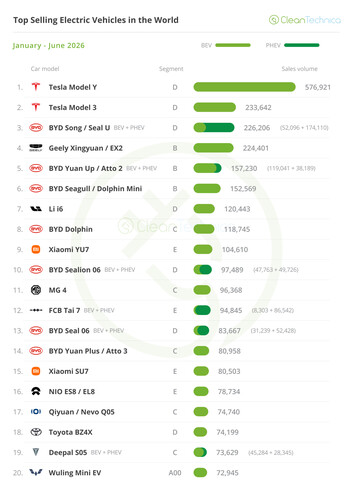
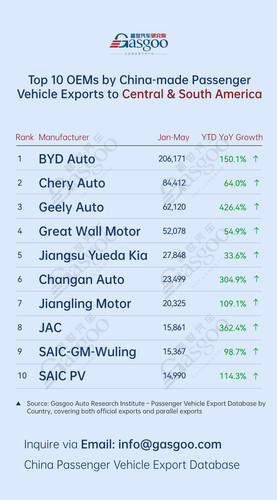
Morgan Moreau · 5 months ago@morganmoreau276China’s Sodium-Ion Batteries Enter Mass Production as CATL, Pret Ramp Up Liked by+60 othersChanganGeelyWulingcheryPost commentRelated PostsGeely Subsidiary ENERGEE Starts Selling BatteriesNicole Côté · 14 days agoTop Selling Electric Vehicles in the World — June 2026 56 · Connor Scott · 2 months agoWhat Do the People AI Cannot Replace Look Like? 70 · Nicole Tremblay · 26 days agoLuxshare acquires 100% stake in BWI Group; FORVIA HELLA secures two ordersGabriel King · 15 days agoPure Electric Vehicle Brands Take Center Stage at Indonesia Auto Show 23 · Kayla King · 2 months agoAugust Pickup Truck Sales Reach 54,000 Units; Exports Account for 71% 20 · Charlotte Lee · 27 days agoAustralian Plugin Vehicle Sales, September Update — Are Mainstream Media Finally Waking Up?Jackson Labelle · 15 days agoChina’s passenger vehicle exporters overview (Jan.-May 2026): Chery Auto surges 277.5% in Europe丨Gasgoo Automotive Research Institute 16 · Morgan Scott · 2 months agoOverseas Factory Boom: China's Auto Industry's Next 7 Million Vehicles 30 · Gabriel Moreau · 1 months agoGeely Battleship 700 launches: A BYD FCB Ti 7 challenger with 10,000+ orders in 12 minutesWilliam King · 16 days agoThe Big ICE Meltdown — June’s China EV Sales Report 33 · Audrey Clark · 3 months agoNearly Half of 2027 World Car of the Year Contenders Are Chinese 29 · Mia Rogers · 1 months agoThe GAC Aion V Looks Odd But Is Incredible Value | ReviewAudrey Nelson · 16 days agoChina Passenger Vehicle Exports Jan-May 2026: Who Is Leading? Changan Sees 634.3% Growth in Europe, BYD Leads in Central & South America | Gasgoo Automotive Research Institute 34 · Ryan Gagnon · 3 months agoIs the "One Toyota" Era Coming in China? 84 · Jackson Leblanc · 1 months agoFrance Passenger Car Market in September 2026: BYD Surges, Chinese Brands Reach 8.1% ShareAdam Pelletier · 16 days agoTop Selling Electric Vehicles in the World — May 2026 90 · Lucas Hill · 3 months agoFuel-to-Electric Switch Accelerates: The Cold and Heat of the August Auto Market 61 · Amelia Brown · 1 months agoGeely Confirms 2027 Canadian Launch, Offers No DetailsAlexander Tremblay · 17 days agoApril 2026 Passenger Car Chinese Brand Sales Ranking: Galaxy Enters Top Three, Leapmotor Hits Record High with 71,000 Units | Gasgoo Automotive Research Institute 67 · Lauren Poirier · 4 months ago




 +60 others