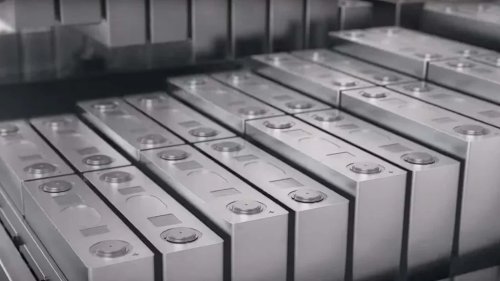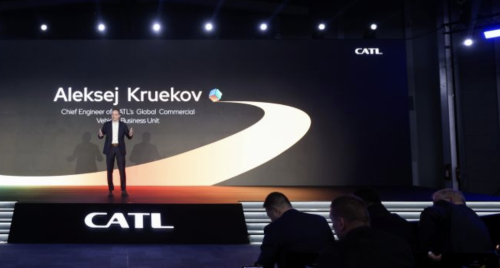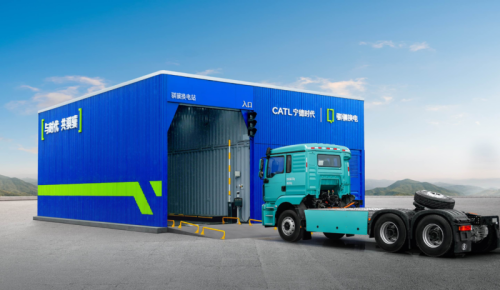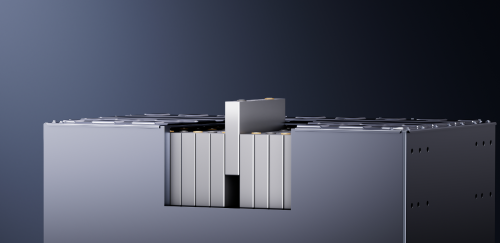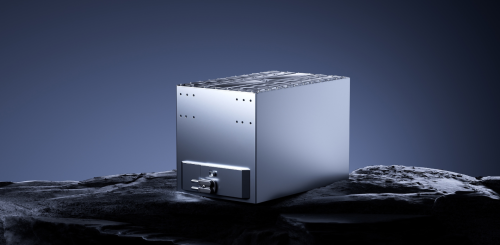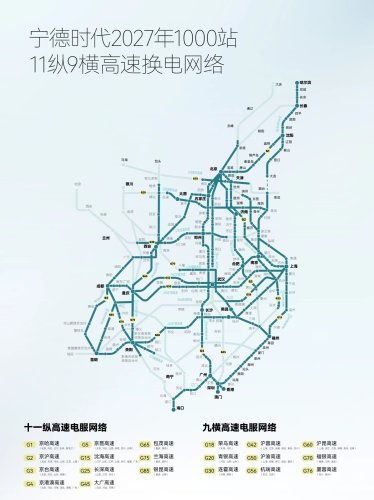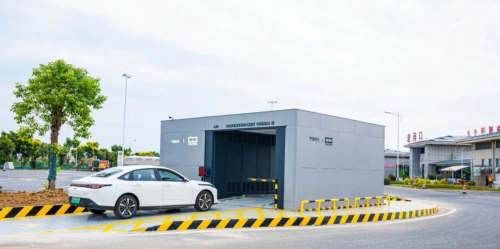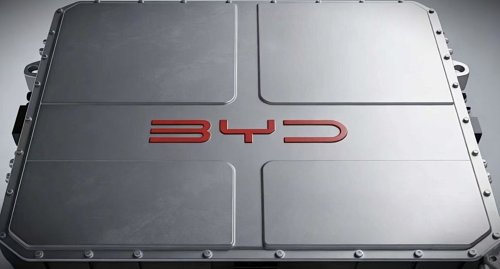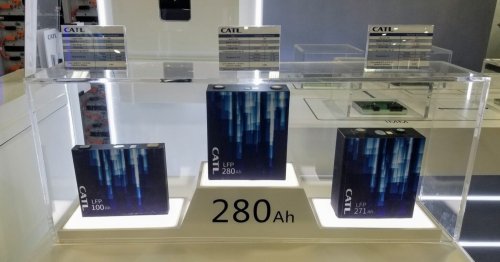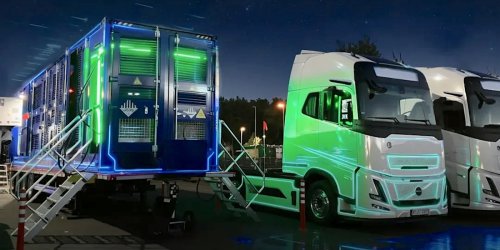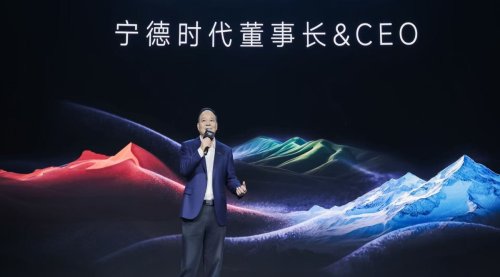
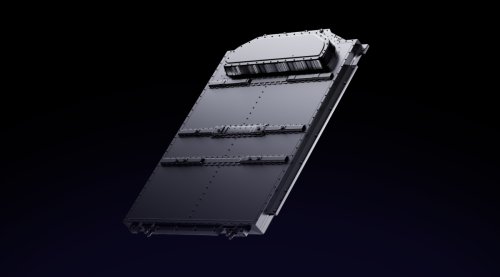
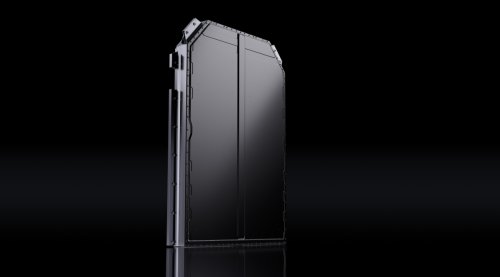
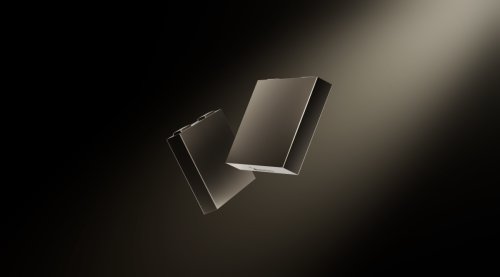
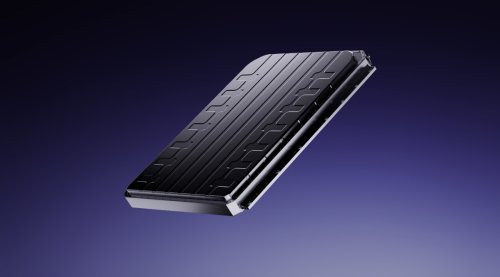
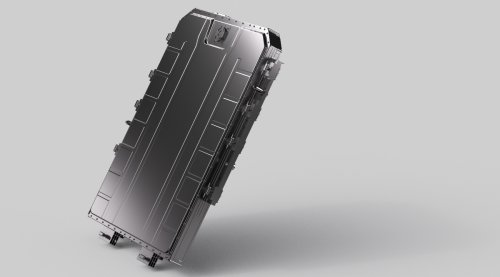



















News of advances in battery technology are coming thick and fast these days. Earlier this year, BYD unveiled its new flash charging technology that features 1.5 MW fast chargers. The company said its latest LFP Blade battery can charge from 10 to 97 percent state of charge in just 9 minutes. That’s impressive, but what is even more important for drivers who live in cold climates, BYD says its new battery needs only three minutes more to do the same thing when the temperature outside is -30º C. That is pretty stunning news. The competition between BYD and CATL is fierce, as the two companies play a high stakes game of “anything you can do, I can do better.” In a press release on April 21, 2026, following its latest Super Technology Day, CATL unveiled its third generation Shenxing Superfast Charging Battery, its third generation Qilin Battery, the Qilin Condensed Battery, a second generation Freevoy Super Hybrid Battery, its latest Naxtra Sodium-ion Battery, and a fully integrated supercharging and battery-swapping solution. “These innovations are designed to address diverse mobility needs across different usage scenarios,”: the company said. The big news here is that the latest Shenxing Superfast battery can charge from 10 to 98 percent in just 6 minutes — knocking three minutes off the time needed for the latest BYD battery. “We always deliver what we promise,” Gao Huan, the company’s chief technology officer, told reporters Tuesday at Super Technology Day. According to Bloomberg, the nickel-cobalt-manganese battery is capable of providing 1,000 kilometers (621 miles) of range, and the even more ambitious condensed-matter battery offers a maximum range of 1,500 kilometers in a typical sedan, which could become a new benchmark for premium vehicles. At Super Technology Day, Dr. Wu Kai, the chief scientist for CATL, talked about all the new technologies and the development pathways of different chemistries. He noted that LFP is nearing its theoretical energy density limit, making it better suited for a technology roadmap centered on extreme fast charging to achieve optimal balance. Robin Zeng, chairman and CEO of CATL, emphasized at the conference that industrial innovation must be driven by a rigorous scientific spirit. For Chinese technology to go global, it relies not just on speed and scale, but on the quality of innovation, the ability to validate, and the credibility of the brand. Careful readers will note that the US currently is not pursuing the idea of a rigorous scientific spirit. Quite the opposite, in fact. Readers are free to draw their own conclusions about what that means for US competitiveness in the future. Third Generation Shenxing Superfast Charging Battery 3rd Generation Shenxing battery. Credit: CATL The company says that from an electrochemical standpoint, boosting charge rates while protecting battery lifespan hinges on one primary factor — temperature rise, not trickle current. As the Arrhenius equation shows, a 10°C increase in battery temperature can roughly double the rate of internal side reactions — an effect that can significantly shorten cycle life. The new third generation Shenxing Superfast charging battery addresses heat generation and dissipation through three major measures: reduced heat production during operation stronger thermal propagation higher precision control. As a result, after 1,000 complete cycles, the battery’s capacity retention remains above 90 percent, achieving an optimal balance between extreme super-fast charging and ultra-long service life. CATL claims its newest battery has achieved true 10C charging and a peak 15C charging rate. Charging from 10 to 35 percent state of charge takes just 1 minute. From 10 to 80 percent SOC takes 3 minutes and 44 seconds, while 10 to 98 percent SOC takes 6 minutes and 27 seconds. Even at −30°C, charging from 20 to 98 percent only takes about 9 minutes. This latest battery offers both fast charging and battery swapping capability. Third Generation Qilin Battery 3rd generation Qilin battery. Credit: CATL Until now, achieving long range in premium EVs with LFP batteries meant simply adding more capacity — an approach that inevitably compromises vehicle lightweighting. CATL says, “The third generation Qilin battery is designed for premium long range EVs, achieving a cell energy density of 280 Wh/kg and enabling 1,000 km range while supporting 10C super-fast charging. The entire battery pack weighs only 625 kg. Compared with equivalent LFP systems, this represents a weight reduction of 255 kg and space savings of 112 liters.” The lightweight technologies incorporated into this batter have significant benefits: Energy consumption per 100 km decreases by more than 6%, saving approximately 0.78 kWh per 100 km. Across a fleet of one million vehicles travelling 20,000 km annually, this equates to 156 million kWh in electricity savings and a reduction of 78,500 tons of CO₂ emissions. Performance and safety improvements include a 0.6–second reduction in 0–100 km/h acceleration, a shorter overtaking risk window, a higher moose test speed, a lower body roll angle, a significant gain in obstacle avoidance capability, and shorter braking distance. Durability is enhanced, with chassis component life extended by 40 percent and tire life by over 30 percent, increasing replacement intervals by at least 10,000 km. The 112 liters of space saved can increase cabin headroom by at least 18 mm. Safety is strengthened through “thermal-electrical separation,” with each cell incorporating an independent sealed exhaust channel to isolate thermal events and prevent propagation, ensuring “heat takes the heat path, electricity takes the electrical path.” Qilin Condensed Battery Condensed battery. Credit: CATL The Qilin condensed battery applies aviation-grade technology to passenger vehicles for the first time, achieving 350 Wh/kg cell energy density and 760 Wh/L volumetric energy density. Both set new records for mass produced batteries and make a range of 1,500 km possible for sedans and more than 1,000 km possible for large SUVs. The weight of the condensed battery pack is less than 650 kg. The condensed battery features a high nickel cathode and low expansion silicon-carbon anode. Together they increase energy density by 50 Wh/kg. Its first-ever aviation-grade titanium alloy case reduced thickness by 60 percent and weight by 30 percent, while tripling unit strength and delivering an additional 20 Wh/kg in energy density. The technology builds on CATL’s electric aviation program, where 500 Wh/kg systems have completed maiden flight validation on four ton aircraft.Further validation on aircraft exceeding 8 tons is in progress. Replacing liquid electrolyte with a condensed system eliminates risks associated with leakage and combustion, achieving “no liquid to leak, no liquid to ignite.” At the same time, CATL has adopted a new composite current collector that acts as a fast self-fusing fuse in extreme cases of internal short circuits. Second-Generation Freevoy Super Hybrid Battery Freevoy hybrid battery. Credit:: CATL The second generation Freevoy Super Hybrid Battery extends battery-only electric range to as much as 600 km and standardizes 10C super-fast charging. It pioneers a “super hybrid technology” that integrates LFP and NCM materials through gradient-uniform mixing, with the olivine crystal structure of LFP serving as the core backbone, while enabling a uniform hybrid of LFP and NCM materials at the powder particle level. The result is an energy density of 230 Wh/kg and an increase in range of more than 15 percent without increasing pack weight. This enables full coverage from mainstream family use to high end hybrid scenarios, delivering optimal solutions across diverse applications. The company says the system delivers 1.5 MW of instantaneous power at full charge and maintains 1.2 MW at 20% SOC, addressing power degradation in low-charge conditions. In off-road scenarios requiring over 350 kW output, the system provides more than three times the required power, ensuring consistent performance even at low charge levels. Safety features include a reinforced bottom coating capable of withstanding 1,500 joules of impact energy (ten times the national standard) and waterproof sealing that allows continuous immersion in 2 meters of water for over 200 hours without performance degradation. Naxtra Sodium-Ion Battery Naxtra sodium battery..Credit: CATL The Naxtra sodium-ion battery marks CATL’s transition from laboratory breakthrough to large-scale manufacturing. By systematically overcoming hundreds of engineering challenges, CATL has achieved GWh-level industrialization, the company reports. This year, CATL has successfully addressed four key industry bottlenecks for sodium-ion mass production extreme water control gas generation in hard carbon aluminium foil adhesion self-forming anode systems The Naxtra sodium-ion battery paves the way for reliable, large scale deployment and is set to enter mass production by the end of 2026. Integrated Supercharging and Battery Swapping Network CATL this week also introduced an integrated supercharging and battery-swapping network, designed as a unified system rather than separate solutions. It is built on three complementary pillars that define the optimal energy replenishment ecosystem home charging public charging battery swapping All passenger vehicle “Choco-Swap” and heavy truck “QIJI” swapping stations will be equipped with Shenxing supercharging systems, enabling true charge/swap synergy, where each station serves both as a battery-swapping node and a high-power charging hub. The integrated charge/swap stations feature shared compact substations and charging modules, reducing energy conversion steps and lowering overall power loss by more than 13 percent compared with conventional storage equipped charging stations. In emergency scenarios, station batteries can discharge directly to charging equipment and bringing equipment utilization rates above 85 percent. This enables a service capacity of 3 times per parking space compared with conventional storage-equipped charging stations, while the fixed investment cost of the supercharging segment is reduced by 20 percent. CATL plans to build 4,000 integrated charge/swap stations by the end of 2026, covering nearly 190 cities and a nationwide highway network spanning 12 vertical and 11 horizontal corridors. To date, the Choco-Swap network has already built 1,470 stations across 99 cities, with scaling continuing to accelerate. From five battery products covering the full material spectrum to an integrated supercharging and battery swapping network, CATL has established a complete value chain from battery products to infrastructure. It says it “plans to continue to invest in advanced research, large scale manufacturing and ecosystem collaboration to accelerate the transition from single-point innovation to full-scenario energy solutions, ensuring the benefits of technological progress are accessible across all mobility use cases.”