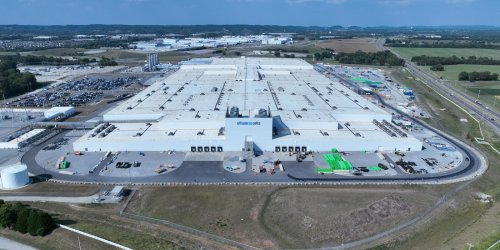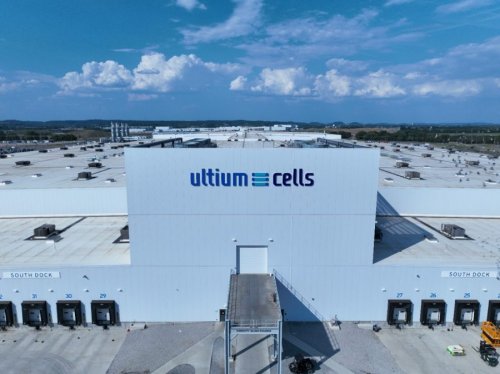



















Oh the irony, it burns. For all the red-state rhetoric bandied about in Texas, the state has emerged as a premier energy transition showcase for wind and solar power, e-fuels, and clean tech manufacturing, too. In the latest development, two US battery materials startups, EnergyX and Wildcat Discovery Technologies, have joined forces to build a $230 million facility in Texas, aimed at churning out 15,000 metric tonnes per year of lithium iron phosphate, the key ingredient in a new generation of LFP batteries for EVs, among other applications. A $230 Million Bet On Electrification The figure of 15,000 metric tonnes (about 16,500 US tons) is just for starters. The proposed LFP operation represents Phase 1 in a far-ranging “Battery Mecca” facility described by EnergyX founder and CEO Teague Egan. “In addition EnergyX’s global lithium technology and production platform, which includes the Project Lonestar™ lithium plant in Texas, this cathode plant is a critical step towards EnergyX’s larger vision of the Battery Mecca™, ” Egan explained in a press statement earlier today. “Cathode production is a natural next step, which will eventually include lithium metal anode production, and high energy density cell manufacturing,” he added (for those of you new to the topic, cathode is basic battery vocabulary; batteries consist of two electrodes, a cathode and an anode, with an electrolyte staged in between). US Department Of Energy Continues To Support Energy Storage There being no such thing as a free lunch, EnergyX and Wildcat (a subsidiary of Sweden-based Holyvolt Group) note that funding from the US Department of Energy would speed construction along. “If selected for DOE funding, federal support would accelerate construction, commissioning, and scale-up of one of the first meaningful domestic LFP cathode production facilities in the United States,” they assert, indicating that an application for funds is moving through the pipeline. If the funding comes through, it wouldn’t be the first time for EnergyX, which has earned Energy Department support in the past. Considering the potential impact on EVs and other electrification applications, though, it’s worth asking why the Energy Department of today would be interested in funding such a project. The answer isn’t too complicated. Generally speaking, batteries are source-agnostic. Higher-performing, less expensive, and safer energy storage technologies can be applied to systems that run on fossil energy as well as renewable energy, particularly in the area of grid-scale applications. So, it’s no surprise to see the Energy Department throw down $15 million in support of a suite of six new cutting-edge energy storage technologies in January. “Success would enable dramatic improvements in the performance of drones, robots, Electrical Vertical Take-Off and Landing (eVTOL) aircraft, and other applications that would benefit from ultra-high-density storage systems,” notes the Energy Department’s ARPA-E office, delicately skipping over the obvious implications for use in civilian EVs. The Energy Department has also thrown its support behind a forthcoming battery factory in Kentucky, which is taking aim at the vehicle electrification market among other applications. More recently, on June 1 the agency’s Pacific Northwest National Laboratory announced the launch of a new high-tech production facility for prismatic battery cells. Prismatic architecture is optimal for grid-scale use, but last year Ford and General Motors teased out mobility applications as well. EVs And The Military Angle EnergyX and Wildcat are also banking on next-generation military applications to stimulate Energy Department interest in their project. “The project would be located on 330 acres of land already secured by EnergyX at the TexAmericas Center, a strategic industrial location with rail transportation access, available utility infrastructure, competitive energy resources, and proximity to important defense and battery supply-chain assets,” the partners explain, with defense referring to nearby Red River Army Depot, a major military supply facility. As for why the US Army might be interested in EVs, that’s another good question. Even before last year’s sharp U-turn in federal energy policy, the Army was proceeding upon its vehicle electrification journey at a pace that any self-respecting snail could easily lap. Among other hurdles both political and structural, concerns over fire risks in conventional lithium-ion batteries have acted as a check on Army interest in vehicle electrification. Signs of a turnaround have begun to emerge, though. Last year the Army began retrofitting vehicles with anti-idling kits consisting of batteries that can run onboard systems without having to draw power from an idling diesel engine. The project has since expanded to embrace microgrids and vehicle battery systems that can run other devices in addition to those on board. Last month, the electric truck startup Harbinger Motors entered the picture in a collaboration with the US branch of the global defense supplier Rheinmetall. The two firms have developed a cabless, crewless autonomous electric vehicle for military applications. “Initial areas of collaboration include autonomous tactical wheeled vehicles, contested-logistics resupply, and next-generation robotic platforms aligned with U.S. Army autonomy and manned-unmanned teaming priorities,” Rheinmetall explained in a press statement. Better Batteries, More EVs The military interest in EVs is also beginning to gather momentum on account of LFP batteries, which are considered less of a fire risk than conventional lithium-ion batteries commonly used in older EVs. The LFP formula is also considered more economical, which explains why Ford is among the automotive stakeholders banking on LFP to drop the up-front cost of EVs. Still, the volatility in the lithium supply chain can have a significant impact on the cost of LFP battery materials. EnergyX cites a calculation by the firm IDTechEx, indicating that lithium precursors account for 60-80% of LFP material costs. EnergyX and Wildcat have worked that into their business model, with EnergyX anticipating that it will supply most or possibly all of the lithium for the new facility. “EnergyX controls approximately 50,000 acres of premium lithium mining rights underneath the co-located cathode production facility and Lonestar™ lithium plant,” the partners point out. Keep an eye out for more activity on the part of Holyvolt. The firm closed on the Wildcat acquisition in March and it already has the wheels in motion to rev up operations in the US with EnergyX. In April, Holyvolt also announced that it has been tapped for support by the Investment Accelerator Program of the Swedish Energy Agency, enabling it to connect with the global financial community towards scale-up. Image: A $230 million battery manufacturing facility is proposed for Texas, aimed at scaling up the production of LFP cathodes for use in EVs among other applications (courtesy of EnergyX/Wildcat via prnewswire.com).