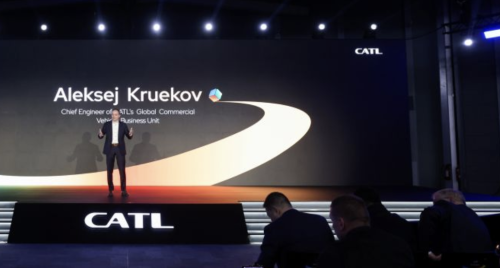
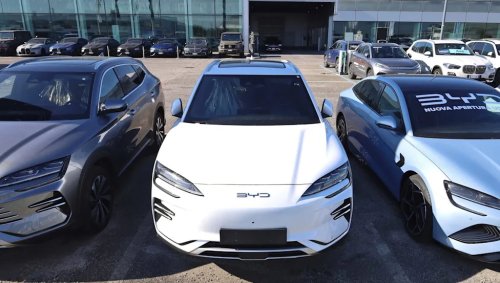
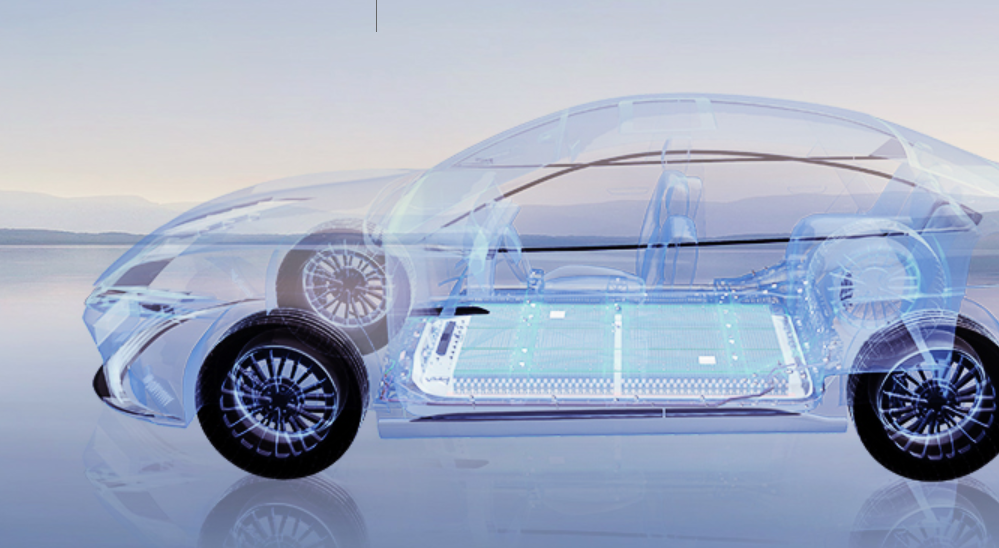
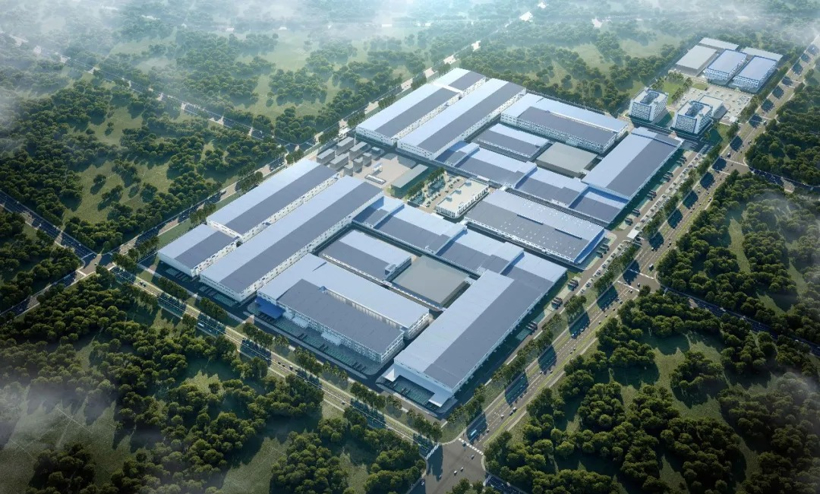
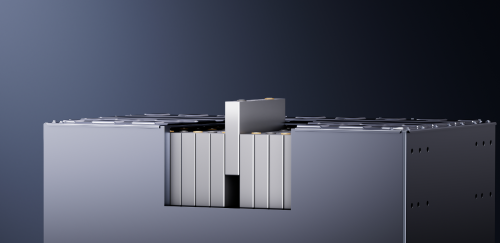
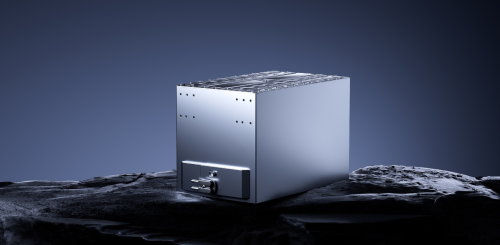
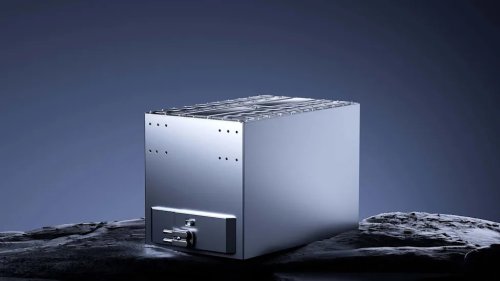
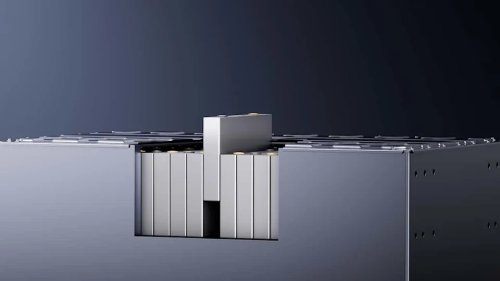
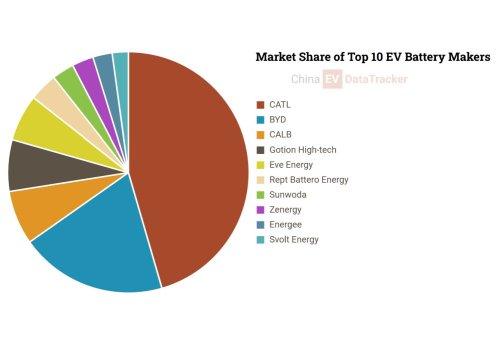
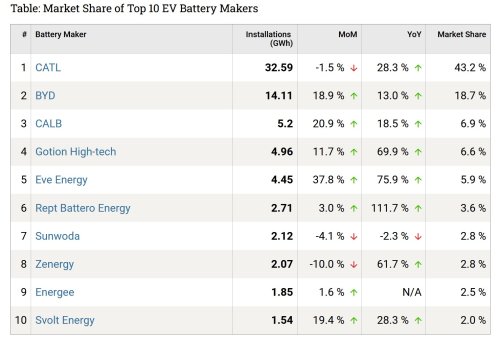
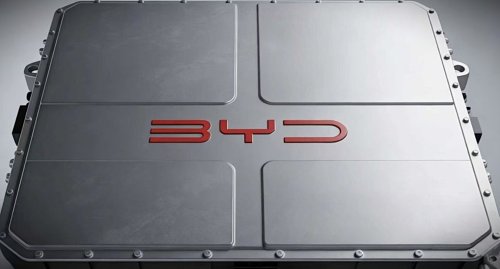
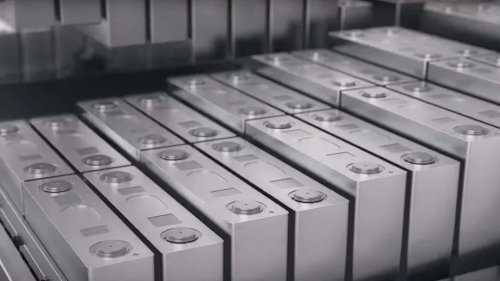
Gasgoo Munich- Having moved past early capacity expansions and price wars, China's power battery market is shifting onto a new trajectory in 2026 — one defined by technological innovation, cost control, and global expansion. Data from the China Automotive Power Battery Alliance shows April installations hit 62.4 GWh, climbing 10.4% from March and 15.2% from a year ago, a sign of steady recovery in the downstream new-energy vehicle market.Image source: FinDreams BatteryYet, beneath this expanding scale, structural divides are widening. Lithium iron phosphate (LFP) is cementing its dominance, fueled by dual advantages in cost and safety. Meanwhile, while the "Dual Kings" — CATL and BYD — appear secure, a second tier of contenders is quietly breaking through, signaling subtle shifts in market concentration. A new era, defined by LFP dominance and a more diverse competitive landscape, is fast approaching.Technology Trajectory Clears as LFP Cements DominanceApril's data reveals a clear trend: the market's choice of technology roadmap is effectively settled.LFP batteries accounted for 50.8 GWh of installations — claiming 81.5% of the monthly total. That share not only far outpaces ternary batteries but also sets a new historical record. By contrast, ternary installations stood at 11.5 GWh, representing an 18.5% share. In terms of growth, LFP installations rose 11% from the previous month, outpacing the 7.6% growth seen in ternary batteries and demonstrating stronger market elasticity. This trend suggests that as automakers' price wars rage on and consumers prioritize value, LFP has become the technological foundation for the vast majority of high-volume models, thanks to its cost and safety edge.Cumulative data for January through April shows LFP installations reaching 149.8 GWh, with market share holding steady at 80%. While cumulative year-on-year growth dipped slightly by 0.1%, this is largely attributed to a high base from last year and inventory destocking by some automakers. It does not alter the long-term trend of continued penetration in passenger vehicles, commercial vehicles, and energy storage.It is worth noting that while ternary batteries have seen slower overall growth, they retain a foothold in high-end, long-range vehicles and certain export models. Cumulative installations for the first four months rose 8.9% year-on-year to reach 37.4 GWh. In the short term, the two paths are set to coexist in a pattern where "LFP drives volume growth, while ternary holds the high ground."This shift reflects the market's prioritization of cost-efficiency and fundamental safety. With new-energy vehicle penetration having breached the 40% mark, the mainstream consumer base is shifting from "early adopters" to "mass pragmatists." Range anxiety is easing, yet attention to purchase costs, safety, and battery longevity is rising sharply.LFP batteries hold a natural advantage in precisely these areas. Moreover, technological innovations — such as Blade Batteries, CTP (cell-to-pack technology), and Qilin batteries — are gradually closing the gap in energy density. With system energy density now stably exceeding 160 Wh/kg, LFP is further squeezing the market space for ternary alternatives.Furthermore, steady installation growth is closely tied to shifts in downstream application structures. Data indicates that in April, installation growth for pure electric trucks and specialty vehicles outpaced that of passenger vehicles. These commercial segments are highly cost-sensitive and rely almost exclusively on LFP chemistry. At the same time, the rapid rise of plug-in hybrid vehicles (PHEVs) has spurred demand for smaller battery packs, which also predominantly use LFP. With these factors converging, LFP's growth momentum is poised to continue, further solidifying its dominance in the power battery market.CATL, BYD Foundation Holds Firm as Second Tier and New Entrants Accelerate BreakoutIf the technology roadmap determines the industry's "foundation," then the corporate competitive landscape dictates its current "ecosystem." April installation data once again confirms the highly concentrated nature of the power battery sector, characterized by the dominance of the "Dual Kings."CATL and BYD combined for 39.55 GWh of installations during the month, capturing a 63.4% market share together. CATL took the top spot with 29.06 GWh and a 46.64% share — up 1.1 percentage points from March — demonstrating a significant siphon effect as the market leader. BYD followed in second place with 10.49 GWh and a 16.83% share. Leveraging formidable vertical integration capabilities, economies of scale, and deep technological patent moats, these two giants have built a lead that competitors are finding difficult to surmount.Yet, beneath the seemingly stable "Dual Kings" dynamic, competition among the second tier has reached a boiling point. In April, Gotion High-Tech surged past CALB to claim third place, with 4.05 GWh and a 6.5% share compared to CALB's 3.90 GWh and 6.26%. These two companies are locked in close combat domestically while accelerating their overseas expansion, seeking new growth through differentiated customer strategies and technological paths. EVE Energy followed closely with a steady performance, holding onto a top-five spot with a 4.98% share.Even more noteworthy is the influx of fresh blood vying for spots beyond the top five. Companies like REPT, ZENERGY, and ENERGEE have turned in eye-catching performances, with both installation volumes and market shares rising month-over-month.In particular, Geely's ENERGEE leveraged its natural advantage as an in-house supplier to reach 1.83 GWh in April, jumping to eighth place — a sign that automakers' strategies for in-house battery development are bearing fruit. Additionally, GAC's Yinpai Battery and CORNEX remain stable on the list, indicating that alliances between automakers and emerging battery makers are reshaping the supply chain.In terms of concentration, the top two, top five, and top ten companies accounted for 63.4%, 81.1%, and 94.9% of installations in April, respectively. Compared to last year, the share of the top two dropped by 2 percentage points, while the share of the top ten increased by 1.4 percentage points.This suggests that while CATL and BYD remain dominant, smaller players and new entrants are gradually carving up the remainder of the market. The industry is not an absolute "winner-takes-all" scenario, but rather settling into a new normal: stability at the top, fierce competition in the middle, and continuous reshuffling at the tail. For all players, the ability to secure a position in the next technology cycle and build global supply chain resilience — all while maintaining existing share — will determine their fate in the next round of industry consolidation.



















 +9 others






![Battery, Watt's up, doc? Huddig hybrid loader gets a big battery boost [video]](https://cdn.topcarnews.net/thumb/id/aHR0cHM6Ly9pMC53cC5jb20vZWxlY3Ry-ZWsuY28vd3AtY29udGVudC91cGxvYWRz-L3NpdGVzLzMvMjAyNi8xMC9odWRkaWct-aHlicmlkX21haW4uanBnP3c9MTUwMCZh-bXA7cXVhbGl0eT04MiZhbXA7c3RyaXA9-YWxsJmFtcDtzc2w9MQ/ea51c544798341190a5eed718aab1ee3.jpg?t=20261006&post_id=67784)
![Battery, Watt's up, doc? Huddig hybrid loader gets a big battery boost [video]](https://cdn.topcarnews.net/thumb/id/aHR0cHM6Ly9lbGVjdHJlay5jby93cC1j-b250ZW50L3VwbG9hZHMvc2l0ZXMvMy8y-MDI2LzEwL0hlcm9iYW5uZXJfVGlnb25f-MS1jbG9zZS1jb3B5LmpwZw/d26fab6fabc13bc13692cf5d41542493.jpg?t=20261006&post_id=67784)
![Battery, Watt's up, doc? Huddig hybrid loader gets a big battery boost [video]](https://cdn.topcarnews.net/thumb/id/aHR0cHM6Ly9lbGVjdHJlay5jby93cC1j-b250ZW50L3VwbG9hZHMvc2l0ZXMvMy8y-MDI1LzAzL0RFUy0xMDM4X0VsZWN0cmVr-LUJhbm5lcnNfRVZzXzA3OTdjMi5wbmc/e850e929e3168f8c7ff73cd888e54add.png?t=20261006&post_id=67784)



![Not sold on Tesla Powerwall? There are great battery alternatives out there [update]](https://cdn.topcarnews.net/thumb/id/aHR0cHM6Ly9pMC53cC5jb20vZWxlY3Ry-ZWsuY28vd3AtY29udGVudC91cGxvYWRz-L3NpdGVzLzMvMjAyNi8wNy9ob21lLXNv-bGFyLWJhdHRlcnkucG5nP3c9MTUwMCZh-bXA7cXVhbGl0eT04MiZhbXA7c3RyaXA9-YWxsJmFtcDtzc2w9MQ/18e81f395a77dbb42269ab5e106fea41.png?t=20261006&post_id=68280)