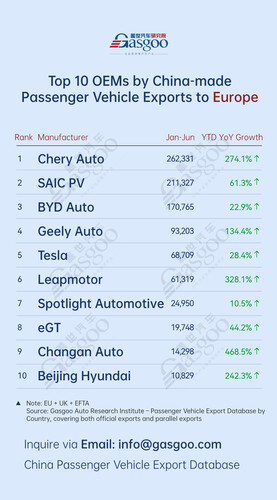
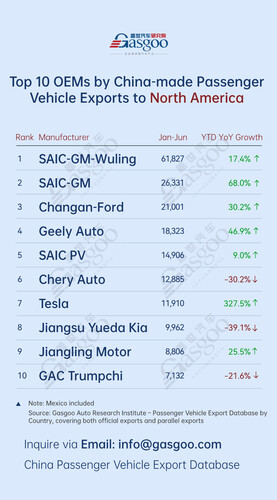
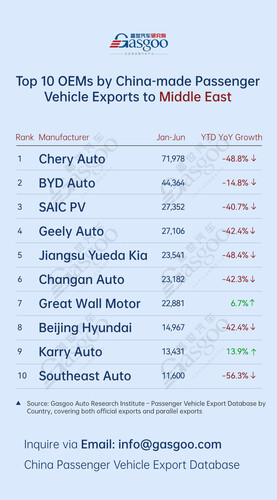
Gasgoo Munich- With oil prices soaring, will your next car still run on gas?On April 9, West Texas Intermediate crude for May delivery climbed $3.46 to settle at $97.87 a barrel — a 3.66% gain. Brent crude for June added $1.17 to close at $95.92, up 1.23%.Behind those figures lies a paralyzed Strait of Hormuz, supply shortages following attacks on Saudi facilities, and the surging fuel bills hitting countless households.Three weeks ago, as the U.S. and Israel launched military action against Iran, WTI was trading below $70. Today, prices under $90 a barrel are history.The U.S. Energy Information Administration's latest outlook warns that even if the Strait of Hormuz reopens, fuel prices will likely keep climbing in the coming months.The EIA forecasts Middle East production cuts will reach 9.1 million barrels per day in April, while global demand growth halves to 600,000 barrels per day. The agency also raised its 2026 Brent average to $96 a barrel.Looking ahead, a lag in supply-demand recovery will keep oil oscillating in the $90–$100 range in the short to medium term. Some analysts believe WTI won't break $90 until the situation stabilizes; full normalization could see it retreat to $80, though not within the next two weeks.And if the resumption of shipping lags expectations or conflict reignites, prices could still surge past $100 to new highs.Yet the ripples from this geopolitical storm are triggering a deeper, more permanent shift in the auto industry: global consumers are voting with their wallets, pushing new-energy vehicles toward an unprecedented tipping point.A Global EV Boom Accidentally Accelerated by WarOn April 10, Xinhua reported a telling remark from Andreas Hoymann, a customer at a Chinese-brand EV showroom in central Berlin: “Filling up my gas tank now costs 35 euros more than it did before the Middle East conflict.”“If this continues, switching cars isn’t just an environmental issue — it’s an economic one.”That captures the core logic driving this surge in global EV demand: when mobility costs shift from predictable fixed expenses to volatile variables, electrification changes from a distant green ideal to an urgent economic calculation.Lately, this logic is finding validation in numbers across global auto markets.Data from Germany’s Federal Motor Transport Authority shows that in March, pure electric vehicle registrations jumped 66.2% year-on-year to 70,663 units, becoming the main engine of market growth. Meanwhile, traditional combustion sales remain under pressure: gasoline car registrations slipped 4.9% to 66,959 units, while diesel fell 0.6%.In March, pure electric registrations in Germany surpassed those of gasoline cars.This isn’t just a German milestone; it’s a signal that in the heart of Europe — one of the world’s largest auto markets — the dominance of combustion vehicles has been breached.Chinese brands are playing a standout role. The authority’s data shows BYD and Leapmotor more than tripled their registrations, while XPENG surged over 200%.German fuel prices have hit historic extremes. Data from ADAC, the country’s largest auto club, shows diesel climbed to about 2.50 euros per liter on April 7, setting records for consecutive days; E10 gasoline hit around 2.24 euros, the highest this year.The German government tried to cap volatility by limiting gas stations to one price hike per day at noon, but the policy has had limited effect as prices continue their ascent.The driver is clear and direct. Roland Berger senior partner Felix Yun points out, “Soaring oil prices have pushed up the cost of running combustion cars, prompting some consumers to switch to EVs.”Germany is far from an isolated case.U.S. AAA data shows the national average for gasoline hit $4.14 on April 7, a sharp rise from $3.41 a month earlier.An analysis by Seattle-based non-profit Coltura indicates that U.S. gas prices have spiked over 30% since late February due to supply disruptions from the Iran conflict. American drivers switching from gas to electric could save an average of $1,805 annually on fuel and maintenance.Image Source: BYDIn the U.S., consumer purchasing directions are shifting.March and first-quarter sales data show that high vehicle prices, severe weather, expiring federal EV tax credits, and rising gas prices are combining to suppress demand for new cars. Several mainstream automakers saw sales decline as the market cools from the highs of the past two years.Latest industry data shows U.S. new vehicle deliveries slid 14% year-on-year in March to 1.39 million units, with retail sales down 16% and fleet sales down 2.3%. The seasonally adjusted annual rate stood at 16.2 million — above forecasts of 15.8–16.0 million but a steep drop from March 2025’s 17.9 million, and a rebound from February’s 15.7 million.Most mainstream automakers in the U.S. saw sales decline in the first quarter, including General Motors, Toyota, Ford, Honda, Nissan, Subaru, and BMW.In Australia, a shortage of refined fuel has made running a gas car four times as expensive as charging an EV. BYD’s Melbourne store hit a monthly sales record in March.In Italy, Leapmotor topped the pure electric market in March with 5,513 registrations — a 2,827% surge. First-quarter registrations reached 11,637 units, capturing a 33.5% share of the local pure EV market and 44.6% of the pure EV retail passenger channel.Even in traditional oil-producing nations like Azerbaijan, Chinese NEVs are becoming a staple for taxis.Still, it’s worth noting that short-term volatility doesn’t always signal long-term trends.Is this current rebound in EV demand, driven by soaring oil prices, a short-term pulse or a long-term structural inflection point?Cao Guangping, a partner at Chedu Consulting, told Gasgoo that the impact of this price spike “is both short-term and long-term — and the short-term will undoubtedly influence the long-term.”He argues that rising short-term prices directly affect national energy strategies, auto industry policies, and charging infrastructure investment. They also reshape long-term consumer expectations: when ownership costs are tied to volatile international oil markets, consumers recognize the persistent risk, while government expansion of power generation and charging networks is irreversible.Therefore, the shift in NEV consumption is sustained, with more robust national energy strategies providing long-term support.Chinese Automakers Are “Ambitious.” Is the Overtaking Moment Here?For now, there is no denying that structural shifts in the global auto market are sending positive signals for Chinese automakers abroad.Nikkei reported that as Middle East tensions boost gas prices and EV appeal, Chinese EV leader BYD has enjoyed an unexpected windfall, according to insiders.Multiple sources said BYD founder and Chairman Wang Chuanfu told a private analyst meeting on March 30 that soaring oil prices are expected to push the company’s overseas sales to a new level this year. He specifically cited markets like Australia, New Zealand, and the Philippines, noting current daily sales there equal what the company previously sold in two weeks.Reports indicate Wang told analysts last week and reiterated at the March 30 meeting that BYD has raised its annual overseas sales target to 1.5 million units — a 15% increase from the previous 1.3 million.Separately, sources revealed BYD plans to launch ultra-fast charging stations overseas starting in 2027.BYD did not respond to a request for comment on these reports.In the first two months of this year, exports of Chinese NEVs — including pure electrics and plug-in hybrids — surged over 110% to 583,000 units. Chery exported 243,000 vehicles, up 45.6% and accounting for 18% of China’s total auto exports, while Geely’s exports jumped over 150% to 156,000 units.Eugene Hsiao, an analyst at Macquarie, said in an interview that even without the Iran conflict driving up oil prices, “2026 was already expected to be another strong year for Chinese EV exports,” as domestic automakers continue to refine global sales networks and optimize product lineups.“The market logic has shifted with the sharp oil price rise,” Hsiao noted. Regions heavily dependent on oil imports — Europe, Southeast Asia, Northeast Asia — may see accelerated interest in EVs, while the U.S. market could benefit more from the uptake of hybrids.Hsiao believes “geopolitical tensions are generally a positive for Chinese EV firms. Improving diplomatic ties with developed markets like the EU and Canada are likely to open new sales space.”Analysts at Bernstein wrote in a report last week that if oil prices remain high for long, “Chinese automakers with deep exposure to EVs or hybrids and substantial overseas operations will fully benefit.”The report added: “BYD, with its cost-effective product matrix, stands to gain from the high margins of overseas EV sales; Geely is expanding exports from a low base and accelerating its hybrid strategy.”Image Source: BYDChinese EV maker Leapmotor also said last week that oil volatility could help it achieve its overseas sales target of 150,000 units this year. Founder and Chairman Zhu Jiangming stated: “Although the Middle East situation has hindered sales in some regions, rising gasoline prices have overall stimulated EV demand.”Discussing overseas business, He Xiaopeng said he expects XPENG’s overseas sales to double by 2026, and reach 1 million units by 2030, contributing over 70% of profits.He Xiaopeng summarizes XPENG’s overseas strategy in eight characters: “Sharp Knife” to break through, “Red Carpet” to retain. The “knife” refers to products and markets: six models covering the 100,000 to 200,000 yuan price band, targeting Israel, Germany, Norway, Thailand, and France. Sales outlets will double to 680 this year, doubling leads. The “red carpet” covers delivery and service: improving certainty in delivery times, service response, and energy replenishment.But this global EV wave isn’t smooth sailing in every market.The speed and scale of demand release depend on a complex mix of charging infrastructure, policy subsidies, and consumer perception. In mature markets like Germany, where policy and infrastructure are relatively sound, the stimulus of rising gas prices transmits quickly to end consumption.In regions where charging networks remain underdeveloped, however, consumers may remain trapped in a “want to buy, but afraid to buy” dilemma, no matter how high oil prices climb.From “Selling Cars” to “Building Plants”: Going Global Enters a New Phase of “Industrial Export”So, after this wave of going global, how will the playbook for Chinese automakers in the world market evolve?The answer: from “selling cars” to “building plants,” from “product export” to “industry export.”A representative from the China Association of Automobile Manufacturers told CCTV that Chinese brands are shifting from simple product exports to a strategic transformation that integrates global resources.BYD’s global layout is representative. Citing S&P Global Mobility data, Nikkei compared BYD and Tesla sales in 2020 versus 2025. BYD has surpassed Tesla in sales across 22 countries and regions. Beyond European nations like the UK, Spain, and Italy, BYD also took the lead in Hong Kong and Singapore, where luxury cars dominate. In 2025, BYD claimed the top spot as the global EV sales champion.To avoid trade tariffs, BYD is shifting from “export-first” to “localized production.” Following plant launches in Thailand in 2024 and Brazil in 2025, its Hungarian passenger vehicle plant is set to start production as early as 2026.Additionally, BYD has officially joined the International Automotive Task Force (IATF), participating in the formulation of global core standards alongside other international automakers.This “localization” strategy is transforming Chinese brands from outsiders into integral parts of the local market ecosystem. More importantly, the cost advantages and trade barrier avoidance offered by local production are unmatched by simple exports.Chery’s overseas performance is even more impressive. In 2025, its global sales reached about 2.8 million units, up nearly 7%, with sales outside China accounting for over 47%.Gasgoo noted that the UK’s SMMT reported on April 7 that March new car registrations hit 380,627 units, the highest monthly total since 2019. Plug-in hybrids shone, with sales surging 47%, and the month’s best-seller was an SUV from Chinese automaker Chery.Chery’s Jaecoo 7 surpassed the Ford Puma and Nissan Qashqai to become the UK’s best-selling model in March. Priced at around 30,000 pounds, this SUV is dubbed an affordable Range Rover. The Jaecoo 7’s success is no outlier; amid fierce price competition at home, Chinese brands like Chery, BYD, and MG are continuing their push into Europe.Jaecoo 7; Image Source: JaecooAccording to Reuters, Chery executives told a Paris event that the company plans to expand production in Europe through partnerships and by utilizing existing factories.On the evening of April 10, Chery held launch events for its Omoda and Jaecoo brands in France. Lionel French Keogh, Chery France’s chief commercial officer, told Reuters on the sidelines: “We are looking for other capacity in Europe.”Chery Chairman Yin Tongyue told reporters the company prefers using existing capacity over spending billions on new assembly plants. “These processes take time and investment, but the core is establishing the right local partnerships,” Yin said. “I very much hope to have news to share in the coming months.”Yin declined to name companies under discussion or specify how many countries are under consideration, but confirmed France is on the potential list.Data from consultancy Dataforce shows Chery’s European sales reached 120,147 units in 2025, more than six times the 17,035 units in 2024. Chery has acquired a former Nissan plant in Barcelona through a joint venture with Spain’s Ebro Group, aiming for an annual capacity of 200,000 units by 2029.Another trend worth watching is the shift in Chinese automakers’ global strategy from “pure EV only” to “diversified powertrain” — no longer betting everything on a single electric track, but adapting EVs, hybrids, and PHEVs to diverse market needs.Behind this strategic shift lies a precise assessment of realities in different global markets.On balancing technology routes, Cao Guangping told Gasgoo that while high oil prices theoretically incentivize pure EVs more, the limitations of pure electrics can constrain their growth trend.“Without major breakthroughs in current battery technology, hybrids may have broader scenario adaptability than pure EVs,” he reiterated, advocating his “Dujiangyan Strategy.” He believes Chinese automakers should flexibly adjust the mix of ICE, hybrid, EV, and alternative fuel vehicles based on tech development, structural energy shifts, and user demand — “burn gas where suitable, go electric where suitable” — making long-term dynamic adjustments to the ratio.“When oil prices rise, lean toward hybrids or EVs; when they fall, flexibly adjust the ICE ratio back,” Cao said.In markets where charging infrastructure is lacking and range anxiety persists, hybrids often hold more practical appeal than pure EVs. As one Canadian dealer put it, “Hybrids are the most cost-effective and impactful products for Chinese brands entering the Canadian market.”Great Wall Motor, representing Chinese brands deep in the Australian market, leverages a full powertrain lineup covering gas, diesel, and NEVs to fit local preferences for SUVs and pickups. In February 2026, China surpassed Japan to become Australia’s top monthly auto importer, accounting for about 25% of sales.The path in Mexico is similar: Chinese automakers first tested the waters with pure EVs, then quickly introduced hybrids and ICE models once familiar with local rules, achieving steady sales growth.At a deeper level, this export wave is reshaping the profit structure of Chinese automakers. Take BYD: in 2025, its overseas gross margin hit 19.46%, significantly higher than the 16.66% at home. This means overseas markets are shifting from “volume contributors” to “profit contributors.”As domestic competition turns intense and price wars compress margins, overseas markets are becoming a new profit pillar for Chinese automakers.At an investor meeting on March 30, BYD Chairman Wang Chuanfu said the overseas competitive environment is more benign, with margins significantly higher than domestic, proving the effectiveness of the “high-end” strategy. BYD management set a 2026 overseas sales target of 1.5 million units, with a medium-to-long-term goal of splitting sales evenly between home and abroad — turning the global market from a “growth driver” into a “foundation.”The financial report shows BYD’s revenue exceeded 800 billion yuan for the first time in 2025, with overseas revenue accounting for nearly 40%. Net profit came in at 32.62 billion yuan.This structural shift isn’t unique to BYD. As global electrization accelerates, overseas markets are becoming a shared “blue ocean” for all mainstream Chinese automakers. From product export to industry export, from selling cars to building plants, from single markets to global layout — Chinese autos are completing a historic leap.Just as the oil crisis half a century ago catalyzed the global rise of Japanese cars, today, amid a new energy upheaval, Chinese NEVs — equipped with battery technology and full supply-chain advantages — stand at a similar window of opportunity.This global EV boom, ignited by soaring oil prices, could determine the power structure of the global auto industry for the next decade.And Chinese automakers are writing their names at this historic juncture.As noted earlier, the sudden and accidental may not last.Cao Guangping told Gasgoo that if the Middle East situation eases and oil prices retreat, it might cause a temporary dip in China’s NEV export figures.But he emphasized that policy adjustments regarding the Middle East and oil prices are long-term in nature. “Any dip may be temporary, but the rise is long-term,” he said. The positive momentum from policy, investment, and charging infrastructure will persist and likely even intensify.