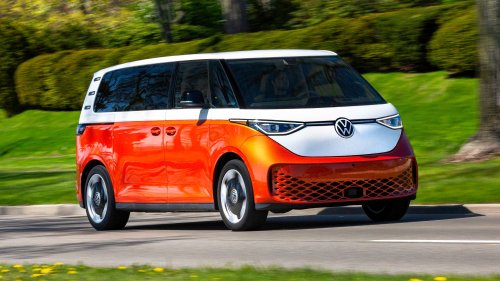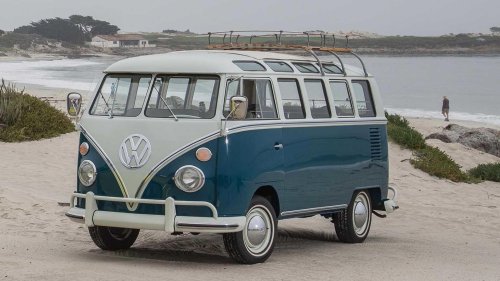
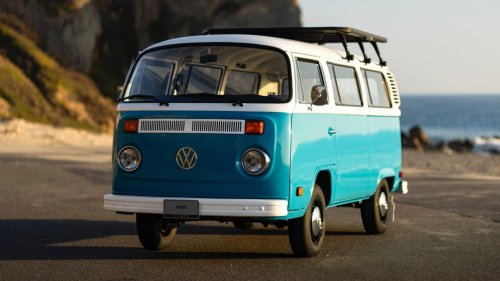
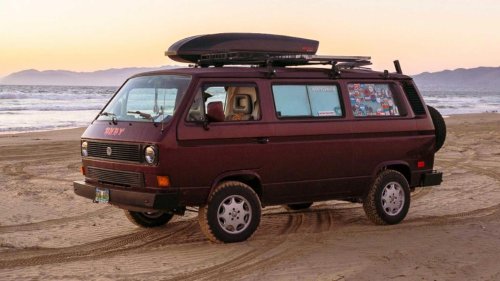
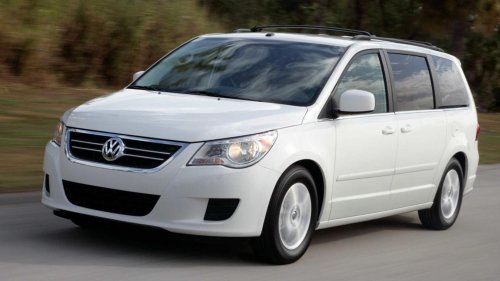
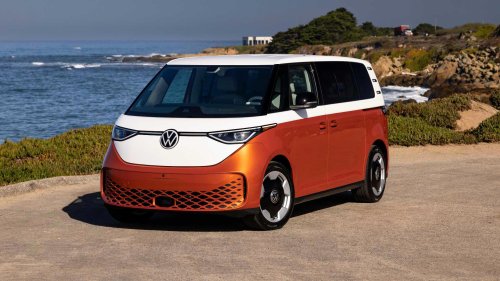
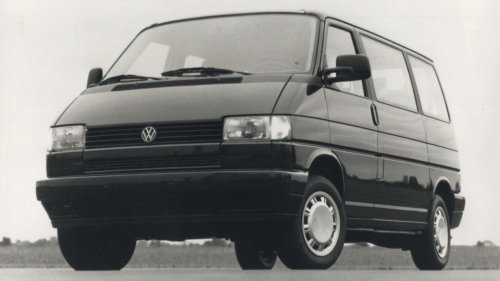
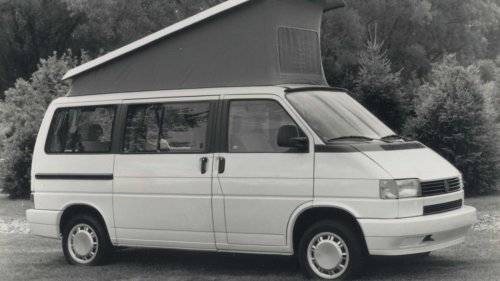
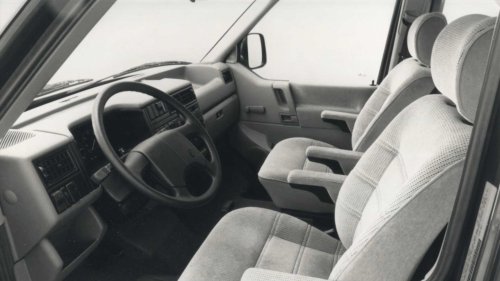
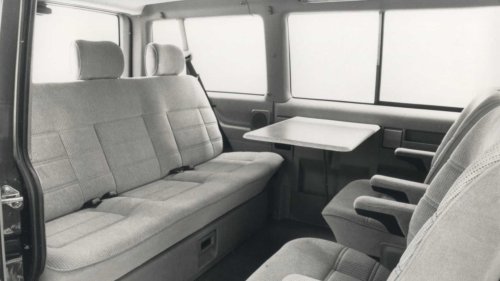
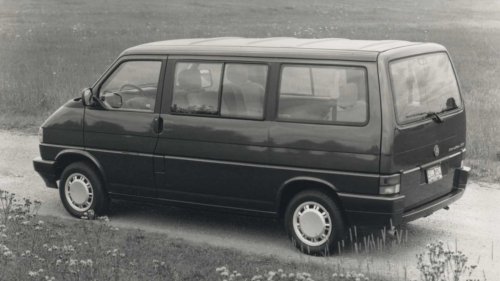



















Volkswagen vans have a curious history in the US. The original T1 is nothing short of a cultural phenomenon thanks to its close association with 1960s counterculture, and the later rear-engined T2 and T3 have their own devoted followings, too.More recently, VW brought the van back to the US with the ID Buzz, but as the company hesitates with its North American EV strategy, it's already skipping a model year in the States. Certainly, it's nothing like Europe, where you can currently buy no fewer than four passenger-carrying, van-shaped VWs – the ID Buzz, the Ford Transit-based Transporter Shuttle, the smaller Caddy, and the Multivan, which sits on the MQB car platform.But there was one other North American VW van, and it tends to get a little forgotten compared to its cult classic predecessors, despite being an interesting and increasingly coveted thing in its own right: the Eurovan. VW Vans In America VolkswagenVolkswagen For much of its time in the US market, VW has had you covered if you wanted to transport lots of people around in something van-shaped. The original VW Van, with its distinctive split windshield, arrived in 1950 and came to the US soon afterwards with a very simple recipe – Beetle running gear with a spacious, boxy body on top.VolkswagenVolkswagen Officially called the Type 2, it's also known by its specific chassis code, T1, or simply as the VW Van, Microbus or Camper. A resolutely utilitarian vehicle, the fact it was cheap to buy and maintain and could fit lots of people in passenger-carrying form made it a hit with the hippie and countercultural subcultures of the 1960s, cementing its status as an icon in America.Volkswagen It was followed up in 1967 by the T2, known by fans as the "Bay Window", and then in 1989 by the T3, officially called the Vanagon in the US. The T4, meanwhile, arrived in Europe in 1990 and the US a few years later, and marked a major move from the rear-mounted and initially air-cooled boxer engines of the earlier vans to a more conventional front-engined, front-wheel drive setup with a full range of water-cooled engines.The T4 was also the last of its lineage to be sold in the US, and was indirectly replaced in 2009 by the North America-exclusive Routan – essentially a badge-engineered Dodge Grand Caravan. That lasted until 2014, and a few years later VW went down the increasingly popular SUV route for its seven-seaters with the Atlas, not bringing a van back to the US until the ID Buzz arrived in 2025. The Eurovan Arrives Volkswagen As mentioned, the arrival of the T4 van in 1990 marked a big step change for VW. After 40 years of rear-engined, mostly air-cooled vans, it moved over to the same layout most of its European rivals had adopted years ago. When it came to the US for the 1993 model year, it had a new name to reflect this major change: Eurovan.Known in Europe as the Transporter in panel van guise or the Caravelle as a passenger-carrying van, the US-market Eurovan only came in the latter form. Likewise, while Europe received a range of gas and diesel engines, America only had one motor: a 2.5-liter five-cylinder gas engine, producing 109 hp and 140 lb-ft of torque. These weren't brilliant figures, even for the time, but VW spoke of the engine's "broad torque" capabilities and the Eurovan's respectable ability to tow up to 4,400 lbs. Buyers hoping to make the most out of the modest power were best served with the standard five-speed manual, although a four-speed automatic was offered, too.In VW's eyes, the Eurovan's USP was its space efficiency: the original press release boasted that it was shorter than a Volvo 940 Wagon, but packed 201 cu-ft of cargo space, 73% more than a contemporary Dodge Caravan. All versions seated seven, with the CL and GL models featuring all front-facing seats and the range-topping MV – short for Multivan – offering a rear-facing second row with a flip-up table between it and the third row. The seats in the MV could also be folded into a bed.Volkswagen Also on offer on the MV was the Weekender package, an official albeit basic camper conversion by long-time VW partner Westfalia that provided a pop-top roof with a sleeping area and a cooler under one of the rear seats. More complete camper conversions by Winnebago would soon arrive, including the extended-wheelbase Rialta that transformed the Eurovan into something a bit more akin to the typical American RV. The Eurovan Goes On Hiatus VolkswagenAlthough a promising recipe, the Eurovan's low power and small dimensions didn't resonate with many American van buyers, while its front-wheel drive and high asking price weren't what VW van loyalists were used to. As a result, the model ended up being entirely discontinued in 1995 while VW sought to broaden its appeal, although the Winnebago camper remained on sale.The solution first arrived in the camper in 1997, ahead of a full return of the passenger-carrying Eurovan in 1999: VW's 2.8-liter narrow-angle VR6 engine, as found in the likes of the Golf and Passat. Even then, it was detuned from the usual 172 hp to 140 hp, and sales remained slow.Another update came for 2001: the engine gained variable valve timing, and the number of valves themselves went from 12 to 24, which helped the Eurovan achieve 201 hp, arguably the sort of power it should have always had to appeal to an American audience. These final Eurovans are widely considered the best, even if the VR6 models only came with the automatic transmission – a known weak spot on the model.Even this and price drops across the range weren't enough to save the Eurovan from sales limbo, though. It remained a niche model in the States, and when the T4 generation as a whole was replaced by the T5 in 2003, VW elected not to bring the new van to North America, instead working with Chrysler to launch the Routan a few years later. The Eurovan's Legacy Volkswagen The Eurovan may have been a sales flop throughout the two distinct periods it was on sale in the US, but like the vans that preceded it, it pretty quickly gained a cult following. For starters, those that could afford it and could live with its initially meager performance were treated to a seriously versatile, cleverly packaged van – arguably more so than any of the minivans coming from US or Japanese manufacturers at the time.Its fanbase has only grown over time, too. That's partly because it's an ideal base for camper builds and "van lifing", a concept that's been steadily growing in its following and has blown up in the wake of Covid. It's also arguably because, even if it ditched the beloved rear-engined formula, it's the last "real" van VW brought to the US.What came after, the Routan, was an unloved piece of badge engineering, and it took until the ID Buzz for something in the image of the original Microbus to return to America. Even that appears to currently be on shaky ground availability-wise, and its fairly modest electric range and high-tech construction still limits its appeal to truly adventurous types.Volkswagen That puts the Eurovan in a good spot – modern and comfortable enough to use regularly, yet simple and dependable enough for adventures. That newfound demand combined with a relatively small supply has led to one thing: growing values. Look at auction results over the past few years and it's not unusual to see regular Eurovans sell for over $10,000, while the Winnebago-converted campers regularly crest $20k.Every now and then, a higher-mileage example will still fetch a four-figure sum, but with the demand for vans like this that offer a blank canvas for further customization only going up, we're not sure that'll be the case for long. Now might be the time to pick up a Eurovan before it becomes out of reach.