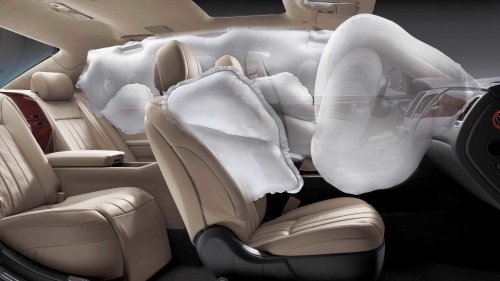
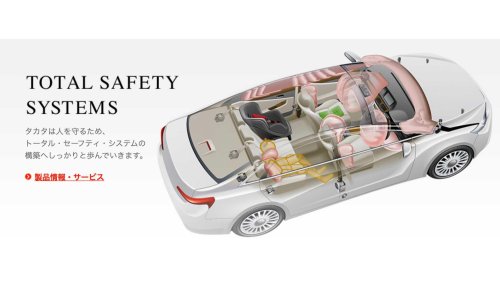
Takata first became a name widely heard in the mainstream when, in 2014, BMW, Chrysler, Ford, Honda, Mazda, Nissan, and Toyota recalled over three million vehicles between them. The affected models had faulty Takata-supplied airbags that could rupture and spray metal fragments into the cabin.As of 2024, a total of 35 deaths have been attributed to Takata airbags and over 400 injuries. Some vehicles under the current recall have Do Not Drive warnings attached, which is a significant concern. Cars built after 2018 shouldn't be affected, but the mess has persisted, with more recalls for older models announced in 2024 and 2025, and automakers have continued to chase affected cars in 2026. Many Brands Affected Hyundai By 2014, Takata had recalled 40 million vehicles across 12 brands globally, but the number has kept mounting. At this point, it's around 67 million. If you're concerned your vehicle might be affected, the National Highway Traffic Safety Administration (NHTSA) recall tool lets you enter the vehicle's year, make, model, license plate number, or VIN to search for safety campaigns. When buying a used vehicle from the 2000 to 2018 model years, potential purchasers should check the VIN with NHTSA to verify that the repair has been completed.Among the affected automakers, Takata airbag recalls included defunct brands like Saturn and some modern Ferraris. No matter the automaker, recall repairs are free. According to the NHTSA, "long-term exposure to high heat and humidity can cause these airbags to explode when deployed. Such explosions have caused injuries and deaths."This latest Takata airbag recall started in 2024, but it was the same basic issue with the gases used as in the original 2014 safety campaign, which even covered some 1998 Honda models. As late as 2024, Nissan and NHTSA were still trying to get owners of some 2000–2005 models to take their cars to dealerships to have the airbags replaced. BMW is still chasing older cars for repair, and as of February 2026, FCA brands, including Chrysler, Dodge, and Jeep, are still looking for affected vehicles. Why Takata Airbags Are Dangerous Takata CorporationThe Takata airbag situation has come in stages. While it hit the mainstream news in 2014, recalls began in 2013, when Takata admitted that chemicals had been improperly stored and that explosive propellants had been improperly handled at its subsidiary in Coahuila, Mexico. Takata failed to maintain adequate quality control records, making it difficult to identify affected vehicles. It gets worse, though, as The New York Times published a report in 2014 that the company had been hiding risks in its airbags since 2004.Automotive airbags operate through sensors. When an airbag is triggered, it's deployed through a pyrotechnic process within 20 to 30 milliseconds of the sensor detecting a collision. An electronic charge ignites a chemical explosive, and the process creates a gas that inflates the nylon airbag. The bag is covered in a chalky dust to allow it to expand smoothly to protect the occupant. The bag's exterior is perforated, so the impact from a person starts to deflate it, improving cushioning. The result is an incredible piece of technology. Manufacturing Issues Dodge Another reason for Takata airbag recalls is because of a faulty seal on the inflation device, which allows environmental heat and humidity to affect the chemicals. The result is that humidity dramatically slows the airbag's inflation, and exposure to heat without being sealed leads to instability. The situation means the inflation device can deploy aggressively, inflating the bag too fast or even causing it to explode. In the worst case, the person can get a faceful of metal shards when the big deploys.As a result, cars on the recall list were split into priority groups based on their location, age, and parts availability. The situation made the recall process complicated at the time. Essentially, vehicles sold or currently registered in particularly humid states got priority. Older cars were also prioritized. However, at this point, the repair process should be more streamlined for anyone who still has an affected vehicle. The Fallout Global NCAPRupturing Takata airbags have killed people, in addition to causing injuries. The tenth person killed was a 17-year-old driving a 2002 Honda Civic. Her death was attributed to shrapnel from the exploding airbag entering her neck. In April 2024, NHTSA reported that 88% of the 67 million recalled airbags have been repaired/replaced – leaving millions still needing fixed. Minor collisions, typically survivable, have resulted in deaths, including a passenger in a stationary car when the car was hit. Unfortunately, some owners of recalled vehicles simply haven't responded, and tragedy has followed.Honda is estimated to have an 80% completion rate and has been the most aggressive about fixing the issue. It was the first brand to call out Takata. BMW has also worked hard at completing the recall for its vehicles, issuing another in 2025. Many car brands still have Takata recall information on their recall sections, and some offer a tool that lets customers check their VIN.Takata didn't escape the situation. The company incurred government fines and class-action lawsuits. Three company executives were charged and pleaded guilty to knowing that the inflation devices Takata was selling to automakers were defective. The resulting criminal penalties came to $1 billion. Takata filed for bankruptcy in 2017, and its assets were sold to a Chinese-owned company in Michigan. There was $125 million for victim compensation and $850 million for car manufacturers. The Rise And Decline Of Takata TakataThe Takata company dates back to 1933 and started out making parachute cords. By the 1950s, it was pioneering car safety features. In the 1960s, Takata built the first crash test facility in Japan, started making child restraint systems in the 1970s, and then in 1987, driver's side airbag modules. In 2000, Takata bought its main competitor, the German firm Petri AG. From there, according to media reporting from the time, the timeline leading up to the recall looked like: 2003: Takata learned of a rupture during airbag deployment in a vehicle in Switzerland, but didn't report or react to it. 2008: Takata found a series of ruptures as the likely cause. Internal emails showed executives were discussing the manipulation of data to hide it. 2009: Senior executives became aware of falsified data being given to at least one automaker, and did nothing about it. 2014: (November) The New York Times reported that Takata ordered technicians to destroy test results showing cracks in inflation devices. 2014: (June) Recalls by Toyota, Honda, Nissan, and Mazda increased to 10.5 million vehicles. NHTSA started investigating. Takata stayed quiet about the safety defects in its airbag inflators. 2014: (July) Honda audit found Takata engaged in widespread manipulation of test results for supplied inflation devices. 2017: Takata pleaded guilty to US criminal wrongdoing. A federal grand jury indicted three Takata executives on conspiracy and wire fraud charges for persuading automakers to buy faulty airbag inflators. Takata expanded rapidly following the acquisition of Petri AG and became the industry's main supplier of airbags. Quality took a hit, leading to the problems that executives tried to hide. By the time the senior heads of the company made the decision to keep quiet and do nothing for fear of the company sinking under the weight of recall costs, the airbags were ticking time bombs for both the automaker's customers and the company itself.