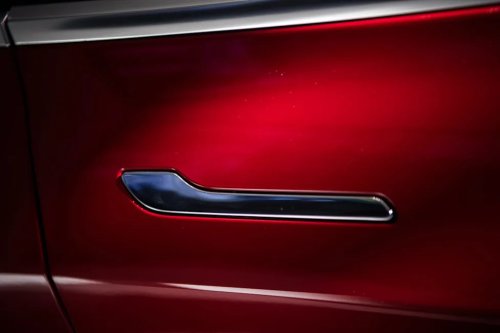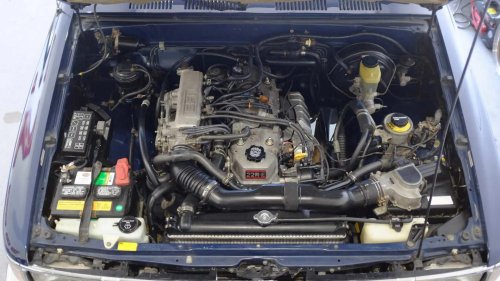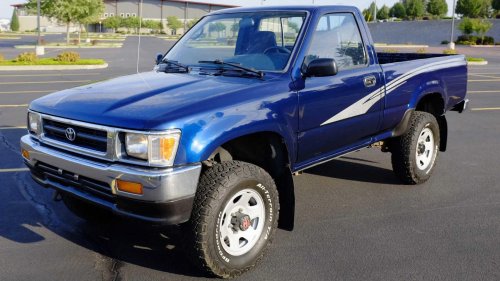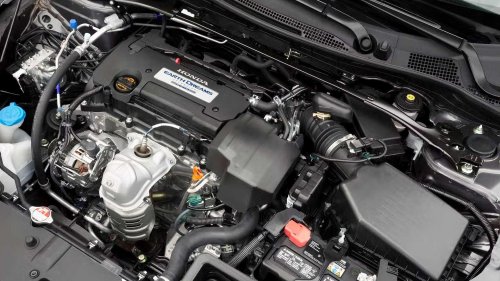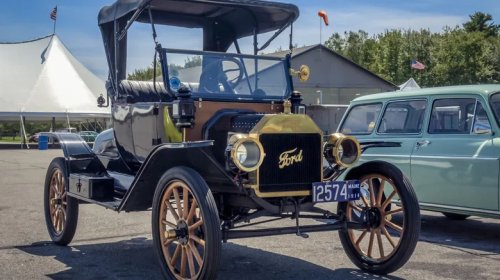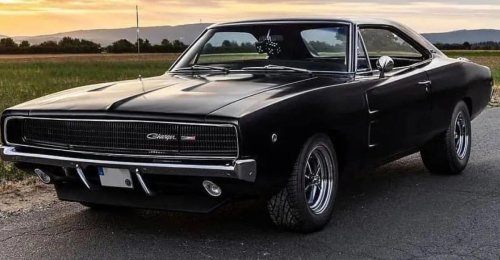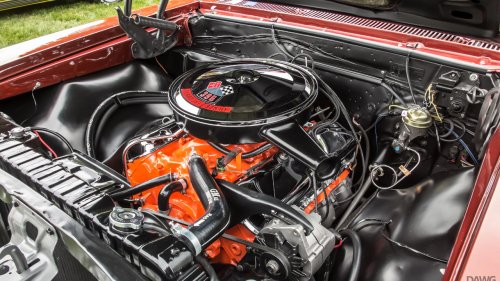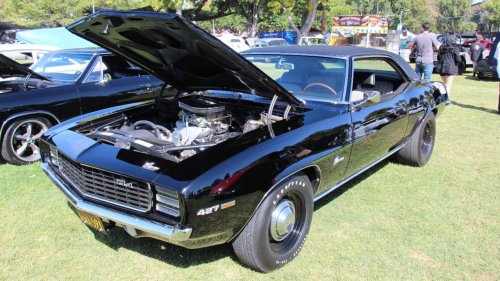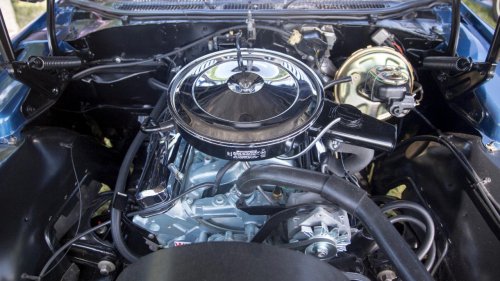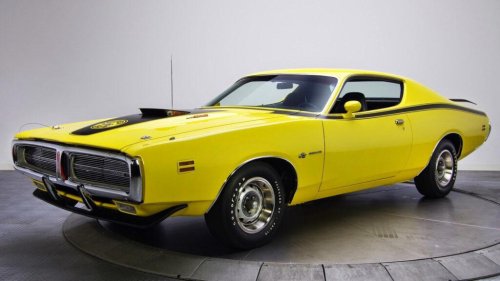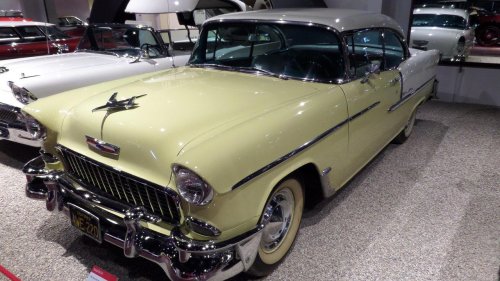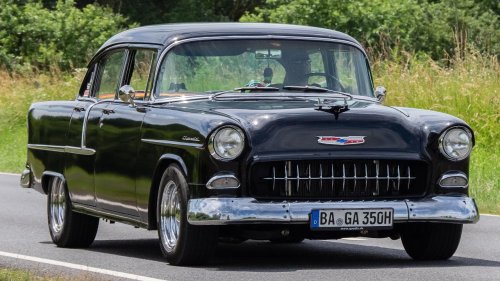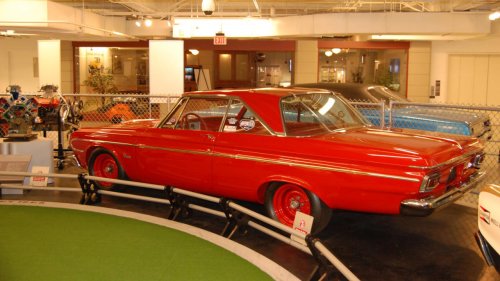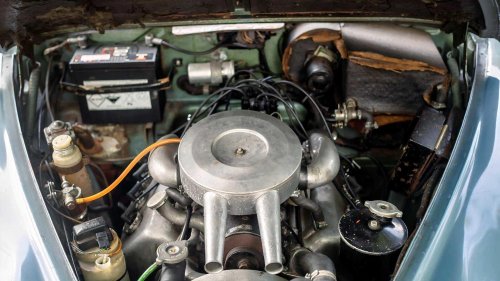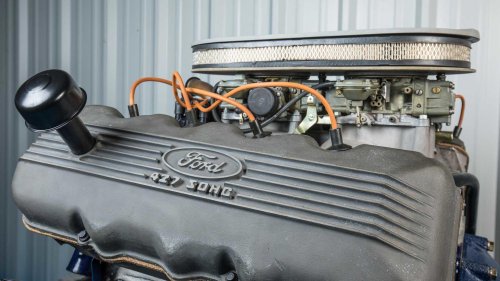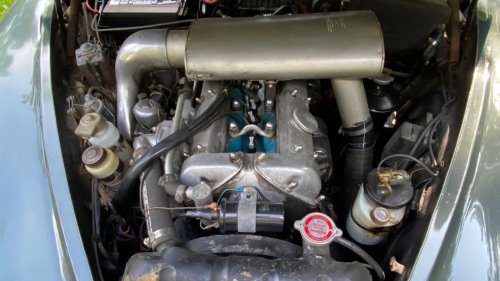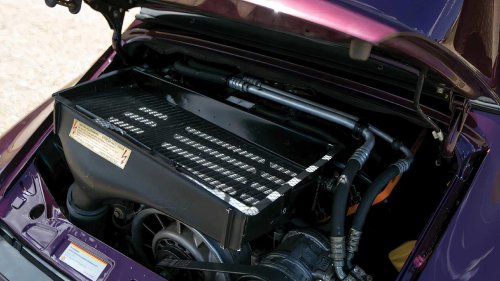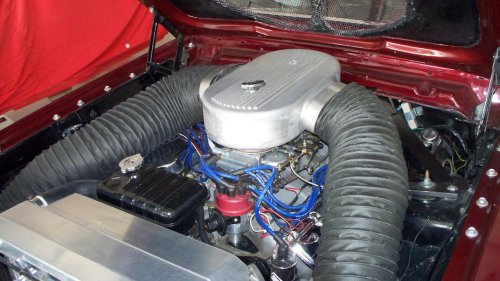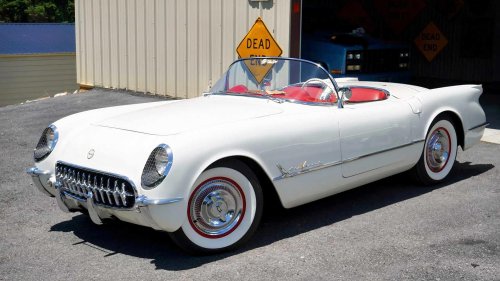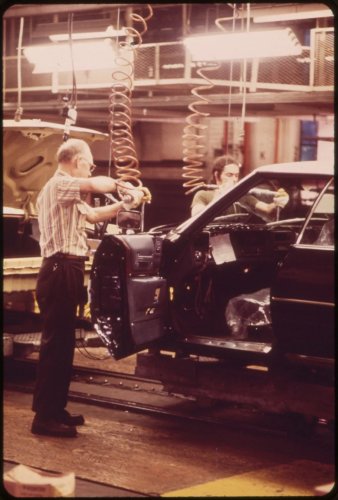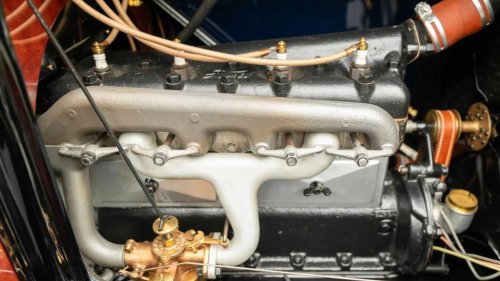
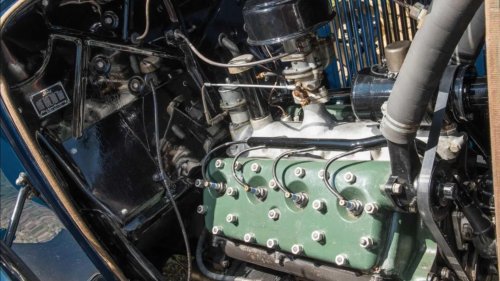
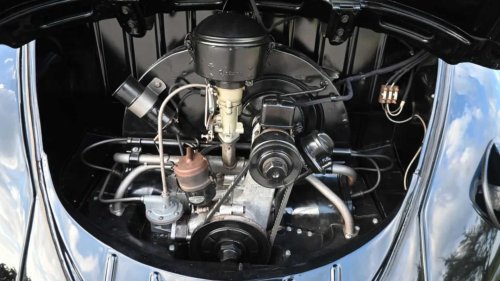
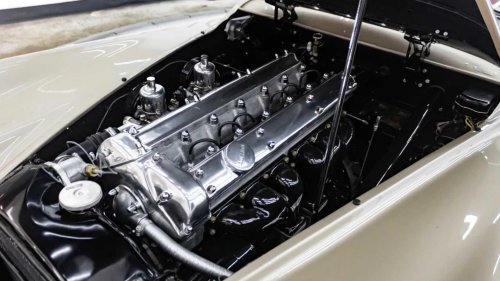
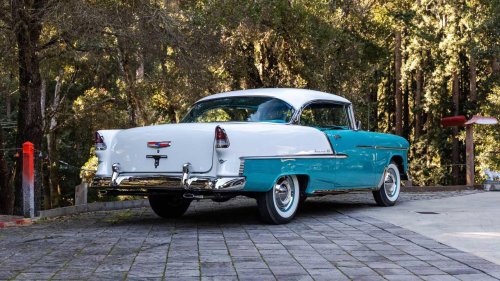
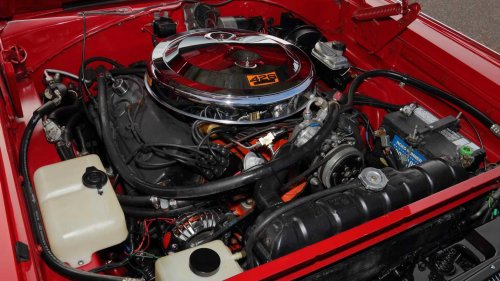
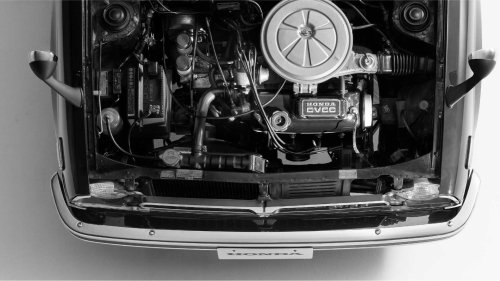
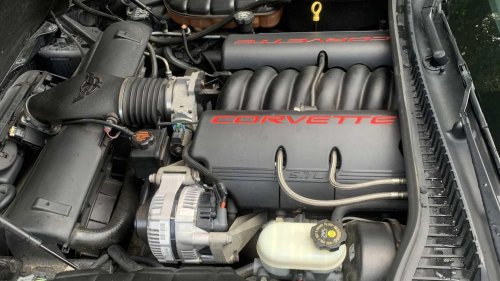
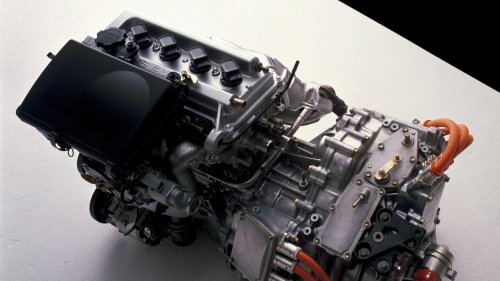



















Throughout history, certain engines have had more than their fair share of influence, helping to steer this industrial juggernaut through some tough patches on its way to the current day. Some of these engines have represented a eureka moment for the industry, helping to make it relevant. Others have influenced in such a way that they democratized the very concept of mobility or forced government decision-makers to look at their control levers in a different light.All the engines on this list have permanently altered the humble vehicle in terms of the way people engineer, manufacture, sell, or regulate it, creating their own sphere of influence as they did so. And in the modern era, one unit even showed that electricity could outperform any traditional combustion approach in the toughest environments.Over more than a century and from Ford to Tesla, these units have turned out to be far more than simply powerplants, as in many ways, they've helped the industry survive and keep moving from one challenge to another. They’ve turned out to be the answer when the industry itself was metaphorically spluttering, before finally coming on cam in the best ways possible. And it's not too much to say that these engines dictated the global trajectory of the automobile itself.For this article we chose 10 power units that – in the author's opinion – have been influential in shaping the development of the industry. We used period technical documentation information from OEMs or manufacturer archives as available. Ford Model T Inline-Four 1908 1912 Ford Model T engineHenry Ford democratized mobility at the turn of the 20th century using a humble, but nevertheless revolutionary, 177 cubic-inch (2.9-liter) inline-four engine for his Model Ts. This motor only produced around 20 hp in its initial offerings, with an L-head that used simple castings, a detachable cylinder head, thermosiphon cooling, and a gravity-fed fuel delivery system.History suggests that Ford turned out over 15 million Model Ts with this simple engine between 1908 and 1927. And this engine didn't just power a car but introduced the concept of affordable mobility across the board. Cars tended to be luxury objects before the Model T came along, and after it arrived, they became household tools. This means that the Model T engine turned the thrill of internal combustion into something that companies could standardize and scale for decades to come. Ford Flathead V8 1932 1932 Ford V8 Deluxe Roadster engineEver the innovators, Ford did something that stunned the industry in 1932 when the company unveiled a V8 engine at an affordable everyday price. Up until that time, you typically had to buy an expensive luxury car to sample anything with eight cylinders, but now, you could get this Flathead V8 with its innovative one-piece cast block that made manufacturing far easier while dramatically cutting costs. This engine had a side valve design which, while simple, helped produce smooth and powerful results.Buyers were able to get some real V8 power without spending too much, and this was very welcome in those turbulent years. Surplus Fords in this era also became the foundation for the hot-rodding culture that would sweep America, as enthusiasts found it very easy to modify and tune their flatheads. This means that the flathead V8 didn't just introduce affordable power, it made the idea of more complicated engines resonate across boardrooms.And the idea of accessible advanced engine configurations started to reshape product planning for years ahead. Volkswagen Air-Cooled Flat-Four 1938 1947 VW Beetle aircooled engineVolkswagen launched a massive engineering program in 1938 which gave birth to its air-cooled flat-four engine. This unit had a horizontally opposed design which lowered its center of gravity and used air cooling to do away with the need for a radiator, water pump or complex plumbing.When the dust settled after World War II, Volkswagen started producing its cars in earnest, making the Beetle one of the most successful vehicles in history. Much of this success was down to the simplicity of the car's engine, as fewer moving parts typically meant fewer failure points. And the Beetle was able to keep going without hesitation across a range of even the harshest climates, from Europe to South America.The Flat-Four also championed durability over complexity at a philosophical level and meant that Volkswagen was able to build an affordable and exportable global car in the millions through the following decades. It proved that performance wasn't everything and showed that buyers wanted long-term reliability in an engine that wouldn't let them down, with simplicity being the keyword. The Air-Cooled Flat-Four was never going to be exotic or powerful by any measure, but it did help Volkswagen become a global force and show just how valuable mechanical simplicity can be. Jaguar XK Engine 1948 1948-1954 Jaguar XK120 I6 XK EngineAt the 1948 London Motor Show, Jaguar made waves in the sports car market by unveiling its new XK engine. This featured advanced architecture for its time, focusing on twin overhead cams instead of pushrod designs for this 3.4-liter creation. Essentially, the design helped give the XK engine smooth power delivery alongside durability, and this made the XK120 one of the most influential and fastest cars of its time. The engine also went on to power Le Mans-winning race cars, and Jaguar kept it in production through various iterations for more than four decades.The big selling point of the Jaguar XK Engine was its adaptability, as Jaguar showed that it could port its ideas from the racing world into successful road cars without sacrificing refinement. The engine also helped normalize twin-cam performance as a really attainable engineering philosophy. Production sports engines now became sophisticated, small and durable, and largely due to the groundbreaking nature of the XK Engine. Chevrolet Small Block V8 1955 1955 Chevrolet Bel Air rear quarterThe Chevrolet Small Block V8 may just be one of the most influential American engine architectures ever built. It debuted for the 1955 model year, coming in at just 265 cubic inches (4.3-liters) in its initial form, and making it lightweight and compact compared to its rivals.The small block V8 also went on to become an engineering stalwart due to its modular scalability. Designers used different materials, grew its displacement, and increased its performance dramatically over the decades, but underneath, the core architecture was the same. You could find this small block in everything from a sedan to a Corvette to a race car, and it really established a blueprint for what a small block motor could be.Even today, you can trace modern iterations back to that 1955 debut through a period of years that helped to standardize the concept of affordable V8 performance, compact packaging, and endless adaptability. In terms of overall longevity, this small-block V8 must be one of the most consequential engines of all. Chrysler 426 Hemi 1964 1966 Dodge Charger with 426 Hemi engineIn the world of American motorsport, Chrysler certainly rocked the boat in 1964 when it introduced the 426 Hemi for NASCAR competition. It had hemispherical combustion chambers for far better air flow and efficiency at high rpm and turned out remarkable output for its era.During the 1964 Daytona 500, the 426 Hemi-powered cars dominated, finishing in most of the top positions and forcing competitors to go back to their drawing boards. Later, the street Hemi variant would bring race-derived credibility direct to showroom floors and this triggered the muscle car horsepower wars of the 60s. Certainly, hemispherical combustion chamber designs had been around before the 426 Hemi came along, but this particular engine defined the concept. And this engine also showed that dominance on the racetrack could directly translate into sales on the following Monday, which is a formula that many manufacturers still use today. Honda CVCC 1972 1973 Honda Civic CVCC engineAt the time, other American manufacturers were scrambling to try and meet tightening US emissions standards, but with this engine, Honda showed that you didn't necessarily need a catalytic converter at all. Here, the CVCC used a stratified combustion approach with a small pre-chamber that improved fuel burn efficiency and cut down on emissions dramatically.Honda brought the engine into production within its Civic in 1975, and as it did so, it reshaped the way the industry looked at its emissions compliance. Essentially, Honda had been seriously innovative with its approach to the problem rather than trying to add too much complexity or de-tuning its engines.This breakthrough would also help to elevate the company from a more niche importer to the role of a respected engineering leader. Honda had shown that regulatory challenges don't necessarily need to be subtractive, they can sometimes lead to meaningful mechanical breakthroughs instead. General Motors LS 1997 GM LS1 engine in a 1997 Chevrolet CorvetteIn 1997, General Motors introduced the LS1 in the new Corvette as a clean-sheet modernization of its small block concept. Here you had an engine that was far lighter than its predecessors due to its aluminum construction, but it also had improved airflow and advanced electronics to deliver strong output.Essentially, General Motors had balanced the old pushrod technology against the modern approach to efficiency, and the compact nature of the engine would make it ideal for use in a wide variety of vehicles. Tuners found that they could extract extraordinary performance out of this new engine as well.Now, pushrod V8s started to become viable as the industry moved into the 21st century, and the legacy design itself survived. With this motor, General Motors showed that you can still rely on traditional architecture if you approach your engineering intelligently, making the LS a benchmark for scalable and accessible performance engineering. Toyota 1NZ-FXE 1997 1997 Toyota’s 1.5-liter 1NZ-FXE Atkinson-cycle engine with hybrid systemAs it introduced the Prius in 1997, it also debuted the 1NZ-FXE engine, which it would pair with its in-house Toyota hybrid system. There wasn't anything particularly special about this 1.5-liter Atkinson cycle engine in terms of its power output, but Toyota had certainly built it to integrate well with electric assistance and to be as efficient as possible.Toyota showed that electrification could move beyond concept and into mainstream adoption. And if people had been skeptical about hybrid complexity before, they needn't have worried, as the 1NZ-FXE showed that these cars can be durable and reliable over the long term. And so, the 1NZ opened the floodgates for hybrid programs across the world, shifting corporate strategy across every continent. It may have been a relatively simple powerplant, but it showed that electrification can certainly have a big say in the internal combustion conversation. Tesla Model S Drive Unit 2012 2012-2016 Tesla Model S Electrification wasn't really in the performance chat until Tesla debuted its Model S in 2012. Now you had a production electric drive unit that was capable of supercar-level acceleration, with instant torque delivery and 60 mph times that put that eligibility argument squarely to bed.Earlier, electric vehicles had tended to be compliance-focused, but that was not so with the new Model S. Instead, you had something aspirational with a drive unit that could deliver silent and smooth acceleration while still competing directly with performance sedans across the world.Established manufacturers started to change their approach, accelerating their EV programs as consumer perception began to shift. Governments began to accelerate electrification incentives as well, because electric propulsion was now something competitive and real-world rather than being largely experimental.You could argue that the Model S Drive Unit represented the most significant transformation in the automotive industry since the Model T, as after all, combustion was no longer the only game in town, and electrification looked increasingly inevitable.