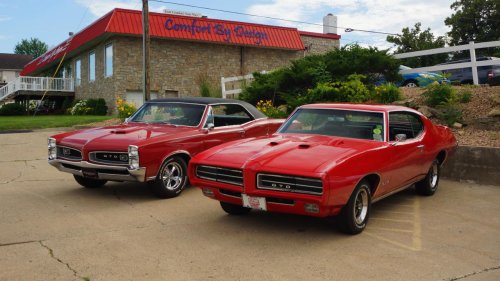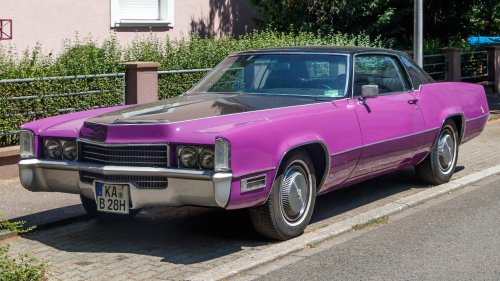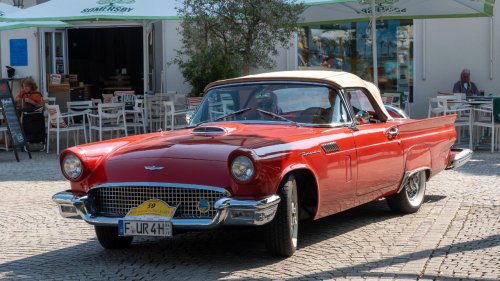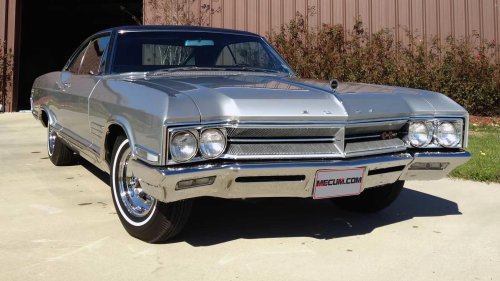
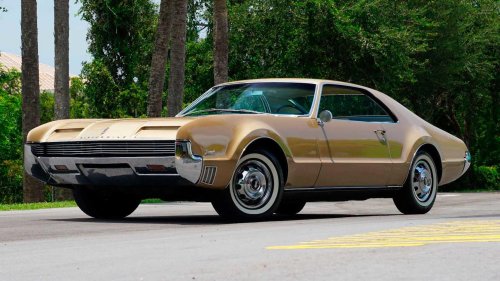
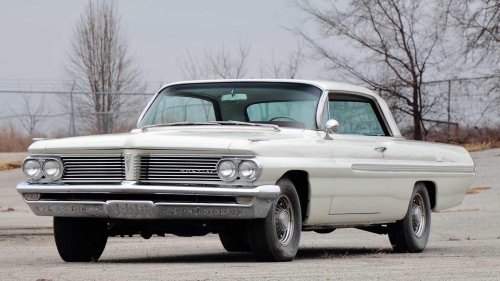
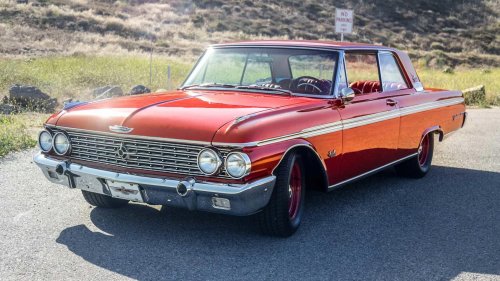
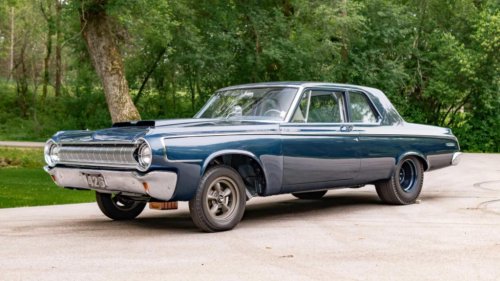
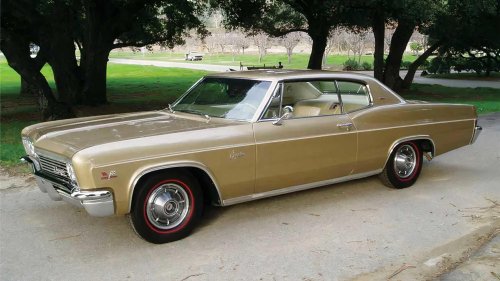
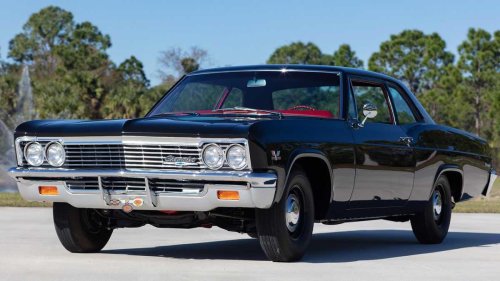
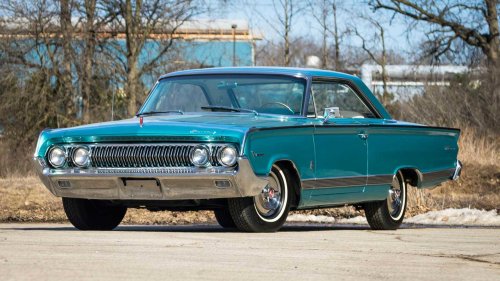
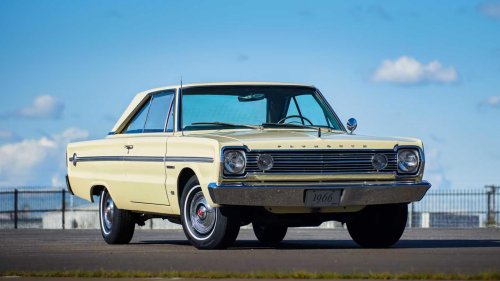


















The golden era of performance gave rise to some truly iconic examples of American muscle, as legendary cars like the Pontiac GTO Judge, the Ford Mustang, and the Chevrolet Chevelle were capable of turning heads as much as they were built to burn rubber. However, the reality is that many other potent vehicles flew under the radar, quietly capable but going unappreciated without the flash of their popular counterparts..Be it a full-size family sedan, a front-wheel-drive cruiser, or a no-frills coupe, there were many unassuming classic sleeper cars that were understated — even boring — on the outside but which featured a powerful engine under the hood. In some cases, unlocking such a combo required a savvy buyer and a well-specced option sheet, but it’s nevertheless incredible to consider some of the cars that were offered from the factory. With this in mind, we rounded up ten American classics that look unimpressive at first glance — only to surprise you with their performance. 1971 Pontiac GT-37 L75 1971 Pontiac GT-37 SpecsBecause of the lasting fame achieved by names like the GTO and the Firebird, the GT-37 tends to go overlooked among Pontiac muscle cars. After all, the T-37 was designed to be an entry-level Tempest with minimal trim, and most examples came with humble six-cylinders, so it’s not like the model was known for its performance. However, when equipped with one of Pontiac’s more powerful V8s — both the 400 Ram Air III and the 455 HO were available options — the resulting GT-37 was a veritable sleeper. 1966 Buick Wildcat GS Mecum Auctions1966 Buick Wildcat GS Specs The Buick Wildcat GS is an often-overlooked muscle car, as its performance is hidden away in an upscale mid-size package. The Wildcat itself was a step above the LeSabre, bringing with it additional luxury, cache, and comfort. When specced with the Gran Sport option, though, the car was transformed into an understated performance threat. The 425-cubic-inch Super Wildcat V8 produced 360 horsepower through a set of dual carbs, and Buick added further upgrades in the form of beefed-up suspension and a heavy-duty drivetrain. 1966 Oldsmobile Toronado Via: Mecum Auctions1966 Oldsmobile Toronado Specs Between its streamlined styling and unconventional front-wheel-drive layout, the Oldsmobile Toronado wasn’t exactly boring per se. However, we felt that it warranted inclusion because Oldsmobile elected to fit the car with its Rocket V8, a massive 7.0-liter engine good for 385 horsepower and 500 lb-ft of torque. Keep in mind that the Toronado was America’s first front-wheel-drive car since the 1930s, so giving the model that kind of power was as bold a statement as any. Now, it was far from perfect in its execution (many reviewers found issues with the brakes), but this Oldsmobile is a car that was far ahead of its time. 1962 Pontiac Catalina Super Duty Mecum Auctions1962 Pontiac Catalina Super Duty Specs Pontiac turned a number of full-sizes into factory drag cars through the addition of its Super Duty engine, but the Catalina has to be the most unassuming of the lot. Despite its family-friendly appearances, though, the car was a hot rod, stripped back and powered by a 405-pony V8. Aluminum body panels, bucket seats, and heavy-duty internals turned it into a street-legal race car. The Catalina Super Duty was purpose-built for NHRA competition, and very few were sold to the public. As such, they’re coveted legends today—proof Pontiac was all-in on performance before the GTO even existed. 1962 Ford Galaxie 500XL 406 Bring a Trailer1962 Ford Galaxie 500XL 406 Specs At first glance, Ford’s Galaxie 500XL looks like another full-size that’s more concerned with chrome and comfort than it is with muscle. However, underneath that expansive hood, you’ll find a 406-cubic-inch V8 and a triple two-barrel setup — a potent pairing that’s good for some 405 horsepower. Ford offered the engine in the Galaxie to homologate the block for NASCAR use, and the 500XL trim brought upscale touches, bucket seats, and flashy aesthetic additions. 1964 Dodge 330 Via: Bring a Trailer1964 Dodge 330 Specs With its boxy proportions and unassuming demeanor, Dodge’s B-body 330 doesn’t inspire aspirations of performance at first glance. In true Mopar fashion, however, Dodge offered the full-size with truly monstrous powerplant options during its two years of production. So, along with more pedestrian inline-sixes, buyers could also have their 330 with a 426 Max Wedge V8. Dodge mostly sold cars equipped with the engine to drag racers, as the setup made over 415 horsepower in Super Stock trim. Beyond its appearances on the strip, Dodge’s 426 Max Wedge also competed on the oval before giving way to its NASCAR-dominating Hemi successor. 1966 Chevrolet Caprice L72 Barrett-Jackson1966 Chevrolet Caprice L72 Specs In the world of Chevy full-size cars, the Impala SS is widely respected for its performance, but even its upscale Caprice sibling could be made to move with the right options on the order sheet. Come 1966, power-hungry buyers could order the model with Chevy’s L72 package, an upgrade that got you a 425-horsepower big block 427 V8 under the hood. By equipping the plush Caprice with the same potent engine found in the Corvette, one could transform the soft boulevard cruiser into a true tire-squealing sleeper — 4-speed manual, performance rear gears and all. 1966 Chevrolet Biscayne L72 americanmusclecarmuseum.com1966 Chevrolet Biscayne L72 Specs Back in the day, a Chevrolet Biscayne with the L72 engine was the epitome of a factory-built sleeper. The car was Chevy’s budget fleet model, and it was barren of interior and exterior trimmings. However, savvy buyers could transform the Biscayne by checking the L72 option off on the order form, equipping their car with a 425-horsepower 427 V8. When paired with a 4-speed transmission and some up-spec suspension, it made a full-size sedan that could hang with the best muscle cars of the era. Now, as you’d expect, it was a rare option — just 200 Biscaynes received this kind of treatment. 1964 Mercury Super Marauder 427 Mecum1964 Mercury Super Marauder 427 Specs The 1964 Mercury Marauder is a perfect example of a subdued full-size sedan packing unexpected heat under the hood. On the surface, it looks like a plush cruiser for getting around town, but Mercury offered the car with Ford’s legendary 427-cubic-inch V8. In dual-quad guise, the NASCAR-derived block was good for some 425 horsepower — enough to turn the otherwise unassuming Marauder into a legitimate muscle car contender. Not many examples of this Mercury sedan were optioned with the 427 on account of its expense, so those that have the block make for rare examples of a seriously underrated sleeper. 1966 Plymouth Belvedere Street Hemi Mecum1966 Plymouth Belvedere Street Hemi Specs With Plymouth’s model downsizing in 1962, the Belvedere became both more compact and also more economical. In fact, in a period roundup, Popular Mechanics compared it to a Ford Fairlane and a Chevrolet Chevy II, concluding that the Plymouth was “a very pleasant transportation package.” Of course, that would all change in 1966, as the Belvedere was among the first models to receive Mopar’s vaunted . Following pushback from NASCAR, Chrysler was required to sell more Plymouth and Dodge production cars with the engine for it to be considered eligible for competition. Rather than conceding the loss of the Hemi, Chrysler doubled-down and fitted 9,955 vehicles with the 426 V8 until it was pulled from the market in 1971.