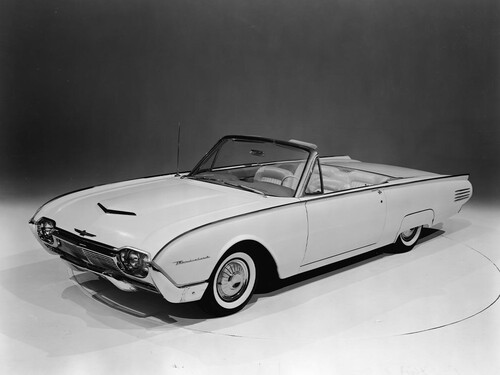
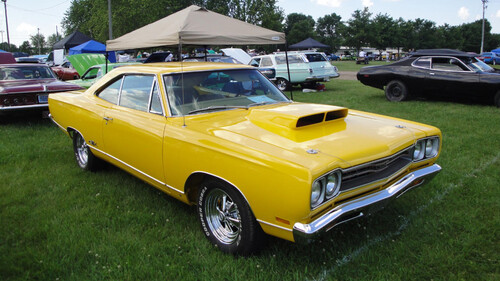
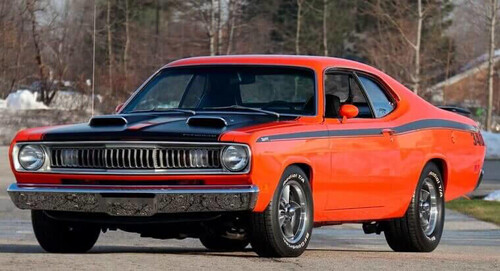
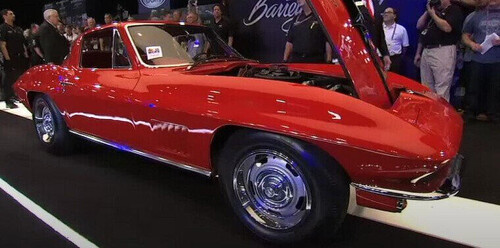
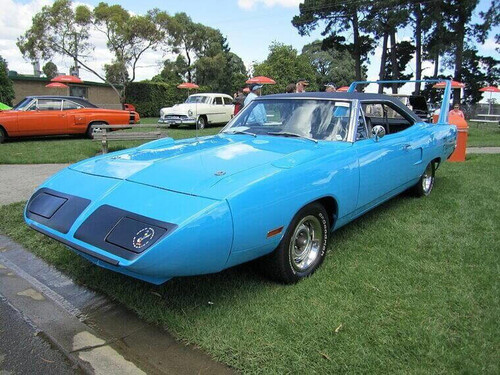
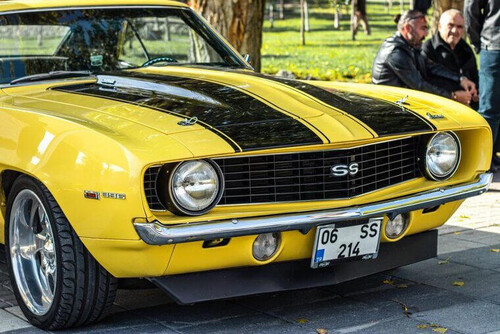
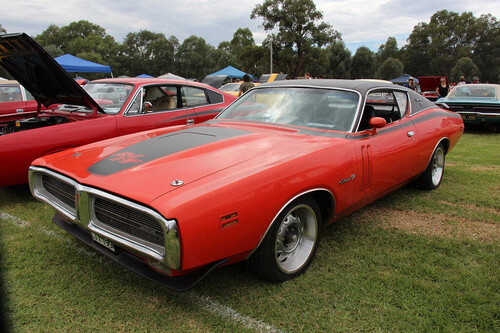
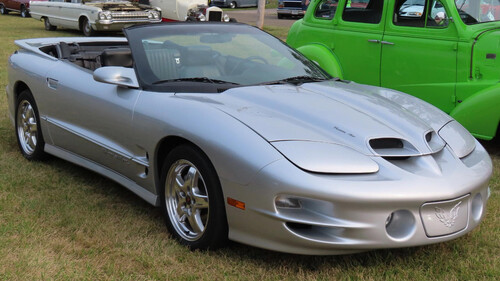
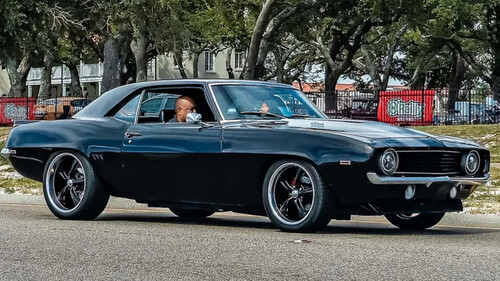
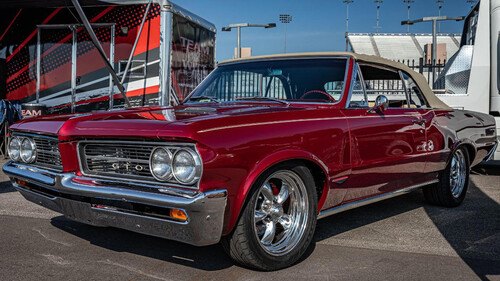
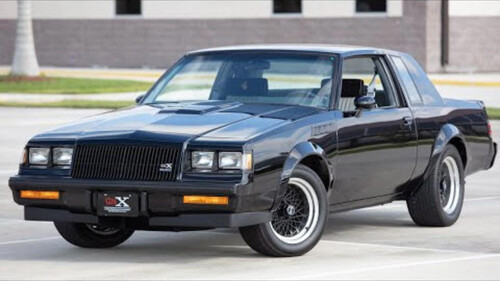
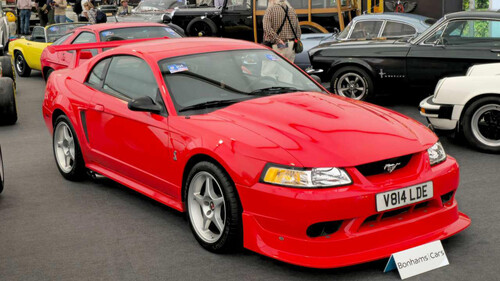
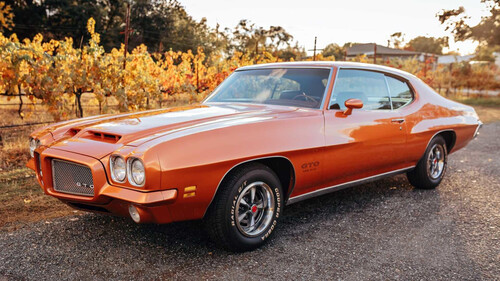
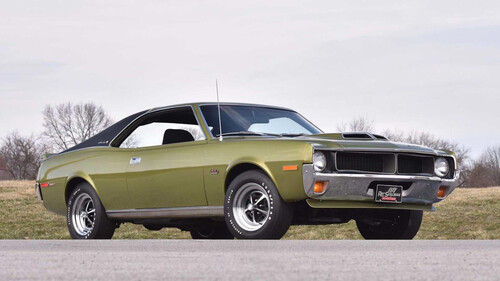
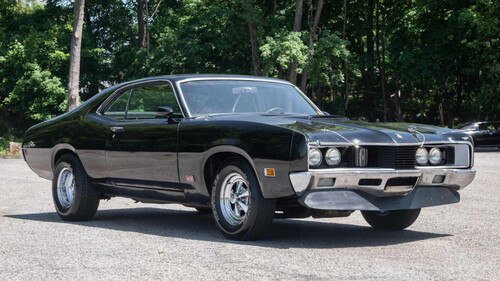
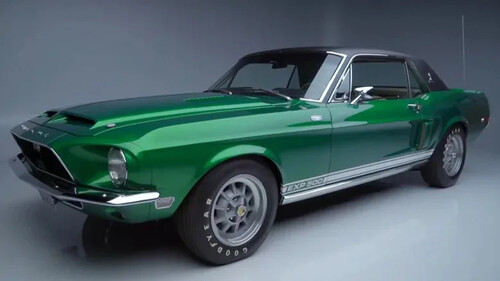
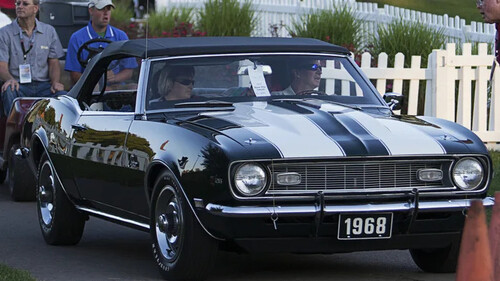
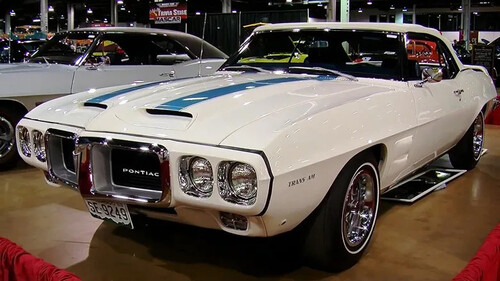
As American car enthusiasts in 2025, we should be counting our blessings for the things we still have. Think about it: If electrification and stricter emissions regulations had started a little bit earlier, the 2020s could have easily been the anti-performance car era. But even though we're grateful that wild and crazy enthusiast machines are still being built - we want more. We want the countless classics that have been taken from us to be returned. We yearn for nameplates that existed in the golden era of American motoring, and we want those badges on the backs of brand-new cars. And though it would be impossible to name all the late-great American machines, here are 9 that absolutely deserve a comeback.In this article, factory specifications are sourced directly from each car's respective manufacturer. If details are not available, they are sourced from reputable automotive outlets like Car and Driver, MotorTrend and more. Pontiac GTO Mecum The GTO started out as a trim package for the Pontiac Tempest Le Mans in 1964, but just three short years later, it would earn the right to its own model. The first-gen GTO featured that classic mid-to-late '60s coke-bottle shape, but the second-gen would replace that with a more traditional fastback design. The most notable GTO from the second generation was the GTO "The Judge," which came with a myriad of performance components as well as the high-output Ram Air 400 cubic-inch V8.The third and fourth-generation GTOs were mostly forgettable, as they were heavily affected by the 1970s gas crisis and emissions regulations, which is why the most probable candidate for a revamp would be the fifth-generation GTO. Pictured above, this subtly styled coupe debuted for the 2004 model year and was based on the Australian Holden Monaro. It featured a 5.7-liter (LS1) V8 making 350 horsepower and 365 pound-feet of torque, and later with a 6.0 (LS2) V8 producing 400 horses and 400 pound-feet. Ford Escort RS Cosworth Bring a Trailer If you've never heard of this car, and you're from America, we don't blame you. We never got this hot little homologation car in the States because the RS Cosworth was specifically built for the British and European markets in order to go rally racing in the early 1990s. Ford only built a limited number of them each year to satisfy the constructor requirements, but that's all it took for the Cossie to become one of the greatest Group A rally cars ever.All you need to know, though, is that this was a 2.0-liter turbo-four with all-wheel-drive, go-kart-esque handling, and sensationally 1980s rally looks. Now that Ford's signature hot-hatch, the Focus RS, is gone from all markets, bringing the Escort RS Cosworth back for more than just Euro markets would fill a much-needed hole in the entry-level market, and make us believe in American brands once again. Plymouth Duster Via: Mecum Auctions While the Duster isn't quite a forgotten muscle car, it still flies under the radar in most classic American car conversations. But for us, this is a go-to for the quintessential muscle car experience. The Duster nameplate first debuted as its own model in 1970 and was based on the Plymouth Valiant. Produced through 1976, the two-door Duster housed many engines, including two slant-six engines and a Chrysler 318 V8.The most notable, however, was the Duster 340, which, as you could guess, came with a 340 cubic-inch V8 producing around 290 horsepower and 340 pound-feet of torque. Of course, Plymouth went out of business in 2001, but we would love nothing more than to see a Dodge Demon-style revamp of this iconic model. Chevrolet Monza via: Pinterest Here's one you definitely forgot about – the Chevy Monza. It was a subcompact coupe sold by GM from 1975 to 1980 that was based on the Chevrolet Vega. It was not particularly well-received in its day, as the malaise era fuel restrictions meant its V8s made no more than 145 horsepower at their most powerful.But now that Chevy doesn't have an entry-level sports car, the Monza could be revamped and made better than it ever was before. We'd propose a simple, small, hardtop coupe with GM's current 2.7-liter turbo-four that makes 310 horsepower and 430 pound-feet of torque. If it were re-tuned for some more revs, and a little less torque (paired with a manual, of course), we would expect nothing short of a hit. And if its chassis tuning was anything like GM's recent performance cars, it could finally put Japan's sports car segment on notice. Ford Thunderbird Bring A Trailer You may have forgotten the Monza, but everyone knows the Ford Thunderbird. Debuting in 1955, this was America's golden child of personal luxury coupes (though it was originally marketed as a sporting vehicle). And it stayed that way for the better part of two decades, until the gas crisis came along and ruined almost every cool American car.The delightful first-gen cars, the "Square-Bird" fighter-jet-inspired second generation and the effortlessly elegant third and fourth generation T-Birds are some of the most beloved mid-century American classics nowadays. Heck, even the tenth-gen Super Coupe bodystyle and eleventh-generation Jaguar-powered Thunderbirds are gaining more love in the car community nowadays. So, if Ford made a new BMW 6-Series competitor, stuck a powerful EcoBoost V6 in the thing and called it the Thunderbird, we wouldn't be mad at all. Chevrolet Chevelle Bring A Trailer We mentioned how the Chevy Monza could fill the entry-level sports car hole in the brand's lineup, and with the current C8 Corvette at the top of the pile, it feels like we need something in the middle. Since the Camaro has been dead since 2023, we figure that the only logical solution is the Chevelle. Introduced in 1964, the Chevelle was a mid-size offering that came in several body styles (Coupe, Sedan, Wagon, Ute) over its production run that ended in 1977.We think the first-generation body styles are underrated, but the second-gen fastback style Chevelle is easily the most recognizable, with its forward-leaning shark-nose front end and timeless lines. Most notable from this generation was the SS 454 trim, which came with either a 360-horsepower 454 cubic-inch V8 or the optional 450-horsepower V8 (also 454 cubic-inches). Mercury Marauder Cars & Bids The Marauder nameplate actually originates in the early 1960s as a full-size two-door and four-door Ford offering, but for the purposes of this piece, we are focusing on the final-generation Marauder that was built for only two years in 2003 and 2004. It used the 4.6-liter DOHC V8 that was also used in cars like the then-current Mustang Mach 1. In the Marauder, the V8 produced 302 horsepower and 318 pound-feet of torque, which was sent to the rear wheels via a four-speed automatic transmission. In short, the Marauder is an excellent sleeper car.Here's our thought process: Ford and Lincoln don't sell any sedans at all, let alone a performance variant. So, if we had control over Ford's product planning for a day, we'd do another Marauder with the Mustang's 5.0-liter Coyote V8 and a ten-speed automatic transmission, and bring back the American sedan we have all been waiting for. In fact, they could essentially use the Mustang's entire platform and make a mid-size sedan out of it and call it a day. We aren't picky. Dodge Viper Stellantis There is no universe in which the Viper doesn't land a spot on this list, and for good reason. The Dodge Viper, for 25 years, was the only American car that was a true competitor with the Chevy Corvette - America's sports car. It was the unconventional, lovably cartoonish, and ridiculously fast coupe that was always powered by a V10 engine, and since its departure in 2017, we've been desperately melancholy.Even though Stellantis hasn't had a great time over the last few years in terms of sales, we'd argue that the rise of the C8 Corvette in this decade is more than a good enough reason to fight back. For enthusiasts born in the 1990s and 2000s, they can't remember a time when the Corvette and Viper weren't battling it out, and we believe Dodge owes it to the next generation to provide the experience of that great American rivalry. Buick GNX via Bring A Trailer Buick had been playing around with turbocharging since the 1970s, when the technology was still not quite understood in a performance setting. But when engineers figured out how to reliably turbocharge a Buick 3.8-liter V6, things started getting crazy. In the early 1980s, the Buick Grand National would feature a 200-horsepower version of that turbo V6, and then a 245-horsepower version later on. But what came next, was the real star of the show.Enter, the Buick GNX. Standing for "Grand National Experimental," this was the ultimate version of the GN that nobody was ready for. In collaboration with McLaren's engineers, they were able to pack a factory-rated 276 horsepower punch out of that V6, as well as 360 pound-feet of torque, which, according to some period rumors, was laughably underrated. It was likely making over 300 horsepower in stock form.Its full story is far too long to dive into here, and there are many things that make the Buick GNX so special, but simply, this car's signature black on black color scheme and outrageous performance were the perfect symbol of evil, mean and fast cars in the 1980s. Currently, Buick isn't a player in the performance car space, but seeing a new GNX with a turbocharged V6 would be a certified global moment for the car community.