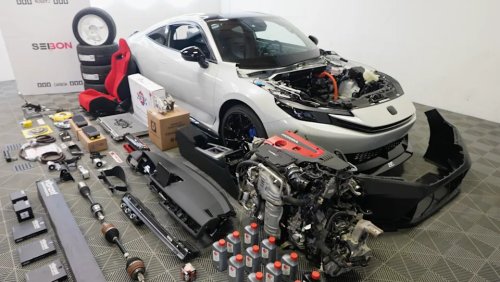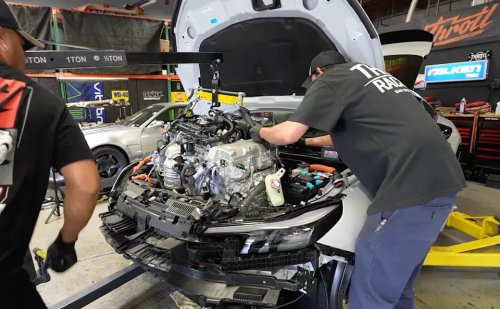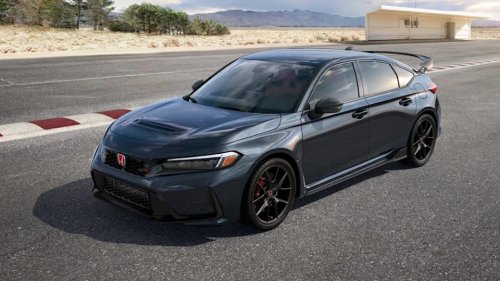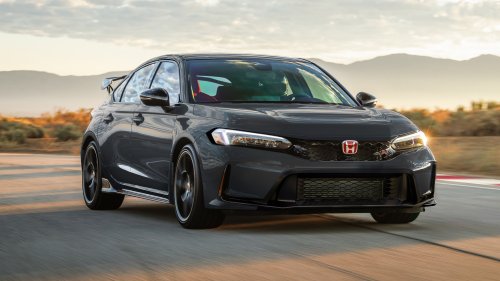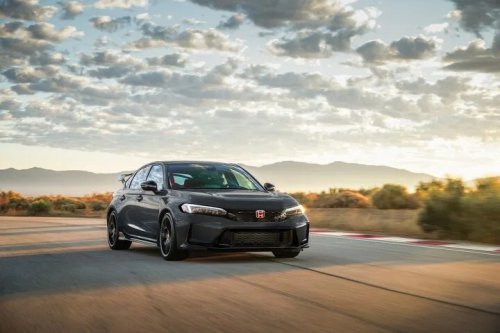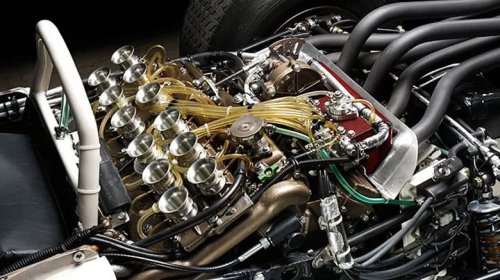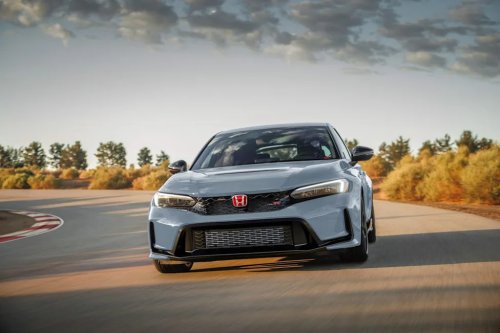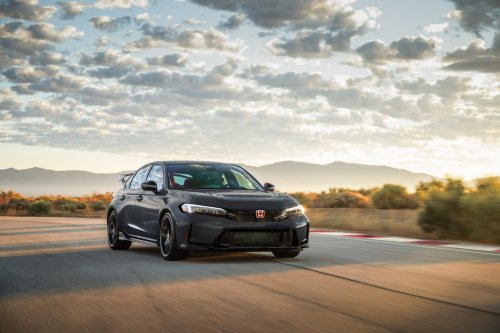

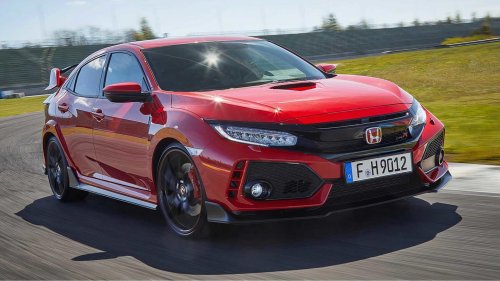
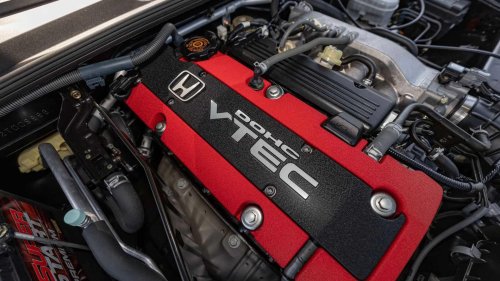



















Honda has long been celebrated for engineering engines that blend reliability, efficiency, and spirited performance. From the early days of the Civic to the high-revving S2000, Honda's powerplants have consistently delivered a driving experience that appeals to both everyday drivers and enthusiasts alike. This reputation is built on a foundation of innovative engineering, meticulous manufacturing, and a commitment to quality.Among Honda's impressive lineup of engines, the K-Series stands out as a remarkable achievement. Introduced in the early 2000s, the K-Series engines have become synonymous with high performance and adaptability. Their design has not only powered a range of Honda vehicles but has also become a favorite among tuners and racers seeking to extract maximum performance.This article explores the reasons behind the K-Series engines' exceptional performance. We'll delve into their technical specifications, examine the various models within the K-Series family, and highlight other notable Honda engines that have contributed to the brand's performance heritage. Why Gearheads Love The Honda K-Series Engines Honda K20C1 engine frontThe Honda K-Series engine family debuted in 2001, marking a significant evolution from its predecessor, the B-Series. Designed with modern engineering principles, the K-Series introduced several advancements that enhanced performance, efficiency, and reliability. These engines feature a dual overhead camshaft (DOHC) configuration and Honda's innovative i-VTEC system, which optimizes valve timing for improved power delivery across the RPM range.The initial K-Series engines, such as the K20A, were introduced in performance-oriented models like the Civic Type R and Integra Type R. These engines quickly gained recognition for their high-revving nature and robust power output. The K20A, for instance, produced up to 220 horsepower at 8,000 RPM, showcasing Honda's ability to extract significant performance from a naturally aspirated 2.0-liter engine.Enthusiasts and tuners were quick to embrace the K-Series engines due to their potential for modification and performance upgrades. The engines' robust construction and advanced technology made them ideal candidates for turbocharging, supercharging, and other performance enhancements. As a result, the K-Series became a popular choice for engine swaps in various vehicles, ranging from older Honda models to entirely different platforms.The versatility of the K-Series engines is further demonstrated by their widespread application across Honda's vehicle lineup. From compact cars like the Civic to larger models like the Accord and CR-V, the K-Series provided a balance of performance and efficiency that appealed to a broad range of drivers. This widespread use also contributed to the availability of aftermarket parts and support, further cementing the K-Series' status among performance enthusiasts. Honda Engine Tech For Robust Power Honda Honda K20A Engine Key Specs Source: HondaThe Honda K-Series engines are renowned for their advanced engineering and performance capabilities. Key technical features include: DOHC Valvetrain: The dual overhead camshaft design allows for precise control of valve timing, enhancing airflow and combustion efficiency. i-VTEC System: Honda's intelligent Variable Valve Timing and Lift Electronic Control system optimizes valve timing for improved power delivery across the RPM range. Aluminum Alloy Construction: The use of lightweight aluminum for both the engine block and cylinder head reduces overall weight, contributing to better vehicle handling and fuel efficiency. High Compression Ratios: Certain K-Series variants feature compression ratios up to 11.7:1, allowing for greater power output and efficiency. Coil-On-Plug Ignition: This system improves ignition efficiency and reduces maintenance needs by eliminating traditional spark plug wires. These technical aspects contribute to the K-Series' ability to deliver impressive horsepower and torque figures, often surpassing expectations for naturally aspirated engines. For example, the K20A engine achieves a redline of 8,400 RPM, enabling a thrilling driving experience.Additionally, the K-Series engines incorporate features like roller rocker arms to reduce friction and improve efficiency. The engines also utilize a forged steel crankshaft and robust connecting rods, ensuring durability under high-performance conditions. Every K-Series Engine That Matters - And Why 2015 honda civic type r cornering Honda K20C1 Engine Key Specs (Most Powerful K-Series Engine) Source: HondaHonda’s K-Series engine family includes a wide array of variants, each designed for specific applications and performance goals. Below is a deeper breakdown of the most notable K-Series engines, organized by displacement and configuration. K20 Family – 2.0L Engines K20A (JDM): High-performance variant used in the Civic Type R (EP3, FD2), Integra Type R (DC5), and Accord Euro R (CL7). High compression (11.5:1), aggressive cams, and a redline above 8,000 rpm. Output ranges from 197–222 hp. K20A1: Installed in base-model CR-Vs. Lower compression and tuned for economy. Around 150 hp. K20A2: Found in the Acura RSX Type-S and 02–04 Civic Si. Features performance cams and better flowing intake. Roughly 200 hp. K20A3: Economy version used in the Civic Si (01–05) and base RSX. Lacks full VTEC on both intake and exhaust. Around 160 hp. K20Z1: Used in the 05–06 Acura RSX Type-S. Very similar to K20A2 but with minor improvements, making about 210 hp. K20Z3: Seen in the 06–11 Civic Si. Uses i-VTEC and drive-by-wire throttle. Around 197 hp with improved emissions. K20C1: Modern turbocharged version used in the FK8 Civic Type R. Direct injection, dual-VTC, and 306 hp out of the factory. K20C2: Turbocharged engine found in base-model Civics (non-Si). Tuned for economy. 158 hp. K20C4/K20C6/K20C3: Other turbocharged variants used in the Accord, Acura RDX, and CR-V. K23 – 2.3L Turbocharged K23A1: Installed in the 2007–2012 Acura RDX. Turbocharged and intercooled, making 240 hp and 260 lb-ft of torque. One of the few factory-turbo K engines before the Type R. K24 Family – 2.4L Engines K24A1: Found in early CR-Vs and Accords. Tuned for low-end torque and fuel efficiency. Around 160 hp. K24A2: A high-performance variant used in the Acura TSX (04–08). It features high compression (10.5:1), performance cams, and improved intake. Produces around 205 hp. K24A3/A4/A8: Found in various markets and vehicles such as the Accord and Odyssey. Differences include emission equipment and ECU tuning. K24Z1/Z2/Z3/Z4/Z7: Updated K24s used in the 2008–2015 Accord, Element, and Civic Si. Slight redesign of the head with a single exhaust port. The K24Z7 (Civic Si) is the most performance-oriented in this group with 205 hp. K24W: Newer Earth Dreams variant using direct injection. Found in the 2013+ Accord and CR-V. Focused more on emissions and efficiency than outright performance. Each variant showcases Honda's commitment to delivering engines that meet diverse performance and efficiency needs. The K-Series' adaptability has also led to the development of hybrid configurations, such as combining a K24 bottom end with a K20 cylinder head, resulting in an engine that offers both high torque and high-revving capabilities.The K-Series engines have also been utilized in motorsports, including drag racing and time attack events. Their robust construction and performance potential make them a popular choice among racers seeking reliable and powerful engines. Honda’s Other Heavy Hitters: B, F, And H Engines Via: Mecum Auctions Honda B, F, And H Engines (Most Powerful Versions) Source: HondaWhile the K-Series engines are often seen as the crown jewel of Honda’s performance engineering, they are part of a larger tradition of impressive powerplants that have shaped Honda’s legacy. Before the K-Series made its mark, the B-Series engines led the charge in the 1990s and early 2000s. Among them, the B18C5, used in the Integra Type R, stood out with its ability to rev beyond 8,000 RPM while producing 195 horsepower from just 1.8 liters. It was lightweight, reliable, and favored by tuners for its responsiveness and tuning flexibility. The B-Series engines didn’t have the modern advancements of later designs, but their raw mechanical efficiency and well-balanced design made them a mainstay in the import performance world.Another standout is the F20C, an engine that powered the Honda S2000. This 2.0-liter naturally aspirated motor was a technical marvel when it debuted in 1999. With a sky-high redline of 9,000 RPM and a peak output of 240 horsepower, it held the world record for highest specific output for a mass-produced naturally aspirated engine for years. It utilized forged internals, an aggressive cam profile, and a meticulously tuned VTEC system. Honda engineered the F20C to behave like a race engine that could still be driven to work every day – an achievement few automakers have matched since.The H-Series engines also deserve recognition, particularly the H22A. Found in the Prelude, this 2.2-liter engine produced between 190 and 220 horsepower depending on the trim and market. It offered strong midrange torque and smooth power delivery, making it a practical yet spirited choice for daily drivers who wanted more performance. Though it was heavier than the B-Series, the H22A gained a loyal following among enthusiasts for its tuning potential and robust design. Its DOHC VTEC head, when combined with a properly built bottom end, could hold up to serious power in turbocharged builds.These engines – B, F, and H – each played a crucial role in establishing Honda's reputation for high-performance four-cylinder engines. While they’ve been overshadowed in recent years by the K-Series and Honda's newer turbocharged lineup, their influence is still felt today. They laid the groundwork for the philosophy that makes Honda engines beloved: a focus on balance, innovation, and performance without sacrificing reliability. Together, they form the pillars of Honda’s performance legacy – one that continues to evolve but never forgets where it came from.