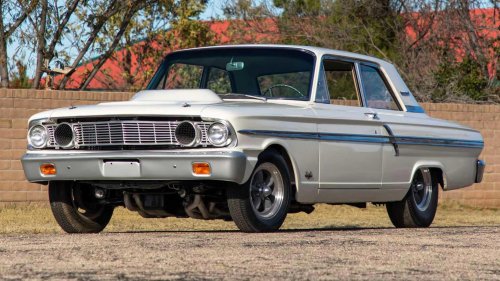
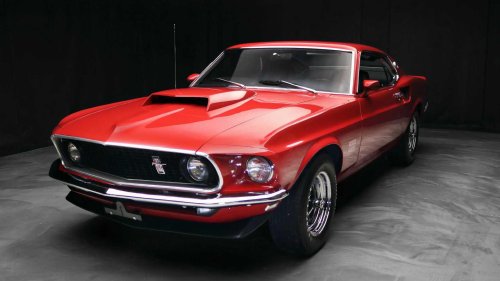
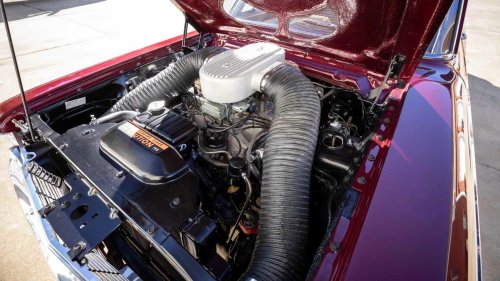
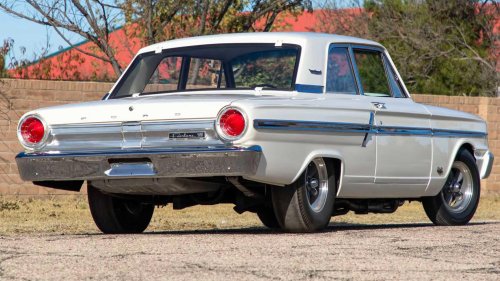
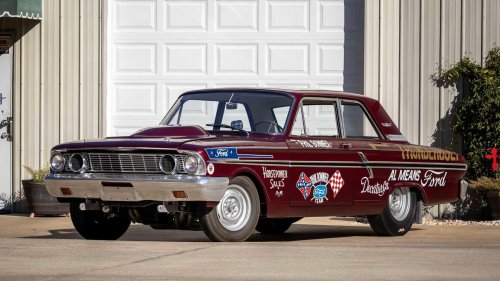
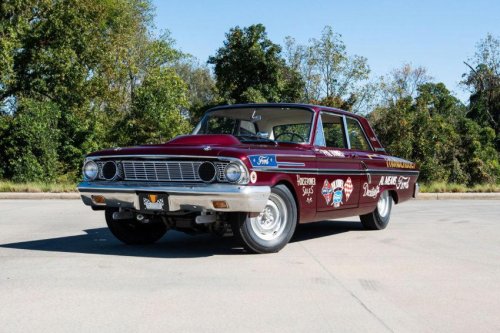
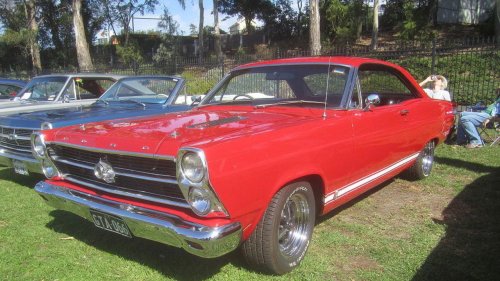
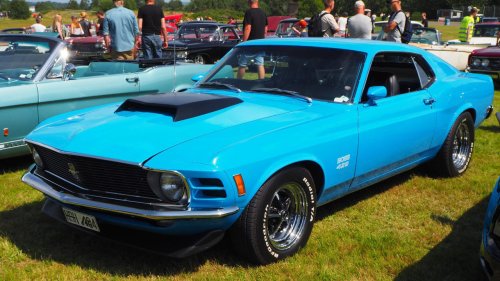
Sometimes acool performance carwill appear out of nowhere, after an automaker typically discovers that it can build something remarkable using readily available parts from some of its other vehicles that are already on sale.There are also cases where an automaker takes an existing platform that underpins a mainstream car, puts a sexier bodywork on top of it, and beefs up the engine and suspension. This is a recipe that has been successfully used multiple times in history, and not just in North America. However, brands like Ford, Chrysler, and GM pushed it to the extremes in the '60s – giving rise to the golden age of muscle cars.With a special NASCAR-built 429 big block under the hood, the Ford Mustang Boss 429 is often cited as the brand's most badass classic muscle car. However, there was another even more capable and underrated Ford roaming the streets in the '60s in much smaller numbers, and it's even hotter than the legendary Mustang Boss. Ford Fairlane Thunderbolt Struck The Drag Racing Scene Like Lightning Via: Mecum AuctionsAround the same time as Ford Motor Company was putting the final touches on the original 1964 1/2 Mustang, the automaker realized that it needed a strong contender in the NHRA Super Stock racing, since the Galaxie was too heavy in stock trim.Ford had the idea to take the 427-cubic-inch (7.0-liter) engine that was used in the Galaxie NASCAR racer and fit it to the Fairlane 500 two-door sedan, which had an intermediate-sized body and therefore was lighter — by some 700 lbs. That’s how a legend was born, and since it had to have a name, it was called the Fairlane Thunderbolt.It’s not hard to guess why it was called the Thunderbolt. The 427 V8 high-riser FE engine with two 4-barrel carburetors was a monster, delivering 425 hp at 6,000 rpm and 480 lb-ft at 3,700 rpm. However, the power figure was conservative, as the engine was deemed to produce more than that.That was obvious from the Thunderbolt's acceleration; it was capable of covering the quarter-mile in 11.61 seconds at 124.8 mph, as tested by Ford with the four-speed transmission in November 1963 at the Lions Drag Strip. It was so fast that the final of the 1964 NHRA Winternationals was an all-Thunderbolt affair, with the car driven by Gas Ronda taking the win in 11.78 seconds at 123.40 mph. He would be crowned Top Stock champion that year with the Thunderbolt. Fairlane Thunderbolt Vs. Boss 429 Mustang: A Blue Oval Affair Bring A Trailer But how does the Fairlane Thunderbolt compare to another drag strip legend from the Blue Oval, the Boss 429 Mustang? Built for only two model years (1969 and 1970), it featured a 429-cubic-inch (7.0-liter) big block V8 that was heavily modified for racing by Kar Kraft, a specialty shop that had a contract with Ford.The engine delivered 375 hp and 450 lb-ft of torque, and it was used in NASCAR and NHRA's Pro Stock class, albeit in other Ford vehicles. The Boss 429 Mustang was significantly slower in a straight line than the Fairlane Thunderbolt, being capable of low 14-second quarter-mile times in stock form. The comparison is not entirely fair, though, as the Fairlane Thunderbolt and Boss 429 Mustang were built to do different things. The former was a purpose-built drag racer, while the latter was a road car that happened to have a homologation engine for NASCAR.The Fairlane Thunderbolt was not only quicker, but also much rarer than the Boss 429. Ford built just 100 Thunderbolts exclusively for the 1964 model year, compared to 1,359 units of the Boss 429 Mustang made for the 1969 and 1970 model years. So it’s a double whammy for the Thunderbolt against the Boss 429 when it comes to performance and rarity. But that doesn't mean that you shouldn't follow your heart when picking one of them for your muscle car garage. How Ford Built The Fairlane Thunderbolt To Outrun All Other Muscle Cars Mecum AuctionsSo how did the Fairlane Thunderbolt actually come to be? It all started with the idea of fitting the 427 V8 into the engine bay of a regular Ford Fairlane, which was no easy task. Since the Fairlane was intended for an engine no larger than a small-block unit, the job required major reworking and relocation of front suspension components, as well as the modification and strengthening of the suspension mounting areas.It helped that Ford delivered the Thunderbolt Fairlane 500s needed for this engine swap as K-code, high-performance 289-ci, 4-speed cars. However, the cars were built without the engine and transmission. But by ordering the K-code engine, Ford made sure that the cars got shipped with larger brakes and the Ford 9-inch differential.Via: Mecum Auctions There was still a lot of work to be done at this point. Since the 427 unit was a heavy beast, Ford engineers worked to offset that weight in other parts of the vehicle, fitting fiberglass doors, hood, front fender and even the front bumper on the earliest cars — later ones got aluminum front bumpers due to racing regulations. In addition, Plexiglas side and rear windows were added for more lightness.The Ford Fairlane Thunderboltalso received a distinctive raised teardrop ram air hood scoop designed to draw hot air from the engine compartment. That one looks really cool and is a dead giveaway that you're not dealing with a regular Fairlane when seeing one on the road.By fitting this scoop, there was no longer a need for hood hinges and a latch, which also saved a few pounds. To further save weight, everything that wasn’t necessary for drag racing was eliminated. As a result, the cabin only included a single driver’s sun visor, windshield wiper, seat belt and lightweight Bostrum Thinline racing seats. Ford engineers took things seriously with the Thunderbolt. Here's How Much A Fairlane Thunderbolt Is Worth Today Mecum Auctions On the rare occasions that Thunderbolts become available for sale, they command respectable prices. However, this is one area where the Thunderbolt loses out to the 429 Boss Mustang quite badly, because the latter is significantly more expensive. According to Classic.com records, the average price of a 1964 Ford Fairlane Thunderbolt is $165,313, compared to $329,974 for a Boss 429, making the latter typically twice as expensive. 1964 Ford Fairlane Thunderbolt Specifications The highest price paid for a Fairlane Thunderbolt in the last five years was $253,000 at the Mecum Indy auction in May 2025, while the most expensive Boss 429 Mustang fetched $627,000 at the same auction. But if you value rarity more than fame, you'll be happy with the Thunderbolt, especially since not many people know about it – and even fewer expect such an old car to go that fast.Sources: Ford, Classic.com.