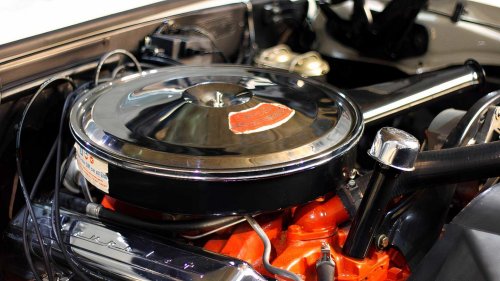
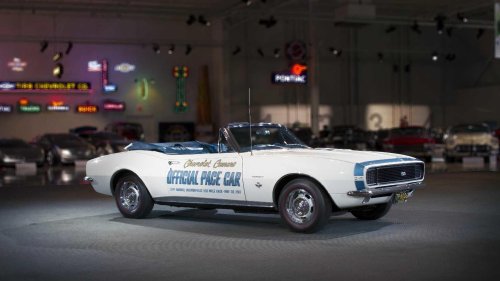
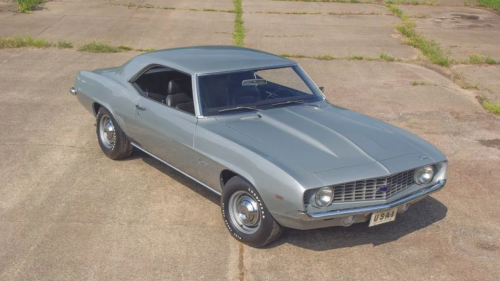
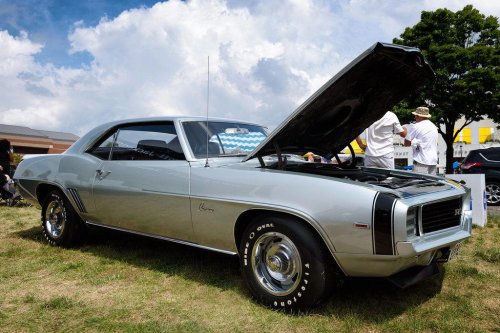
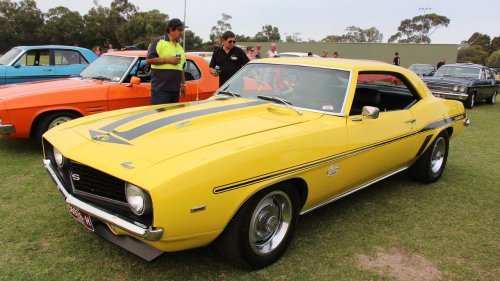
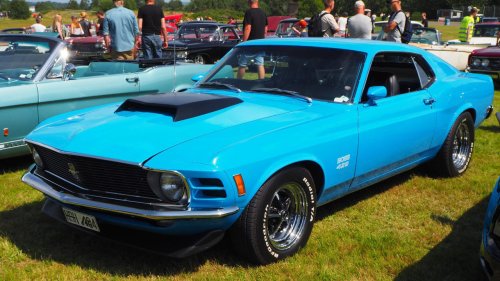
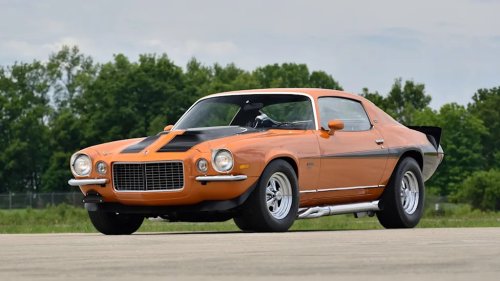
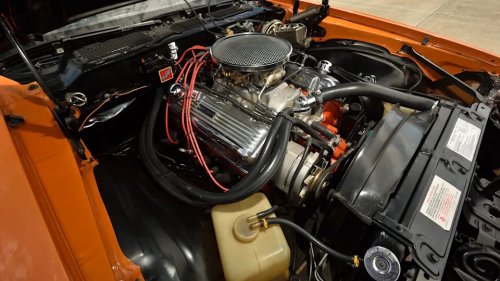
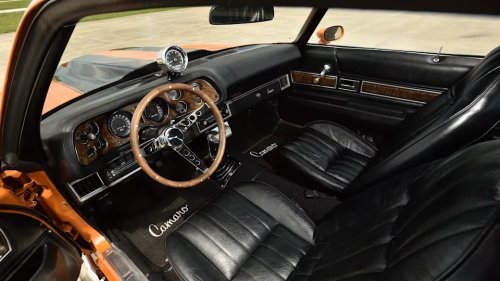
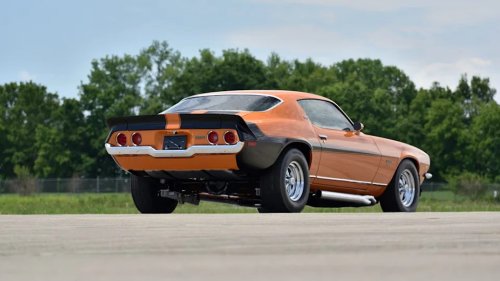
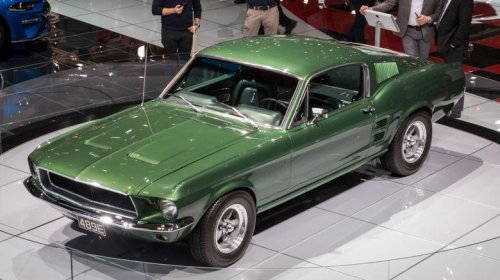
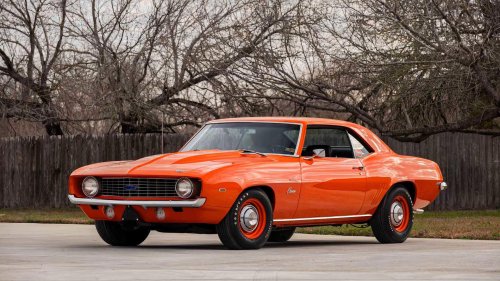
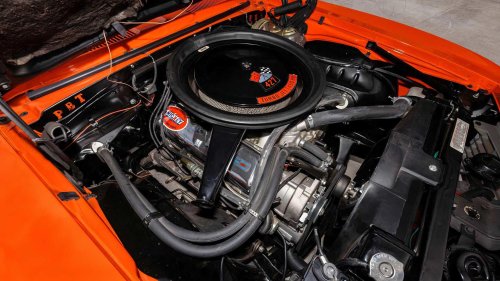
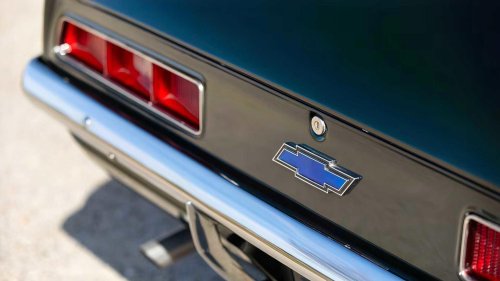
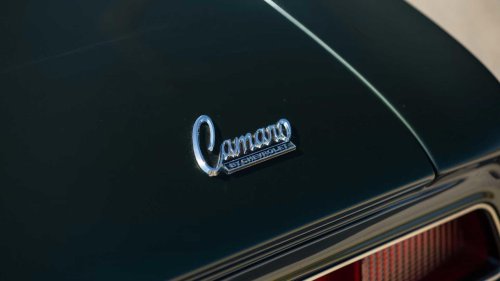
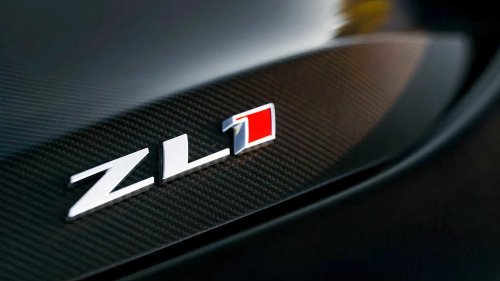
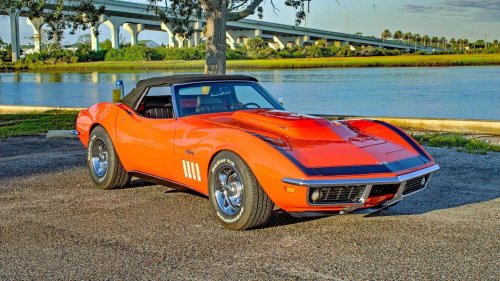
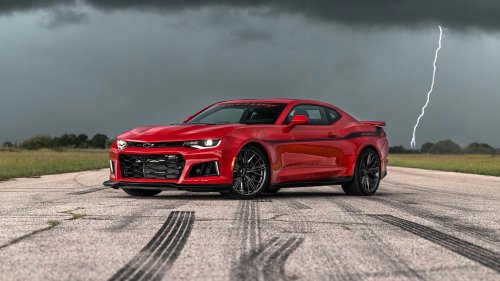
In 1969, Chevrolet created an icon almost by accident. The Camaro ZL1 was a limited-edition worthy of the name, with just 69 examples built, but it still struck a chord with enthusiasts and became one of the most desirable Chevrolet muscle cars of all time. Fitted with Chevy’s legendary 427-cubic-inch, aluminum-block ZL1 racing engine, they were the kings of the drag strip, and earned themselves a folkloric reputation.Today, Classic.com data shows pristine examples of those rare 1969 ZL1s change hands for as much as $700,000 – roughly 100 times their (already steep, by the standards of the time) price when new. Even replicas, outside the 69 original cars, can fetch more than $70,000 at auction, such is the insatiable appetite for those classic muscle cars. How The Original ZL1 Became A Racing Legend Via Mecum AuctionsIn 1969, the ZL1 was just an engine, and it didn't really become a household name until it was included in Chevrolet's Central Office Production Order (COPO) program, which essentially allowed dealers to specify special builds and more exotic engine-and-chassis configurations. That meant dealers could order cars that exceeded the 400-cubic-inch maximum displacement limit General Motors had set for its production models, and it was under that scheme that COPO 9560 — the 1969 Camaro with the ZL1 engine — was born.The ZL1 engine was hugely overpowered, producing 430 hp on the official spec sheet, but often churning out much more on the dyno. More than 500 ponies, in some cases, which made it more powerful than many of its contemporaries. Yet with its expensive-to-produce aluminum block, the ZL1 was light. Compared with the cast-iron engine on which it was based, the ZL1 weighed about 100 lbs less, and that made it perfect for performance cars.At first, that was exactly what it did. It found a place in the Can-Am cars of the late 1960s, including the bright orange McLarens of the 1968 season, and it was a roaring success. Admittedly, the production engine wasn’t quite the same – Chevrolet made a few tweaks – but the basic idea of a lightweight, powerful V8 with a focus on performance was unchanged.Via Mecum AuctionsUnsurprisingly, the combination was very desirable indeed, and though Chevrolet only needed to make 50 cars to meet the drag-racing rules, 69 cars eventually left the factory gates. Thanks to outrageous prices (a ZL1 cost around $4,000 more than an SS of the same era), sales were slow – some cars didn’t find buyers until the early 1970s – but those cars cleaned up on the drag strip. Hot Rod Magazine managed the quarter-mile drag strip in 11.64 seconds, and thought some stickier tires would have made it even faster. Modified examples made it into 10-second territory with ease. Why The '69 Camaro ZL1 Was So Different From Other Camaros Via Mecum AuctionsUnsurprisingly, the original Camaro ZL1 didn't just have a lighter and more powerful engine than the other high-performance Camaros of the era, such as the SS and the Z28. First proposed by Fred Gibb, who wanted the car for drag-racing, the ZL1 was in fact based on the Camaro SS with the L78 engine, but they got the ZL1 engine, a choice of “Muncie” manual transmissions or a three-speed hydramatic auto, and a cowl induction hood, as well as front disc brakes and a Positraction differential.All 50 cars originally specified by Gibb came with a black vinyl interior, no radio, and a choice of just five colors: silver, green, orange, and two shades of blue. Ten cars were built in each color, each with blue emblems on the silver front grilles and the rear panel, and Camaro badges dotted around the bodywork. Why Was The Camaro ZL1 Overpowered? MecumThe ZL1 engine's true output of more than 500 horsepower was enormous for the time, and put some other big-block V8s to shame. While modern technology and the use of forced induction means 500 horsepower doesn't sound all that impressive today, it was good going back then. The Ford Mustang Boss 429 of the era, for example, had 375 horsepower, which pales in comparison to the Camaro ZL1's might.In fact, Hot Rod Magazine's drag test of the ZL1 concluded that the engine was too powerful for the car's stock tires, and the car couldn't get all its power down at once. The problem was so great that, in the hunt for faster times, a garage changed the carburetor to deliver the power later and avoid burning up the rubber. No, ZL1 Doesn’t Stand For Anything Bring A TrailerThere’s something very important – particularly to gearheads – about badging. Perhaps it’s the snobbery of knowing your car is more upmarket than that of the guy next to you, or maybe it’s the history of badges like Mach 1 and GTI that make those cars so special. In Chevrolet’s case, the nomenclature is confusing, with seemingly nonsensical badges like SS, LT1 and 1LE enshrined in Chevy lore, despite only aficionados knowing where they stand in the hierarchy. The ZL1 is arguably the least logical name of them all, but it comes from humble beginnings and a world where logical naming policies didn’t really matter.The seemingly random collection of letters and numbers is almost exactly that. General Motors uses RPO (regular production option) codes for its vehicles, allowing the factory to fit exactly the right options to each car that rolls off the production line. Normally, a big-block engine would simply be known by its capacity in cubic inches, but General Motors did things slightly differently. Because the company liked RPO codenames beginning with Z (think ZR1, Z28 and so on), the aluminum-block 427 engine became known as the ZL1. And as the build sheet for the COPO cars bore the ZL1 code, the COPO 9560 became the Camaro ZL1. The Rarest ZL1 Of All Time Bring A TrailerThe rarest Chevrolet product to bear the ZL1 name didn't even have a Chevrolet badge. The comparatively lightweight engine was a proper sports car motor, and it ended up powering what is arguably Chevrolet's most famous sports car of all time: the Corvette. The Corvette ZL1 came with different suspension, a Positraction rear axle and upgraded brakes, while the radio and air conditioning were taken off the menu. Nevertheless, the list price was just over $10,000, which was an absurd amount at that time.Perhaps because of that price tag, just two examples were made, and only one is fully documented. In 1969, one Corvette Coupe was wheeled out of the factory, as was a sole Corvette convertible, making them the rarest factory-built ZL1 models and some of the most desirable today. Capable of 0-60 mph in less than four seconds, the coupe was thunderously quick, and now resides in the hands of a private collector. Meanwhile, the roadster sold at auction in 2023 for more than $3 million. What ZL1 Means Today Hennessey PerformanceChevrolet revived the Camaro ZL1 in 2012, using the fabled nameplate to mark out the most performance-orientated Camaro in the line-up. Technically speaking, because the original ZL1 was a homologation special, that 2012 car was the first “official” production Camaro ZL1, even though times had changed, and the engine was a supercharged LSA unit. Yet the folklore surrounding the ZL1 name gave the 2012 Camaro some reflected glory, and left buyers in no doubt they were purchasing the cream of the Camaro crop.Since then, the ZL1 name has continued to mark out the fastest and most spectacular Camaro models, right up to the sixth-generation car’s discontinuation in December 2023. The 2024 model year Camaro ZL1 was the final flourish. There’s a lot of speculation that it could return in the next few years, though, possibly even with electric power, but Chevy hasn’t confirmed that.Even so, the rumor mill continues to churn away, with some even suggesting the ZL1 name could return on an ultra-powerful electric Camaro model. Whether that happens remains to be seen, and it would be sure to cause a stir among gearheads, but it’s a sure sign that – like Porsche’s Turbo moniker – the ZL1 name has become more than just an RPO code for a 50-year-old engine. Today, it’s a byword for power, and that’s quite some legacy.Sources: Classic.com, Hot Rod, Motor Trend, HowStuffWorks, RM Sotheby’s, Camaros.org, Motorious



















 +70 others