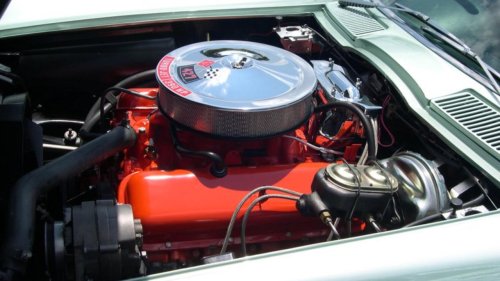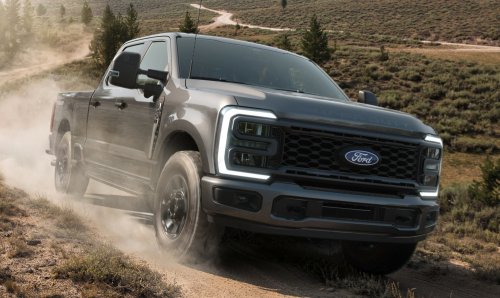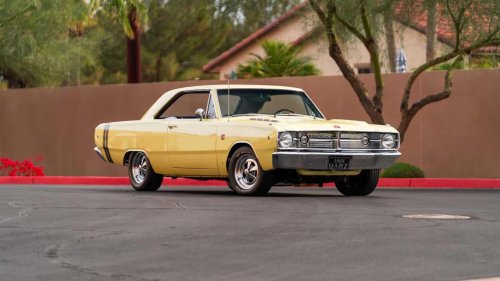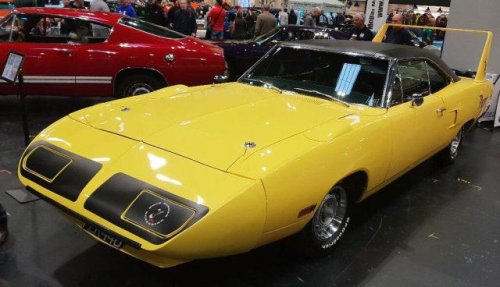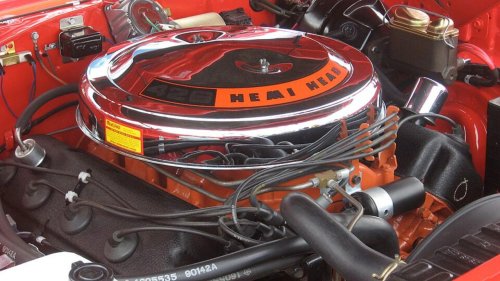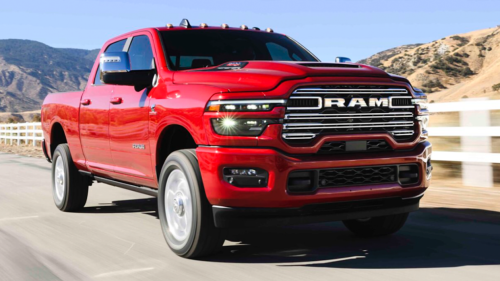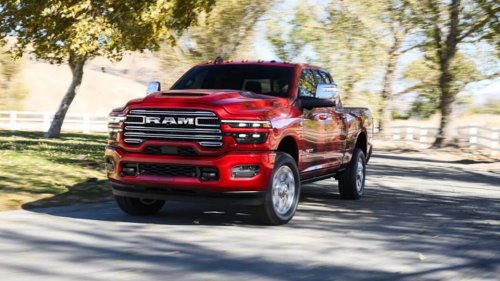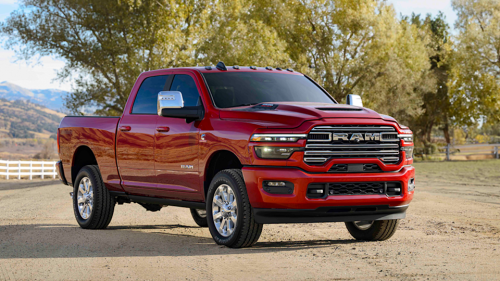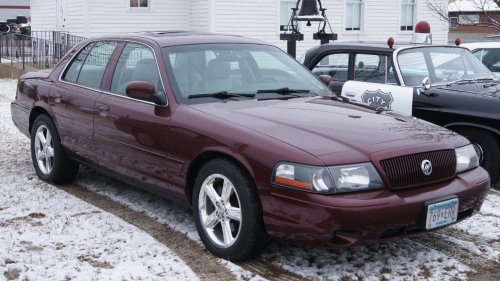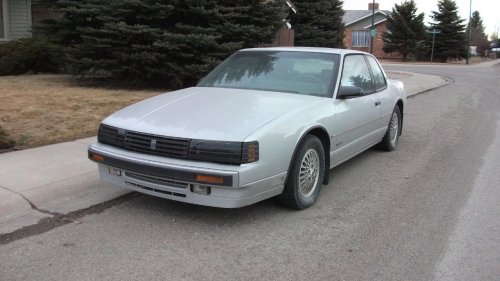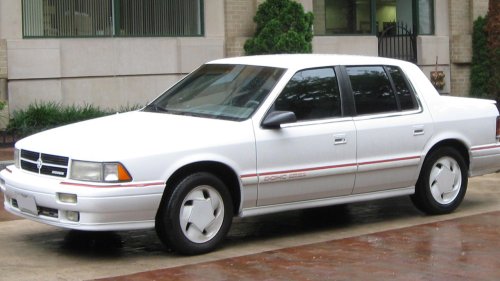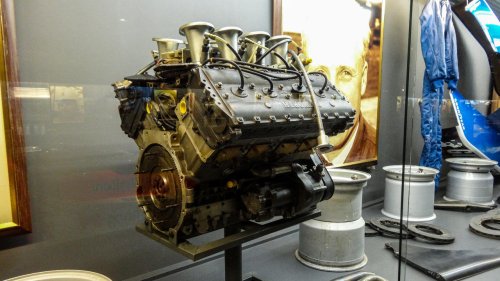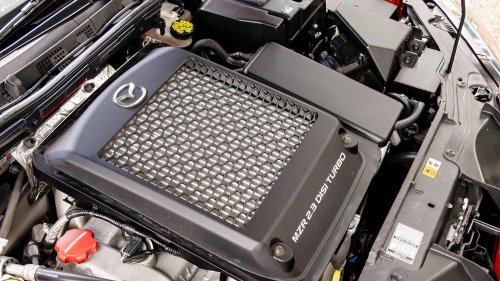
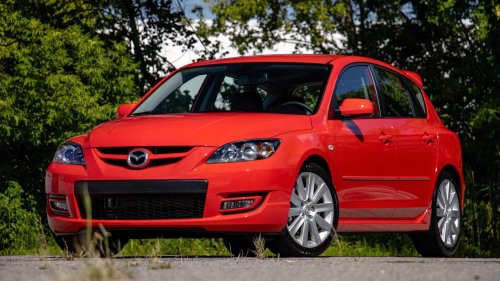
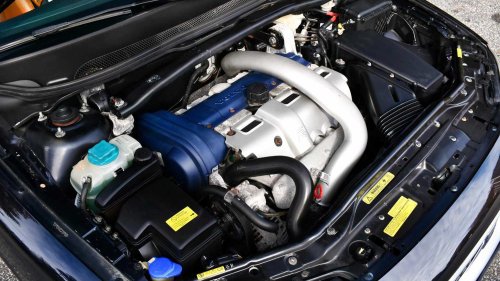
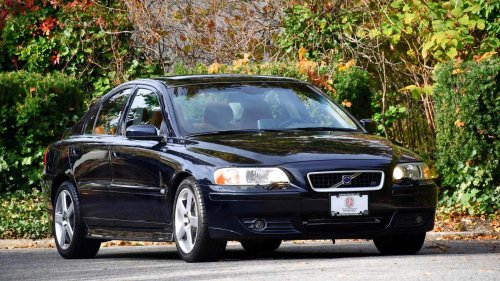
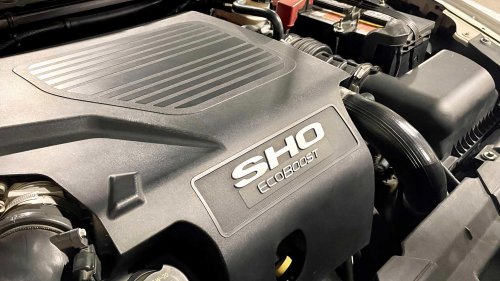
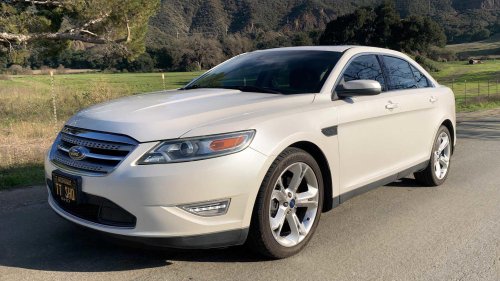
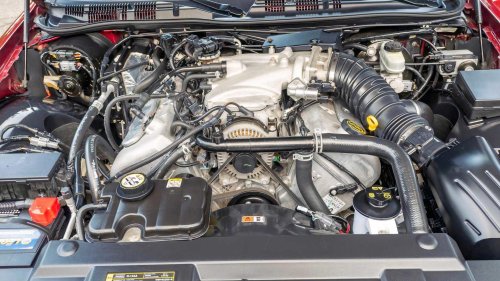
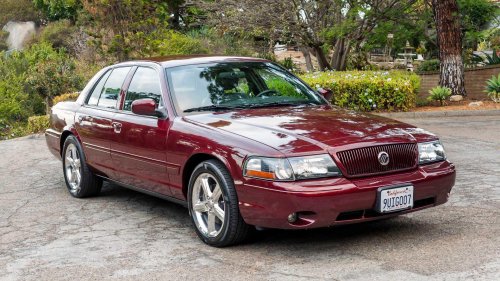
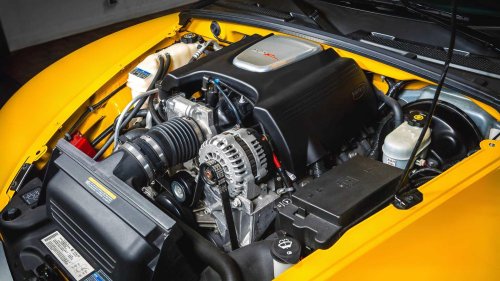
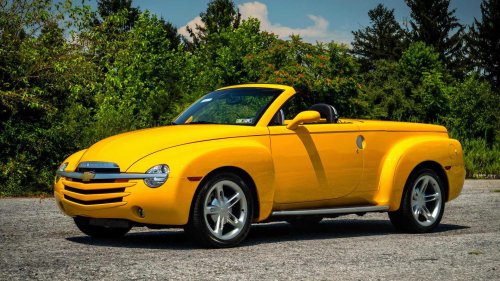
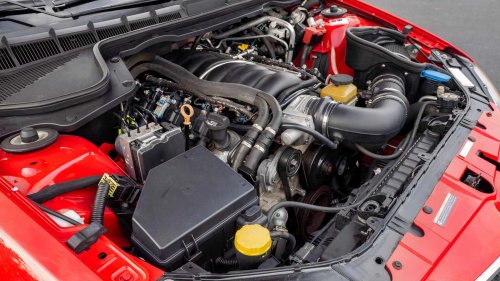
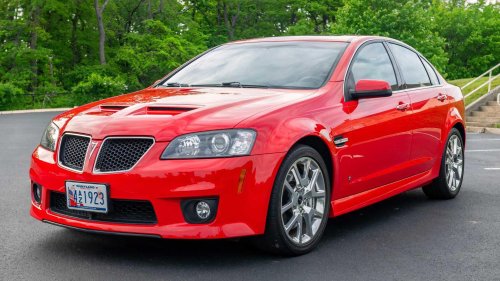
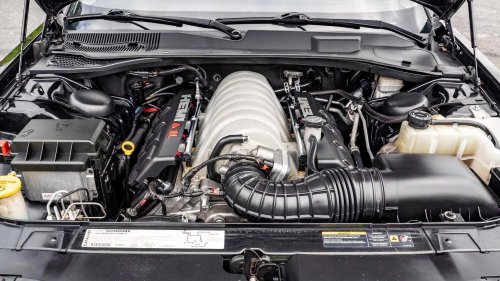
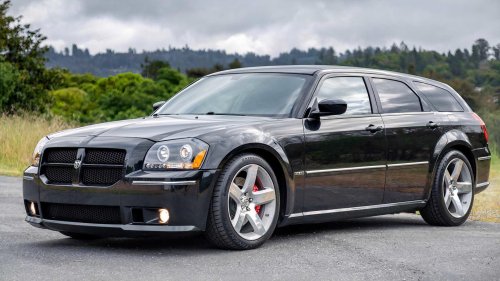
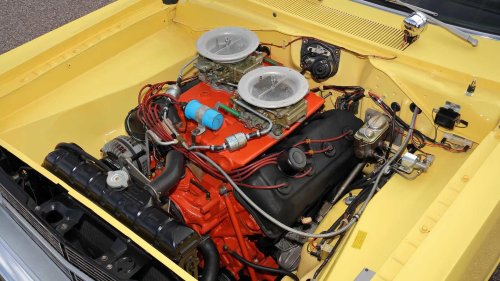
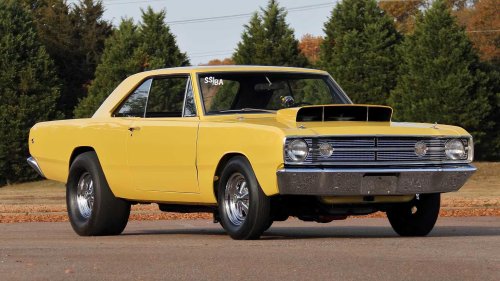
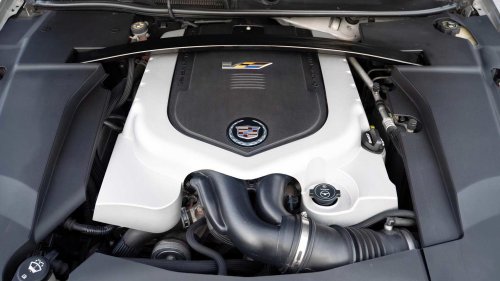
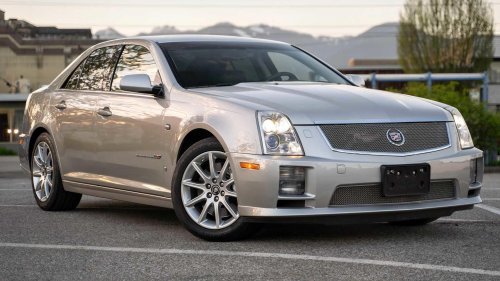
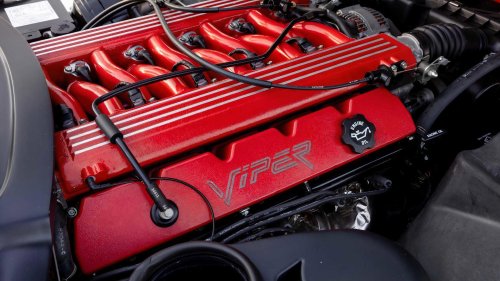
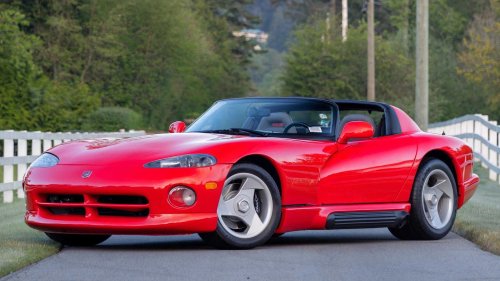



















One of the coolest aspects of the custom car scene is when an insanely powerful engine gets stuffed into a mundane ride. Back in the day, Baldwin Motion did some dealer mods on Chevy Vegas that were equipped with 500-horsepower race-tuned 454ci big-block V8s, which is exactly as awesome as it sounds. The early days of the NHRA experimental classes were also a great source of things that should not be, like Bob Glidden's custom 1972 Ford Pinto that could rip an 8.83-second quarter-mile, which was definitely not achieved with the stock 2.0-liter I-4.Even cooler is the fact that many automakers shoehorned impossibly potent engines into factory cars that had no business being that freaky fast. These are mostly family rides and daily drivers that came with way too much juice for the average person to handle, but there were also some sporty cars with excessive raw power that inexperienced drivers weren't equipped for. Here's a list of some forgotten high-performance doom-bringer engines that turned sleeper cars into living nightmares on wheels.All the specs and performance information provided in this article are courtesy of the respective car manufacturers. The engines on this list have been ranked according to their factory horsepower ratings, from least to most powerful. Mazdaspeed3's 2.3-Liter MZR DISI Turbo I-4 Maximum Power: 263 HP Bring a Trailer Generally speaking, an inline-four-cylinder engine isn't considered wild or over-the-top, but Mazda managed to make a pretty hellacious one with the 2.3-liter DISI turbo. As the name would suggest, it was a small-displacement turbocharged engine that was introduced in 2005 and spat out an impressive 263 horsepower. Mazda’s 2.3-liter DISI turbo was part of the MZR family, and while Mazda did run MZR engines in various motorsport programs, this turbocharged version was always destined for road cars. Thankfully so, because it became one of the hottest four-cylinders of the 2000s. Engine Specifications And Applications Bring a Trailer 263 ponies isn't the most power anyone has ever heard of in a car today, but when that set of wheels is a compact like the Mazdaspeed3, suddenly it's a power-to-weight ratio champion. That kind of oomph in a 3,185-pound car helped the 2007 Mazdaspeed3 become a super-accelerator with a 5.9-second 0-60, 14.2-second quarter-mile, and 155 MPH top speed. We get that the "hot hatch" is a thing, but it doesn't make it any less absurd that a dorky hatchback like this possesses muscle car-like power.Production Years: 2005-2012 Displacement: 2.3-liter Power: 263 HP Torque: 280 LB-FT Noteworthy Applications: 2007 Mazdaspeed3 2006 Volvo S60R's 2.5-Liter B5254T4 I-5 Maximum Power: 300 HP Bring a Trailer The Volvo B5254T4 engine may not have a very peppy name, but it certainly packed the pep with a pedal stomp. The 2.5-liter turbocharged inline-five-cylinder produced 300 horsepower and nearly as much pound-feet of torque. Introduced in 2004, the mighty I-5 helped Volvo shake off its reputation for conservative vehicles and made it a player in the performance market. Engine Specifications And Applications Bring a TrailerVolvo cars got a lot less boxy in the new millennium, but that's not to say they were actually cool-looking. The 2004-2007 Volvo S60R was the lucky recipient of the B5254T4 engine, which made it fast as hell, but unless it was flying by at top speed, nobody would have noticed its bland styling. While it's sufficiently awesome that this ho-hum sedan is a 13-second car, anyone who is attracted to it probably shouldn't have a vehicle that can top out at 155 MPH.Production Years: 2004-2007 Displacement: 2.5-liter Power: 300 HP Torque: 298 LB-FT Noteworthy Applications: 2006 Volvo S60R 2010 Ford Taurus SHO's 3.5-Liter EcoBoost V6 Maximum Power: 365 HP Bring a TrailerThe Ford EcoBoost series of turbocharged four and six-cylinder engines are marvels of modern automotive technology, producing the kind of power the company's big-block V8s back in the classic muscle car era. The first-gen 3.5-liter twin-turbo EcoBoost V-6 generated an insane 365 horsepower, versus the claimed 335 hp from the 1969 Mustang Mach 1 428ci Cobra Jet V8. In the real world, these two engines are more closely matched, but this still exemplifies just how far the tech has advanced. Engine Specifications And Applications Bring a Trailer The Taurus SHO is Ford's most famous sleeper car as well as one of its biggest mysteries. It is by no means a sporty ride, but brings incredible performance, which begs the question of "why not just get a Mustang?" The 2010-2019 Taurus SHO was its fourth and final generation, but Ford sent it out in style with the 365-horsepower twin-turbo V6, making it the baddest version of the less-than-slick four-door sedan. Those choosing substance over style could rip a 13.6-second ET, which was three-tenths of a second quicker than a '69 Mach 1 Cobra Jet.Production Years: 2010-2019 Displacement: 3.5-liter Power: 365 HP Torque: 350 LB-FT Noteworthy Applications: 2010 Ford Taurus SHO 2004 Mercury Marauder's Ford Modular 4.6-Liter V8 Maximum Power: 390 HP Bring a Trailer The 5.0-liter V8, from the 1969 Boss 302 to the 1980s Fox Boy Five-Oh!, has played a major role in Ford performance cars – especially the 1980s Fox-body Mustangs and early 1990s Mustang GTs and SVT Cobras – before being replaced in the mid-1990s by Ford’s 4.6-liter modular V8. By 1996, the Mustang didn't have those 302 cubic inches that had become synonymous with the iconic pony car. The 4.6-liter V8, however, was much more powerful, with variants that could blast out up to 390 horsepower. Engine Specifications And Applications Bring a TrailerThe Mercury Marauder is the most wicked car name of all time, as well as one of the least appealingly styled sets of wheels to roll out of Detroit. Not only didn't the name and design match, but the boring four-door sedan was at odds with its tremendous power. Equipped with the 4-valve DOHC version of the 4.6-liter, the 2003-2004 Marauder had 302 horsepower at its disposal, which was a lot for back then. Since this car was aimed at thrifty grandparents, its 146 MPH top speed was definitely too wild.Production Years: 1991-2014 Displacement: 4.6-liter Power: 390 HP Torque: 335 LB-FT Noteworthy Applications: 2004 Mercury Marauder Chevrolet SSR's 6.0-liter LS2 V8 Maximum Power: 400 HP Bring a TrailerMaking its debut under the hood of the 2005 C6 Corvette, the 6.0-liter LS2 V-8 is a great but forgotten GM engine. Cranking out an even 400 horsepower and 400 pound-feet of torque split, the LS2 topped every other American V8 in the early 2000s. It also saw duty in the weird Pontiac GTO reboot, making it the most unexpected fastest muscle car of the entire decade, beating out the Dodge Challenger and Charger for top speed. Engine Specifications And Applications Bring a Trailer Speaking of weird and unexpected, Chevy came out with the SSR convertible pickup that was meant to copy the classic styling of the Advanced Design trucks of the 1950s, but instead, it was one of the goofiest things the Bowtie ever produced. It's hard to say what type of engine would be a match for this eye-sore, because nothing goes with something this silly, but the 390-horsepower version of the LS2 seemed out of place with the 2005 SSR. Maybe Chevy gave it a 5.5-second 0-60 acceleration so owners could get away from the laughter quickly.Production Years: 2004-2009 Displacement: 6.0-liter Power: 400 HP Torque: 400 LB-FT Noteworthy Applications: 2005 Chevrolet SSR Pontiac G8 GXP's 6.2-Liter LS3 V8 Maximum Power: 415 HP Bring a Trailer Obviously, the Corvette is a priority for GM as the halo car for the entire corporation, so when they came out with the amazing 6.2-liter LS3 engine in 2008, the iconic sports car was first in line. When Chevy brought the Camaro back in 2010, it got to battle Mustangs and Challengers on the streets with a 430-horsepower version of the LS3, and did its share of blowing doors off. In the G8 GXP, however, the LS3 was detuned to 415 hp and 415 lb-ft, which was still enough to make it one of the biggest sleeper sedans of the decade. Engine Specifications And Applications Bring a Trailer The 6.2-liter LS3 was clearly designed for sporty and muscular rides, so when Pontiac put one in their milquetoast G8 GXP full-size sedan, it was kind of surprising. Literally, if a car doesn't look cool, there is absolutely no reason why it should be fast. The Pontiac G8 was actually a rebadged Holden Commodore, which is the antithesis of cool, and that raging GM V8 was simply too much for it. This car had a 0-60 in 4.8 seconds and a quarter-mile time in the low 13s before it topped out at 176 MPH, which is something no four-door should be able to brag about.Production Years: 2008-2017 Displacement: 6.2-liter Power: 415 HP Torque: 415 LB-FT Noteworthy Applications: 2009 Pontiac G8 GXP Dodge Magnum SRT-8's 6.1-Liter Hemi V8 Maximum Power: 425 HP Bring a Trailer The 6.1-liter V-8 is for sure the most underappreciated of the resurrected Chrysler Hemi engines. The 5.7-liter Hemi is still going strong, as is the 396 Hemi, and the 6.2-liter Hellcat/Demon is a modern legend. Introduced in 2005, the 6.1-liter Hemi was the first Mopar V8 to produce 425 horsepower since the iconic 426 Street Hemi that powered Mopars to dominance in the Golden Age of American Muscle. Only made for about five years, the 6.1 quietly pushed Dodge back to the head of the pack in the early stages of the modern muscle car era. Engine Specifications And Applications Bring a Trailer Dodge also brought back the Magnum nameplate in 2006 as a peculiar-looking station wagon kind of thing. With five points of entry, the Magnum had three doors too many to qualify as a muscle car, but somehow the four-door 2006 Charger got a pass because it was such an incredible relaunch. The Magnum SRT8 did get a smoking 425-horsepower 6.1-liter Hemi, but that only added to the level of wrong this vehicle possessed. Station wagons shouldn't go 0-60 in 4.8 seconds, have a 13.2-second quarter-mile time, and hit 173 MPH, but this one did.Production Years: 2005-2010 Displacement: 6.1-liter Power: 425 HP Torque: 420 LB-FT Noteworthy Applications: 2006 Dodge Magnum SRT-8 Where research meets the right dealBrowse This Model 1968 Dodge Hemi Dart's 426 Race Hemi V8 Maximum Power: 425 HP Mecum Despite being extremely rare, with less than 10,000 units across six production years, the Chrysler 426 Street Hemi is anything but forgotten, as the most sought-after classic muscle car engine. Lesser known, however, is the 426 Race Hemi, whose numbers are not reflected in the Street Hemi production. The race version of 426 Hemi managed to get banned from both NASCAR and NHRA competition for being so explosively powerful. Both the Race and Street versions were rated at 425 horsepower, but the Race Hemis were tuned by teams to achieve unreal performance. Engine Specifications And Applications Mecum When the 426 Hemi hit the streets in 1966, it was available to almost every Dodge and Plymouth intermediate car, before being restricted to muscle car-specific models. As a compact, the Dodge Dart was out of the 426 Hemi sweepstakes, but in 1968, a workaround was discovered by partnering with Hurst Performance to build some special-edition factory drag cars. There was a very good reason why Chrysler didn't want compacts to be equipped with the 426, because the '68 Hemi Dart was terrifyingly powerful, and even came with a disclaimer that it should only be used on the track with professional drivers. Yet, it was street-legal and sold at dealerships, so there were probably some noobs who got overwhelmed by one.Production Years: 1964-1971 Displacement: 425ci Power: 425 HP Torque: 490 LB-FT Noteworthy Applications: 1968 Dodge Hemi Dart Cadillac STS-V's Northstar 4.4-Liter LC3 Maximum Power: 469 HP Bring a Trailer In 1992, GM rolled out the Northstar V-8s that would be the only engines Cadillac would use for a decade. Initially released as a 4.6-liter naturally-aspirated V8 that produced up to 300 horsepower, a 4.4-liter LC3 supercharged version came out in 2006 that exploded with 469 fire-breathing horses. The Northstar was more than just an engine, but an entire system that included a four-speed automatic transmission, road-sensing suspension, Bosch anti-lock brakes, and Magnasteer speed-variable power steering. Engine Specifications And Applications Bring a Trailer The 2009 Cadillac STS-V wasn't hideous, but it also wasn't something that anyone would notice. That is, until one blew off the line like it was shot out of a cannon. We can all agree a 4.4-second 0-60 time, a quarter-mile in the 12s, and a 185 MPH top speed is way too much for an unassuming family sedan. Most people can't handle anything over 300 horsepower, so the 469 pony output of the STS-V was just asking for trouble and something a lot of folks would find difficult to keep on the road.Production Years: 2006-2009 Displacement: 4.4-liter Power: 469 HP Torque: 439 LB-FT Noteworthy Applications: 2009 Cadillac STS-V Where research meets the right dealBrowse This Model Dodge Viper's V10 Maximum Power: 645 HP Bring a TrailerWe could focus solely on the first-generation Viper and its 400-hp 8.0-liter V10, but really this goes for any generation Viper ever made. They are incredible, sure, but also feature some of the craziest engines an automaker ever decided to put in a two-seat roadster. Before the Viper, American automakers had settled on eight being the max cylinder count for a high-output engine, but Dodge knew that they had to break all the rules with their radical Viper project in the early 1990s.Trying to capture a European-style roadster feel with some modern flair, they took things up a notch or two with the 8.0-liter V10. The engine block was actually designed with the help of Lamborghini, which was owned by Chrysler at the time, and definitely had some Italian supercar credentials. Originally rated at 400 horsepower, it increased with each successive generation until it became a 645-horsepower beast. Engine Specifications And Applications Bring a Trailer Seeing how the Viper is a high-performance vehicle, many readers may call shenanigans on us for including it on a list of cars with engines that were too wild, but there is a method to this madness. When the Viper first hit the streets in 1992, it had absolutely no safety features like anti-lock brakes or traction control, and when combined with that raw horsepower, it made for an extremely dangerous ride for inexperienced drivers. Interestingly, the Viper’s V10 wasn’t limited to sports cars, as Dodge also dropped it into the Ram SRT-10 (2004–2006), creating the fastest production pickup of its era with 500 hp and a 0-60 time under 5 seconds.Production Years: 1992-2010, 2012-2017 Displacement: 8.0-8.3-liter Power: 400-645 HP Torque: 450-600 LB-FT Noteworthy Applications: 1992-2017 Dodge Viper, Where research meets the right dealBrowse This ModelSources: Chrysler, Ford, GM.