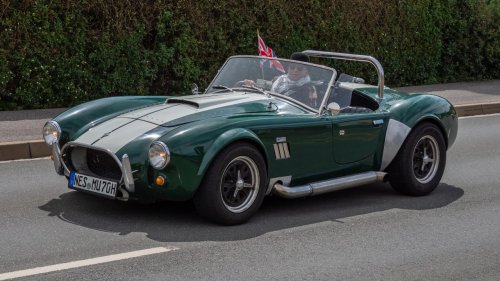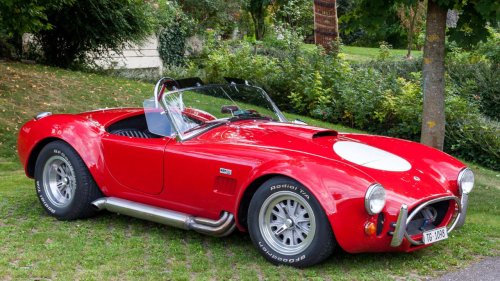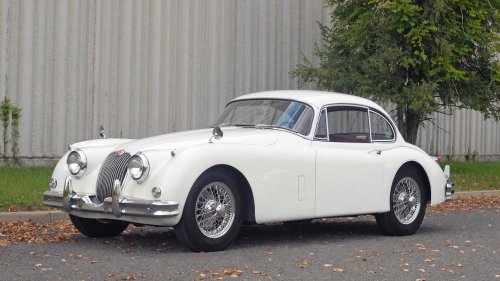
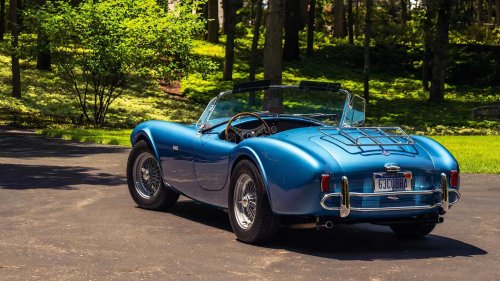
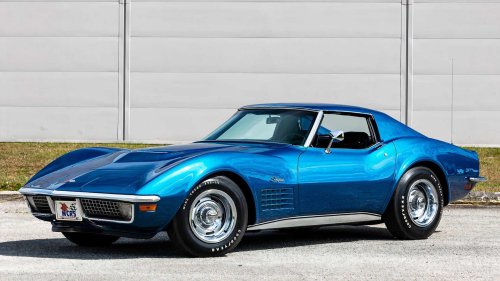
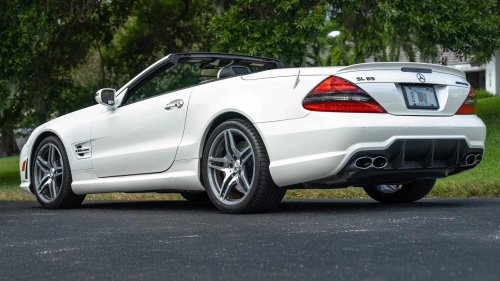
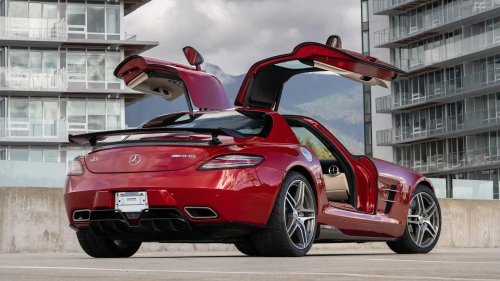
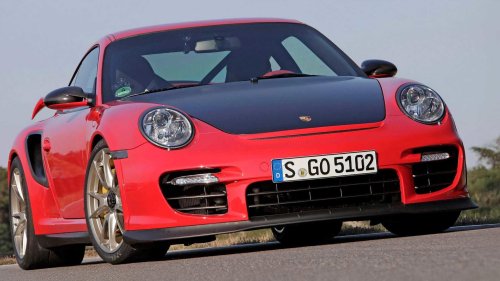
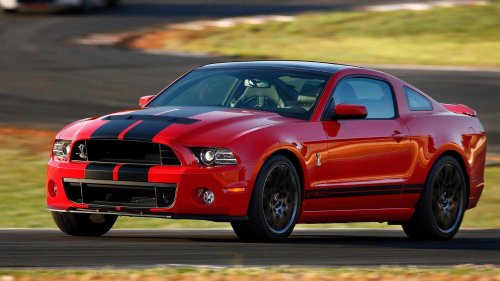
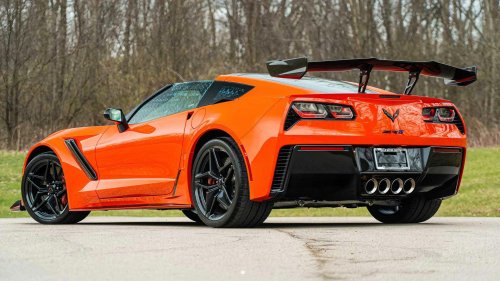




















From a young age, car enthusiasts are trained to judge cars by their numbers. Car magazines are filled with charts and tables for every vehicle. Sports cars are the favorite fodder for comparisons and shootouts to determine which models have the most horsepower, the quickest 0-60 mph times, and the highest top speeds. Like just about everything in life, too much of a good thing can ruin an otherwise great experience. It gets more nuanced with cars because it isn't as simple as just a horsepower number on paper. It's possible for one car to feel perfectly balanced with 500 horsepower, while another car might be a handful with half that.I've never bought into the idea that you need to feel like you're in danger to have fun driving a car. I've been doing this for several decades, and I've worked with countless professional drivers. I've never come across one who enjoys a car that's difficult or dangerous. Thrilling, fast, powerful, those qualities are all great. But, people who are actually driving for a living, whether they're journalists, development engineers, or race car drivers, actually want to spend time trying to wring performance out of a sports car that wants to hurt them. The list below is made up of cars I've driven, and for reasons I'll give for each one, I feel would be better off with less power. 1959 Jaguar XK150 S Bring A Trailer1959 Jaguar XK150 S SpecificationsToday's Jaguar seems more focused on style and luxury more than flexing muscles. Sure, the F-Type had some big power numbers and the SVR badge graced the sides of some super sedans, but that's in the past. There was a time when the letters XK were at the top of the lap time sheet. I drove a 59 XK150S that was basically a brand-new car, recently restored with a fresh 3.8-liter inline-6 producing more than the factory-rated 265 hp. It was the most British experience imaginable, right-hand drive, on soaking wet roads, with a paper map. The car was "running impeccably" unless it was between 2,000 and 3,500 rpm. Oh, the clutch is a bit sticky, and mind the tires – they aren't particularly good in the cold.Not only is the compound not good in the cold, but the tires on my mountain bike are wider. The entire drive was an exercise in countersteering and wild burnouts, while my jetlagged brain worked out which direction to enter the traffic circles. I've since driven similar XKs in the dry, and while better, I've decided it isn't so much that they have too much power, as they only drive well at wide open throttle. Still, 265 hp in the '50s, when most cars were pushing low 100s, was no joke. 1963 Shelby 289 Cobra Bring A Trailer1963 Shelby 289 Cobra SpecificationsI have an interesting relationship with Shelby cars. I worked for Shelby American for several years as a young mechanical engineering student. On occasion, we'd get to drive the cars to compensate for the long hours and low pay. After becoming a journalist, I have been fortunate enough to drive a variety of Shelby cars. It helps compensate for the long hours and low pay. The Cobra is based on the AC Ace, a British sports car weight-optimized with just enough torsional rigidity for every one of the 100 hp from AC's 2-liter screamer inline-6.The 289 cars I've driven, rated at 271 hp, all actually had north of 300. One car had good throttle modulation but still required a light touch to not blast the tires loose at any speed. Most, however, were less drivable. A combination of "I want it to feel like a racer" and "the carbs were working fine yesterday." Still, even at the best of times, a flimsy ladder frame, tires that will fall into cattle guards, and an American V8 aren't an ideal combination. It's hard to argue with the racing success of these cars, but the track and the street are two different things. 1965 Shelby 427 Cobra Bring A Trailer1965 Shelby 427 Cobra SpecificationsThe 289 Cobra's 3-inch ladder frame was upgraded to 4-inch for the 427. Anyone who has leaned a ladder against a house and precariously stood as it twists and creaks, might wonder why it was used to build a car around, instead of say, a truss. Again, Cobras are legendary cars from a time when kids ate candy cigarettes and death was a part of racing. The 427 Cobratook the formula of the 289 and added bigger fenders for wider tires, improved suspension, and, of course, a 7.0-liter engine. At 2,500 lbs and at least 485 hp, acceleration is anywhere from brisk to suicidal. They are better on modern tires, but still an absolute handful that can rarely, if ever, utilize full throttle. 1971 Chevrolet Corvette LS6 Bring A Trailer1971 Chevrolet Corvette LS6 SpecificationsBy 1971, Chevrolet had begun worrying about pollution, noise, and to some extent, fuel economy. A Corvette with 425 hp was seen as the ideal version, and these cars were relatively rare. But, even with that kind of power, Zora Arkus-Duntov, father of the Corvette, was still quick to point out the car could easily gain another 50 hp with an exhaust upgrade alone. Old Vettes don't have the refinement and sophistication we associate with modern versions – they flex and creak while the car wanders around at speed. The steering is sloppy, and the power brakes operate on vacuum and faith. I'm not sure whether there's another car that satisfies the Speed Racer Mach V fantasy as well as this one. 2009 Mercedes-Benz SL65 AMG Bring A Trailer2009 Mercedes-Benz SL65 AMG SpecificationsIn 2009, Mercedes offered an SL63 AMG with the 6.2-liter naturally aspirated V-8, which is God's perfect engine. Eight cylinders are far too plebeian for some Mercedes customers, so the SL65 AMG not only added four more cylinders but two turbos as well. Yes, a twin-turbo V-12 engine in a grotesquely luxurious convertible. I had a press car for a couple of weeks. Driving at parking lot speeds, you can turn the wheel and just blip the throttle, and the car would turn 90 degrees.On the freeway, rolling on the gas at 80 mph would cause the back end to shimmy. The car came with active body control, which stopped roll, dive, and squat, which is one of the main ways a car communicates with the driver. I will not generalize Mercedes customers, but 738 lb-ft of torque going to the rear wheels only, and very little feedback seems to be a good way to eliminate many of them as future customers of yours, or any brand. 2010 Mercedes-Benz SLS AMG Bring A Trailer2010 Mercedes-Benz SLS AMG SpecificationsThe return of the Gullwing. No car is as recognizable as a Mercedes SLS with its Gullwing doors open. The modern version was an amazing recreation powered by one of the best engines ever, the M159 6.2-liter V-8. I've turned many laps at many different tracks in the SLS. It is not a great track car. It uses a front-mounted engine, although it sits so far back it is technically mid-engine, which is connected to a rear-mounted transaxle with a torque tube. The rigid unit is ideal for performance... on paper. At some point in development, an NVH engineer won the argument with a chassis engineer, and the whole drivetrain unit was mounted on bushings way too soft for the task.The car had big secondary motions as first the chassis took a set in corners and then the powertrain hip-checked the whole car out of shape. The car slid, resettled, and it started over. It was more prone to this repeated hula because the rear tires were so easily overpowered. The first time I did figure-8 testing with an SLS resulted in a big smoky snap spin. And this was at a time when I was driving at least one different 500+hp car per week. 2011 Porsche 911 GT2 RS (997) netcarshow.com2011 Porsche 911 GT2 RS (997) SpecificationsWhenever someone asks me about my favorite car or the best car in the world, my answer is always a Porsche 911. I've owned and raced them. There is nothing that's a better overall combination of attributes and is as enjoyable to drive as the base 911. I never want to drive the 997 GT2 RS again. At the time, the 911 Turbo made 500 hp and put it down with all four wheels. This car attempted to put 620 hp down through just the rear.But that's not all. The GT2RS suffered from a 38/62 front/rear weight bias, but the tire contact patches were staggered 43/57 front/rear. I tested this back to back with the GT3 RS, which is one of the best performance cars ever built, hands down, so it was even a bigger shock at the lack of composure. The power from the RS's bigger turbos came on like a sledgehammer. It would understeer going into turns, and you had to be incredibly patient to get on the throttle coming out. The GT3 RS was living proof of what the car could have been with less power and more controllable delivery.Find [[default_name]] and more cars for sale on our MarketplaceShop Now 2013 Ford Mustang GT500 Ford2013 Ford Mustang GT500 SpecificationsThe year before driving this car, I had spent a considerable amount of time in the Mustang Boss 302 Laguna Seca – an amazing car that I still look up every once in a while to track values. The Boss made do with 444 hp compared to the GT500's 662 hp. The first night I drove the GT500, I did a legitimate burnout starting at 50 mph, with my wife in the car on the way to dinner. She's come to expect such uncivil behavior from me in uncivil cars.While the car did put in impressive numbers at the test track in a straight line and around the figure-8, I learned later on that it wasn't so great in canyons or on a road course. All that torque is tough to put down, and not just for me; the pro we used for lap times at Laguna Seca was also let down by Ford and Carroll's final project. Over 600 hp and 600 lb-ft was a huge number 12 years ago, and it still is today. Even with modern tires, suspension tech, and stability control, it's hard to put that power down. Back then, the supercharged snake had no hope without drag slicks.Find [[default_name]] and more cars for sale on our MarketplaceShop Now 2019 Chevrolet Corvette ZR1 (C7) Bring A Trailer2019 Chevrolet Corvette ZR1 (C7) SpecificationsThe 2019 Corvette ZR1 is another car that is betrayed by its "lesser" siblings. The base C7 Stingray was a huge leap forward for the Corvette in every way. When the Grand Sport and Z06 models hit, they were legitimate supercar contenders at a fraction of the price. I attended a very early sneak peek of the supercharged monster and thought I was looking at what could be the street car around most racetracks. Sadly, all that extra power didn't translate into that much extra performance. One of the biggest advantages of the ZR1 was extra downforce, but even with that, it couldn't put its 755 hp down as well as the Z06 managed 650 hp. As another example, the Performante's V-10 "only" made 630 hp, and it used all four wheels to put it down. It's worth noting the obnoxious Lambo is also faster around a track, even with the big power difference. The current ZR1, which I haven't driven, appears to be suited to the huge power numbers; maybe its time has come.Find [[default_name]] and more cars for sale on our MarketplaceShop Now