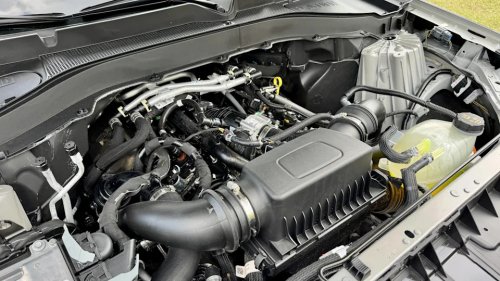
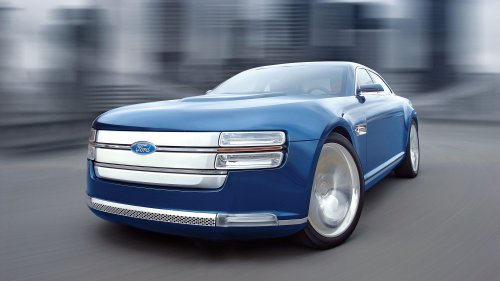
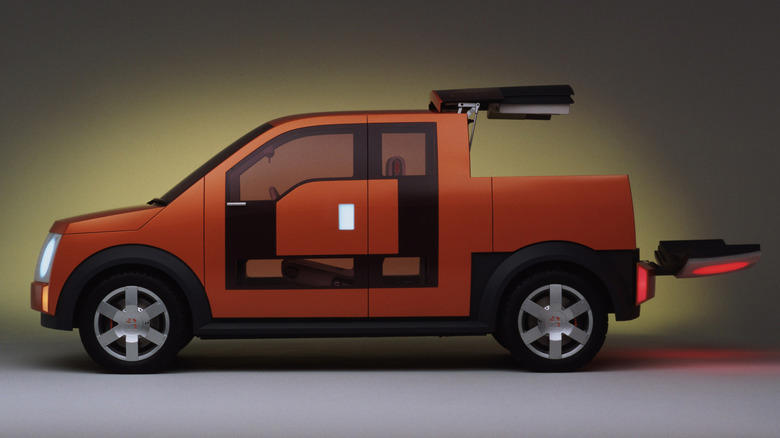
A familiar Ford underneathBefore one can discuss the futuristic styling of either one of the three 24.7 models, there are a few key components to the concept that are immediately recognizable to any Ford fan. The first is its engine. Unlike every concept from today, the Ford 24.7 models were not electric vehicles, they were, in fact, powered by a very average drivetrain, the 2-liter "Zetec" four-cylinder found in the Ford Focus from the time. The entire concept is built on the Focus platform. Ford did not note how much horsepower the 24.7 line would generate, but in a 2000 model year Focus, the 2-liter put out an adequate 110 horsepower.In classic early-2000s style, it featured matte-colored wheels and custom Goodyear tires. Ford's press release also goes out of its way in announcing that the concepts feature LED headlights and taillights that "last the lifetime of the vehicle."24.7 TruckWhile the 24.7 Wagon and Coupe could be genuinely useful (aside from the connected features) in a number of different places, the same can't really be said about the 24.7 Truck. In the year 2000, the market was not hurting for compact trucks as models like the Ford Ranger, Nissan Frontier, Mazda B-Series, and Toyota Tacoma were all mainstream successes. If it came to fruition, the 24.7 Truck likely wouldn't have captured the public's attention, at least the section of people who actually use a truck for truck stuff. It wasn't because the engine was too weak either –110 hp is plenty for light duty. It probably wouldn't have taken off simply because the bed is too short to carry anything very large. Most SUVs, crossovers, or station wagons would be capable carrying what the 24.7 could fit in its bed, negating the need for a truck in the first place. Still, the design has aged fairly well 24 years later. It might not have been a useful truck, but at least it looked interesting, and that's worth something.



















 +16 others