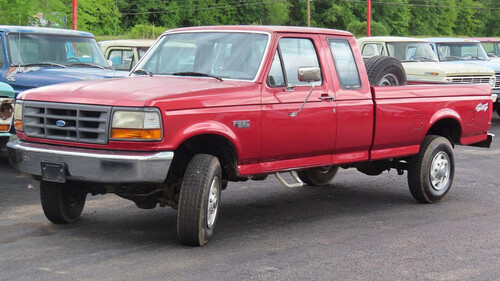
Morgan Labelle · 5 months ago@morganlabelle418Ford F-250 Buyer Legally Can’t Take His Truck Home Because Of A Robin Liked by+2 othersPost commentRelated PostsFord Never Built an F-250 Diesel Lightning, So This Shop Did 38 · Abigail Fortin · 1 months agoSEMA-Built 1994 Ford F-350 on 54-Inch Tires Brings Its Own Dance Floor to Mecum Las VegasDaniel Lewis · 12 days ago10 Trucks From The '70s That Look Better Than Today's Pickups 23 · Mia Fortin · 1 months agoFord Patents Beach Mode That Tracks The TideJacob Bouchard · 12 days agoTesla Cybertruck Rescues a Ford F-250 Pickup, and the Irony is Not Lost On the Car Community 31 · Amélie Labelle · 1 months agoFord Ranger MS-RT Champion Edition brings “bucket loads of style”Hannah Wilson · 13 days agoEvery Ford Truck Is Changing for 2027. Here’s What’s New for Each Model and What’s Coming Soon 29 · Matthew Wright · 1 months ago1968 Ford Shelby Mustang GT350 Convertible for Sale With 26k Miles ShownKaitlyn Brown · 13 days agoMost Reliable Diesel Engines of 2026, Ranked by What Went Wrong 58 · Chloé Wilson · 1 months agoHonda Pilot 4WD vs. AWD: What the i-VTM4 System Really DoesMadeleine White · 13 days agoTwo Ford F-250 Owners Found Each Other—and Fixed a 20-Year-Old Problem in a Parking Lot 93 · Alexander Tremblay · 1 months agoAustralian Plugin Vehicle Sales, September Update — Are Mainstream Media Finally Waking Up?Jackson Labelle · 13 days agoTest-Driving The Dog-Friendly 2026 Ford F-250 Super Duty 38 · Ethan Scott · 1 months ago7 Of The Most Powerful 8-Cylinder Engines Ever MadeJustin Moreau · 13 days ago1976 Ford F-250 Custom Highboy 4x4 For Sale With 454 Miles on the Build 90 · Evan Turner · 1 months agoCarroll Shelby's Personal 1967 GT500 Just Sold At An Online AuctionMadeleine Côté · 13 days agoDefender’s Wolf and Ford’s F-250 Are Taking Civilian Vehicles Into the Military 90 · Victoria Smith · 1 months ago1966 Ford Bronco by Vintage Broncos for Sale With 2,000 Miles on the BuildWilliam Anderson · 13 days agoRam 2500 Power Wagon Diesel Tested: They Said It Couldn’t Be Done 73 · Victoria Green · 1 months agoDoes The 'XL' On A Ford F-150 Mean Anything?Amélie Girard · 13 days ago




 +2 others