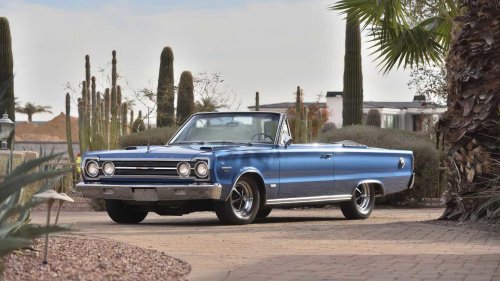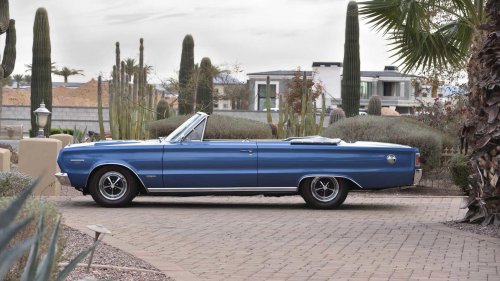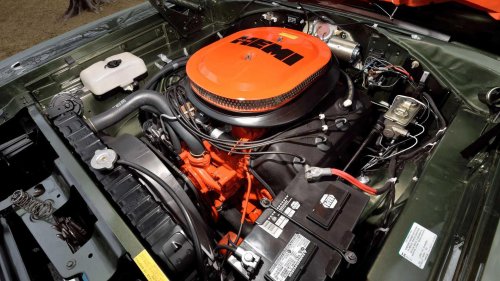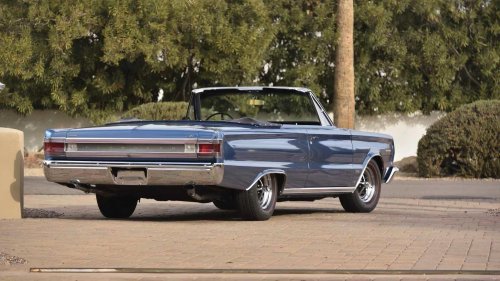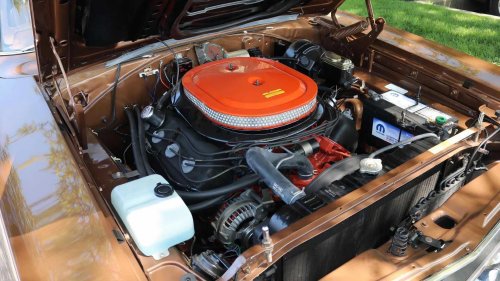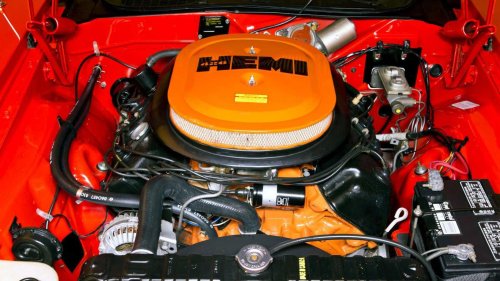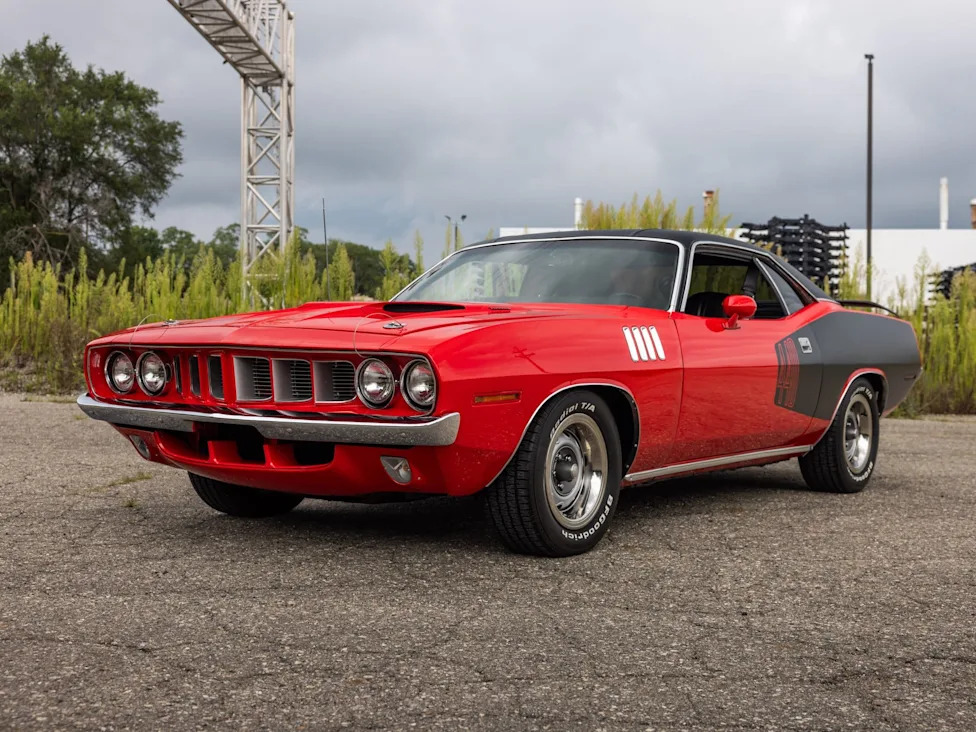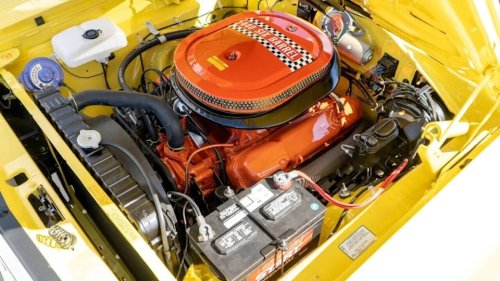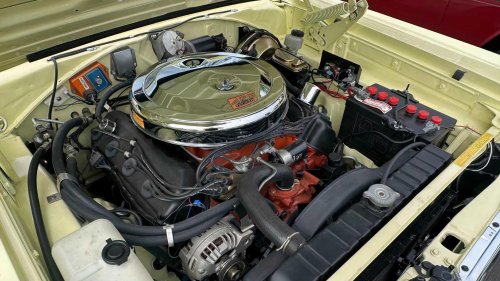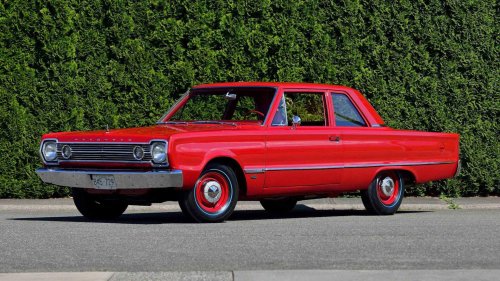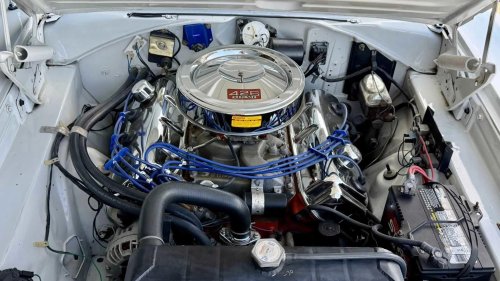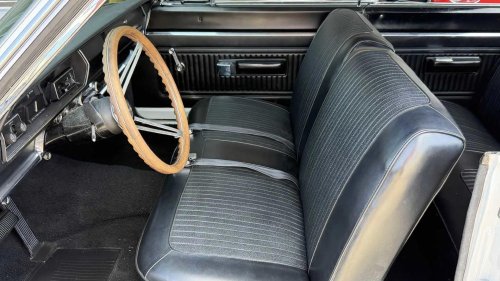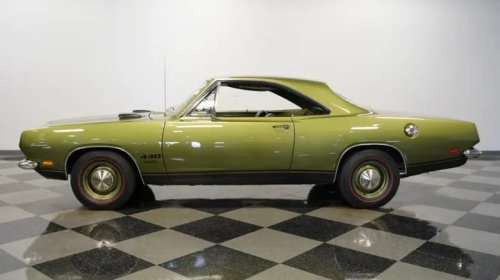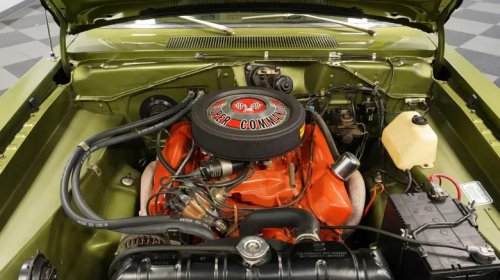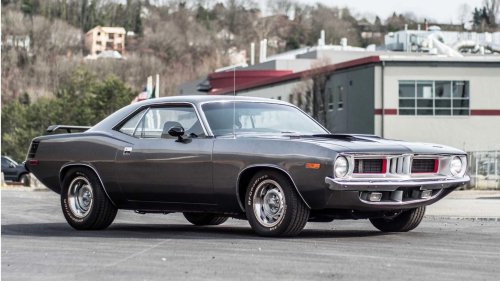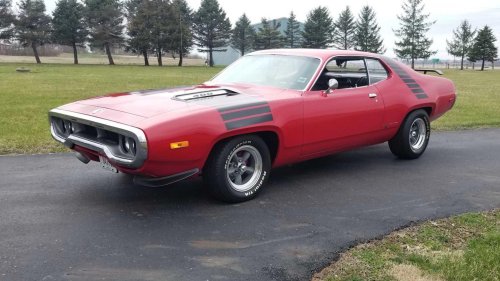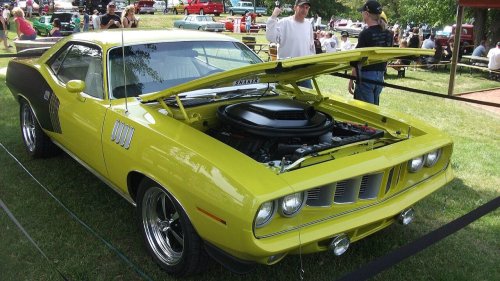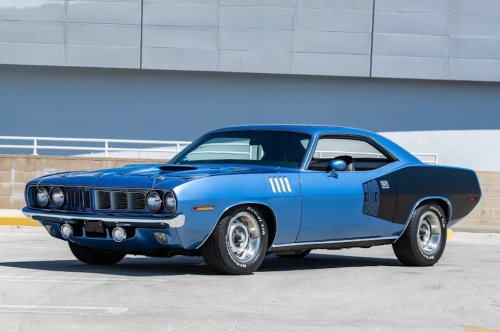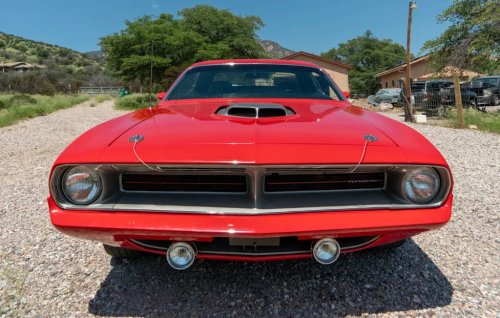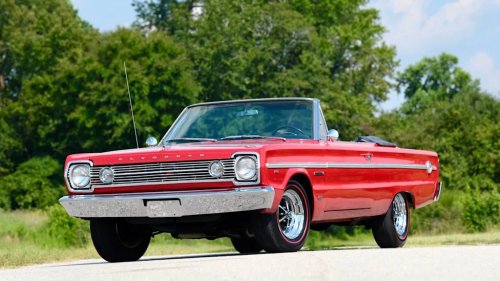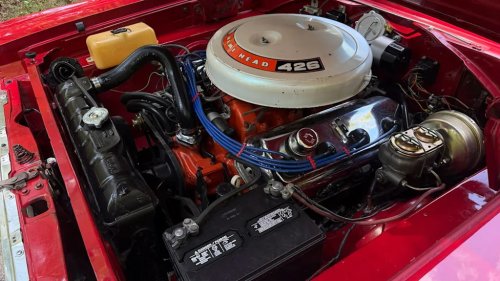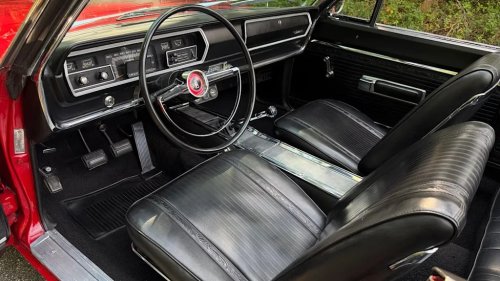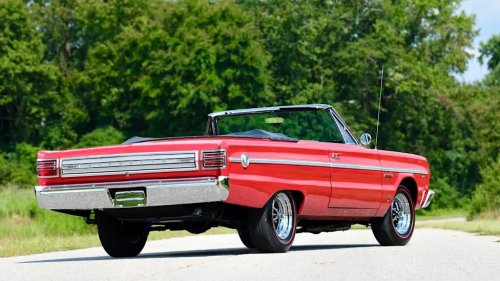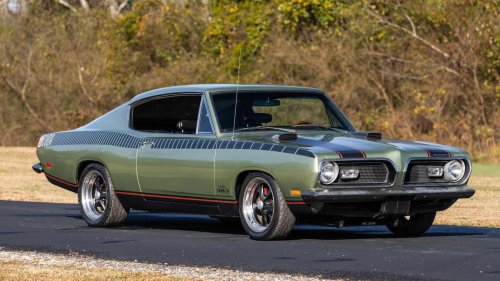
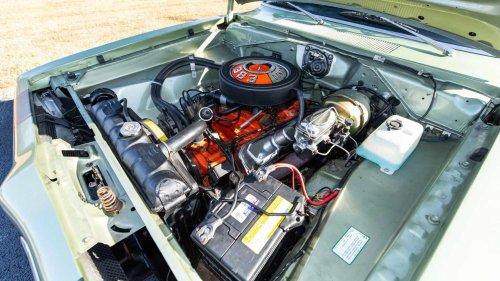
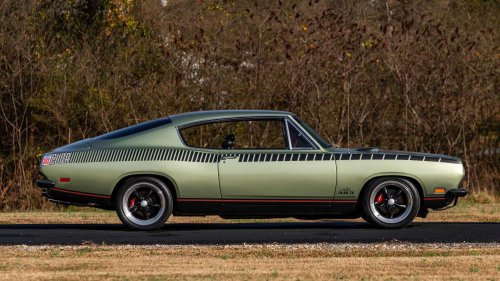
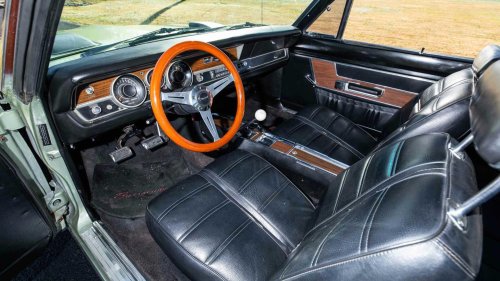
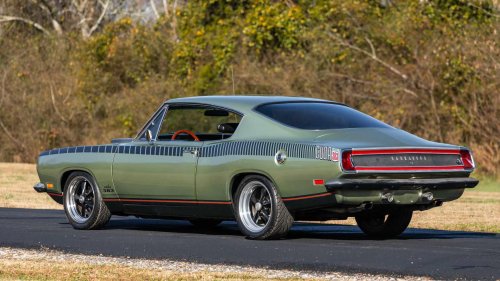
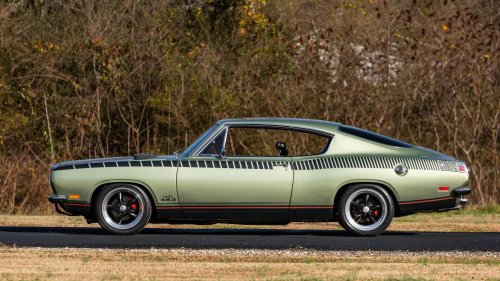



















In 1967, Plymouth engineers shocked the motoring world by cramming a massive 383-cubic-inch big-block V8 so tightly into a compact pony car that there was literally no room for power steering. This monstrosity turned out to be one of the rarest, strangest, and most overlooked muscle cars of the entire era. It was a 280-horsepower, 400-pound-feet-of-torque burnout specialist on Chrysler’s lightweight A-body platform, more than a year before “budget muscle” officially became a Detroit trend.This limited production vehicle became dramatically rarer than the likes of Mustang, Camaro, or even later Mopar legends. Although this car should've won the show the entire time, its historical importance didn't stop it from spending decades buried beneath the towering cultural shadow of the 1970 Plymouth Hemi 'Cuda—a shame, because this aggressive, overpowered machine was arguably the true turning point in Plymouth pony car history, a product so ambitious that its own chassis barely knew how to contain it. A Radical Reinvention: 1967 Plymouth Barracuda Formula S 383 Mecum AuctionsIn 1967, Plymouth had an identity problem. Between 1964 and 1966, the company had a legendary pony car that was pretty much a Plymouth Valiant cosplaying as a sports car, but it struggled to compete with the big boys. This was an era where it was extremely difficult to find a car that could seriously threaten the cultural phenomenon that was the Ford Mustang or the Chevrolet Camaro. So, by 1967, Plymouth had to really dig in and produce something more serious. Plymouth had to do something radical, like taking Chrysler's revised A-body platform, featuring a 108-inch wheelbase, and building a wider, dramatically more aggressive pony car with a lower stance and proper pony car looks.In an era where the pony car wars had rapidly escalated, Plymouth needed a new offering that would feature the more fashionable “Coke-bottle” body trend that was sweeping through Detroit. The company needed sharper body lines and sculpted fenders in muscular proportions designed to compete directly against the premium pony cars: the Chevrolet Camaro and Mustang. Plymouth had to produce something that felt almost exotic, and it had to come in a fastback, notchback coupe, and convertible body styles that would compete with the bigger boys. But with Ford and Chevrolet continuing to win the horsepower war, Plymouth also had to add mechanical credibility to its visual aggression. That was when the new powertrain was born. Shoehorning A Big-Block: The Engineering Gamble That Made The Formula S 383 Possible Mecum AuctionsThat vehicle was the 1967 Plymouth Barracuda Formula S 383, the second generation of the Barracuda. At its heart was the first big-block engine ever installed in a Barracuda, Chrysler’s legendary 383-cubic-inch B-block V8. This feat was so fascinating that the Chrysler B-block engine barely fit into the compact A-body engine bay, leading to unavoidable compromises. Imagine wanting to create a horsepower behemoth, but because of the restrictive exhaust manifolds required to squeeze the engine into place, output had to drop to 280 horsepower at 4,200 rpm, much lower than the 300 horsepower that other larger Chrysler platforms could unleash. But that compromise didn’t affect the engine’s monstrous 400 pound-feet of torque at just 2,400 rpm, making the Barracuda a brutally effective street machine with the kind of instant torque that makes a car feel violently quick in the real world.But that wasn’t the only compromise with the Barracuda. Power steering simply could not physically fit because the engine occupied nearly every inch of available space, meaning that if you got the Formula S package, you were stuck with manual steering, whether you liked it or not. That would've made parking the car at low speeds feel like a pro wrestling match. However, this didn’t stop the project from being fascinating. This made the Formula S 383 one of the earliest iterations of the “big engine, small car” philosophy, something that later defined the muscle-car era. This unrefined beast was also genuinely fast, with road tests from the era regularly praising its massive torque output and 7.5 to 8.0 seconds straight-line acceleration. More Than An Engine Swap: What The Formula S Package Actually Gave You Mecum Auctions But let's not think the Plymouth Barracuda Formula S was just a Barracuda with a larger engine, because Plymouth addressed suspension, braking, handling, and durability alongside raw horsepower in the Formula S package, building one of the most complete performance packages available in 1967. Plymouth employed extra rear leaf springs to control axle movement under acceleration, heavy-duty torsion bars to stiffen the front suspension, improved stability with uprated shocks, and then sharpened cornering response beyond what most muscle cars of the era could manage with a front anti-roll bar.Mecum Auctions Front disc brakes also came standard, giving the Barracuda a serious performance identity in an era where many contemporary muscle cars were still using drum brakes, even with the big horsepower figures they were unleashing on the street. It was also able to improve grip and handling balance with its Wide Oval tires, making the Plymouth Barracuda a proper dragstrip special. This was a well-rounded performance car that could handle the corners as well as it could deliver straight-line acceleration. This made the steering irony even more pronounced, because if Plymouth could deliver such highly sophisticated performance suspension setups, why force drivers to wrestle the steering wheel manually? Certainly, there could’ve been another way to accommodate power steering hardware. Plymouth found the solution the next year. Why The '67 Formula S 383 Lost The History Wars To The Camaro And Mustang Mecum Auctions The sad story in the end was that the 1967 Plymouth Barracuda Formula S 383 never ended up as a household muscle-car legend. Maybe if Plymouth had built more than the approximately 1,841 Formula S 383 cars it produced, it would not have been so dramatically rare that rivals like the Chevrolet Camaro SS 396 and Ford Mustang GT outshone it without blinking. While limited production turned it into a collector’s dream, it also meant far fewer people experienced the car when new. What choice did the Plymouth actually have in the cultural conversation over Ford and Chevrolet? Ford and Chevrolet had stronger motorsport exposure, bigger advertising budgets, larger dealer networks, and far more visibility in youth culture. With the Camaro and Mustang, the natural poster boys of the era, Plymouth struggled to establish the Barracuda as a defining pony car icon.But that wasn’t the Barracuda’s only problem. When Plymouth launched the E-body 'Cuda in 1970, especially the legendary Hemi, the company buried the 383 and completely redefined public perception of the Barracuda nameplate. The Hemi 'Cuda eventually went on to become one of the most famous muscle cars ever built, burying earlier Barracudas in its massive shadow. However, the 1967 Formula S 383 still pioneered one of the biggest ideas in muscle car history: installing a giant engine into an affordable intermediate-sized car. With the Road Runner, Plymouth eventually perfected the concept commercially, a concept the Barracuda Formula S 383 had explored first. While it seemed like the market was still undervaluing this gem back in 2022 when a four-speed Formula S 383 sold on Bring a Trailer for just $29,500, it seems the market is beginning to realize what it is, with more recent trades at over $44,000. Finding One Today: The Collector Case For Plymouth's Forgotten Big-Block Pioneer Mecum Auctions To find a surviving 1967 Plymouth Barracuda Formula S 383 today is like digging for gold. Aside from its limited production, more than half a century of accidents, rust, modifications, and neglect have radically thinned the population of authentic survivors. Its tendency to be used as a race car made buyers race them hard, with some converting them completely into drag cars. The rest were just lost to time in those decades when early Barracudas weren't as sought-after as they are now. This rarity should normally shoot the value of surviving examples through the roof, but that isn't the case with the Barracuda. Equivalent Camaro SS 396 or Mustang GT models always outvalue the 1967 Barracuda because collectors still prefer those nameplates as the more popular big-block pony cars from the same era.However, if you happen to find a 1967 Barracuda, be careful. There are many cloned cars in circulation. You'd need to authenticate a genuine Formula S 383 by closely inspecting the numbers-matching 383 engine, build sheet, fender tag, and original Formula S trim details. Check all the important hardware, including the factory engine-bay layout, correct Wide Oval tires, and unmodified suspension, before making a purchase. For those who see the intriguing collector opportunity in the ’67 Formula S 383, they see the genuine turning point it represents in American muscle-car evolution, the forgotten footnote it holds in muscle-car history, and understand that the 1967 Formula S 383 was one of the boldest muscle-car experiments Detroit ever attempted.