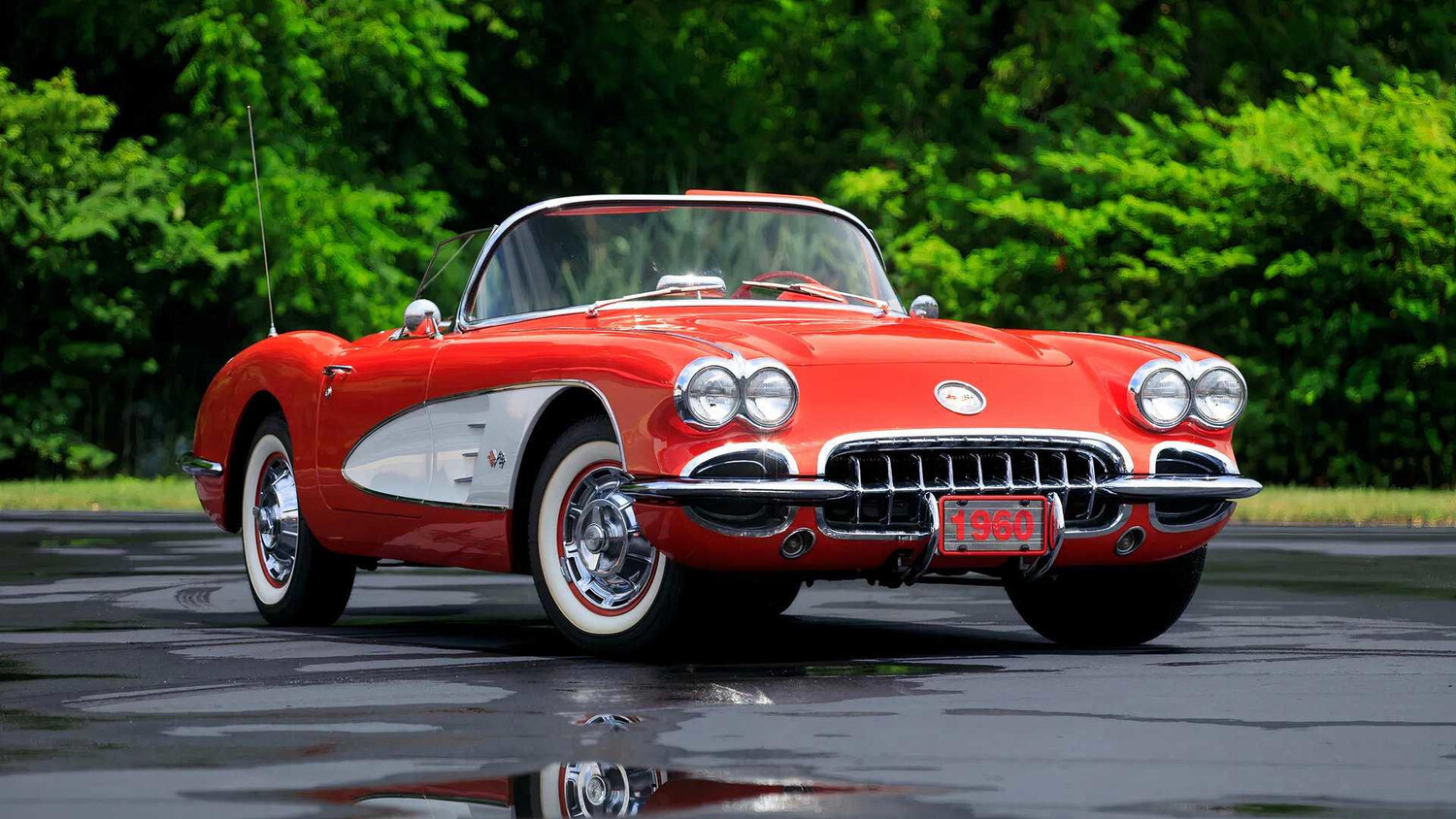
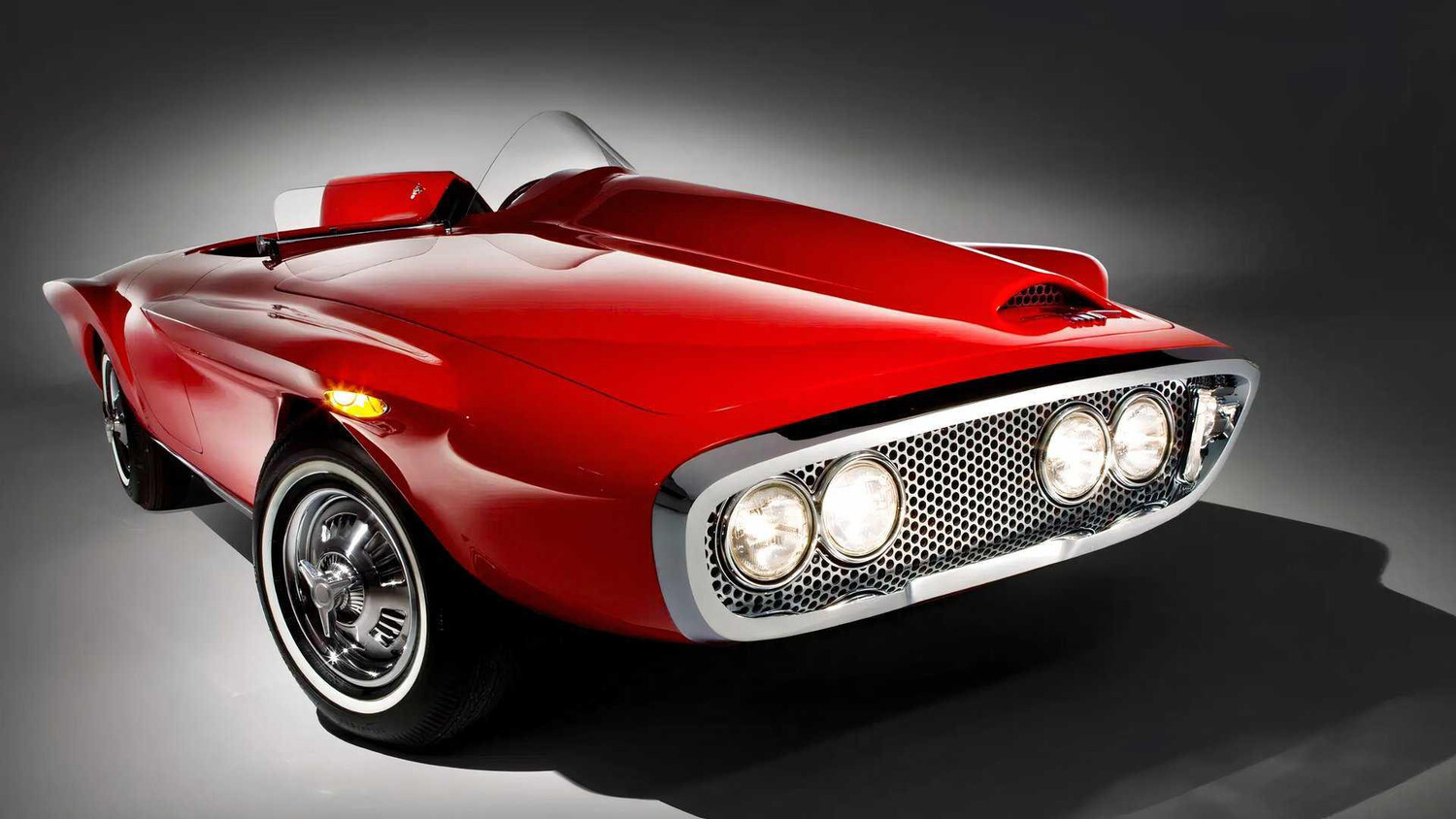
Imagine an America where the Corvette isn’t the only name in American sports cars of any substance during the ‘60s. It seems almost comical to think about, because Americans built muscle cars, full-size trucks, and not much else during that time, right? Seldom was that actually true, because Chrysler/Mopar very nearly came close to challenging the mighty Corvette. No, seriously, the only problem is Mopar themselves canned the thing. Plymouth At The Turn Of The ‘60s: A Boring Brand Gets A Glow Up Via: Mecum AuctionsIf there was ever a modern analog to explain what the Plymouth brand offered at the turn of the 60s, you could say their lineup consisted of Civic and Corolla equivalents geared for the American palette of the day. Mainstays like the Belvedere, Valiant, and the Fury may have had better-sounding names than modern economy cars, but the intent was very similar.Like Pontiac over at GM and Ford at, uh, Ford, a decade and a half of manufacturing humble, simple cars at high volume while sports cars played a supporting role might’ve been great for profit margins. But as the ‘50s gave way to the utterly unprecedented 1960s, a shift in the way Americans built cars and the engines that powered them began.Baby boomers coming of age rapidly in the early ‘60s didn’t have nearly the same buying habits as their war veteran parents. As such, every automaker in Detroit, and all its surrounding satellite cities, had to take notice. As far as Plymouth was concerned,that meant getting sporty, getting muscly, and getting clever. An American Sports Car To Challenge The Vette Bring A TrailerWith the possible exception of the Ford Thunderbird, and even then, Ford went to great lengths not to call it one, the Chevy Corvette was the be-all and end-all of the sports car breed in America. Its introduction in 1953 was of great consequence for all of America’s OEMs, even others in the GM fleet. Buick, Pontiac, and Oldsmobile all tried to build concept drop-tops with generally Corvette-adjacent styling in the 1950s.Coincidentally, only one of those brands still exists today. But as far as Plymouth and Mopar were concerned, the ambitions of fielding an alternative to the Corvette was spearheaded by a man called Virgil Exner. An Ann Arbor native who was practically born to design cars, Exner started in the advertising space before taking a job with Harley Earl at GM, and then spent time at Studebaker in the 1940s before winding up at Chrysler.Exner’s time at Chrysler/Mopar allowed him to rub shoulders with the company’s third-party design contractors. Firms like Italy's Carrozzeria Ghia,more known for its work with Volkswagen, Alfa Romeo, and Ferrari than its Italo-American collaborations.Concepts like the Chrysler Falcon and Dodge Firearrow sure looked more like Corvette analogs than traditional American cars. By the turn of the ‘60s, it was Exner and Ghia’s job to give Plymouth a Corvette analog all its own. Plymouth XNR: The Corvette Rival That Never Was RM AuctionsIf the name doesn’t make sense, it’s actually pronounced in a way that’s an impromptu acronym for Virgil Exner’s name. While Ghia was hard at work developing an open-top asymmetric roadster body for Plymouth’s new concept, its underpinnings were taken from a shortened version of the Plymouth Valiant. Consequently, the Chrysler design team went to great lengths to cut down and reinforce the delicate chassis rails.It was then shipped all the way to Italy, where the finished body was paired to the frame. Its rear hump arrangement behind the driver was inspired by the LeMans racing legend Jaguar D-Type, and its aerodynamic silhouette was reminiscent of a Studebaker Indy racer in Exner’s personal collection. The front grille almost looks like a muscle car’s, save for four gleaming front headlights that sit flush in the grille’s recessed interior.In the driver's line of sight, a bulge in the hood line integrates a functional air scoop, mimicking what muscle cars would start using not long afterward. Along the sides of the car, prominent quasi-aviation motifs that almost look like wings meld the jet set craze of the ‘50s with contemporary design philosophies of the early ‘60s. Prominent side-dump exhaust pipes foreshadowed a feature no flagship ‘60s drag package muscle car could live without, and the whole car melded racing and street car archetypes beautifully. Mopar Design At Its Most Ambitious RM AuctionsAt the rear of the vehicle, the XNR’s fuel filler cap looked more like a dinner plate than what it really was, and sported a branded motif across its surface. Like a modern flagship McLaren or Ferrari, a metal tonneau cover turned the XNR into a bona-fide single-seat racer. Elsewhere, the rear bumper was intersected by a vertical piece of metal integrated into the rear hump. It made for a rear-left-quarter profile unlike any other concept in history.Inside the cabin, the XNR’s interior looked more like a classic LeMans racer of the period than a traditional concept car. Vinyl-trimmed bucket seats contrasted hard against the polished wood and aluminum of the steering wheel and the gauge cluster. Inside the 8,000-rpm tachometer sat a cute little vacuum gauge with nominal, moderate, and high engine loads indicated through the colors green, yellow, and red.In every way that mattered, the XNR was a spectacle in every sense of the word. In a way any decent concept car should be, it was memorable. But above all else, it showed the path forward for Mopar. Albeit, not in the same way you’d expect for a traditional American car. A Sports Car To The Core, No V8 Needed RM AuctionsMake no mistake, the XNR was no muscle car, nor did it ever claim to be. It was as close to a Corvette rival from Mopar as had ever existed to that point, and it meant there weren’t as many strict rules on what decided whether it was “proper” or not. This framework meant Plymouth’s new concept car didn’t require a V8. This explained the XNR's powertrain, a 170-cubic-inch straight six from the Valiant platform that donated the chassis.The engine sported Chrysler's rare but potent Hyper Pak performance package that added a longer ram intake manifold, a four-barrel Carter carburetor, beefier valve springs and pushrods, plus a heavy-duty clutch for the three-speed manual gearbox. Even beyond the Hyper Pak, the XNR’s engine flexed an absurdly rare “NASCAR-spec” package with a de-restricted exhaust, high-lift camshafts, and higher compression.The package was supposed to form the backbone of Mopar's entry into NASCAR's fledgling Cannonball Compact Car Division. Instead, this obscure piece of Mopar history had its shining moment in the XNR concept. It developed in the neighborhood of 250 horsepower at the crankshaft, which in a car this small and with such thin steel body panels, wasn’t exactly a small sum. The Ultimate ‘60s Mopar Concept Car RM Auctions In track testing, the XNR topped 150 miles per hour. It also had handling characteristics that, while not modern by any stretch, were better than what was expected of wallowing American land barges. During its global debut at the 1960 New York Auto Show, a show that also featured a Corvette, the parallels between the two couldn't be ignored.Ultimately, Plymouth decided against developing a direct Corvette rival, opting instead to become key players in the upcoming muscle car wars.But history wasn’t finished with the XNR lineage. Using a similar Valiant chassis and a 101-horsepower engine, Ghia themselves developed a more reserved variant called the Asimmetrica.Complete with dual headlights instead of one, and more Italian-coded styling, the concept made its debut, along with the Coupe St. Regis hard-top, at the 1962 Geneva Auto Show. Nine times out of ten, that would’ve been the end of the story for Mopar’s most intriguing concept of the era. Instead, it was just the beginning. A Very Long Middle East Vacation RM AuctionsNot long after its debut, Mopar sold the XNR concept to Ghia themselves, who then sold it off to an unidentified Swiss buyer. From there, the car was sold once again, to none other than Mohammad Reza Pahlavi, the soon-to-be-deposed Shah of Iran. The Shah didn’t keep the car for long, selling it to a multi-millionaire car dealer and collector in Kuwait named Anwar al Mulla.By the 1970s, the car was sold once again to a collector in Beirut, Lebanon, right before the outbreak of the Lebanese Civil War. For 15 long years, the car survived wave after wave of bombings and general combat into the 1980s. That is until, among the chaos of war, a teenager named Karim Edie stumbled upon the car and took ownership of it. By moving the iconic concept from garage to sweaty garage, the XNR survived the war relatively unscathed.In 2008, the XNR was imported back to North America, arriving by ship to Canada. There, the world-class team at RM Auto Restoration began a comprehensive restoration project. In 2018, the Asimetrica sold at auction for an impressive $335,000 via RM Sotheby's. Meanwhile, the iconic XNR was sold at auction, also by RM Sotheby’s, for an eye-watering $935,000. It proved definitively that people look back quite fondly on Plymouth's lone attempt to challenge the Corvette. But even beyond that, the story alone makes the sale price understandable.Source: RM Auctions