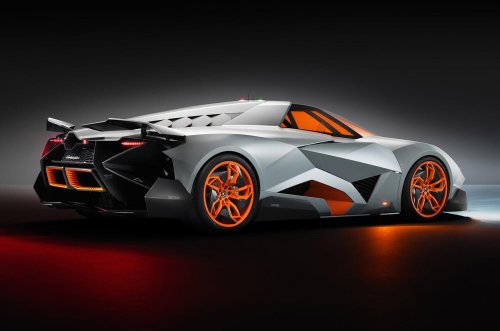
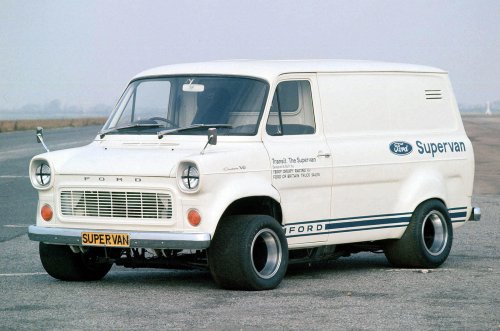
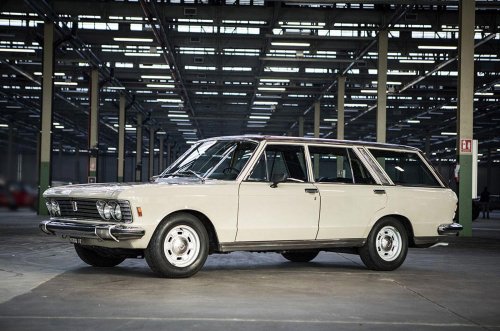
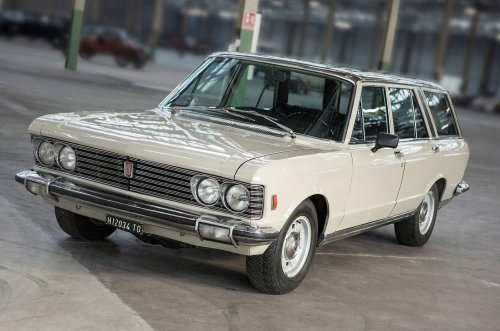
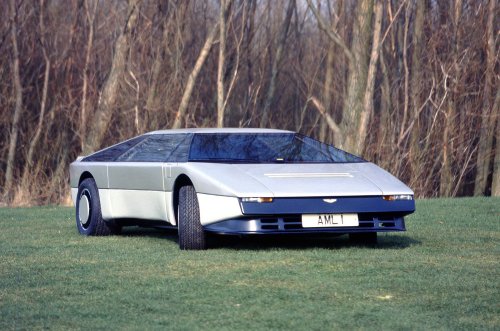
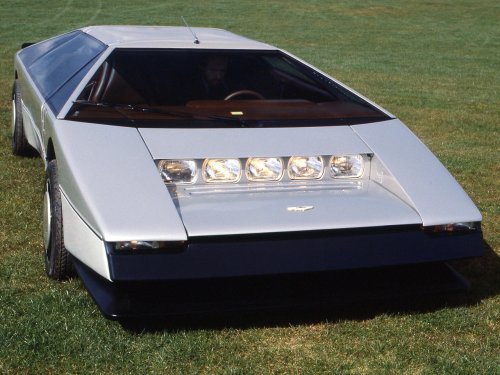
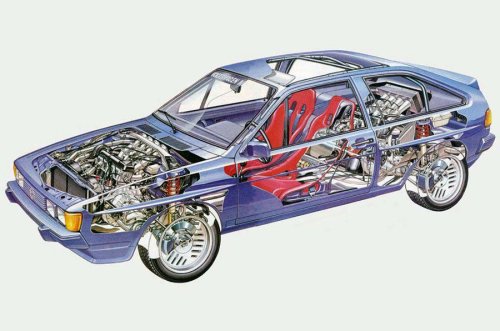
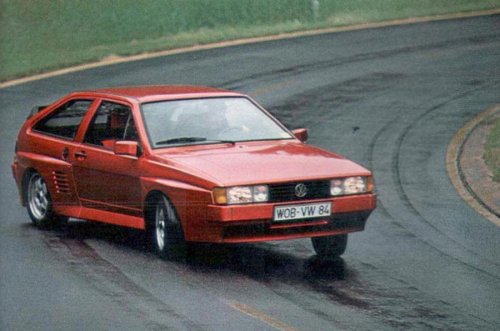
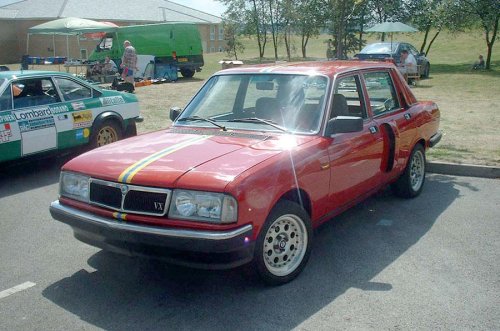
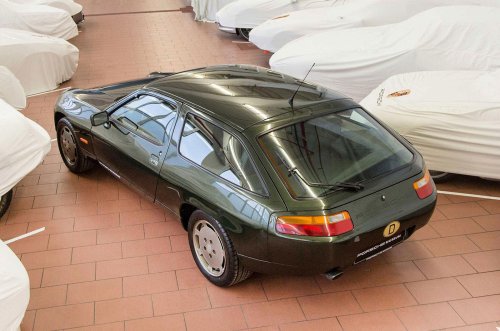
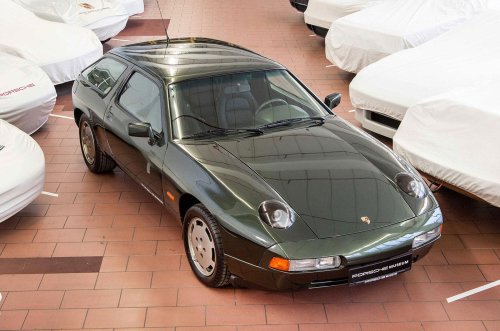
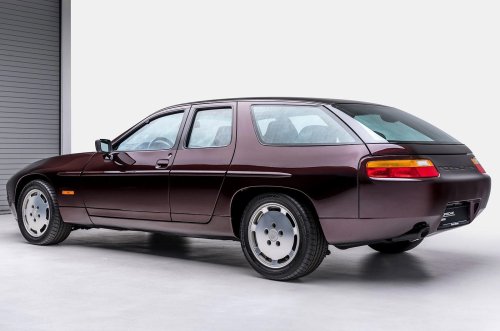
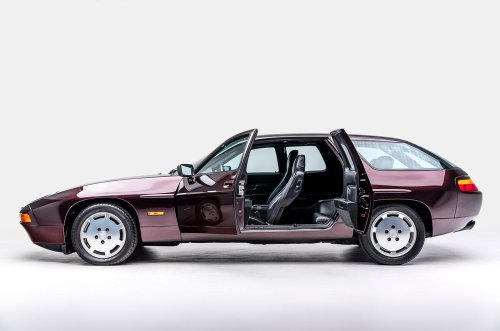
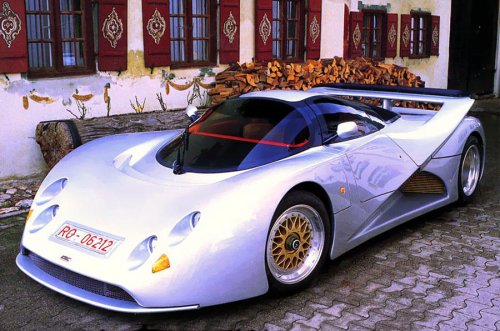
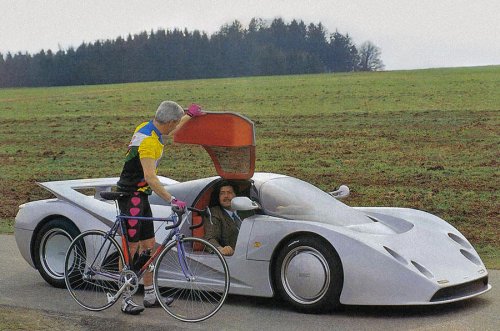
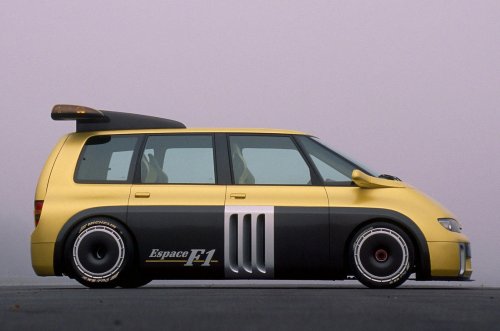
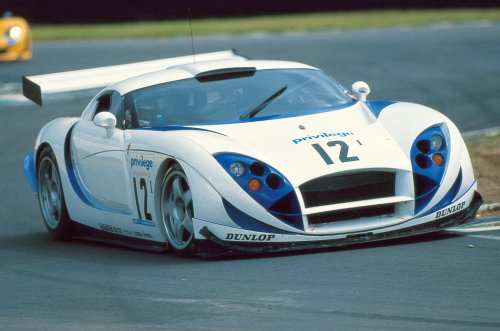
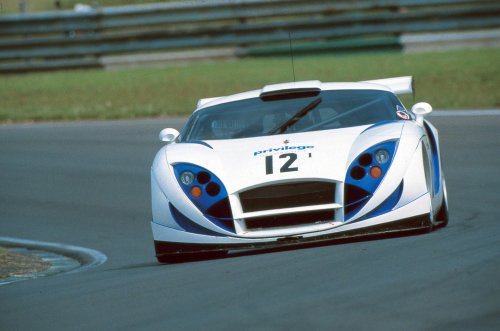
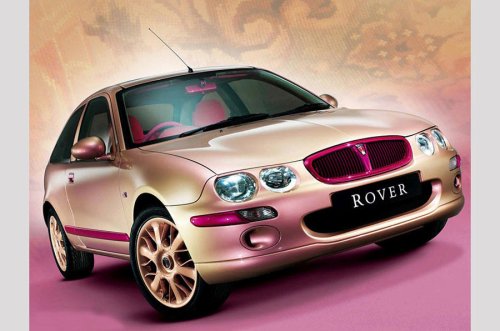
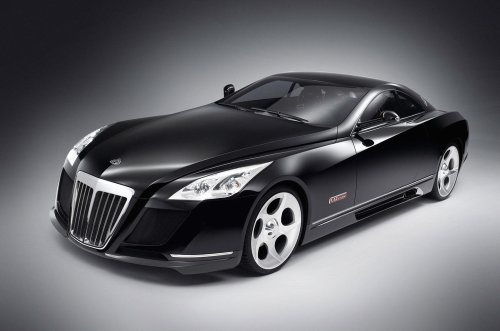
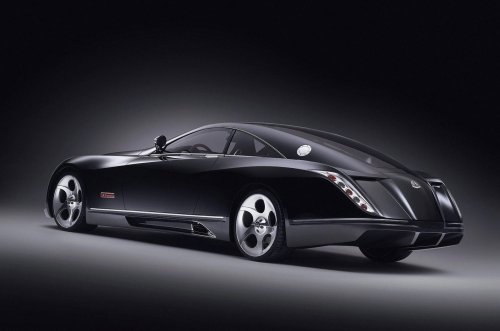
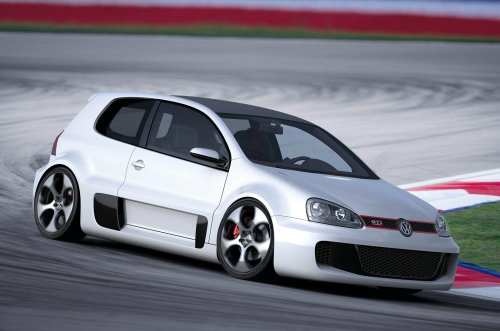
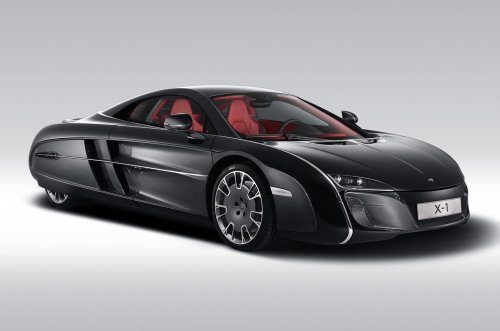
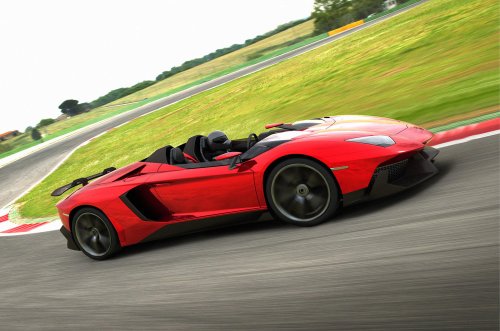
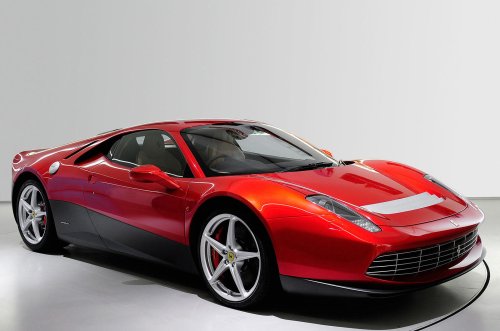
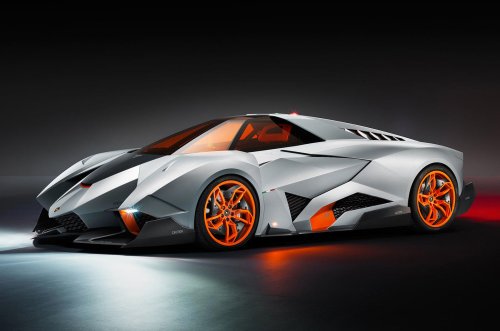



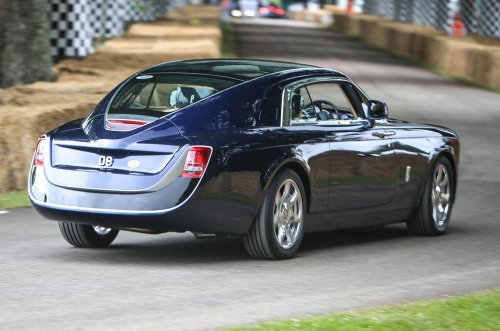

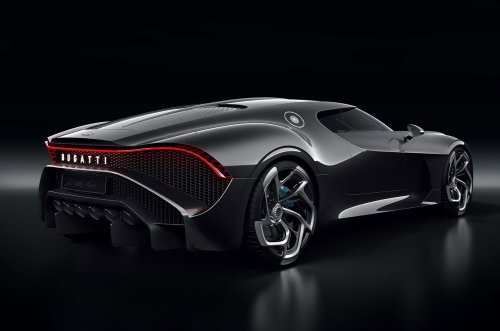

















In the early days of the car, when they were hand-made and based on a separate chassis, it was easy to build one-offs.But the advent of monocoque construction made it much harder to construct a unique car, which is why it's now such a costly business. But every so often a car maker will unveil a road-going machine that's unique, either as a customer commission, a marketing exercise or it could simply be as the basis for a production model which never sees the light of day. Sometimes it's a shame that only the one was made – but sometimes it's not such a bad thing:Ford Supervan 1 (1971)When the Transit Supervan made its public debut at the Easter race meeting at Thruxton in April 1971, Ford could never have predicted just what an icon this ludicrous machine would become. The bodyshell was a standard Transit Mk1, but it hid a rather barmy secret; this delivery van was based on the chassis of a Ford GT40, complete with mid-mounted 5.0-liter V8.With 441 hp on tap, the Supervan's performance was shattering. We clocked a 0-100mph time of just 21.6 seconds when we drove it at Ford Motorsport's Boreham airfield. We also saw 102mph on the clock – in second gear. It was reckoned that the top speed was 168mph, but Supervan's aerodynamics were so poor that it would have been a frightening experience. Sadly, Supervan 1 was scrapped in the 1970s.Fiat 130 Familiare (1971)When business tycoon Gianni Agnelli (1921-2003) owned Fiat he could have whatever cars he wanted and a whole raft of one-offs were built for him. Among them was a five-door wagon based on the ultra-luxurious Fiat 130 sedan, with its 3.2-liter six-cylinder engine rated at 167 hp.The Agnelli family actually had four of these ultra-practical wagon cars made, each one differing in detail. The boss got one with a roof rack and wickerwork down the flanks; that car was known as the Villa d'Este and is now in private hands. The one shown here was originally owned by Umberto Agnelli (Gianni's younger brother) and is now owned by FCA; it's in the company's heritage collection in Italy.Aston Martin Bulldog (1980)When Aston Martin developed the incredibly futuristic mid-engined Bulldog, there was talk of building up to 25 of the Williams Towns-designed machines. With electrically operated gullwing doors, a twin-turbo V8 cranking out 700 hp and the most dramatic proportions imaginable, it’s likely the necessary buyers could have been found.With a verified near-200mph top speed, this would have been the world’s fastest production road car without doubt. But with all of the development work done, Aston Martin changed hands and the new owners didn’t feel this was the way forward for a quintessentially English car maker. So the sole Bulldog built was sold instead, but it still survives and is currently having a nut-and-bolt restoration by Classic Motor Cars in Shropshire, England.Twin-engined Volkswagen Scirocco (1983)With Audi busy conquering rally stages the world over, with its incredible Quattro, Volkswagen wanted a piece of the four-wheel drive action so it came up with this – a Scirocco with a 1791cc four-cylinder engine at each end. Thus equipped there was a healthy 365 hp available to give a 180mph top speed and 0-62mph in just 4.5 seconds. VW built two of these Sciroccos; one for testing and one for show use.Having already created a twin-engined Scirocco earlier in the year, in late 1983 Volkswagen unveiled a sequel, with boxy wheelarches and a different mechanical spec. This time each engine displaced 1781cc and put out 143 hp, and instead of two manual gearboxes with a common linkage, there was a pair of three-speed automatic transmissions. VW developed the twin-engined Scirocco to a point where production could have been feasible, but just the one example was made.Lancia Trevi Bimotore (1984)When Lancia needed to come up with a successor to its rally-winning 037 in 1984, it had to feature four-wheel drive if it was going to be competitive. Its initial (rather bizarre) solution was the Trevi BiMotore which was fitted with a pair of turbocharged 2.0-liter four-cylinder twin-cam engines. Although the car was fast and very effective, it was overweight due to having twice the mechanicals and the rear engine had a tendency to overheat.The two engines were not mechanically coupled, only the two gearboxes were connected so that they could be operated by a single lever, with just one pedal to activate the two clutches. The two accelerators were controlled by a rudimentary electronic system that determined the delay in supplying power to the rear axle. The dashboard had two rev counters, the second of which replaced the speedometer, and two central gauges indicated the water temperature and oil pressure of each engine.Porsche 928-4 (1984)A direct ancestor to the Porsche Panamera Sport Turismo, the 928-4 was a regular Porsche 928 S from the B-pillars forward. But the back end of the car was completely replaced with a hatchback, and to give those in the second row some more leg room the wheelbase was also stretched by 9.8in.Presented to Ferry Porsche in September 1984, to mark his 75th birthday, the 928-4 also featured projector headlights in place of the usual pop-up items, while there was also green-tinted glass and a unique leather interior finished in green. The car now sits in Porsche's museum in Stuttgart.Porsche 928 H50 (1987)Three years after Porsche built its 928 shooting brake, it finished this five-door wagon, although the rear doors were so small that they were classed as half doors. Which probably makes the car a four-door wagon. Even though the car was finished in 1987, it wasn't seen publicly until the 2012 Pebble Beach Concours; the car was axed because Porsche couldn't make it rigid enough.Whereas the shooting brake had been based on a Porsche 928 S, the H50 used the 928 S4 as its basis. That meant power came from a 5.0-liter V8 instead of the earlier 4.7-liter unit. Tuned to produce 335 hp the H50 would have been swift, but it would have handled poorly with that lack of stiffness.Lotec C1000 (1991)With a whole raft of supercars set to enter the market in the early 1990s, one oil sheikh decided he just had to own something nobody else could ever have, so he commissioned Mercedes to build a one-off hypercar. The German company in turn asked supercar specialist Lotec to come up with something suitably swift; the C1000 was the result.In the middle was a twin-turbo Mercedes 5.6-liter V8 developing a claimed 1000 hp – hence the car’s name. Top speed was allegedly 268mph, but this was never independently verified. However, with a race-spec chassis and carbon-fiber bodyshell, it was more high-tech than the name suggested.Renault Espace F1 (1995)Taking a leaf out of Ford's book, to mark a decade of Espace production Renault mated one of its people-carriers with the chassis and running gear of a 1993 Williams-Renault FW15C F1 car. The result was an MPV that wasn't much good at carrying people (although there were still four seats), but it was pretty good at burning rubber. With around 800 hp available the F1 could do 0-120mph in 6.9 seconds and topped out at 194mph, so it was ideal for the school run.TVR Speed 12 (1996)Shown as Project 7/12 at the 1996 Birmingham motor show, this mad TVR was intended to become the world’s fastest road car thanks to a 7.7-liter V12 pushing out anything up to a claimed 892 hp. Originally envisaged as a GT1 racer which could also be adapted for the road, the project was renamed the Speed 12 in 1998.Race regulations shifted and TVR boss Peter Wheeler reckoned the car was simply too fast for the road. With a curb weight of 2200 lb and the right gearing, 240mph was supposedly possible; Wheeler didn’t want to sell such a beast to drivers who couldn’t handle the power, so the project bit the dust.Rover 25 Art Car (2002)With MG Rover getting up to nonsense such as this. It's not hard to see why the company went to the wall. In 2002 the British car maker teamed up with young fashion designer Matthew Williamson to create a 25 with some pizzazz, to tie in with London Fashion Week. With its various shades of pink the car was certainly not for shrinking violets.Maybach Exelero (2005)While it looks like a refugee from a Batman film, the Exelero was never designed for a starring role on the silver screen. Instead it was designed as a mobile test bed for high-speed tires, bankrolled by German tire maker Fulda and based on the platform of the Maybach 57 limousine.This wasn’t the first time that Fulda had teamed up with the Maybach marque, nor was it the first time that the tire maker had built a vehicle specially for the purpose of demonstrating its tires. Back in 1938, Fulda had paid for a one-off Maybach SW38, to enable high-speed tire testing on Germany’s autobahns.Volkswagen Golf GTi W12-650 (2007)Once in a while Volkswagen does do something completely crazy, and for the 2007 Worthersee festival, the company slotted its largest engine into one of its smallest cars to come up with something utterly bonkers. Worthersee is the world’s largest annual celebration of the Golf GTi, so it was fitting that VW should use its then-current hot Golf as the basis for a show car that gave the punters a fresh perspective on this most staid of car makers.Mounted in the middle of the Golf GTi W12-650 was a 6.0-liter W12 engine with a couple of turbochargers strapped on to boost peak power to 650 hp. The bespoke drivetrain needed some accommodating, so VW widened the Golf by 6in and fitted 19-inch alloys with 295-section tires – which no doubt had their work cut out trying to harness the power. The car was claimed to be capable of 202mph along with 0-62mph in just 3.7 seconds.Ferrari SP1 (2008)In 2008 Ferrari unveiled its first official unique car, from its Special Projects division. Called the SP1 (Special Project #1) and built for Japanese collector Junichiro Hiramatsu, the SP1 was based on the F430 and it carried that car's glasshouse and pillars over, but with all new panelling made of carbon fiber. The design was based on Leonardo Fioravanti's 1998 F100 concept; he designed the SP1 too.Ferrari P540 Superfast Aperta (2009)Just a year after the SP1 was unveiled, Ferrari unwrapped its next unique commission. This time it was based on the 599GTB, the lucky buyer was American Edward Walson and the inspiration came from the 1968 Ferrari-based Golden Roadster that starred in the 1968 cult film Histoires Extraordinaires.Ferrari Superamerica 45 (2011)The third in Ferrari's Special Projects series, the Superamerica 45 was based on a 599GTB and commissioned by serial Ferrari owner Peter Kalikow. The car took its name from the fact that it was built to mark 45 years of Ferrari ownership for Kalikow; its most intriguing feature was a carbon fiber rotating hard top which incoporated the rear screen. The Superamerica was finished in Blu Antille paintwork, to go with Kalikow's 1961 400 Superamerica – the design of which inspired the new car.McLaren X-1 (2012)In 2012 McLaren unveiled a unique rebodied 12C at The Quail, part of the Monterey Historics week – and it's never been seen since. Mechanically identical to the car that sired it and using the 12C's monocoque, the X-1 featured entirely new outer panelling made of carbon fiber and aluminum, with even the lights and wheels made specially.Lamborghini Aventador J (2012)Commissioned by Lambo boss Stefan Winkelmann just six weeks before the opening of the Geneva motor show where it was making its debut, the Lamborghini Aventador J featured almost entirely new bodywork and was claimed to be the lowest car ever to leave the Sant’Agata factory. By the time the Aventador J was unveiled it had been sold to a prolific Lamborghini buyer, for more than €2m (around $2.5 million at the time).Ferrari SP12 EC (2012)Perhaps the best-known of the various official one-off Ferraris, partly because of its celebrity owner, the rock star Eric Clapton, the SP12 EC's design was inspired by the 512 Boxer's. However, there were just eight cylinders rather than 12, as the SP12 was based on the 458 Italia.Lamborghini Egoista (2013)Lamborghini marked its 50th birthday by creating what was surely one of the most outrageously styled cars ever made. The Egoista (Italian for ‘selfish’) was a single-seater with a 600 hp 5.2-liter V10; much of its design (inside and out) was inspired by aviation design and construction. As a result, the cabin was more like the cockpit of a fighter jet, swathed in carbonfiber and aluminum. This car wasn't for a wealthy collector though; Lamborghini made the Egoista for its own museum.Volkswagen Golf Design Vision GTi (2013)For the 2013 GTi Festival at Lake Worthersee, held in Austria, created a 503 hp Golf called the Design Vision GTi, 15mm shorter than the regular production GTi, but 2.2in lower and a massive 2.8in wider.Fitted with ceramic brakes and unique 20-inch alloys, the styling was turned up to the max for that ultimate menacing look. The Design Vision GTi was no sheep in wolf’s clothing though, as in the nose there was a turbocharged 3.0 V6 TSI engine that could put out a stonking 413 LB-FT of torque, most of it from just 2000 RPM. Channelled to all four wheels via a DSG transmission, the car could get to 62mph in just 3.9 seconds.Ferrari F12 TRS (2014)The F12 TRS was the first Ferrari Special Projects model to be based on the F12 Berlinetta, with completely bespoke bodywork inspired by the 1957 250 Testa Rossa. Strictly speaking this isn't a one-off though, as the person who commissioned it had a second one built, with modified styling and chrome paintwork. This second car features a different nose, rear diffuser and headlights.Ferrari SP America (2014)American Ferrari enthusiast Danny Wegman stumped up the necessary cash for this one, which was based on the Ferrari F12. With a design inspired by that of the ultra-collectible 250 GTO, the SP America got all-new bodywork with round tail lights. The mechanicals were left standard, which meant a 750 hp 6.3-liter V12 was in the nose.Ferrari SP FFX (2014)Ferrari Special Projects had a busy year in 2014, with no fewer than three unique cars being unveiled. The SP FFX was commissioned by Japanese collector Shin Okamato and while it was based on a Ferrari FF you would never guess, with the sharply cut away bodywork at the back so it looked more like a restyled F12 Berlinetta.Ferrari SP 275 RW Competizione (2016)Yet another F12-based one-off, the SP 275 RW Competizione was commissioned by American dentist Rick Workman, who paid $3-4m to pay for his unique machine. Inspired by the 275 GTB/C Speciale that won its class at Le Mans in 1965, the SP 275 RW used the mechanicals of the F12tdf, which meant a rather handy 780 hp was on tap; the 20-inch wheels were unique to this car.Ferrari 458 MM Speciale (2016)Not many official Ferrari one-offs were commissioned by British Prancing Horse fans, but the 458 MM Speciale was. Based on a 458 Speciale, a completely new set of panels were constructed of aluminum and carbon fiber. This one-off was inspired by the 288 GTO, with its wrap-around windshield; the paintwork was pearlescent white while the interior was swathed in dark brown leather.Kia Sorento Ski Gondola (2016)The Specialty Equipment Market Association has been going since the early 1960s and in recent years it has become a must-see event for gasolineheads the world over. Held every autumn in Las Vegas, car makers have embraced the annual SEMA bash with such enthusiasm that cars like the Kia Sorento Ski Gondola aren't the most outrageous confections on display.While the Ski Gondola was left standard from an engine and transmission perspective, the rest of the running gear was given a serious makeover, with self-levelling rubber tracks fitted for the Kia to cope with the most tricky arctic terrain imaginable.Ferrari SP38 Deborah (2018)Revealed at Villa d’Este in 2018, the SP38 happened thanks to the cash and enthusiasm of Swiss collector Ronnie Kessel whose start point was a 488 GTB, reworked with a design inspired by the F40. The SP38 Deborah name apparently refers to the bespoke shade of red paintwork – although if you can work out the reference you're doing better than us.Rolls-Royce Sweptail (2017)An unnamed owner paid many millions of pounds for this to be built, and when we introduced it to our readers the message boards went into overdrive with readers telling us how much they hated the design. But love it or loathe it, the Sweptail harks back to the glory days of coachbuilding, which is what Rolls-Royce should be all about.The Sweptail was based on the Rolls-Royce Phantom VII, complete with 6.75-liter V12 engine. The one-off car took four years to design and build, and it featured the largest ever iteration of Rolls-Royce's iconic Pantheon grille. Despite its generous proportions, the Sweptail was fitted with just two seats – and presumably had the trunk space of a Luton van.Bugatti La Voiture Noire (2019)When Bugatti revealed its La Voiture Noire at the 2019 Geneva salon the company claimed that it was the world's most expensive new car, with a price tag of $19 million. You couldn't buy it though; it was commissioned by an unnamed marque enthusiast with very deep pockets, at one time rumored to be Portuguese soccer star Cristiano Ronaldo, though he has denied this.While it was the 1500 hp Chiron that provided the basis for La Voiture Noire, it was the Bugatti Type 57SC Atlantic that provided the inspiration – and specifically the car originally owned by Jean Bugatti. That car was lost during World War 2, never to be seen again; we suspect that now this car has been seen very publicly on one occasion, it won't get too many airings from now on.