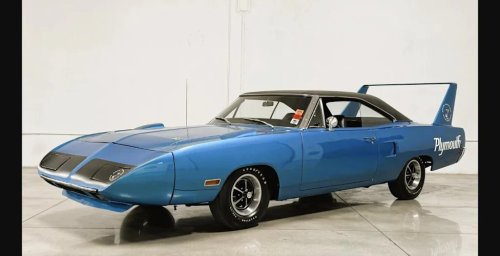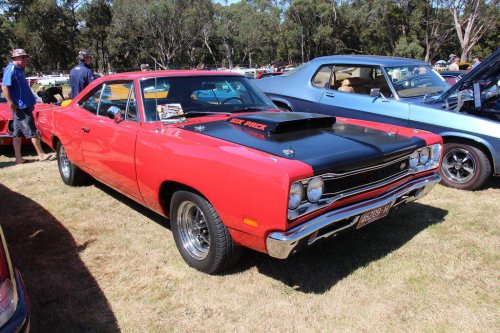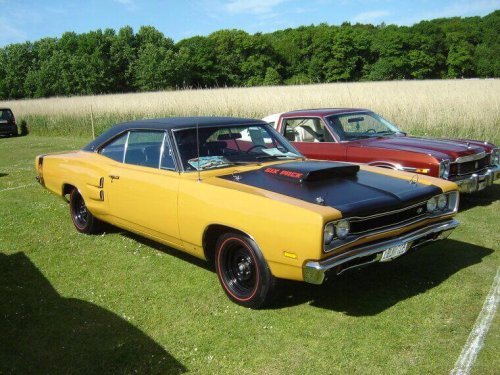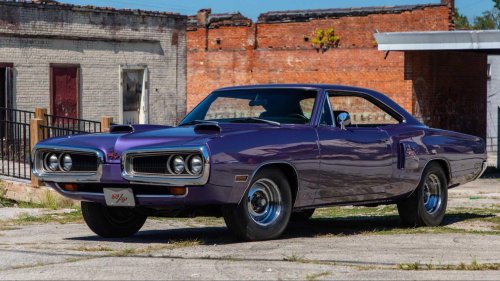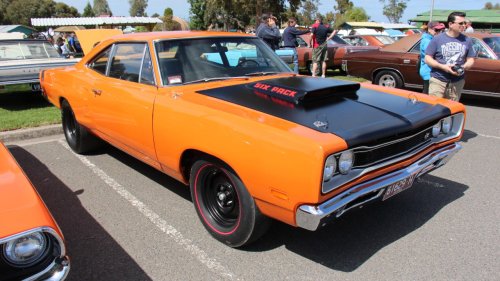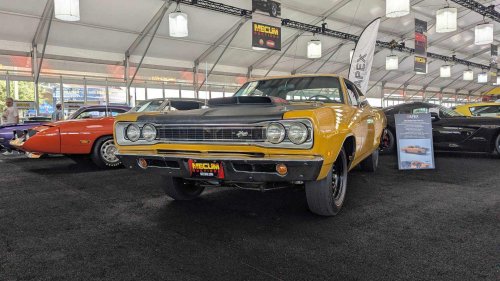
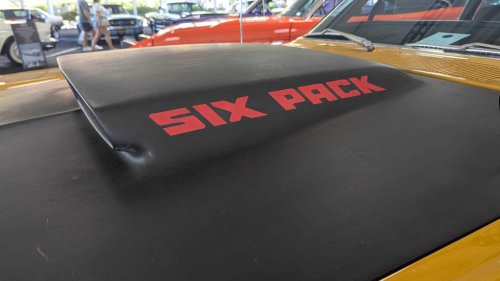
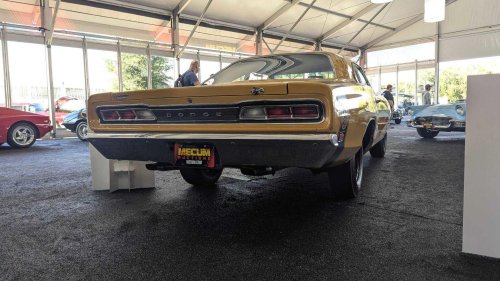
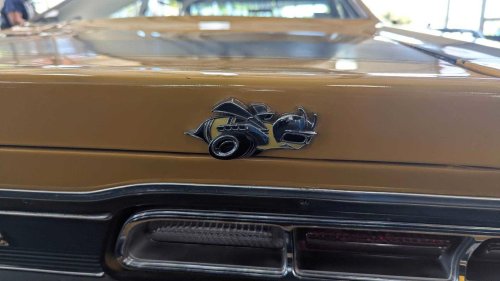
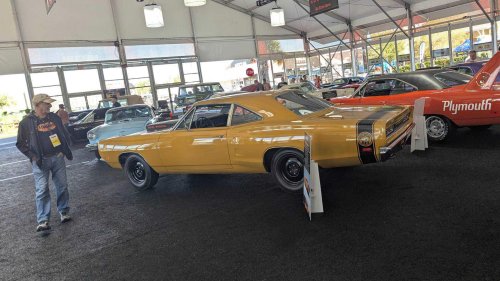
















We all have a favorite song or scene in a movie that, no matter how many times you see or hear it, it just gets you. It never fails to get your heart going and invoke a physical reaction. That happens in the car world, too.While walking the lots at Mecum Kissimmee, I was stopped dead in my tracks when I saw it. The sea of priceless gems it was among seemed to fade out of existence. My skin erupted with goosebumps, and my hair stood on end. No. It wasn’t the White Elephant ‘Cuda. It wasn’t the Bianco Speciale. It wasn’t a multi-million dollar machine like many others in the room were.I’m talking about a 1969 A12 Super Bee. Now, it’s not as rare or as valuable as many of the others you can find at these shows, but it's a very special car in the American muscle world and a true piece of Mopar royalty that I can’t help but stop and admire, no matter what’s going on. This one, in particular, reminded me why I love these cars so much and gave me the push I needed to keep working toward my goals. The A12 Super Bee Was Detroit’s Fastest Muscle Car Hank O'Hop/HotCars The A12 package was a special option made available to the Plymouth Road Runner and Dodge Coronet Super Bee in 1969. Even before it arrived, these cars were the perfect embodiment of what the muscle car segment was all about. They were raw, stripped-down models that gave buyers access to high-performance cars without all the add-ons that drive prices up. They were affordable and downright nasty with a standard 383 cubic-inch V8 or an optional 426 Hemi.Halfway through the 1969 model year, Dodge and Plymouth introduced the legendary 440 to the engine lineup for the Super Bee and Road Runner with the limited A12 package. Only, it wasn’t just any RB engine. This one was fitted with the legendary Holley tri-power intake dubbed Six-Packs on Dodges and Six-Barrels on Plymouths. They were officially rated to produce 390 horsepower, 15 more horsepower than the four-barrel 440.More than being a potent combination on paper, these proved to be the quickest factory-equipped muscle cars to leave Detroit in the 1960s. Ronnie Sox clocked a 12.9-second quarter-mile behind the wheel of an A12 Road Runner, this car’s twin sister. That was the shot heard around the world, reminding everyone who built the meanest streetcars of the era. This 440 Six-Pack Is No Frills, All Thrills Hank O'Hop/HotCarsThe 440 Six-Pack engines are coveted for their low-end performance. They were the affordable alternative to the 426, delivering better street manners and enough grunt to shame the stock ones in the quarter-mile. That said, these weren’t just regular 440s equipped with a special set of Holley carbs. They also featured higher compression ratios and special cams to take advantage of the induction system.While seemingly simple upgrades, they worked wonders for performance. Some dyno tests show that an output of 420 horsepower was a more accurate rating than what Mopar said in the ‘60s. A trick engine isn’t all that made these cars special. A12 also featured a special lift-off fiberglass hood with a signature scoop, a Dana 60 rear end with 4.10:1 gears, and a heavy-duty Hemi gearbox. That, paired with the no-frills-all-thrills presentation, gave them a presence that no factory muscle car has delivered since.The one at the show also happened to be a post car, not a hardtop, awarding it extra points for performance junkies. These old Mopars rely on a unibody construction. Hard tops with a seamless transition between the door and quarter windows are actually prone to flexing. Post cars introduce a B-pillar that ties everything together to stiffen it all up. Mopars Weren’t High-End Muscle Cars Hank O'Hop/HotCars I get it. This Super Bee isn’t the most beautiful example of an A12 car and, compared to all the other sterile machines in the room, some might even think it's ugly or out of place at the very least. That’s exactly what I love so much about it.The nature of cars like this tends to get lost in translation, especially when they’re built for shows and auctions. Most are restored to a level of perfection that classic cars, Mopars especially, didn’t have to begin with. While consistent panel gaps and glass-like paint are nice, they take away from the originality. That wasn’t the case for this car. It was rough around the edges, true to its nature.This Super Bee was loaded with flaws, and that’s how it left the factory. It’s an unrestored gem that shows the true standard these cars were built to. The Superbird, alongside it, was the same way, which is a reminder that Chrysler cars didn’t roll off the factory line with the prestige people associate with them today.Of the big three, Mopars were the lowest on the totem pole. With less money to sink into operations, the fit and finish of its cars suffered. Though they did have what counted most, which was absurd performance capabilities that kept everyone’s expectations in check. Both of these cars are perfect examples of that, as both dominated their respective performance realms, despite not having the pedigree others skated on. The Plan For Building My Dream Car Hank O'Hop/HotCars That’s not to say A12 cars aren’t special. Only about 1,500 Super Bees and 1,900 Road Runners were built with this package. I completely understand why these cars often sell in the six-figure range. This one actually sold for $247,000 at auction, which, according to Classic.com, is the highest sale recorded for a Super Bee. So, I’ve also accepted that my chances of owning a real one are nearly non-existent.I do have a plan to add something similar to my stable, though. After swapping my ‘69 Charger to a Gen III Hemi, I’m left with a running 440 that’s begging to get back in the fight. This encounter re-lit my motivation to find a Road Runner or Coronet shell to build an A12 tribute car with. No, it won’t be as special as an original, but, like my Charger, it’d be a car I’d be happy to drive in any condition, which is what I’d much rather own anyway. Always Meet Your Heroes Hank O'Hop/HotCars You hear it all the time, “it’s just a car.” People outside the industry try to talk them down all the time, and I do understand the point they’re trying to make in many instances. However, cars are so much more than simple machines. They’re a vehicle that connects you to the world, and the one you drive says a lot about who you are as an individual.This Super Bee might not have been the most prestigious car in that room. It was joined by several amazing one-offs that made much bigger waves in the automotive world, and the millions of dollars they command are bound to capture the attention of the masses. I’ll still take the Dodge, though. It’s rough, honest, and it’ll throw down at a moment's notice and put up a hell of a fight every time. To me, it’s what the American spirit is all about and would probably be my top pick if I could have had the keys to anything in that room. However, the Superbird alongside it wouldn’t make the decision easy.Sources: Classic.com.