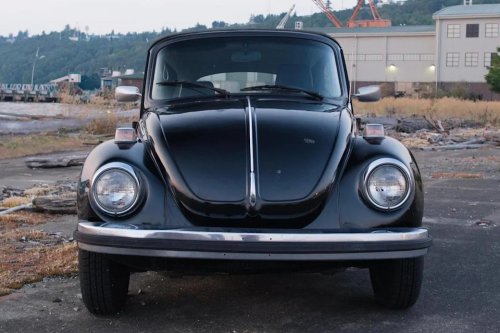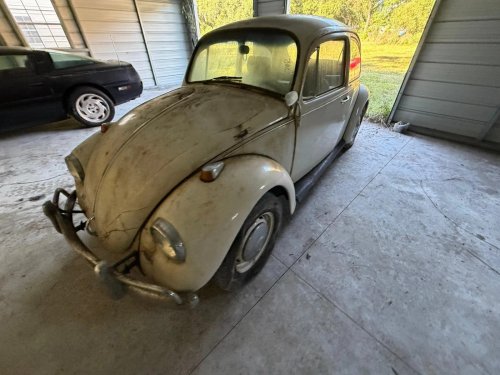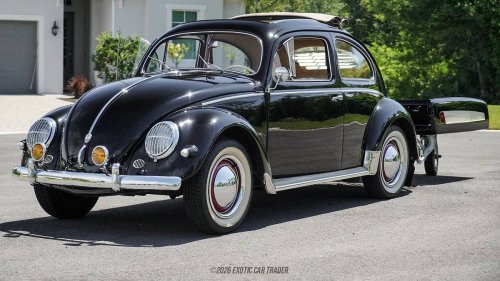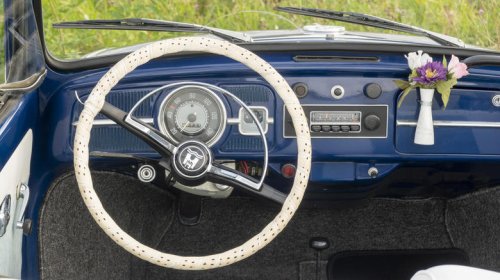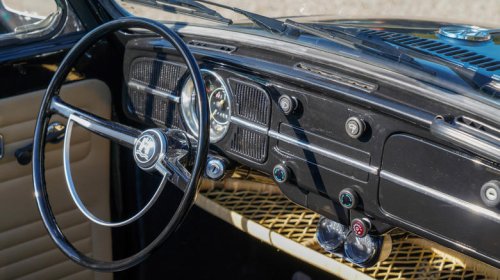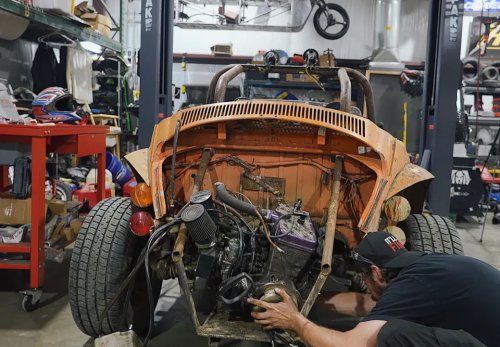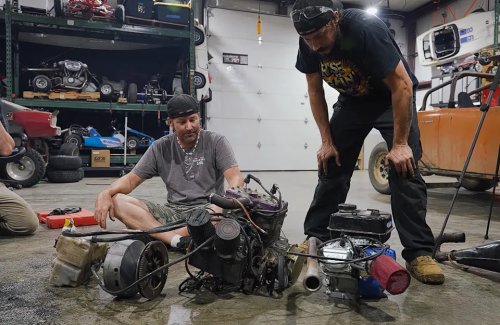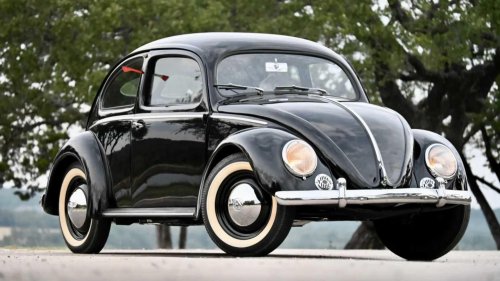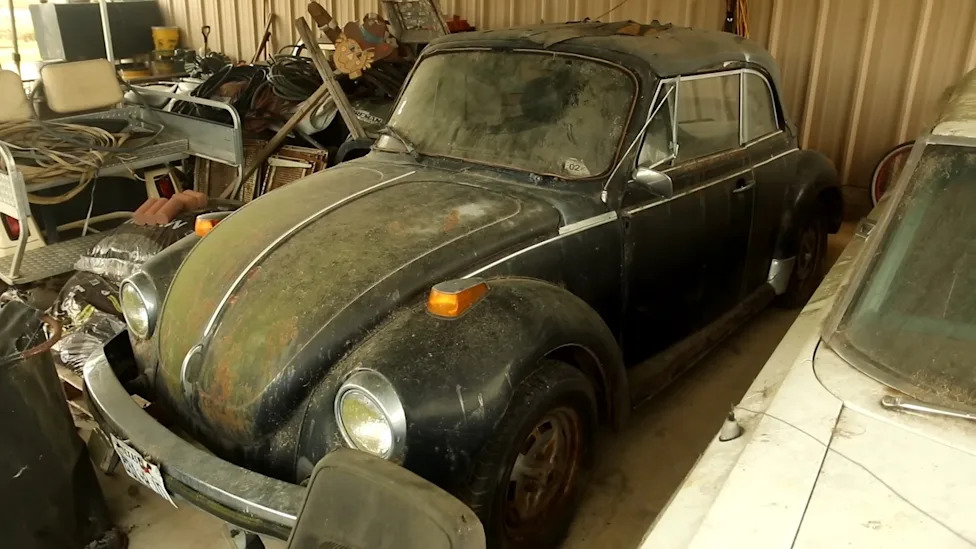
















Only 900 Were Built: A 1979 VW Beetle Epilogue Edition Wakes Up After 24 Years in a ShedVolkswagen built more than 21 million Beetles, which makes it strange to call any of them rare. But the 1979 Epilogue Edition is the exception. When the air-cooled Beetle finally bowed out of the American market, Volkswagen sent one specially trimmed convertible to each U.S. dealer — roughly 900 cars in total. Somewhere around a third of them are believed to have survived. One of those survivors just came back from 24 years in the dark.The car is a triple-black Epilogue ragtop that had not turned a wheel since 2002, and the father-and-son team behind the RESTORED YouTube channel spent the better part of a video coaxing its seized 82,000-mile flat-four back into service. It is a long, quiet, oddly soothing watch — and a useful lesson in how to free an engine that has rusted itself shut.Why the Epilogue Edition MattersBy 1979 the standard Beetle sedan was long gone from U.S. showrooms, pushed aside by the water-cooled Rabbit. Only the Super Beetle convertible was left to carry the badge, and just 10,662 of them were built for the American market that year at a base price in the $6,500 range. Karmann kept the convertible line running a few months into 1980 before the last German-built car rolled out on January 10.The Epilogue Edition was the send-off. Every one wore black paint over black leatherette with a black top, offset by a white headliner. Each car got a wood-look dash, a factory radio with a chrome antenna, factory air conditioning and the deluxe wheels. Under the decklid sat the familiar 1,600cc flat-four with Bosch L-Jetronic fuel injection — 48 horsepower and 73 lb-ft, enough for about 80 mph and mileage in the 20s and 30s. Nobody bought one for speed. They bought one because it was the end of something.Twenty-Four Years of Standing StillStructurally, the car came out of storage better than it had any right to. The body was straight with no rot through the panels, which says something about how well these cars were sealed and painted from the factory. The soft top was shredded and the tires had gone hard as stone, but those are consumables.The engine was the problem. Somewhere in its past an owner had pulled the L-Jetronic injection in favor of a single-barrel carburetor, a common simplification that also removed a sealed intake tract from the equation. Two decades of damp air working through the louvered engine lid did the rest: the pistons had rusted to the cylinder walls, one chamber far worse than the others, and the valvetrain was caked solid. A pushrod had jumped off its rocker arm, a reliable sign that the valves had frozen in place.How They Freed It — Without Breaking ItThe temptation with a stuck engine is a breaker bar and optimism. That is how connecting rods bend and blocks crack. The approach here was slower and worth copying.Plugs out, then a borescope down each cylinder to find out which one was actually rusted before touching anything.A mix of penetrating oil and Marvel Mystery Oil poured into the bores and left to soak, with the valve covers off so the rockers and springs could be saturated too.A wrench on the crank pulley bolt, rocking the assembly a few degrees clockwise, then counterclockwise, over and over until the rust gave up its grip.Compressed air through the plug holes to pop the stuck valves back onto their seats while tapping the springs.The rocker assemblies soaked in rust remover before going back on.Fuel was a separate mess. What was left in the tank had turned to varnish, so the factory lines were bypassed entirely in favor of a temporary supply — the right call, since pumping 24-year-old gasoline through a fresh revival is how you buy yourself a second teardown. The ignition points were corroded and got cleaned up with fine sandpaper until they threw a clean spark.It Runs. It Does Not Stop.Compression told the story before the key turned: one cylinder read around 20 PSI against 130 for its partner on the same bank. The engine fired anyway, smoked like a chimney while it burned off decades of oil and debris, and gradually settled into something like an idle as the rings reseated with heat.The lap around the shop yard was less encouraging. The master cylinder was dead, leaving no brake pedal at all, so the car was slowed with the gearbox and a good deal of nerve. Heavy blow-by from the weak cylinders confirmed what the compression numbers implied: the jugs and rings are too pitted to live like this for long. A top-end rebuild with new pistons and cylinders is the honest next step for a car this rare, and the channel says there is more to come.More Long Sleeps, More Rude AwakeningsSmall European cars seem to specialize in this kind of resurrection. We covered a 1971 Citroen DS 21 Pallas that roared back after 21 years in a barn, and a 1973 Lotus Elan 2+2 130 that surfaced at no reserve with a notorious past. On the economy-car end, a 1960 Nash Metropolitan got its first wash in 31 years before running again.If sealed-away survivors are your thing, there is also the family DeLorean DMC-12 that finally saw daylight after decades and the crew who bought an abandoned garage for $17,000 and found a widebody Corvette C3 shut inside for 19 years.For all the finality in its name, this Beetle is not finished. It is just waiting on a set of cylinders and a brake job.