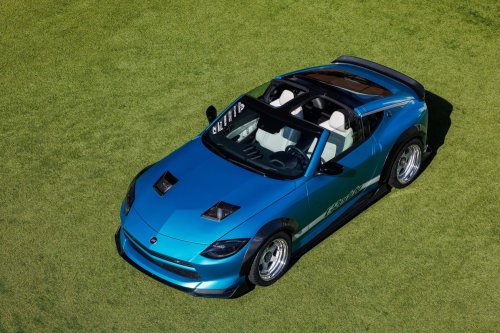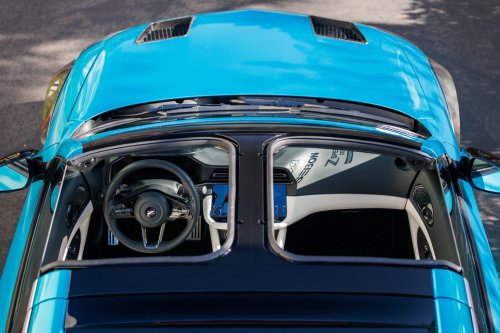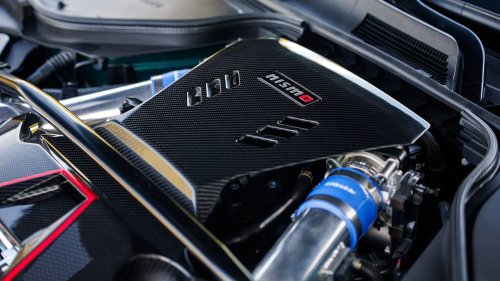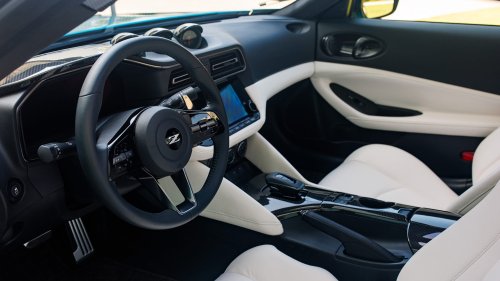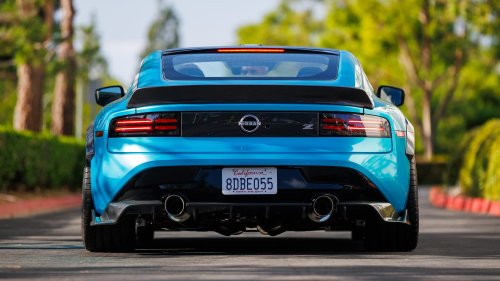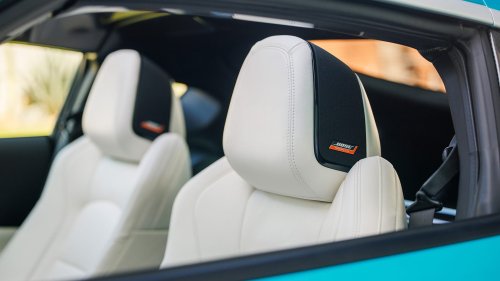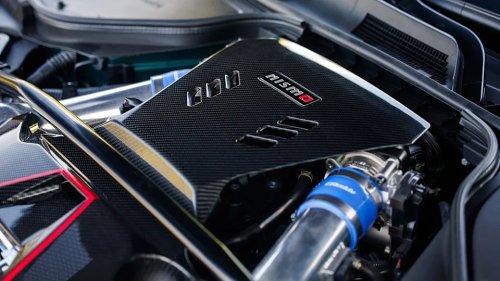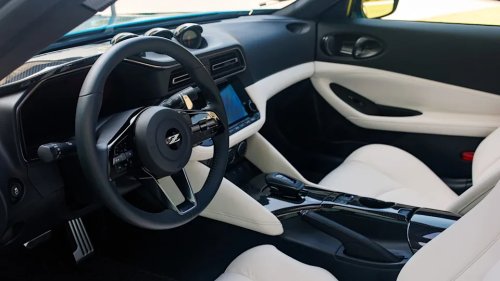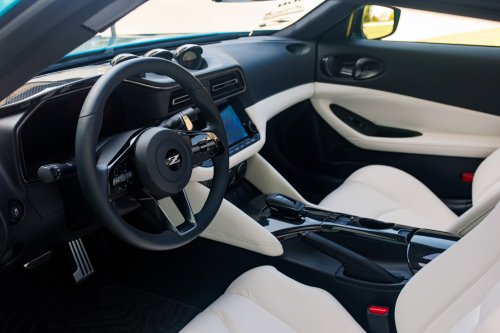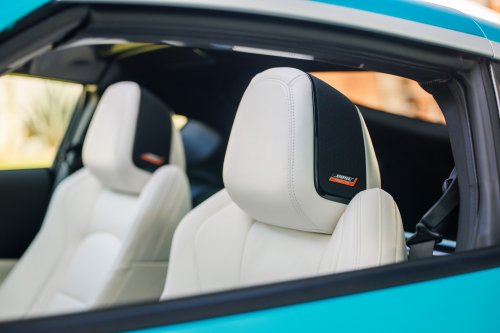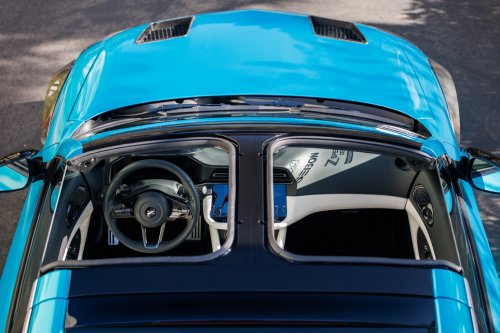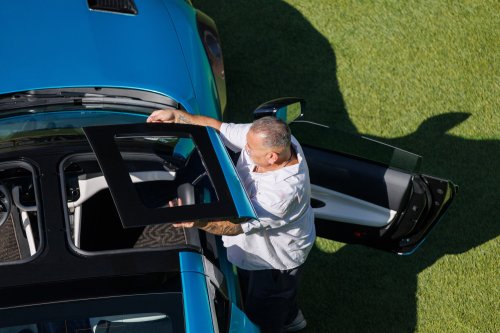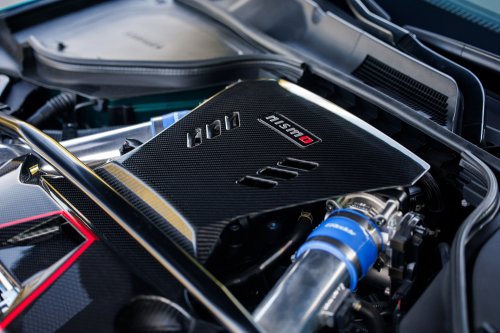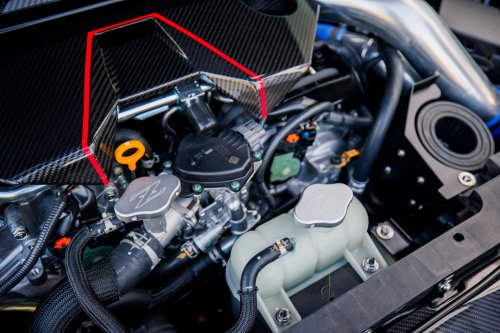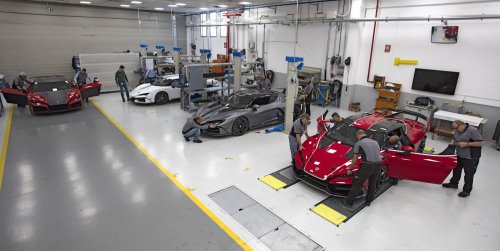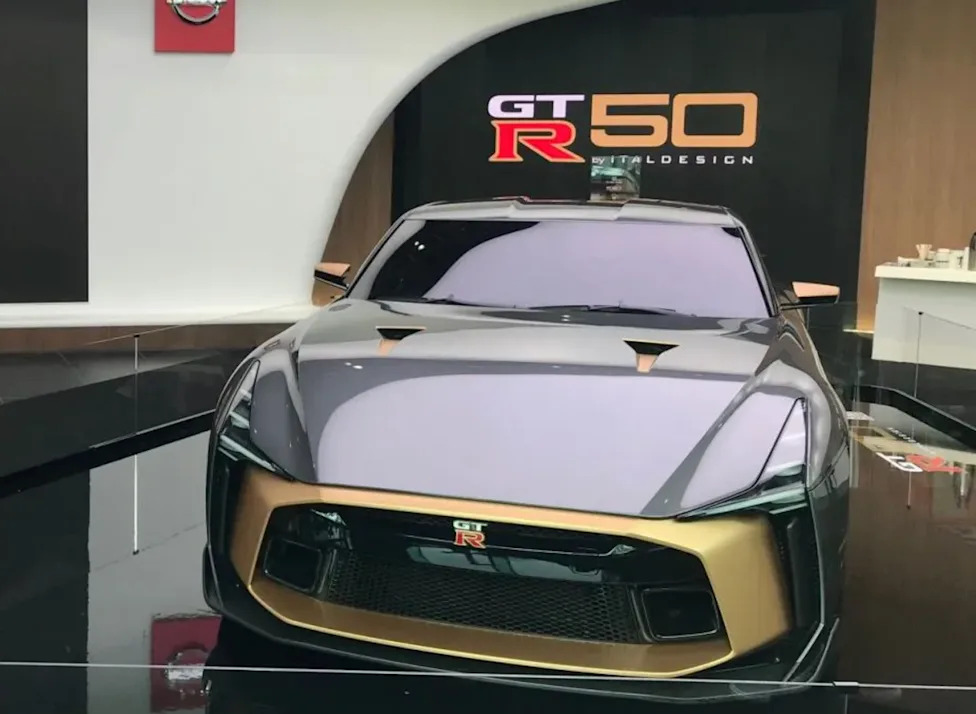



















Nissan GT-R50 by Italdesign: Only 18 of 50 Were Actually BuiltNissan opened the order book on the GT-R50 by Italdesign in December 2018 with a number that sounded deliberately mythic: fifty cars, fifty years of GT-R, fifty years of Italdesign, €990,000 apiece before taxes and options. Eight years later, the arithmetic doesn't work. According to the catalogue entry for the only example ever offered at public auction, the manufacturer built 18.That single fact reframes everything else about this car, so let's start with what the paper trail actually says.What Nissan announced, and whenThe GT-R50 began as a one-off. Nissan and Italdesign announced it in June 2018 as a first-ever collaboration built on a 2018 GT-R NISMO, with Italdesign in Moncalieri doing the development, engineering and fabrication while Nissan Design Europe and Nissan Design America handled the shapes. It ran the Goodwood hill in July 2018, toured Spa, Monterey, Ginza and eventually the Dubai Autodrome.Related ArticlesChevrolet's Impala Sneaker Deal With Devin Booker and Nike, and What Impala Buyers Should KnowHow California's New 100 MPH License Rule Changes Monterey Car Week for DriversAdvertisementAdvertisementOn December 7, 2018, Nissan confirmed production design and opened order books, quoting €990,000 before tax. Bob Laishley, then Nissan's global sports car program director, said the response "has greatly exceeded our expectations." The Dubai Autodrome release two months later put a dollar figure on it: $1,122,958.Deliveries were supposed to start in 2019 and run through 2020. By December 2019 that had slipped to a window of late 2020 through 2021, with a Japanese distributor appointed and, notably, "a limited number of reservations" still open — a phrase that was doing a lot of work. Nissan quietly closed the order book on July 1, 2022, shut down the microsite, and directed remaining inquiries to an Italdesign business-development address. The release did not say the run sold out. It said deliveries had started.What the million bought, mechanicallyStrip the coachwork and this is a heavily reworked VR38DETT. Per Italdesign's specification, the hand-assembled 3.8-liter twin-turbo V6 got large-diameter GT3-spec turbochargers, bigger intercoolers, a heavy-duty crankshaft with matching pistons, rods and bearings, high-flow piston oil jets, revised cam profiles, larger injectors, and reworked ignition, intake and exhaust. Output: an estimated 720 PS and 780 Nm.The interesting part is what came after the engine. The six-speed dual-clutch rear transaxle was reinforced and the differentials and driveshafts strengthened — because the GR6 transaxle in a standard R35 is already the component enthusiasts break first, and adding 120 PS over a NISMO without touching it would have been negligent. Bilstein DampTronic I dampers, Brembo six-piston front and four-piston rear calipers, and 21x10 front / 21x10.5 rear wheels on Michelin Pilot Super Sports (255/35 R21 and 285/30 R21) finish the hardware list. The roofline sits 54 mm lower than a standard R35's.AdvertisementAdvertisementOne housekeeping note, because the internet has muddled this for years: 720 PS and 710 hp are the same number. PS is metric horsepower, worth about 0.986 of the SAE variety. Same story with 780 Nm and 575 lb-ft. If you see both figures quoted as though they're competing claims, they aren't. And while the transaxle sits at the back, the GT-R50 retains the R35's all-wheel-drive layout — a distinction that gets flattened in more than one catalogue description.The part nobody discusses: the paperworkHere's where a GT-R50 stops behaving like a Nissan. Buried in the December 2018 release is a footnote attached to the customization options: "Subject to homologation rules in the intended country of operation." Translation — Nissan was not promising your bespoke commission would be road-legal where you live.The one car offered publicly, chassis ZA9ECN504MTM09011, tells the rest of the story. That prefix is an Italian small-series manufacturer code, not a Nissan one. When RM Sotheby's catalogued it as Lot 156 in Munich in November 2023, the registration line read "Certificate of Conformity Only" — the car had never been titled anywhere. It had also entered the EU on a temporary import bond, meaning the buyer either exported it again or paid VAT and duty to keep it. On a car listed at €1,050,000 (Liquid Silver Metallic, NISMO red accents, and a hydraulic rear wing that alone added north of €60,000), EU VAT is not a rounding error.Related ArticlesGordon Murray's New Special Vehicles Supercar: Reading the Teaser Before Friday's Quail Reveal2027 Suzuki GSX-R600 and GSX-R750: Prices, Specs, and the Missing ABSAdvertisementAdvertisementFor American buyers the situation is simpler and worse. The GT-R50 was never certified to FMVSS. NHTSA's own guidance is unambiguous: a vehicle can be imported without regard to FMVSS compliance once it's 25 years old, measured from date of manufacture. A car built in 2021 clears that in 2046. The only earlier route is Show or Display, which requires NHTSA to find the vehicle historically or technologically significant, caps driving at 2,500 miles a year, and doesn't touch EPA obligations at all.Practical notes for anyone who ends up near oneService is the obvious exposure. The drivetrain is Nissan and largely supportable — a competent R35 specialist can handle the VR38 and the GR6. The body is not. Those panels came out of Moncalieri, the taillamp assemblies are unique, and there is no dealer parts bin. A moderate front-end hit on a GT-R50 is an insurance conversation with Italdesign in it, which is why an agreed-value policy with a stated total-loss threshold isn't optional here. Also worth knowing: Italdesign has operated as a wholly owned Audi AG subsidiary since 2010, so Nissan's most exclusive halo car was assembled inside the Volkswagen Group.As for the market, the evidence is thin and not flattering. That Munich car — the 11th of 18, 119 delivery miles, never registered, brand new four years after it was built — carried a €950,000 to €1,150,000 estimate and did not sell.Which leaves an odd artifact. Nissan built the last R35 at Tochigi on August 26, 2025, closing an 18-year run of roughly 48,000 cars. The GT-R50 is the rarest branch of that family tree by a factor of about 2,600 — rarer than intended, largely unregistered, and in most of the world's largest car market, two decades from being legally drivable.Images Via: Italdesign